Meaning at a glance
Teal sapphire engagement rings are a durable, colorful alternative to diamonds whose appeal depends on hue, treatment status, and setting choices; buyers should prioritize verified disclosure, consider trade-offs between color and clarity, and follow gem-specific care and verification steps that require a gemological lab for certainty.
What documented historical evidence exists for teal sapphires?
Approved, evidence-based sources consulted for this guide do not document a distinct historical record for the color described today as 'teal' in sapphires. Modern market and editorial research included in industry summaries focus on contemporary demand and trends, not primary historical or cultural meanings for a teal hue. For example, trade and trend reports analyzed by Professional Jeweller and Imaginaire Digital describe interest in sculptural and period styles such as Art Deco and in colored gemstone rings generally, but they do not provide primary historical documentation of teal sapphire symbolism.
Because the approved sources do not provide primary historical accounts tying teal sapphires to a specific culture or period, any specific historical claims about teal sapphires would be beyond the scope of the evidence permitted for this article. That absence is itself important: shoppers and gift-givers should treat historical-sounding meanings for a very specific contemporary color as modern or interpretive unless a credible gemological or historical reference explicitly documents them.
Historical meanings versus modern personal interpretation
Documented historical meaning: With the available, approved sources there is no documented historical meaning specific to 'teal' sapphires to attribute to a particular culture or era. The literature and consumer-protection resources used for this guide instead focus on treatment, disclosure, and modern buying behavior.
Modern personal interpretation: Today, many people assign personal or stylistic meanings to teal sapphires—teal is often read as a blend of blue and green associations, so some wearers describe it as representing calmness plus renewal or individuality versus tradition. Those are contemporary, subjective readings and not historical facts. Treat any symbolic interpretation of color as personal or stylistic rather than universally documented.
How teal sapphires appear in jewelry
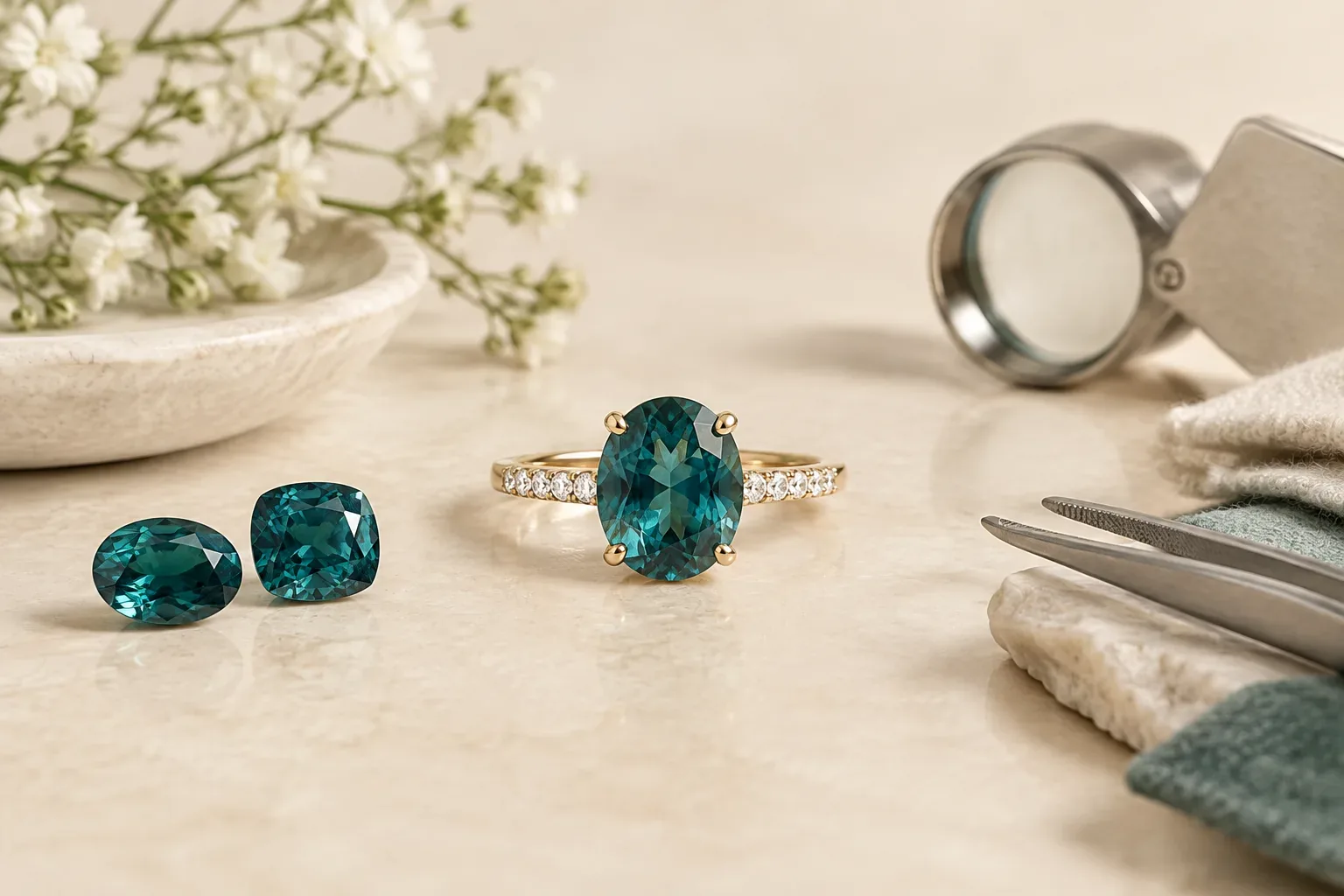
In practice, 'teal' sapphires appear across a range of cuts and settings. Designers use oval and cushion cuts to emphasize color with fewer visible facets, and brilliant cuts to increase sparkle where clarity allows. Common engagement settings include solitaire mounts that showcase a single color stone, halo settings that enhance perceived size with small diamonds or white sapphires, and three-stone or cluster settings that combine complementary colors. The industry trend coverage from Professional Jeweller notes growth in sculptural jewelry forms and revived interest in period styles such as Art Deco, both of which influence how colored sapphires are set and styled.
Contemporary rings may pair teal sapphires with warm metals like rose or yellow gold to bring out green tones, or with platinum and white gold to make the blue side of the color pop. Choices about metal, side-stone color, and setting profile affect both aesthetics and practical durability: low-profile settings reduce snag risk for active wearers, while bezel and flush settings offer extra protection for stones with surface-reaching inclusions.
Decision criteria and practical trade-offs
Color versus clarity and cost: The most important decision for a teal sapphire is the color characteristics you value—hue (the balance of blue and green), tone (how light or dark), and saturation (intensity). A richly saturated teal may show inclusions less easily than a paler stone, but intense color examples can command a premium. Conversely, a near-colorless or highly included stone may be cheaper but less attractive. Expect trade-offs: a larger stone with perfect hue may cost significantly more than a slightly smaller, paler stone with higher clarity.
Natural versus lab-created and treated stones: Lab-created sapphires generally offer consistent color and fewer inclusions at a lower price; they have essentially the same physical hardness as natural corundum. Treated natural sapphires, typically heat-treated to improve color or clarity, are common in the market. The Gemological Institute of America (GIA) explains that treatments and their detectability create distinct consumer questions; treatments affect value and require disclosure. The Federal Trade Commission (FTC) makes clear that consumers should receive written disclosures distinguishing natural, lab-created, treated, and imitation materials.
Durability and setting trade-offs: Sapphire ranks high on the Mohs hardness scale, making it suitable for everyday wear. However, toughness (resistance to chipping) depends on inclusions and how the stone is cut and set. Bezel and low-profile settings offer extra protection for stones with surface-reaching inclusions, while prong settings can expose pavilion edges that are more susceptible to knocks. Decide how much protection you need based on the intended wearer’s lifestyle.
Practical, respectful selection and gifting guidance
Be explicit about expectations with the seller. Ask whether the sapphire is natural, lab-created, or an imitation; whether it has been treated (for example by heat or other processes); and what documentation accompanies the stone. The FTC endorses clear distinctions among natural, lab-created, treated, and imitation materials and recommends written seller disclosures. Request a full description in writing before purchase.
Request independent grading or origin reports when value or provenance matters. If geographic origin or the absence of treatments is important to you as a buyer or to your intended recipient, arrange for a report from an independent gemological laboratory. Sellers may provide GIA or other lab reports, and the GIA materials used for this guide describe how treatment disclosure and detectability are central consumer issues for gemstones. Be prepared to pay extra for a lab report when the stone’s price or personal significance justifies that verification expense.
Consider the recipient’s personal style and cultural context. Teal is contemporary and not a universally traditional engagement color. Some recipients will value the individuality of a teal sapphire; others may prefer a classic white diamond. If you are unsure, discuss color preferences or involve a trusted friend or family member without spoiling a planned surprise. When gifting across cultures, avoid assuming that a color’s modern, Western associations hold elsewhere; treat symbolic interpretations as personal and ask where possible.
Care and maintenance (what to do and what to avoid)
Regular cleaning: For most sapphires, warm soapy water and a soft brush are safe for routine cleaning. Rinse thoroughly and dry with a soft cloth. GIA guidance highlights that care and treatment history can affect which cleaning methods are safe for a given stone.
Be cautious with ultrasonic and steam cleaners: These devices can be safe for many untreated and heat-treated sapphires, but are risky for stones that have been fracture-filled or undergone other enhancement. If a stone has any type of filling or fracture treatment, avoid ultrasonic and steam cleaning and consult a qualified jeweler. Because treatment detectability varies, do not assume a stone is safe for aggressive cleaning without written confirmation from the seller or a lab report.
Professional inspection: Have prongs and settings checked by a qualified jeweler regularly, especially if the wearer is active with sports or manual work. A secure setting is the best protection against loss or damage.
Verification limits — what you cannot confirm at home
You cannot reliably determine at home whether a sapphire is natural or lab-created, what specific treatments it has undergone, or its geographic origin. The FTC requires disclosure but a seller’s statement is not the same as laboratory verification. The GIA underscores that treatment detectability, disclosure, and durability are technical matters that typically require specialized equipment and trained personnel to evaluate.
Ask for documentation and, when necessary, a third-party lab report. If the seller provides a gemological report, review which aspects the report covers (for example, whether it discloses heat treatment, fracture filling, or origin). If you must rely on a verbal claim from a seller, insist on written confirmation prior to purchase and budget for an independent lab report if provenance or treatment status materially affects value or personal significance.
Putting it together: a buyer’s quick checklist
Prioritize color attributes you value and decide how much you will accept in clarity trade-offs. Ask directly for written disclosure about whether the stone is natural, lab-created, or treated and request any gemological reports the seller can provide. Choose a setting that balances the wearer’s lifestyle and the stone’s protection needs. For stones with a higher price tag or for buyers who need treatment/origin certainty, obtain an independent lab report. Follow conservative cleaning guidance and get regular professional inspections to maintain the ring’s condition.
Design ideas and market context
Designers are incorporating colored sapphires into engagement pieces in ways that reflect current trends: sculptural mounts, vintage-inspired Art Deco geometry, and mixed-stone clusters are visible in contemporary trend reporting. Imaginaire Digital’s search estimates and Professional Jeweller’s trend summaries indicate strong consumer interest in gemstone rings and sculptural design elements, suggesting teal sapphires will remain a fashionable option for buyers who want color and individuality.
Frequently asked questions
Are teal sapphires durable enough for everyday wear?
Yes—sapphires are among the hardest commonly used gemstones and are generally suitable for everyday wear, but toughness depends on inclusions, cut, and setting. Choose protective settings for stones with surface-reaching inclusions and have settings inspected regularly.
How can I tell if a teal sapphire has been treated?
You cannot reliably determine treatments at home. The GIA explains that treatment detectability is technical; request written disclosure from the seller and, if treatment status matters for value or sentiment, obtain a report from a reputable gemological laboratory.
Is a lab-created teal sapphire a good alternative?
Lab-created sapphires offer consistent color, fewer inclusions, and lower cost while sharing the same basic hardness as natural corundum. They are a good option if budget and uniform color are priorities, but ensure the seller labels the stone accurately.
What cleaning methods are safe for a teal sapphire engagement ring?
Routine cleaning with warm soapy water and a soft brush is usually safe. Avoid ultrasonic or steam cleaning if the stone is fracture-filled or otherwise enhanced; consult the seller or a qualified jeweler before using aggressive cleaning methods.
What documentation should I ask for when buying a teal sapphire engagement ring?
Ask whether the stone is natural, lab-created, or imitation and whether it has been treated, and request any gemological reports the seller can provide. For higher-value purchases, obtain an independent third-party laboratory report to verify treatment and, if relevant, origin.
Sources and further reading
- Imaginaire Digital — Imaginaire Digital
- Professional Jeweller / PRYA Jewellery Search Insights — Professional Jeweller / PRYA Jewellery Search Insights
- Gemological Institute of America — Gemological Institute of America
- Federal Trade Commission — Federal Trade Commission