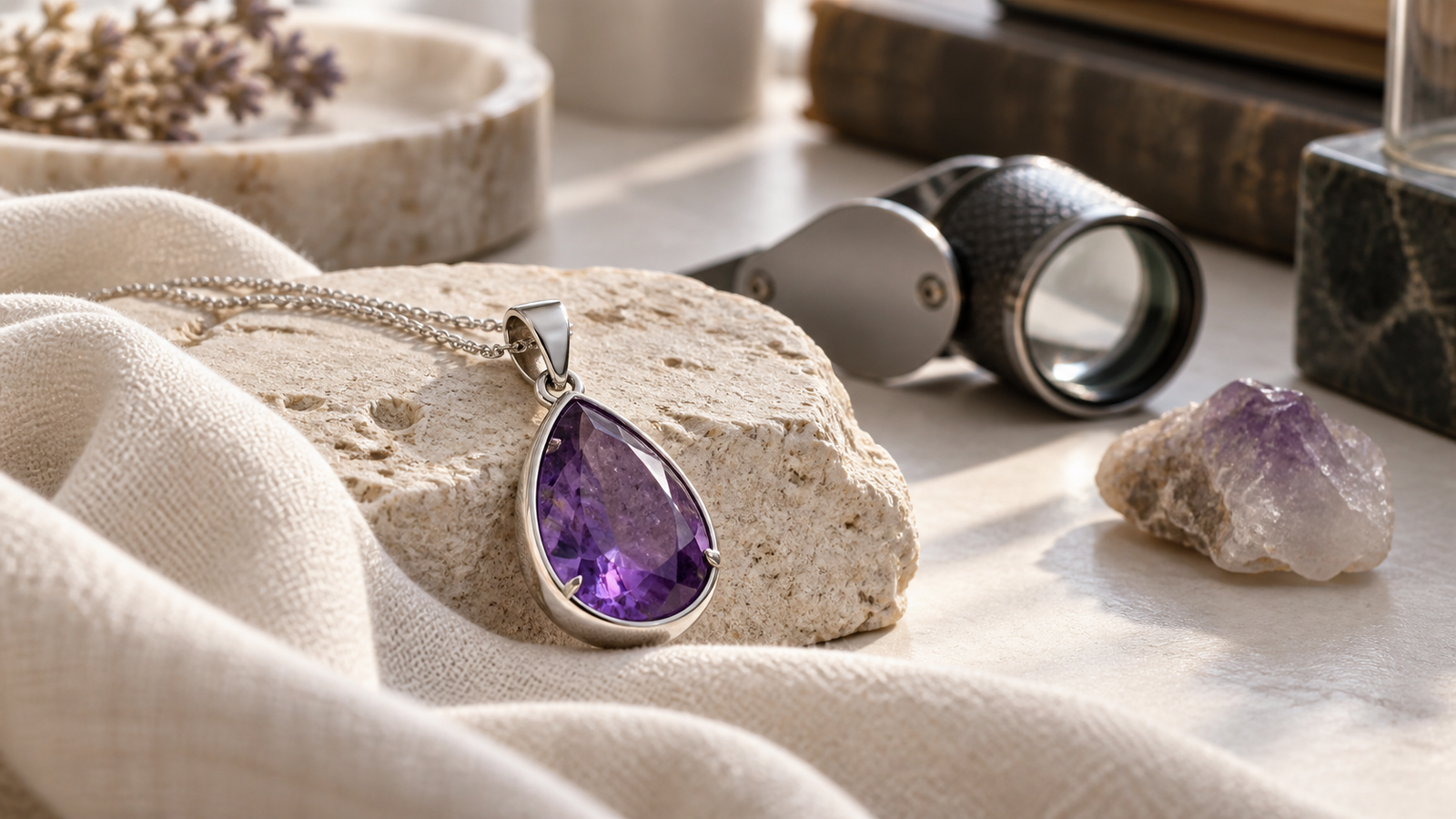
Meaning at a glance
Amethyst jewelry is prized for its purple quartz identity, long-documented use in personal adornment, and status as a February birthstone; historical lore such as sobriety and protection and modern personal interpretations like clarity and calm are symbolic rather than proven, while practical value depends on color, construction, treatment disclosure, and proper care.
What amethyst is and why it is purple
Amethyst is a purple variety of the mineral quartz. The Smithsonian National Museum of Natural History explains that quartz appears purple when iron replaces some silicon atoms in its crystal structure. For jewelry buyers, the Gemological Institute of America identifies color as amethyst's most important quality factor, with strong reddish-purple or purple and no visible color zoning generally preferred.
Documented historical evidence and specific sources
Amethyst has a long archaeological and museum-recorded presence in personal adornment. The British Museum holds a Minoan necklace of cornelian and amethyst beads dated to about 1700–1500 BCE, a specific example of the gem's use in ancient beadwork.
The Metropolitan Museum of Art documents a Byzantine gold necklace with amethysts, glass, and gold beads dated to the 6th–7th century. Together, these objects show amethyst appearing in jewelry across widely separated periods without proving that every culture assigned it the same meaning.
Aside from objects, the Gemological Institute of America (GIA) records cultural references such as the Greek-derived name and longstanding folklore that associated amethyst with sobriety. The GIA also records the modern convention of listing amethyst as a February birthstone, situating much contemporary meaning within organized modern traditions rather than ancient universal practice.
Historical meanings (documented) versus modern personal interpretation
Where sources document historical meanings, they are specific and limited. For example, the GIA notes that a Greek name and associated lore linked amethyst to restraint around wine and sobriety; this is a cultural association recorded in historical texts and later commentary rather than a scientific claim.
Modern symbolic uses—words like clarity, calm, protection, inner strength, or emotional balance—are widely shared in contemporary jewelry marketing and personal practice. In this guide, those ideas are treated as lore or personal interpretation rather than proven effects. That distinction matters: museums and gemological sources record how people used and interpreted amethyst, but they do not provide evidence that wearing the gem produces physical or psychological effects.
How amethyst appears as a jewelry motif
Amethyst appears in jewelry in multiple ways across periods and styles. Museum collections document the gem in bead necklaces, combined with other stones or glass, and set in metalwork. Those museum pieces show beadwork and simple settings that rely on color and repetition, as well as more elaborate gold work that highlights individual stones.
In modern jewelry, amethyst is frequently faceted for rings, pendants, and earrings, or cut as cabochons and beads for softer, tactile pieces. Designers exploit the gem’s range of purple tones: lighter lavenders for delicate, daytime pieces and deep, saturated purples for dramatic evening jewelry. Amethyst is also used as a birthstone motif for February-themed jewelry and anniversary gifts, a modern convention documented by the GIA.
Selecting amethyst jewelry: color, clarity, treatment, and construction
When choosing amethyst, prioritize the color you enjoy and look for even saturation. The GIA buyer's guide identifies color as the most important quality factor and notes that the trade's labels such as AAA, AA, and A are private descriptions rather than universal standards. Clarity matters for faceted stones: eye-clean material with minimal inclusions lets faceting maximize brilliance.
Ask sellers about treatments and origin. The GIA emphasizes disclosure for treatments and lab-created stones; reputable dealers will state whether a gem has been heat-treated, is synthetic, or has been otherwise enhanced. Construction and setting are practical value factors: a well-made mounting protects the stone from knocks and abrasion and contributes to long-term wearability.
Care and safe cleaning
Amethyst has a Mohs hardness around 7, which the GIA cites as making it reasonably durable but still susceptible to scratches from harder materials. That hardness means everyday careful wear is practical, but rough contact and abrasive surfaces can damage the gem over time.
For cleaning, the GIA’s guidance and amethyst-specific care recommendations advise gentle methods: warm soapy water and a soft brush or cloth are safe for routine cleaning. Avoid prolonged exposure to strong light or heat that could alter color, and avoid steam cleaning or chemical baths unless you have confirmation from a gemological report that those methods are safe for a particular stone. Always check for fracture fillings or surface coatings before using ultrasonic or steam cleaners, and when in doubt, consult a professional jeweler.
Gifting amethyst: respectful and useful guidance
If you are gifting amethyst, consider the recipient’s personal tastes and any cultural significance the stone may have for them. The GIA’s note about amethyst as a February birthstone makes it an obvious choice for February birthdays or anniversary gifts linked to modern birthstone conventions, but not everyone values birthstones the same way.
Provide a basic care note with the gift: suggest cleaning with mild soap and warm water, avoiding steam and high heat, and checking settings periodically. If the recipient is concerned about authenticity or treatments, include any documentation from the seller indicating whether the stone is natural, treated, or lab-grown. Finally, choose a setting and metal appropriate to the recipient’s lifestyle: bezel or protective settings for active wearers, open faceted settings for those who prioritize sparkle.
Putting meaning in context
Amethyst’s symbolic language has layers: archaeological and museum records show it was valued and used across past cultures, the GIA documents specific historical associations such as sobriety lore and modern birthstone practices, and contemporary wearers often attach personal meanings. None of those symbolic layers—historical lore, modern tradition, or private interpretation—amount to scientific proof that the gem causes particular states of mind or physical effects.
Treat symbolic claims respectfully as cultural and personal practices. If you or a gift recipient find comfort or meaning in amethyst’s traditional associations, that is a valid personal or cultural use. At the same time, separate that meaning from claims about measurable effects and focus on the gem’s visual, historical, and material qualities when judging value and care.
Frequently asked questions
What does amethyst jewelry mean?
Amethyst jewelry meaning varies by culture and individual: historical sources record an association with sobriety, while modern wearers may choose personal meanings such as calm or inner strength. These are cultural or personal interpretations rather than proven effects.
Is amethyst a February birthstone?
Yes; the Gemological Institute of America lists amethyst as a February birthstone, a modern convention used for birthday and anniversary jewelry traditions.
How should I clean amethyst jewelry?
Follow GIA guidance: clean with warm soapy water and a soft brush or cloth for routine care, avoid prolonged exposure to strong heat or light, and avoid steam or aggressive chemical cleaners unless a professional confirms those methods are safe for a specific piece.
Are amethysts durable enough for everyday wear?
Amethyst has a Mohs hardness of about 7, which GIA notes as reasonably durable but not immune to scratches and chips; protective settings and mindful wear reduce risk of damage.
Should I ask about treatments or synthetic amethyst when buying?
Yes. The GIA emphasizes disclosure of heat treatments, other enhancements, and whether a stone is lab-created; reputable sellers provide this information and any supporting documentation.
How should I choose an amethyst as a gift?
Consider the recipient’s color and style preferences, the durability required for their lifestyle, whether birthstone relevance matters, and include seller documentation about treatments; adding simple care advice with the gift is a considerate practice.
Sources and further reading
- Quartz (var. amethyst) — Smithsonian National Museum of Natural History
- February Birthstone — Gemological Institute of America
- Amethyst Buyer's Guide — Gemological Institute of America
- Amethyst Care and Cleaning Guide — Gemological Institute of America
- Necklace of cornelian and amethyst beads — The British Museum
- Gold Necklace with Amethysts, Glass, and Gold Beads — The Metropolitan Museum of Art