Meaning at a glance
Teal sapphires are corundum and share the strong hardness and generally good toughness of sapphire, making them a viable choice for everyday jewelry when set and cared for properly; buyers should weigh color vs. clarity, confirm treatment and origin disclosures, choose protective settings for rings, and understand that some treatment or origin questions require a qualified jeweler or gem lab to answer.
Durability definitions: hardness, toughness, and stability
Hardness measures a material’s resistance to surface scratching; sapphires are classically among the hardest gemstones used in jewelry and therefore resist daily scratching better than most colored stones. Toughness describes how well a gem resists breaking, chipping, or cleavage under impact; sapphires typically have good toughness because corundum lacks an easy cleavage plane, but toughness still varies with internal inclusions and cutting style.
Stability refers to a stone’s resistance to heat, chemicals, and light. Treatments that change color or clarity can affect stability: some processes are stable under normal wear and cleaning, while others require special care. For consumers this means that understanding both the material properties and any treatments is necessary to predict how a teal sapphire will behave in daily life. The Gemological Institute of America emphasizes that treatment, detectability and special care create distinct consumer questions for gemstones, so buyers should ask sellers for treatment disclosures and care recommendations.
What the historical evidence shows (and what it does not)
Approved reference sources for this guide do not supply sustained historical accounts specifically about “teal” sapphires as a distinct category in past cultures. The available material from gemology and consumer-protection publishers focuses on durability, treatment, disclosure, and modern market trends rather than antiquarian symbolism tied to a particular teal hue.
Because the sources used for this article emphasize treatment and consumer disclosure, they leave historical cultural meanings of particular sapphire colors outside their scope. That means any precise claims about how a specific culture or period regarded teal sapphires are not documented in these sources and should not be presented as established fact here.
Documented historical meanings versus modern personal interpretations
When sources document historical meanings, they generally refer to sapphires as a broad group rather than isolating a teal tint. The publishers used for this piece do not provide discrete historical symbolism for the teal color; therefore, any historical meanings discussed here must be treated as generalized or speculative if not explicitly cited.
Modern personal and marketing interpretations—how wearers choose teal sapphires today—are well documented by industry and search-trend reporting. Retail and trend analysis show growing interest in gemstone engagement rings, colored stones and unique hues; these contemporary meanings are often shaped by personal preference, fashion cycles, and commercial description rather than by discrete historical evidence. For example, trade and market observers note rising consumer searches for sculptural and gemstone rings, which is the context where teal sapphires often appear in modern jewelry collections.
How teal sapphires appear in jewelry
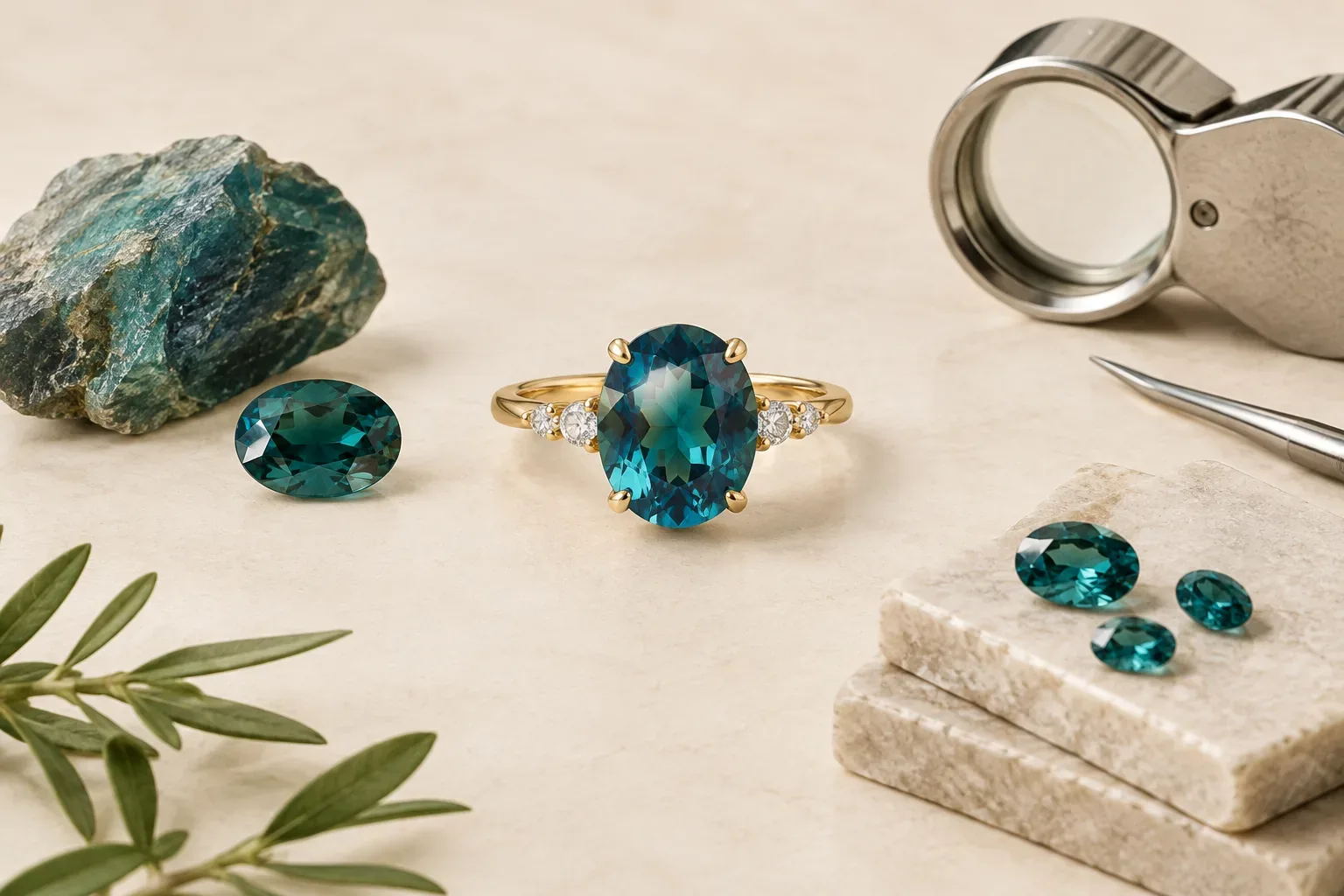
Teal sapphires appear in a range of jewelry styles, from solitaire engagement rings and halo settings to pendants and cluster earrings. Their blue-green tones make them popular as center stones or as colored accents against diamonds or other gems. Industry reporting shows increased consumer interest in gemstone rings and sculptural pieces, which helps explain why unique sapphire hues such as teal have gained visibility in recent years.
In practical terms, teal sapphires are cut and set like other sapphires: common shapes include oval, cushion, and round cuts that emphasize color while maintaining structural strength. Settings that protect the girdle and corners—such as bezel or partial-bezel mounts—are often recommended for rings to reduce the chance of chipping, especially for stones intended for daily wear.
Selection criteria: what to consider when buying or gifting
Decide what matters most: color saturation and tone, clarity, size, origin (natural vs lab-grown), and treatments. Strong, even teal color may command a higher price, but very vivid color can coincide with higher visibility of internal features. Buyers should request clear written disclosures about whether a stone is natural, lab-grown, or treated, because treatments affect value and care requirements. The Federal Trade Commission advises that consumers need clear distinctions among natural, lab-created, treated, cultured and imitation materials and that sellers provide written disclosures.
Ask the seller whether the stone has undergone heat treatment, diffusion, fracture-filling or other enhancements. The Gemological Institute of America highlights that treatments and their detectability have direct implications for durability and care. Some treatments are routine and stable, while others may reduce resistance to cleaning methods or change how the stone responds to heat and chemicals. If the buyer needs certainty about treatment or origin for insurance or heirloom purposes, ask for a gemological report issued by a qualified laboratory; many determinations cannot be reliably made by eye or by a retail salesperson alone.
Match the setting and jewelry type to the intended use. For an everyday ring choose lower-profile settings that shield the stone’s edges; for active wearers consider pendants or earrings which are less exposed to knocks. If gifting, consider the recipient’s lifestyle and whether they prefer a bold center stone or a more subtle accent piece. Where budget matters, treated or smaller stones can deliver attractive teal color at lower cost, but require clear disclosure and possibly gentler care.
Practical trade-offs and decision checkpoints
Color versus clarity: a richly saturated teal may hide some inclusions, letting you prioritize color over clarity, but large or surface-reaching inclusions can lower toughness and make chips more likely. Balance what you value most and inspect stones under good light before purchase.
Untreated versus treated stones: untreated gems can carry a premium but often show more natural inclusions; many treated sapphires are more affordable and visually attractive. Because treatment type alters long-term care needs, obtain documented disclosure—FTC guidance emphasizes written seller disclosures for treated versus natural gems.
Lab-grown versus natural: lab-grown sapphires can offer consistent color and lower price; they may be as hard as natural corundum, but buyers should ensure accurate labeling and documentation. A reputable seller will make these distinctions clearly.
Safe care guidance for daily wear
For routine cleaning of a teal sapphire set in metal, use warm water, mild dish soap, and a soft brush, then rinse and dry with a soft cloth. This approach is broadly safe for hard corundum and is commonly recommended for colored gemstones, but always follow any seller-specific care instructions tied to disclosed treatments.
Avoid exposing treated stones to aggressive ultrasonic cleaners, steam, or harsh chemicals unless you have written confirmation from the seller or lab that the stone’s particular treatment and condition make such methods safe. The Gemological Institute of America explains that detectability and durability of treatments vary, so confirm before using deep-cleaning techniques.
Inspect settings periodically and have prongs or mountings checked by a jeweler at least annually for pieces worn daily. If a stone shows chips, loosening, or surface changes, stop wearing it and seek professional assessment, because physical damage may propagate if left unaddressed.
What you can and cannot verify yourself
You can check color, visible inclusions, and the quality of the setting yourself under good light, and you can request written statements about whether the stone is natural, lab-grown, or treated. The Federal Trade Commission recommends that buyers obtain clear written disclosures from sellers when purchasing gemstones.
You cannot reliably verify certain treatments, diffusion processes, or geographic origin without instrumentation and expertise. For these determinations you will need a qualified jeweler or a gemological laboratory report. If a seller claims a particular origin or treatment status that matters to you, ask for an independent laboratory report and insist on written disclosure.
Practical buying and gifting checklist
Before buying or gifting a teal sapphire, ask for written disclosures about natural versus lab-grown status and about any treatments. Request a return policy and any care recommendations in writing. Choose a setting appropriate to intended daily wear—low-profile or protective mounting for rings, or pendants and earrings for more vigorous lifestyles. If provenance, treatment status, or durability under specific cleaning methods is critical, request a third-party lab report before completing the purchase.
Quick summary and final guidance
Teal sapphires combine sapphire-level hardness and generally good toughness with an attractive blue-green color that suits many jewelry styles. Their suitability for daily wear depends on treatment status, cutting and setting choices, and the wearer’s lifestyle. Use seller disclosures and, when needed, a gemological laboratory report to settle questions about treatment and origin. Ask for protective settings and routine maintenance checks to maximize longevity.
Frequently asked questions
Is a teal sapphire suitable for everyday wear?
Yes—teal sapphires are generally suitable for daily wear because they are corundum and resist surface abrasion, but the stone’s cut, setting, any treatments, and the wearer’s activities affect real-world durability. Ask the seller for treatment disclosures and choose a protective setting for rings.
How can I tell if a teal sapphire has been treated?
You should request written disclosure from the seller; some treatments are visible only with gemological testing. The Gemological Institute of America recommends treating treatment status as a material consumer question and seeking lab verification if the answer affects purchase or care decisions.
Can I clean my teal sapphire at home?
For routine cleaning, warm soapy water and a soft brush followed by a rinse is generally safe, but avoid ultrasonic or steam cleaning unless the seller or a lab report confirms the stone and its treatment are stable under those methods.
Do I need a lab report for a teal sapphire purchase?
If origin, treatment status, or high value matters to you, a gemological laboratory report provides authoritative information that cannot be reliably determined by eye. The Federal Trade Commission advises obtaining clear written disclosures from sellers about material distinctions.
What settings are best for teal sapphire engagement rings?
Protective settings such as bezels or lower-profile prongs help shield the girdle and corners, reducing the risk of chipping for rings intended for daily wear. Have settings inspected regularly by a jeweler.
Sources and further reading
- Imaginaire Digital — Imaginaire Digital
- Professional Jeweller / PRYA Jewellery Search Insights — Professional Jeweller / PRYA Jewellery Search Insights
- Gemological Institute of America — Gemological Institute of America
- Federal Trade Commission — Federal Trade Commission