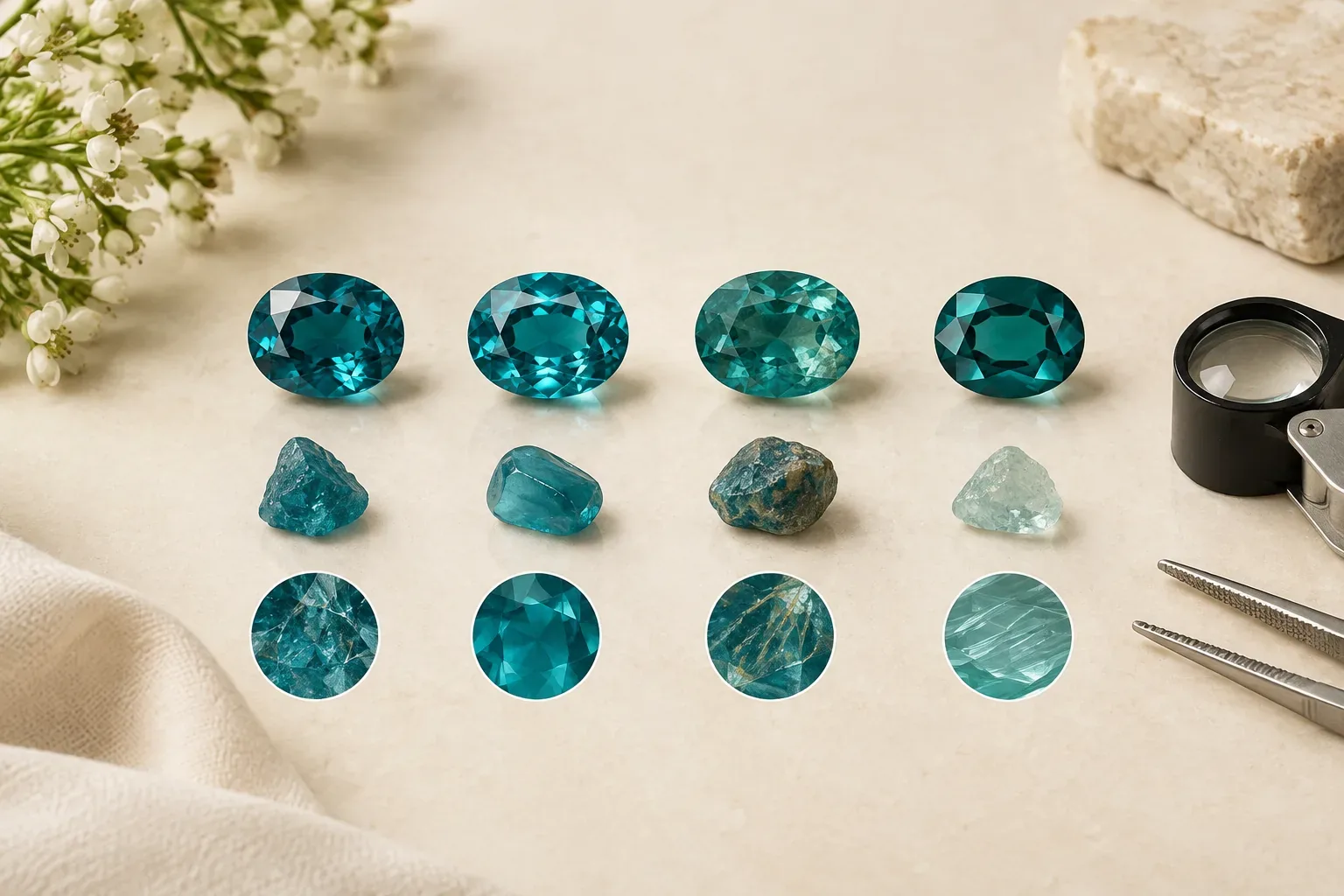
Meaning at a glance
A teal sapphire authenticity guide must define natural, lab-grown, treated and imitation stones; give clear decision criteria and trade-offs (price, disclosure, durability, traceability); offer safe care steps; and state what only a qualified jeweler or gemological laboratory can confirm. Reliably verifying origin or subtle treatments usually requires professional testing and documentation, while informed buying decisions rely on seller disclosures, reputable retailers, and gem reports.
Definitions you need
Natural teal sapphire: A corundum (the mineral family of sapphires) that formed in nature and shows mineralogical characteristics typical of natural stones. Determining whether a sapphire is natural versus lab-grown or a simulant typically requires gemological tools and expertise. The GIA outlines how treatments and detectability make accurate classification a technical matter.
Lab-created (synthetic) teal sapphire: A synthetic corundum grown in a laboratory that has the same chemical composition and crystal structure as a natural sapphire but a known laboratory origin. The FTC requires sellers to disclose lab-grown materials as such rather than labeling them simply as “real” or “natural.”
Treated teal sapphire: A natural or lab-created sapphire that has been altered to improve color, clarity or stability—common treatments for sapphires include heat and diffusion. According to the GIA, such treatments have different detectability and durability implications, and must be disclosed to buyers.
Imitation or simulant teal sapphire: A non-corundum material (glass, cubic zirconia, or other gemstones) that looks like teal sapphire but is chemically different. The FTC’s guidance stresses that imitations must be described plainly to avoid consumer confusion.
Historical evidence and cultural context (what the approved sources cover)
The approved sources for this article focus on market patterns, treatment disclosure and consumer protection rather than primary cultural histories of sapphires. Professional Jeweller and PRYA Jewellery Search Insights report the evolution of jewelry trends, noting revivals such as Art Deco and sculptural design that influence how colored stones are used in modern pieces. Imaginaire Digital’s search analysis shows ongoing consumer demand for engagement-related settings and certain stone shapes, which affects how teal sapphires are marketed today.
For historical symbolism across distinct cultures and periods, the citations available here do not provide primary historical narratives. That means this guide separates documented modern trade and disclosure practice (from GIA and the FTC) from historical lore: the trade sources explain how sapphires are treated and sold now, while trend publishers describe which styles bring colored stones back into fashion.
Documented historical meanings versus modern personal interpretation
Because the approved sources do not record detailed historical beliefs about teal sapphires, this guide does not attribute specific ancient or cultural meanings to them as documented facts. Documented modern issues are well covered: the GIA documents treatment practices and their implications for disclosure and durability, while the FTC documents consumers’ legal protections regarding truthful labeling.
Modern personal interpretations—what a giver or wearer feels a teal sapphire means today—are subjective. Jewelry trend analyses from Professional Jeweller and Imaginaire Digital show that consumers are choosing colored gemstones for personal expression, vintage references, and engagement alternatives, but these publications present market data and trends rather than universal symbolic claims.
How teal sapphires appear in jewelry
Teal sapphires are used in the same types of settings as other colored sapphires: engagement rings, halo and solitaire rings, pendants, earrings and statement cocktail pieces. Trade reporting from Professional Jeweller highlights a resurgence of sculptural and Art Deco-inspired settings; these styles often frame colored gems in geometric or cluster arrangements that emphasize hue and cut.
Market research such as Imaginaire Digital’s search analysis shows strong consumer interest in engagement shapes and classic settings, which affects how sellers present teal sapphires—ovals and cushions are commonly marketed for rings, while mixed cuts appear in necklaces and earrings. Whether the stone is natural, lab-created or treated affects price, disclosure and sometimes the setting choice, because certain treatments may influence long-term care or insurance considerations.
Practical selection and gifting guidance
Decide your priority: budget, origin transparency, long-term durability, or traceability. A natural untreated teal sapphire typically commands a premium; a lab-created stone offers comparable appearance at lower cost with easier traceability if the seller discloses origin; treated stones can offer strong color at lower cost but require clear disclosure. The FTC requires accurate written description of whether a stone is natural, lab-created or a simulant, so ask for that information in writing before purchase.
Buy from sellers who provide written documentation. For natural or high-value stones, request a current gemological report from a recognized laboratory. The GIA explains that many treatments are technically detectable but not always obvious without laboratory methods, which is why independent reports and clear seller disclosure matter.
When gifting, match the recipient’s expectations: if they value natural origin or investment potential, prioritize a disclosed natural stone with a lab report. If they prioritize color and value over origin, a disclosed lab-grown stone or a well-disclosed treated stone may be appropriate. For heirloom or engagement gifts, consider insuring the piece and keeping documentation together.
What you can reasonably verify yourself
Check seller disclosures and paperwork before purchase. The FTC makes clear that sellers must distinguish among natural, lab-created, treated and imitation stones in writing, so that paperwork is your first and most reliable check.
Perform non-destructive visual checks: look for bubbles or layering that suggest glass, check for consistent color zoning that might indicate treatment or diffusion, and inspect the mounting for any hallmarks of quality. These visual clues can raise red flags but are not definitive evidence of origin or treatment.
Know the limits: only a qualified jeweler with gemological instruments or a gemological laboratory can reliably differentiate natural from synthetic corundum, and many treatments (especially heat treatment or surface diffusion) require advanced testing to detect, as GIA explains.
Trade-offs and common practical considerations
Price versus provenance: Natural, untreated teal sapphires are typically the most expensive. Lab-created sapphires offer similar optical properties for lower cost and are fully legitimate when disclosed. Treated stones provide strong color at lower price but may affect resale and insurance.
Durability and care: Corundum (sapphire) is a hard material, but treatments and certain mounting choices affect long-term wear. The GIA notes that treatments and durability are important consumer questions. Avoid ultrasonic cleaning for stones with unclear treatment histories and follow care advice from a qualified jeweler.
Resale and documentation: Lab reports and clear seller provenance improve resale prospects and facilitate insurance. Without documentation a buyer assumes additional risk; the FTC’s guidance emphasizes written disclosure to reduce that risk.
Safe care basics
Treat all purchases conservatively until you know origin and treatment. Clean sapphires with warm soapy water and a soft brush; avoid harsh chemical cleaners or aggressive ultrasonic cleaning unless a qualified jeweler confirms the stone’s treatment status and suitability.
When in doubt, ask a jeweler for a professional cleaning and inspection. For high-value stones, request a post-purchase verification from a recognized gemological laboratory if origin or undisclosed treatments are a concern.
When to seek professional testing
If the stone is high value, if you suspect misrepresentation, or if you need a definitive origin for insurance or resale, obtain a report from a recognized laboratory. The GIA describes laboratory testing as the reliable route to detect many treatments and to determine origin when feasible.
If a seller will not provide clear written disclosure or a report on request, treat that as a red flag. The FTC’s consumer guidance indicates that clear written distinguishing of natural, lab-grown and imitation materials is an established consumer right.
Final checklist before purchase
Obtain written disclosure of natural vs lab-grown vs imitation status. Ask for a current independent report for expensive pieces. Inspect the setting, request condition photos or videos, and confirm return and warranty policies.
If you value historical or cultural symbolism, discuss the meaning with the recipient: modern interpretations are personal and may be more meaningful than assumed historical lore. Use trusted sellers and documentation to align expectations with the item’s factual origin and treatment status.
Frequently asked questions
Can I tell whether a teal sapphire is natural just by looking at it?
No. Visual inspection can reveal clues that suggest a stone is an imitation or has surface treatments, but distinguishing a natural corundum from a lab-created corundum or detecting many treatments usually requires gemological instruments and expertise. The GIA explains that detectability and treatment disclosure are technical issues, and the FTC recommends obtaining clear written disclosure from the seller.
Do sellers have to disclose if a sapphire is lab-created or treated?
Yes. The Federal Trade Commission advises that sellers must clearly distinguish between natural, lab-created, treated and imitation materials in writing. Ask for explicit written statements and, for higher-value purchases, an independent laboratory report.
Are lab-created teal sapphires a good value?
Lab-created sapphires offer genuine corundum optical and physical properties at lower cost than comparable natural stones. If origin transparency and lower price are priorities, a disclosed lab-created sapphire can be a strong choice. Ensure the seller labels the stone accurately.
What care steps should I take for a teal sapphire?
Clean most sapphires with warm soapy water and a soft brush and avoid aggressive ultrasonic cleaning or steam unless a qualified jeweler confirms the stone’s treatment status and suitability. The GIA highlights that treatments and durability factors are important for safe care decisions.
When should I get a laboratory report for a teal sapphire?
Obtain a lab report when the stone is high value, when you need definitive origin or treatment information for insurance or resale, or when the seller cannot provide clear written disclosure. The GIA notes laboratory testing is the reliable route for detecting many treatments and determining origin when feasible.
Sources and further reading
- Imaginaire Digital — Imaginaire Digital
- Professional Jeweller / PRYA Jewellery Search Insights — Professional Jeweller / PRYA Jewellery Search Insights
- Gemological Institute of America — Gemological Institute of America
- Federal Trade Commission — Federal Trade Commission