Meaning at a glance
Opal durability is a balance of modest surface hardness and relatively low toughness, so safe daily use depends on the type of opal, protective setting, wearer lifestyle, and verified seller disclosures; for high-value pieces ask for a gemological report and follow conservative care and setting choices.
Quick answer
Short answer: opal is not a 'hardy' everyday gemstone in the way sapphire or diamond are. It combines a softer surface hardness with vulnerability to impact and environmental stresses, so whether an opal is suitable for daily wear depends on the specific material (solid, assembled, or synthetic), the setting design, the wearer’s activities, and clear seller disclosure. For valuable or sentimental pieces, get written disclosure and consider a gemological report from a qualified laboratory; the Federal Trade Commission recommends that sellers distinguish natural, lab-created, treated, and imitation materials in writing.
Durability terms defined
When shoppers ask about opal durability they are usually asking two related questions that require distinct definitions. Hardness describes how resistant a mineral’s surface is to scratching in normal contact with other materials. Toughness (or fracture resistance) describes how well a gem resists breaking, cracking, or chipping when struck or dropped. A durable jewelry gemstone needs both sufficient surface hardness for daily contact and enough toughness to survive impacts or pressure.
Trade and consumer resources highlight the importance of these distinctions because treatments and special care affect both surface condition and structural integrity; gem-treatment, disclosure, detectability, durability and special care are common consumer questions emphasized by the Gemological Institute of America.
What the approved evidence set says about opal durability and disclosure
The Gemological Institute of America places opal durability questions within its broader guidance on gem treatments, detectability and special care; consumers should therefore expect that treatments and assembled constructions materially affect durability and require disclosure. The U.S. Federal Trade Commission advises that sellers provide clear written distinctions among natural, lab-created, treated, and imitation materials. In other words, durability for a specific opal is not only a property of the stone itself but also of how it was made, treated, and set.
Market reporting in the approved evidence set indicates rising consumer interest in opal and gemstone rings, which makes durability and disclosure more relevant to shoppers today. Professional Jeweller and industry search research identify opal and gemstone rings among growing trends, and UK search estimates show ongoing demand for engagement and gemstone rings; increased buyer interest creates a need for clear treatment disclosure and consumer education.
Documented historical meanings versus modern personal interpretations
This guide separates documented historical statements from modern interpretations because the approved evidence set does not include primary historical sources on cultural beliefs about opal. The four approved references focus on consumer guidance, trade trends, and gem-treatment principles rather than on historical or anthropological records.
Modern personal interpretations of opal — for example as birthstone choices or expressive centerpieces in contemporary sculptural jewelry — are documented in current trade reporting that shows an uptick in demand for opal and gemstone rings and for birthstone necklaces. Those trends reflect present-day consumer taste rather than a verified, universal cultural symbolism; they are modern marketplace phenomena recorded by industry publishers.
How opal appears in jewelry and what that means for durability
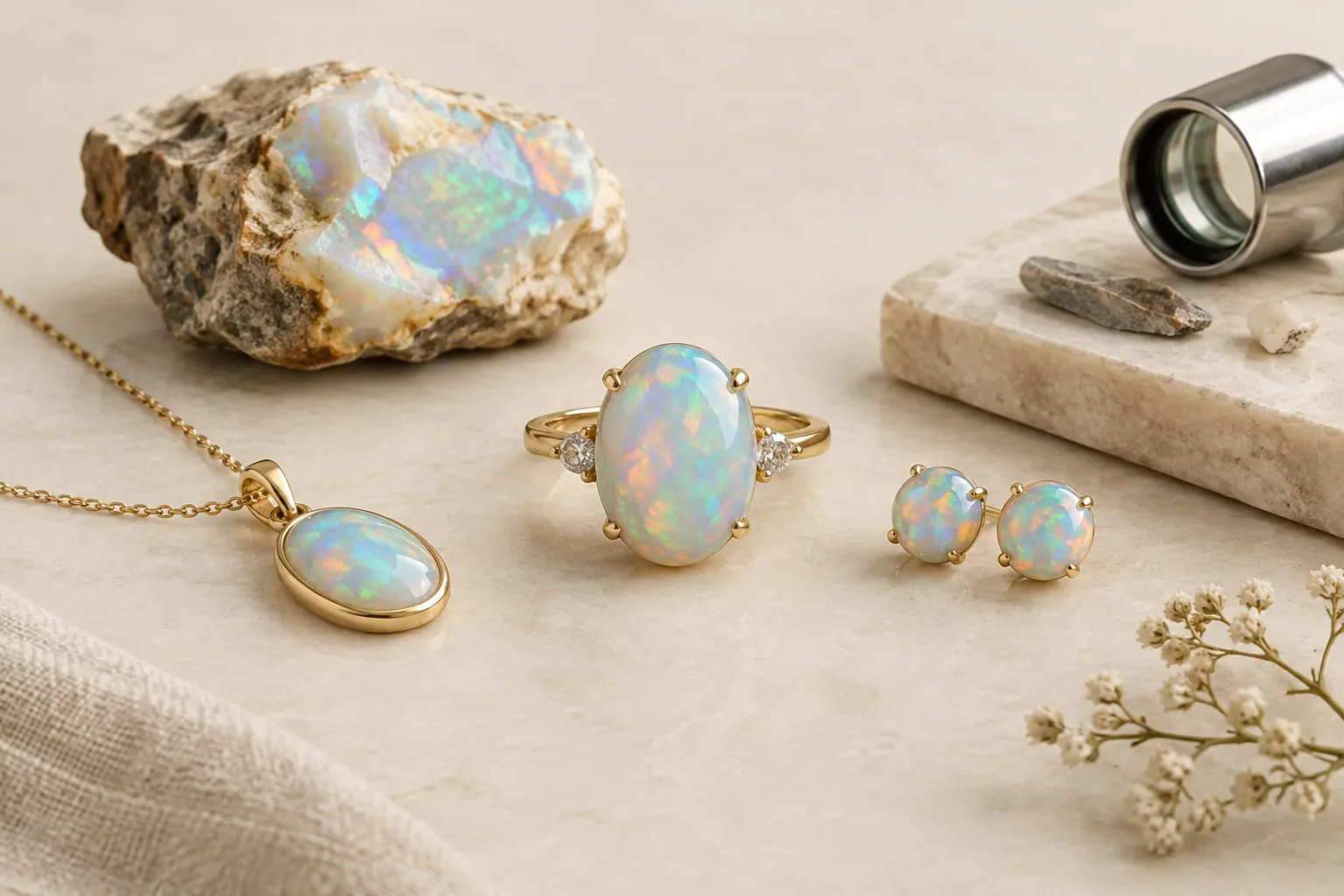
Opal is offered in several commercial forms that affect durability: solid (single-piece) opal and assembled opals that combine an opal layer with backing or protective caps. Assembled stones are often constructed to improve appearance or reduce cost, but construction changes how the stone behaves under stress. The presence of layers, backing materials, or glues changes impact resistance and water behavior, and therefore affects which cleaning methods and settings are appropriate.
Design choices influence performance. Protective settings such as bezels or recessed centers reduce edge exposure and help protect against knocks. Open prong settings expose more edge and increase the risk of chipping. Necklaces and earrings typically subject opals to less impact than rings and are therefore safer daily options for softer or assembled opals. Contemporary sculptural and cluster styles that the trade notes as trending can both highlight opal and increase the need for protective design considerations.
Decision criteria: choosing opal for daily wear
Decide with three priorities: the wearer’s lifestyle, the opal’s construction and disclosure, and the setting design. If the recipient leads an active life or regularly handles tools, sports, or manual tasks, avoid exposed opal ring centers and favor pendants, earrings, or bezel-set stones. For people with gentler daily routines, a solid opal in a protective setting can be reasonable for frequent wear.
Demand clear written disclosure from the seller about whether the stone is natural, lab-grown, assembled, or treated; the Federal Trade Commission specifically recommends that consumers require these distinctions in writing. For mid- to high-value purchases, insist on a gemological report or appraisal from an accredited laboratory or qualified jeweler before purchase. The Gemological Institute of America and other lab authorities can identify treatments and assembled constructions that significantly alter both value and care needs.
Practical trade-offs and common buyer strategies
There are trade-offs between beauty, cost, and long-term durability. Assembled opals and triplets can offer vivid color and lower price, but glue lines and softer cap materials change care needs. Solid opal tends to be more repairable and stable but can be costlier. Protective settings reduce visible surface area but improve survivability under everyday use; that is a rational trade-off for a sentimental piece.
Buyers often select opal for jewelry types with lower impact risk to enjoy the stone without frequent repairs. Alternatively, buyers who prefer rings choose designs with thicker bezels, lower-profile settings, and occasional professional inspections to catch loosening or surface wear early.
Safe care guidance for opal jewelry
Treat opal jewelry conservatively. Avoid hard knocks, heavy manual tasks, sport, and sleepwear while wearing opal. Store opal pieces separately in soft pouches or padded compartments to prevent abrasion from harder gems or metal. Clean gently with a soft cloth and mild, non-abrasive soap and rinse carefully; if a seller’s documentation or a lab report identifies treatments or adhesives, follow any additional care instructions they provide.
Before using commercial ultrasonic cleaners or steam cleaners, check the vendor’s written disclosure and consult a qualified jeweler. Many special-care warnings apply to assembled or treated gems, and only a qualified gemologist or laboratory can reliably identify vulnerabilities introduced by certain treatments or constructions. Schedule periodic inspections with a trusted jeweler to check settings and stone stability.
What a shopper can and cannot verify without a laboratory
Shoppers can verify several practical items without a lab: ask the seller for written disclosure about whether the opal is natural, treated, lab-created, or assembled; inspect the setting and construction in person or in clear photos; and judge whether the design exposes edges or creates a low-profile bezel that offers protection. Use marketplace trend reports and seller reputation to inform expectations about quality and service.
Shoppers cannot reliably determine stone treatments, whether an opal is an assembled doublet or triplet, or geographic origin with the unaided eye. For these confirmations, request a report from a recognized gemological laboratory or an identification by a qualified jeweler. The Federal Trade Commission emphasizes written disclosure from sellers, and the Gemological Institute of America documents that treatments and detectability create distinct consumer questions; a lab report is the standard way to resolve those questions for valuable purchases.
Selection and gifting guidance
When selecting an opal as a gift, match the choice to the recipient’s routine and the occasion. For an everyday piece, prefer a design that reduces impact risk: pendants, earrings, and bracelet charms set with a protective bezel are suitable. For rings intended only for occasional wear, you can choose a more open setting but communicate usage expectations clearly to the gift recipient.
Ask the seller for written disclosures and care instructions at the time of purchase. For significant purchases, request a gemological report and a return policy that allows verification. Consider offering the recipient a protective care allowance such as a recommended storage box or insurance appraisal. If you prefer alternative options with higher abrasion resistance for daily wear, related gemstone pieces such as moonstone, onyx, or amethyst can be good substitutes depending on taste and lifestyle; our related articles explore their histories and care.
When to consult a professional
Consult a qualified jeweler or gemological laboratory when the purchase price is substantial, when the seller’s disclosure is incomplete, or when you need to confirm treatments, assembled construction, or origin. Professionals can conduct tests that are not possible in a retail setting and can advise on re-setting, repairs, or conservation measures.
Ask independent appraisers about recommended insurance coverage for high-value pieces and for written maintenance schedules. Routine professional checks can extend the life of an opal piece and reduce the risk of accidental damage.
Frequently asked questions
Is opal suitable for daily wear?
Opal can be suitable for daily wear only when the stone type, setting, and wearer’s lifestyle align. Choose protective settings and lower-impact jewelry types like pendants or earrings for frequent wear. For rings, prefer solid opal in a protective bezel and accept that occasional professional inspection is wise.
How should I clean and store opal jewelry?
Clean opal gently with a soft cloth and mild, non-abrasive soap if needed, then rinse and dry thoroughly. Store in padded compartments or soft pouches away from harder gems and metals. Consult seller disclosures or a jeweler before using ultrasonic or steam cleaning.
Can I tell if an opal is natural or assembled by looking?
You cannot reliably identify treatments, assembled constructions, or origin by sight alone. The Federal Trade Commission advises getting written seller disclosures and the Gemological Institute of America recommends laboratory identification when treatments or detectability are in question.
What should I ask the seller before buying an opal?
Request written disclosure specifying whether the stone is natural, lab-created, treated, or assembled; ask for details about setting and any care instructions; and for higher-value pieces, request a gemological report from a recognized laboratory or an independent appraisal.
Are there safer alternatives to opal for everyday jewelry?
Yes. If you need a more abrasion- and impact-resistant alternative for everyday wear, consider gemstones with higher toughness and hardness. Our related articles on moonstone, amethyst, and onyx discuss their histories and care and can help you compare options.
Sources and further reading
- Imaginaire Digital — Imaginaire Digital
- Professional Jeweller / PRYA Jewellery Search Insights — Professional Jeweller / PRYA Jewellery Search Insights
- Gemological Institute of America — Gemological Institute of America
- Federal Trade Commission — Federal Trade Commission