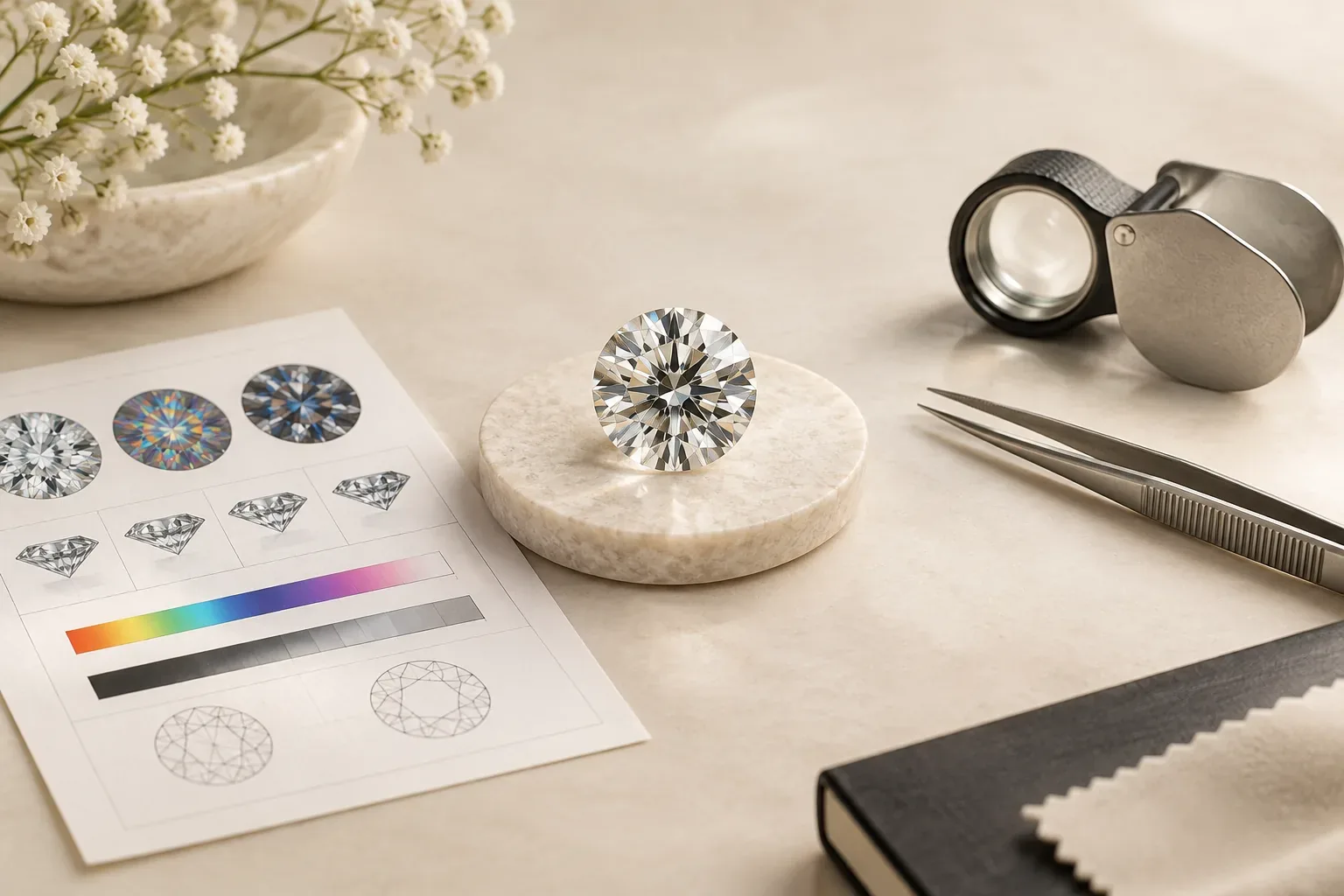
Meaning at a glance
A diamond light performance report is a modern, laboratory-style tool that quantifies how a diamond returns light (brightness, fire, scintillation) and helps shoppers weigh visual performance against price and other attributes; the report can be read using clear definitions and decision criteria, but some claims and durability or treatment questions require a qualified jeweler or gemological laboratory to verify.
What a light performance report is (evidence-led definition)
Light performance reports are technical summaries intended to describe how a particular diamond handles light: how much white light it returns (brightness), how much color separation it shows (fire), and how dynamic the sparkle is as the stone moves (scintillation). Laboratories or vendors often produce diagrams or numeric indexes to convey those effects. These reports are a consumer tool for judging appearance, not a standalone guarantee of material origin or long-term durability.
Historical evidence and the modern emergence of performance reports
There is no historical precedent for 'light performance reports' in pre‑modern jewelry practice; the idea of measuring optical performance is a product of modern gemology and consumer testing. According to the Gemological Institute of America, contemporary consumer questions about treatments, detectability and disclosure have driven laboratories and the trade to develop objective testing and reporting standards for gemstones and diamonds rather than relying on traditional, qualitative descriptions.
Because the reports are a technical, late‑20th/21st‑century development tied to laboratory gemology and retail transparency, they should be treated as modern scientific tools rather than cultural or historical symbols. Historical meanings attached to diamonds (status, endurance, etc.) are a separate area of study and do not substitute for laboratory measurements of optical performance.
Documented technical components versus modern personal interpretations
Documented technical components of a light performance report are objective measurements or standardized visualizations produced by instrumentation or calibrated imaging. Typical components include a light map or ray-tracing image, numerical indexes for brightness/fire/scintillation, and notes about how the stone was oriented during measurement.
Modern personal interpretations—for example, attaching personality traits or spiritual properties to a high 'fire' score—are subjective responses to appearance and fall outside the documented, evidence‑based content of the report. Distinguish the laboratory observations from what the stone means to a wearer; both are valid, but only the former is verifiable by instruments and laboratories.
How those measurements appear in jewelry
Light performance is a practical influence on how diamonds look in settings you will wear. A diamond with strong overall light return will appear bright in a ring or stud; a stone with pronounced fire may show colorful flashes under certain lighting, which many buyers find attractive in solitaire engagement rings, earrings and pendants. Market demand for styles such as engagement rings, diamond studs and tennis bracelets remains high, and shoppers often use light performance to choose stones for these pieces, as shown by contemporary market research trends cited by Imaginaire Digital.
Different settings and metal colors change perceived performance. Open-prong settings and white metal usually enhance perceived brilliance, while deeper settings or warm-colored metals can mute or shift visible light effects. A light performance report describes the stone alone; the final look depends on the setting and environment where it will be worn.
Decision criteria and practical trade-offs
Use a light performance report in combination with cut, color and clarity information. If your primary goal is visible sparkle in everyday light, prioritize metrics and imagery that indicate strong light return and balanced scintillation. If you prefer bright white appearance over colored flashes, weight the 'brightness' measures more heavily than 'fire' in your decision.
Expect trade-offs. High-performance optical grading can come at higher price-per-carat; extremely high light-performance indices sometimes coincide with stricter cut proportions that affect weight retention. Conversely, a lower-priced stone can look excellent in real-world wear if its light return suits your viewing conditions and setting style. The Federal Trade Commission advises consumers to seek clear disclosures and written descriptions that distinguish natural, lab-created, treated and imitation materials, which also affects price and resale expectations.
Safe care guidance, treatments and disclosure
Light performance reports describe optical behavior, not treatments or origin. For questions about treatments, durability and special care, consult the Gemological Institute of America’s guidance on treatments, detectability and disclosure. Some treatments can change optical appearance or require special care; GIA explains why disclosure and laboratory testing matter.
The Federal Trade Commission underscores the importance of written disclosures from sellers about material origin (natural vs lab-created), treatments and any special care needs. When buying a diamond based on a light performance report, ask the seller for full written disclosures about treatments and for any supporting laboratory documentation that specifically tests for treatments or origin.
What you can verify yourself and where you need a professional
You can use a light performance report to compare how two candidate stones are expected to look in standardized images or indexes and to judge which appearance you prefer. You can inspect stones in person to confirm that a report’s depiction aligns with real-world appearance under the lighting you will usually encounter.
You cannot reliably verify many technical claims—such as whether a treatment was applied, whether a reported optical map was generated under standardized conditions, or whether a stone’s material origin is natural or lab-grown—without a qualified jeweler’s loupe, specific testing equipment, or an accredited gemological laboratory report. For those verifications, the Gemological Institute of America and other laboratories provide tests that measure treatments, detectability and other properties that consumer equipment cannot.
Selection and gifting guidance
When selecting or gifting a diamond, first clarify the recipient’s priorities: maximum everyday sparkle, colorful fire, traditional white brilliance, or budget. Use a light performance report as a visual decision tool alongside standard grading information. Ask the seller for any independent laboratory reports that test for treatments or origin, and confirm written disclosures as recommended by the Federal Trade Commission.
For gifts meant to be heirloom pieces, prioritize documentation and durable settings and request professional mounting and inspection. If you are unsure about interpreting a performance report, arrange to see the stone in person and, where reasonable, seek a second opinion from an independent jeweler or a gemological laboratory before purchase. This approach keeps the emotional value of the gift while respecting technical limits of the reports.
Final note: limits of reports and reasonable expectations
Treat a light performance report as a powerful, modern tool for assessing how a diamond will look, but not as a substitute for full laboratory testing when questions about treatments, origin or long-term durability arise. The reports help you make evidence‑led aesthetic choices; for provenance or treatment verification, follow up with qualified jewellers and accredited laboratories and insist on clear written disclosures from sellers.
Frequently asked questions
What exactly does a diamond light performance report measure?
A light performance report documents how a diamond returns and disperses light—commonly described as brightness (white light return), fire (colored flashes) and scintillation (sparkle dynamics). It is a visual and technical summary of optical behavior, not a full provenance or treatment test.
Is a light performance report the same as a GIA grading report?
No. A GIA grading report focuses on the 4Cs and material identification; a light performance report concentrates on optical behavior. For treatment or origin verification you should rely on accredited laboratory reports such as those from recognized gemological institutions.
Can I verify a light performance report at home?
You can compare the report’s illustrations to how the stone looks under the lighting you expect to wear it in and check that the appearance matches the report. However, many technical verifications—especially detection of treatments or origin—require professional equipment or laboratory testing.
Do light performance reports cover lab-grown diamonds and treated stones?
Light performance reports can describe optical behavior of any polished material, but they do not by themselves determine whether a stone is lab-grown or treated. The Federal Trade Commission requires written disclosure of origin and treatments, and labs such as the Gemological Institute of America provide tests to confirm those aspects.
Should I insist on written disclosures when buying based on a report?
Yes. The Federal Trade Commission recommends clear written disclosures distinguishing natural, lab-created, treated and imitation materials. Request written documentation of treatments and any laboratory reports that confirm origin before purchasing.
How should I care for a diamond chosen for high visual performance?
Follow guidance from qualified gemological sources: clean diamonds regularly to maintain optimal light return, avoid harsh chemicals if the setting or any treatments demand special care, and seek professional inspections of the setting to prevent loss or damage. For treatment‑specific care, consult laboratory guidance such as that provided by the Gemological Institute of America.
Sources and further reading
- Imaginaire Digital — Imaginaire Digital
- Gemological Institute of America — Gemological Institute of America
- Federal Trade Commission — Federal Trade Commission