Meaning at a glance
This guide defines diamond light performance, explains practical durability and cleaning guidance, identifies repair limits, and lists decision criteria and consumer-level verifications backed by industry guidance and consumer-protection recommendations.
What we mean by 'diamond light performance'
In consumer terms, 'light performance' describes how a finished diamond returns light to the eye: brightness, fire (color flashes), and scintillation (sparkle when moved). Shaping (cut), polish, symmetry, and how the stone is set in jewelry all influence perceived light performance. Decisions about light performance are trade-offs: extreme brilliance in a particular cut may sacrifice weight, perceived size, or face-up color.
Historical evidence and documented records
Most robust documentary evidence cited by industry and consumer-protection organizations concerns trade practices, treatments, and disclosure rather than single symbolic meanings assigned by a particular ancient culture. The Gemological Institute of America (GIA) documents that treatments, disclosure, detectability, durability, and special care for gemstones are central consumer questions, and those themes have shaped modern standards for how gems are described and cared for. The Federal Trade Commission (FTC) emphasizes the need for clear written disclosures to distinguish natural, lab-created, treated, and imitation materials in the market. Contemporary commercial evidence about what shoppers search for online shows strong interest in engagement rings, studs, bracelets, and other diamond jewelry (Imaginaire Digital, 2026).
Separating documented history from modern interpretation
Documented history—according to the GIA and consumer-protection guidance—focuses on treatments, market descriptions, and durability characteristics rather than universal symbolic meanings that can be confidently claimed for every culture or period. Modern interpretations such as 'a diamond equals everlasting love' are popular cultural ideas and consumer narratives today, but they are social meanings that vary by region, community, and individual. When making care or purchase decisions, prioritize documented facts about a specific stone (treatment status, hardness, setting construction) over generalized symbolic statements.
How diamond light performance appears in jewelry
In finished jewelry, light performance is shaped by the diamond’s cut proportions, the precision of its facets, and the setting. Open-style settings that allow light from the side and beneath the stone often increase perceived brightness. Closed-back or heavily-bezeled settings can reduce visible return of light, changing perceived color and sparkle. Different jewelry types—stud earrings, solitaire engagement rings, tennis bracelets, and halo designs—use varying balances of cut and setting to prioritize brilliance, durability, or silhouette. Market demand data from Imaginaire Digital (2026) shows these categories are among the most commonly searched for, which helps explain why manufacturers and retailers emphasize visible brilliance in product imagery and descriptions.
Durability: what diamonds tolerate and what they don't
Diamonds are the hardest natural mineral on the Mohs scale, which makes them highly resistant to scratching in everyday wear. Hardness is different from toughness: diamonds can cleave or chip if struck at certain angles or if an inclusion creates a weakness. Settings and mounting materials (prongs, bezels) wear over time and are the usual points of failure that lead to loss or damage. The GIA cautions that treatments and durability concerns create distinct consumer questions, meaning that some modifications to gemstones change how they should be cared for and how they will behave under mechanical stress.
Cleaning: safe home practices and what to avoid
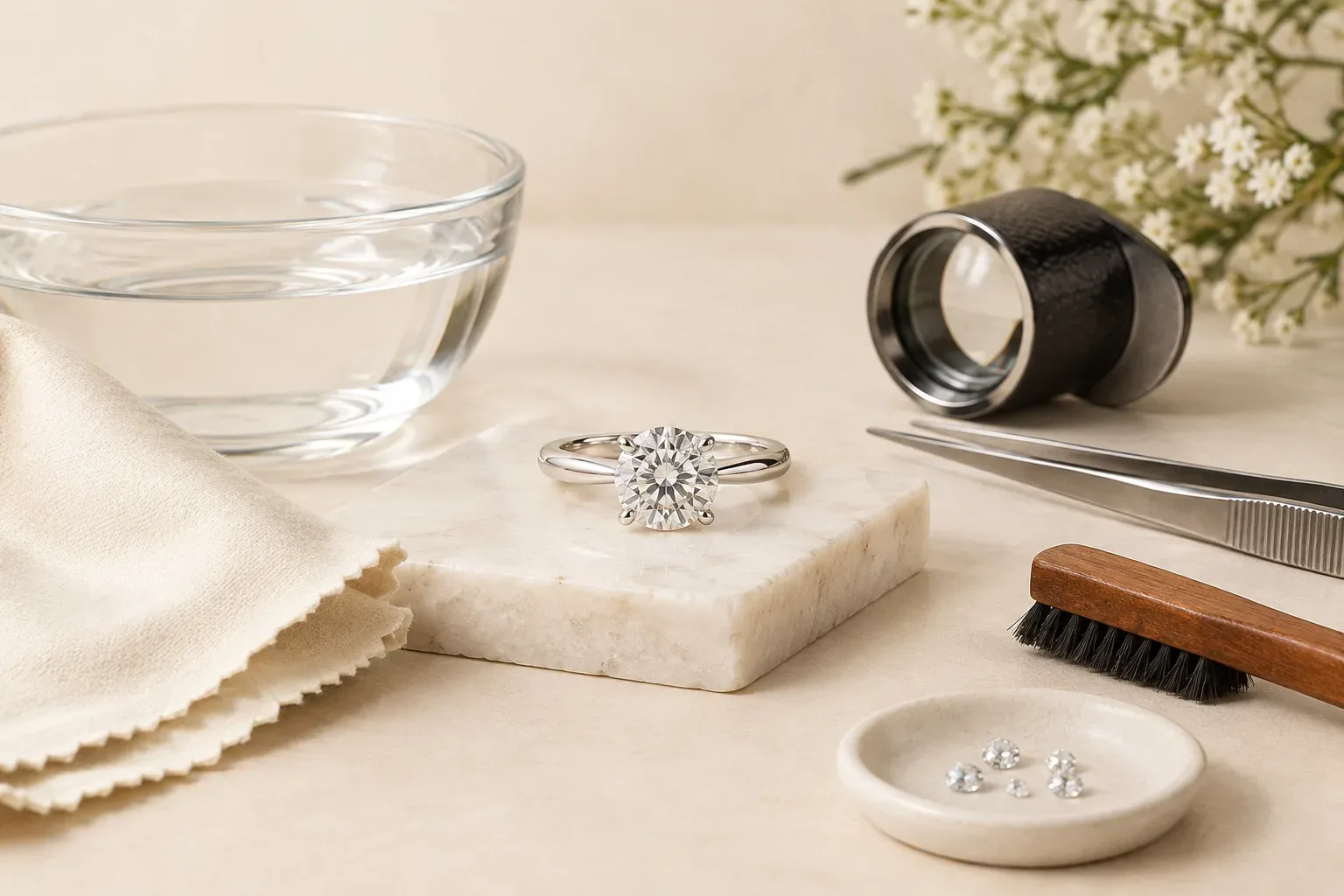
For routine cleaning, use warm water, a few drops of mild dish soap, and a soft-bristled brush to remove oils and surface grime. Rinse carefully and dry with a lint-free cloth. Avoid chlorine-based bleach, strong acids, or abrasive household cleaners that can harm settings or any metal plating. Ultrasonic and steam cleaners can safely clean many diamonds but are not universally safe: if a stone has been treated or has a fragile setting, such machines can cause damage or alter appearance. Because treatments and detectability are material consumer concerns documented by the GIA, treat ultrasonic and steam cleaning as conditional tools that should only be used after confirming a stone’s treatment status and the condition of its setting with a qualified jeweler.
Repair precautions and when to seek professional help
Never attempt to re-seat a loose stone or re-tip prongs at home. Professional repair is needed for prong replacement, re-tipping, sizing rings, soldering, or re-setting stones. A jeweler can assess whether a stone has been treated in ways that affect repair choices and can choose repair techniques and solders that are compatible with the metal and setting. For valuable or sentimental pieces, ask for documentation before and after repair and request that a qualified craftsman photographs the stone and setting before any invasive work.
Decision criteria and practical trade-offs for buyers
When choosing a diamond for appearance and everyday durability, weigh cut quality and the setting’s protection. A well-cut smaller diamond can out-perform a larger poorly cut stone in perceived brilliance; conversely, a heavier cut to retain carat weight may affect light return. Ask the seller for a graded report from an independent laboratory for higher-value purchases, and get written disclosure about whether the stone is natural, lab-grown, or treated as required by the FTC. Trade-offs include price versus verified light-performance claims, the desirability of a particular cut versus the ease of setting and cleaning, and the choice between a setting that maximizes sparkle versus one that prioritizes security.
Limits on what a shopper can verify without experts
Shoppers can inspect a stone for obvious damage, compare its visual sparkle under different lighting, and check that settings are secure. However, only a qualified jeweler or a gemological laboratory can reliably verify treatment history, confirm lab-grown origin versus natural origin, or provide authoritative grading of cut and light-performance metrics. The GIA and FTC both emphasize that treatments, detectability, and disclosure are technical topics that require specialized testing. For any claim about permanent treatment, light-performance measurements, or grading beyond visual inspection, obtain written documentation from an accredited lab or request an in-person evaluation by a qualified professional.
Practical selection and gifting guidance
When selecting or gifting diamond jewelry, ask for complete written disclosures and any laboratory reports, especially for higher-value items. Choose a setting appropriate for the recipient’s lifestyle: low-profile, bezel, or channel settings are often better for active wearers, while classic prong settings maximize visible brilliance for occasional wear. Include care instructions and encourage the recipient to have the piece inspected annually by a jeweler to check prongs and mounts. If purchasing online or from a marketplace, confirm return policies, grading-report authenticity, and the seller’s disclosure practices as recommended by the FTC.
Final practical checklist
For everyday care: clean gently with warm soapy water and a soft brush, store separately to avoid metal scratches, and remove jewelry for heavy manual tasks. For repairs and verification: do not attempt home repair, and seek a qualified jeweler or gemological laboratory for treatment verification, grading confirmation, or major restoration. Ask for written disclosures and independent lab reports and keep all paperwork with the jewelry for future maintenance and resale.
Frequently asked questions
Can I clean my diamond in an ultrasonic cleaner at home?
Ultrasonic cleaners can be safe for many diamonds, but they are not universally appropriate. If a stone has been treated, has surface-reaching inclusions, or sits in a fragile setting, ultrasonic cleaning can cause damage. The Gemological Institute of America (GIA) notes that treatments and detectability affect care choices; when in doubt, ask a qualified jeweler before using an ultrasonic cleaner.
How often should I have my diamond jewelry inspected?
Have settings and prongs inspected at least once a year, and more often for items worn daily. Annual inspection helps identify worn mounting elements before a stone becomes loose. For high-value or sentimental pieces, request a written condition report from your jeweler.
Can I verify a diamond’s treatment or origin myself?
No. Only a qualified jeweler with specialized equipment or an accredited gemological laboratory can reliably verify treatment history or origin (natural vs lab-grown). The FTC advises consumers to obtain clear written disclosures from sellers and to request laboratory reports for definitive verification.
What should I include when gifting a diamond to help with future care?
Include any grading reports, treatment disclosures, and written care instructions recommending gentle cleaning, avoidance of harsh chemicals, and regular professional inspections. Also provide the recipient with the seller’s contact details for warranty or repair queries.
Are diamonds immune to damage because they are hard?
No. Hardness resists scratching, but diamonds can chip, cleave, or fracture if struck at vulnerable angles, or if inclusions create weak points. Protect stones from hard knocks and have settings maintained to reduce the risk of loss or damage.
Sources and further reading
- Imaginaire Digital — Imaginaire Digital
- Gemological Institute of America — Gemological Institute of America
- Federal Trade Commission — Federal Trade Commission