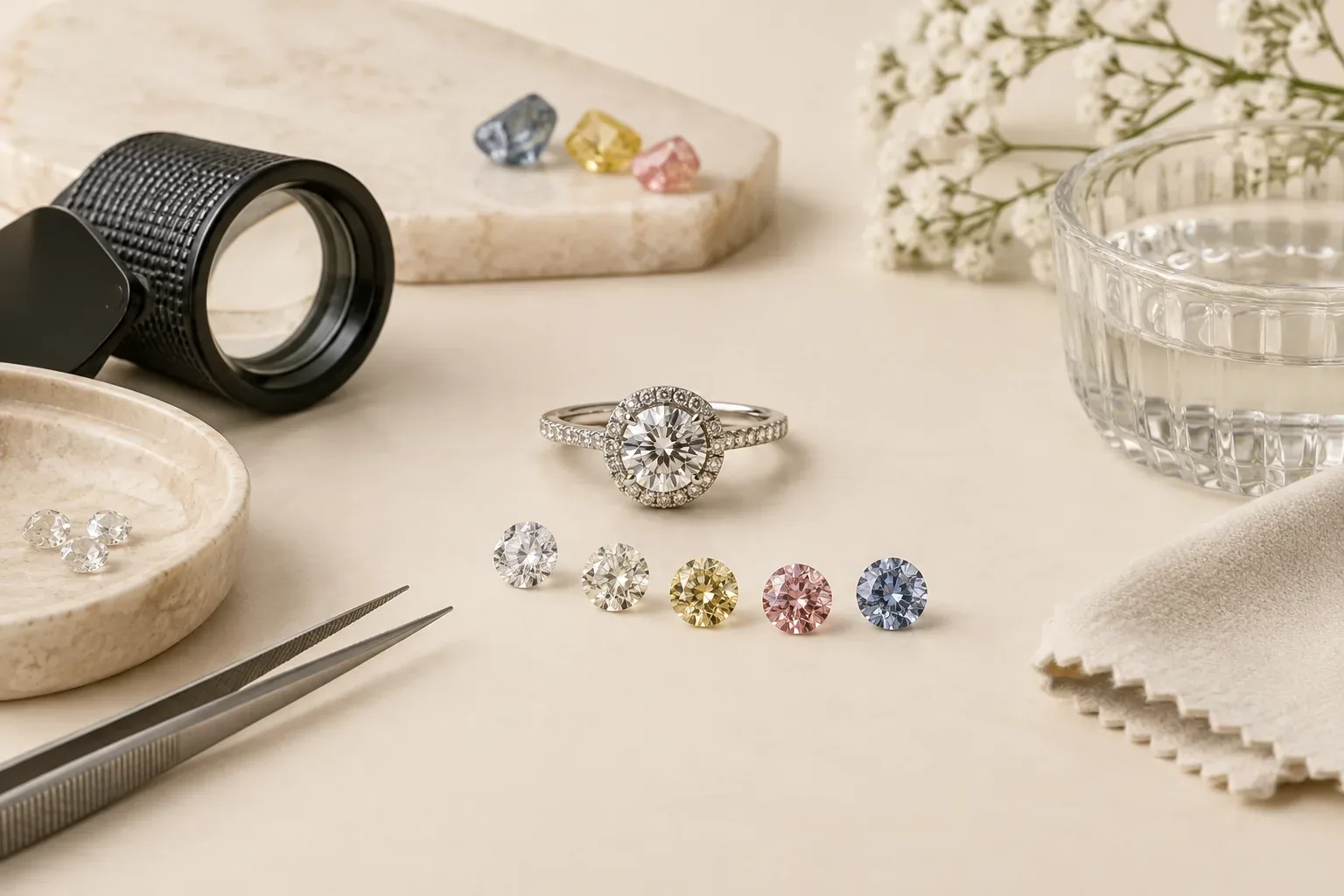
Meaning at a glance
This diamond color treatment care guide defines common treatment types, explains the trade-offs buyers face, and gives step-by-step care and repair precautions while clearly stating what only a qualified jeweler or gemological laboratory can confirm.
What "color treatment" means and the decision criteria buyers face
The term color treatment covers several distinct procedures that change or improve a diamond’s color. Some treatments alter the stone at a structural level and are intended to be permanent, while others are applied to the surface or fill fractures and can be removed, damaged, or changed during normal servicing. The Gemological Institute of America (GIA) describes treatments, their detectability, and their implications for durability and care; those distinctions are central to any purchase decision.
Buyers should evaluate four decision criteria: the type of treatment (structural versus surface), the intended use of the jewelry (daily wear versus occasional), the quality and transparency of seller disclosure, and the available independent verification (laboratory grading reports). Each factor changes the practical trade-offs between price, appearance, long-term stability, and resale value.
Historical evidence and how modern treatments emerged
Most documented evidence for deliberate color modification of diamonds comes from the modern scientific era rather than preindustrial cultures. The Gemological Institute of America documents the emergence and refinement of laboratory-based color modification techniques in the 20th century and afterward; these methods include high-temperature, high-pressure processes, irradiation, and surface treatments. In short, the technical history of diamond color treatments is rooted in modern gemological science rather than in ancient jewelry practices, a distinction GIA makes in its treatment literature.
Regulatory and marketplace responses are also modern developments. The Federal Trade Commission (FTC) has established consumer-protection expectations that require clear distinctions and seller disclosure among natural, lab-created, treated, and imitation materials. Those disclosure norms and enforcement actions are part of the contemporary history of how treated stones are sold and described to consumers.
Separating documented history from modern interpretation
Documented history, as recorded by institutions such as GIA and regulatory bodies such as the FTC, concerns who developed treatments, how treatments are detected, and how disclosure is required. For example, the scientific development of HPHT and irradiation treatments and the regulatory expectation of written disclosure are factual histories recorded by those organizations.
Modern personal meanings — such as whether a color-treated diamond is "less romantic" or "less authentic" — are subjective interpretations that vary by buyer, culture, and occasion. Imaginaire Digital’s consumer search data shows sustained modern demand for engagement rings and classic diamond forms, but it does not prescribe symbolic value. Separate the factual record about treatments and regulations from each buyer’s personal or cultural interpretation of what a treated stone represents.
How color-treated diamonds appear in jewelry
Color-treated diamonds appear across the market, from fashion jewelry to engagement rings and studs. Surface-coated diamonds are commonly used in lower-cost fashion pieces to create vivid hues. Structural treatments such as HPHT or irradiation are sometimes applied to melee or center stones intended for engagement rings and fine jewelry to improve color grade or to produce fancy colors that are rare in nature.
Appearance and mounting influence care needs. A treated stone set low in a ring or in a cluster will experience different exposure to cleaning and repair processes than a solitaire set with open prongs. Sellers and manufacturers may use treatments to achieve particular tonal effects in specific settings, but the way the treatment was applied determines how careful a buyer must be during cleaning and repair.
Durability: what to expect from common treatments
According to GIA, some treatments change the internal structure of a diamond and are intended to be permanent under normal wearing conditions. High-pressure, high-temperature (HPHT) treatment and certain irradiation-plus-annealing protocols can produce stable color changes that survive routine cleaning and handling.
By contrast, surface coatings and some fracture-filling or diffusion-style enhancements are more vulnerable. Coatings can abrade, cloud, or be removed by heat, strong solvents, polishing, or prolonged ultrasonic cleaning. Fracture-filling materials may be sensitive to heat and common repair procedures, and they can alter the stone’s appearance if the filler is compromised. These durability differences directly affect cleaning choices and repair precautions.
Cleaning and daily care recommendations
If the treatment is unknown, err on the side of caution. Use a gentle method first: warm water, a mild detergent (a few drops), and a soft-bristled brush. Rinse thoroughly and pat dry with a soft cloth. This method is safe for most diamonds and will avoid disturbing surface treatments that could be soluble or abrasion-prone.
Avoid steam cleaning, harsh chemicals (including bleach, household ammonia, and strong acids), and prolonged ultrasonic cleaning if you do not have explicit confirmation that the stone’s treatment is stable. Even when a seller asserts that a treatment is durable, ask whether the stone is recommended for ultrasonic or steam cleaning and request that guidance in writing. For high-value purchases, request a laboratory report that documents the treatment and its durability so you can follow laboratory-recommended care.
Repair precautions and what to tell your jeweler
Before any repair work, tell the jeweler the stone is treated and share any written disclosure or laboratory report you received. Routine repair tasks such as re-tipping prongs, soldering, polishing, and rhodium plating involve heat and chemicals; those processes can damage surface coatings or fracture filler materials. A competent jeweler will protect the treated stone or remove and safely store it during processes that could harm the treatment.
If the treatment is unknown and the piece is valuable to you, insist that the jeweler perform repairs with the stone removed or submit the stone for professional testing first. Only a jeweler with the right instrumentation or an accredited gemological laboratory can determine whether a stone is safe to expose to heat, steam, ultrasonic cleaning, or certain chemicals used in repair. The FTC’s guidance on disclosure reinforces that sellers should make treatment status clear so jewelers and buyers can make informed repair decisions.
Selection and gifting guidance
When selecting or gifting a diamond that may be color-treated, ask the seller for written disclosure and for the exact nature of any treatment. The FTC advises that consumers receive clear distinctions among natural, lab-created, treated, and imitation materials; request those distinctions in writing and keep them with the purchase documentation.
Decide whether you prioritize appearance, long-term stability, or budget. Treated stones can offer dramatic color or a lower price for a similar visual effect, but treatments affect resale value and may require more careful maintenance. For an engagement ring or heirloom piece, consider investing in a stone with a laboratory report from an accredited gemological laboratory that documents treatment status, and purchase insurance that reflects the stone’s condition and disclosure.
Limits on what you can verify without a qualified jeweler or laboratory
You can visually inspect a diamond for obvious surface coatings (evidence may include uneven color zones, wear at bezel edges, or color accumulation in prongs), but visual inspection alone cannot reliably detect many treatments. The GIA warns that some treatments can only be identified using specialized instruments and professional analysis.
If you need definitive confirmation about whether a diamond has been color-treated and whether that treatment is permanent, obtain a report from an accredited gemological laboratory or have a qualified jeweler perform instrumental testing. Rely on written documentation rather than verbal assurances when confirming treatment status for valuable purchases.
Quick checklist before buying or gifting
Ask for written disclosure of any color treatment and the specific type. Request a laboratory report for higher-value stones. Learn the recommended cleaning and repair precautions and get them in writing when possible. Confirm the seller’s return policy, warranty, and whether the seller will certify treatment status for insurance and resale purposes. These steps will protect you and the recipient and ensure that future cleaning and repair work is done safely.
Closing summary
Diamond color treatment care hinges on identifying the exact treatment and following corresponding cleaning and repair protocols. Treatments documented by institutions such as GIA fall into durability categories that should guide cleaning choices and repair planning, and the FTC’s guidance reinforces the need for clear seller disclosure. When in doubt, obtain written documentation and professional laboratory verification before exposing a treated stone to heat, ultrasonic cleaning, or repair work that could alter its appearance or stability.
Frequently asked questions
Can I tell if a diamond is color-treated at home?
You may notice clues such as uneven color, color concentrated at edges, or unusual surface residues, but visual inspection cannot reliably detect many treatments. For definitive identification you need a qualified jeweler with instruments or an accredited gemological laboratory report.
Is it safe to use an ultrasonic cleaner on a treated diamond?
Only if the seller or laboratory report explicitly states the treatment is stable under ultrasonic cleaning. If the treatment is unknown or if the stone has a surface coating or fracture filler, avoid ultrasonic cleaning.
Will routine ring repair remove a color treatment?
Repair processes that use heat, strong chemicals, or polishing can damage surface coatings and some fillers. Always inform your jeweler the stone is treated and provide any written disclosure or lab report before repairs.
Should I insist on a laboratory report for a color-treated diamond?
For higher-value purchases, yes. A lab report from an accredited gemological laboratory is the most reliable way to document treatment type, permanence, and any limitations for care.
What should I ask the seller before buying a treated diamond?
Request written disclosure of any treatment, ask for the specific treatment name, inquire about recommended cleaning and repair precautions, and ask whether a laboratory report is available. Confirm return, warranty and insurance support in writing.
Sources and further reading
- Imaginaire Digital — Imaginaire Digital
- Gemological Institute of America — Gemological Institute of America
- Federal Trade Commission — Federal Trade Commission