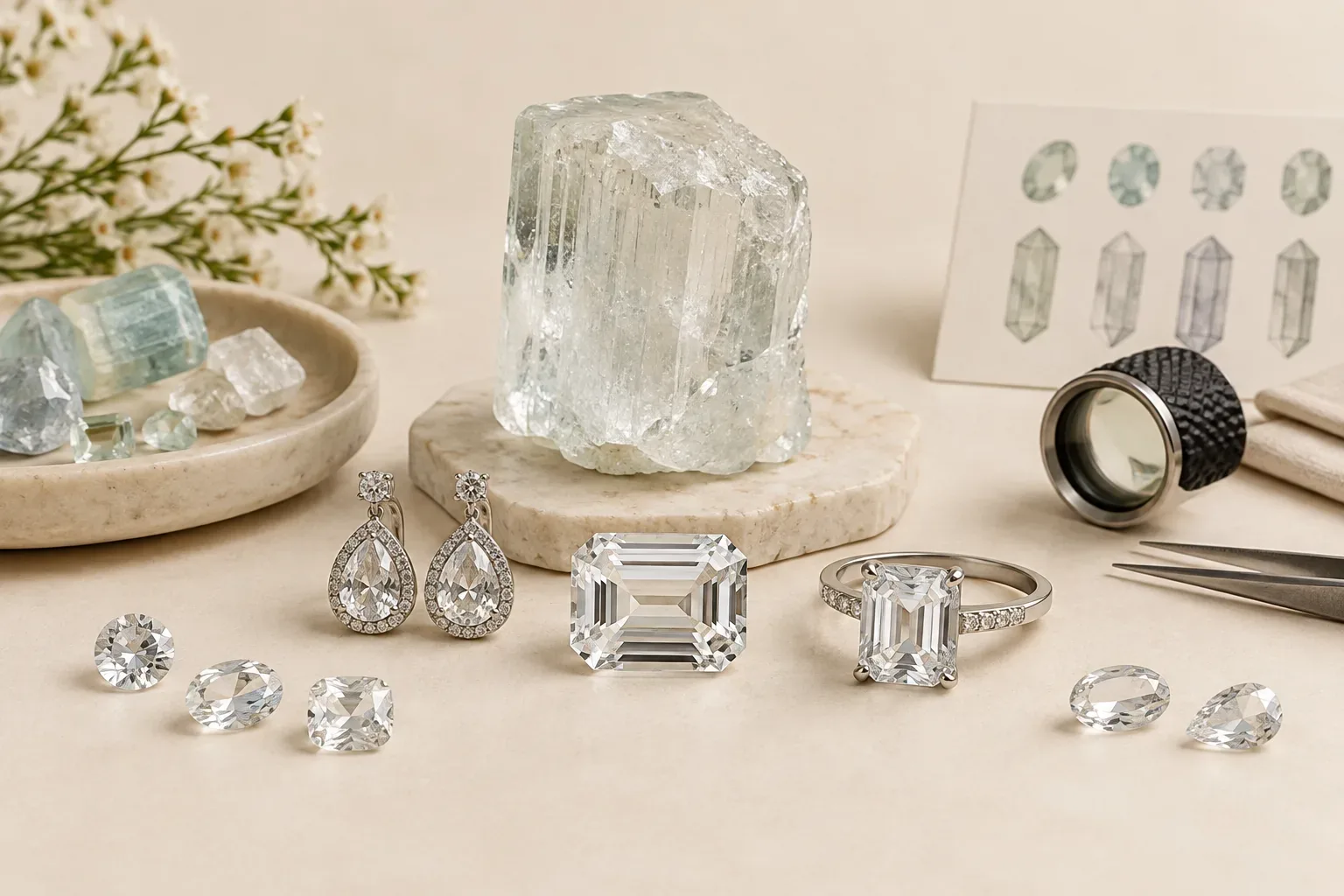
Meaning at a glance
Goshenite is the colorless variety of beryl; its value and meaning come from its mineral identity, clarity and cut, potential confusion with other colorless gems, and the need for clear disclosure and proper care.
What goshenite is: mineral identity and context
Goshenite is the colorless member of the beryl mineral family. Beryl includes several well-known gem varieties, such as emerald (green) and aquamarine (blue), and goshenite is their colorless counterpart. The Smithsonian National Museum of Natural History describes gems and minerals in context of their chemistry, crystal structure, and formation, which places goshenite within that beryl family and explains why it shares physical properties with other beryls, including relative hardness and crystal habit.
Evidence about historical uses and meanings
The approved museum and professional sources used for this article focus on mineral identity, gemology, and consumer protection rather than extensive records of symbolic use for goshenite in specific cultures. The Smithsonian's educational materials emphasize geological and material context rather than culture-specific symbolism. Because the available documentary evidence in these sources does not record widespread, distinct historical meanings for goshenite across named cultures or periods, any claim that goshenite carried a particular traditional meaning in a specified culture would be speculative without additional primary historical sources.
Documented historical facts versus modern personal interpretations
Documented facts from the approved sources concern what goshenite is as a mineral and how gem professionals treat and disclose gems. The Gemological Institute of America (GIA) explains gem treatments, laboratory-grown counterparts, and the importance of disclosure when gems are enhanced or imitated. The Federal Trade Commission (FTC) provides consumer guidance on truthful labeling of natural, treated, lab-grown, and imitation gemstones.
Modern personal interpretations of goshenite’s meaning — for example, associating its colorlessness with clarity, purity, or new beginnings — are contemporary symbolic readings that people assign to colorless gems today. Those readings are personal and cultural choices rather than documented historical facts in the approved sources. Treat modern symbolism as individual or cultural preference rather than universal antiquity.
How goshenite appears in jewelry
In jewelry, goshenite is used much like other transparent gemstones: it is faceted for brilliance or cut into cabochons for a softer look. Its colorlessness makes it suitable for use where a neutral, sparkling stone is desired, and it is sometimes chosen as an inexpensive alternative to more costly colorless gems for larger accent or statement stones.
Because goshenite has the same basic crystal structure as other beryls, it responds well to standard gem cutting techniques that emphasize clarity and luster. Settings for goshenite range from delicate solitaire rings and pendants to multi-stone bracelets and heirloom-style jewelry. Designers may choose goshenite to showcase cut and clarity without introducing color, or to pair it with colored gemstones and metals.
Identification and common confusion with other colorless gems
Colorless gemstones can be visually similar. Goshenite can be confused with colorless topaz, white sapphire, quartz, and even diamond imitations when viewed without gemological testing. The Smithsonian’s resources on gems and minerals emphasize studying mineral properties and context to identify gem materials accurately.
Because visual inspection alone can be misleading, gemological testing (refractive index, specific gravity, and other properties) is the reliable way to distinguish goshenite from look-alikes and from lab-grown or treated materials.
Buying guidance: disclosure, reports, and consumer protection
When buying goshenite, request clear disclosure about whether the stone is natural, treated, lab-grown, or an imitation. The GIA’s guidance on treatments underscores that some gems are enhanced and that disclosure allows buyers to understand value and care needs. The FTC’s consumer advice stresses that sellers must not misrepresent natural versus treated or synthetic gems and that consumers should ask specific questions if a listing uses vague terms.
For higher-value purchases, ask for an independent gemological report from a reputable laboratory that states the gem’s identity and notes any treatments. If a seller cannot or will not disclose a gem’s origin or treatment status, consider that a red flag. Also compare cut, clarity, and setting quality: with goshenite, clarity and cut often drive visual appeal and value more than color, because the stone lacks color.
Practical care and maintenance
Goshenite, as a beryl, is relatively hard and durable compared with many jewelry materials, but like all gems it benefits from sensible care. Clean goshenite jewelry with mild soap, warm water, and a soft brush or cloth. Avoid harsh chemical cleaners, ultrasonic machines, or steam cleaning unless a qualified gemologist confirms the specific piece has no vulnerabilities from fractures, treatments, or settings.
Store goshenite separately from harder stones such as diamonds to avoid surface abrasion, and remove gemstone jewelry during activities that risk knocks, exposure to household chemicals, or extreme heat. Proper care preserves both brilliance and the metal settings that hold the stone.
Selection and gifting guidance — practical and respectful
If you’re buying goshenite as a gift, consider the recipient’s aesthetic preferences: goshenite’s neutral appearance works well with many styles, but some people prefer colored gems or stones with documented cultural significance. Ask whether the recipient prefers natural stones, lab-grown, or affordable alternatives; this shows respect for personal values and budget.
Be explicit when gifting about what the stone is and whether it has been treated or lab-grown. Good gifting includes accurate information so the recipient understands the gem’s nature and care requirements. If you want to attach a symbolic meaning, frame that meaning as a personal sentiment rather than an historical fact, unless you can cite documented cultural uses from primary historical sources.
Final considerations
Goshenite’s meaning in contemporary jewelry comes from a mixture of its mineral identity, its visual neutrality, and the personal or cultural meanings owners assign to clear stones. Rely on gemological reports and seller disclosure when evaluating a stone’s identity and value, and follow responsible care recommendations to keep goshenite jewelry looking its best. Where historical symbolism is important, seek primary cultural sources; the approved educational and consumer-protection sources used here document mineral identity and buying best practices rather than culture-specific traditional meanings.
Frequently asked questions
What is goshenite?
Goshenite is the colorless variety of the mineral beryl, the same mineral family that includes emerald and aquamarine; museum resources treat it primarily as a mineral and gem material rather than as a well-documented historic symbol.
Is goshenite treated or lab-grown?
Goshenite can be natural, and like other gems it may be sold as natural, treated, lab-grown, or imitation; the Gemological Institute of America explains common treatments and why disclosure matters, and the FTC advises consumers to ask sellers for clear information about origin and treatments.
Can goshenite be confused with a diamond or other colorless gems?
Yes; visually similar colorless stones include topaz, white sapphire, quartz, and man-made diamond simulants; reliable identification requires gemological testing rather than visual inspection alone.
How should I clean and care for goshenite jewelry?
Clean goshenite with mild soap, warm water, and a soft brush or cloth; avoid harsh chemicals and consult a gemologist before using ultrasonic or steam cleaners if the piece shows inclusions, treatments, or unusual settings.
What should I ask a seller when buying goshenite?
Ask whether the stone is natural, treated, lab-grown, or an imitation; request any available gemological reports; confirm the seller’s return policy and get care instructions. If a seller is vague or refuses disclosure, treat that as a warning sign.
Sources and further reading
- Gems and Minerals: Beauties and Building Blocks — Smithsonian National Museum of Natural History
- An Introduction to Gem Treatments — Gemological Institute of America
- Buying Gemstones, Diamonds, and Pearls — Federal Trade Commission