Meaning at a glance
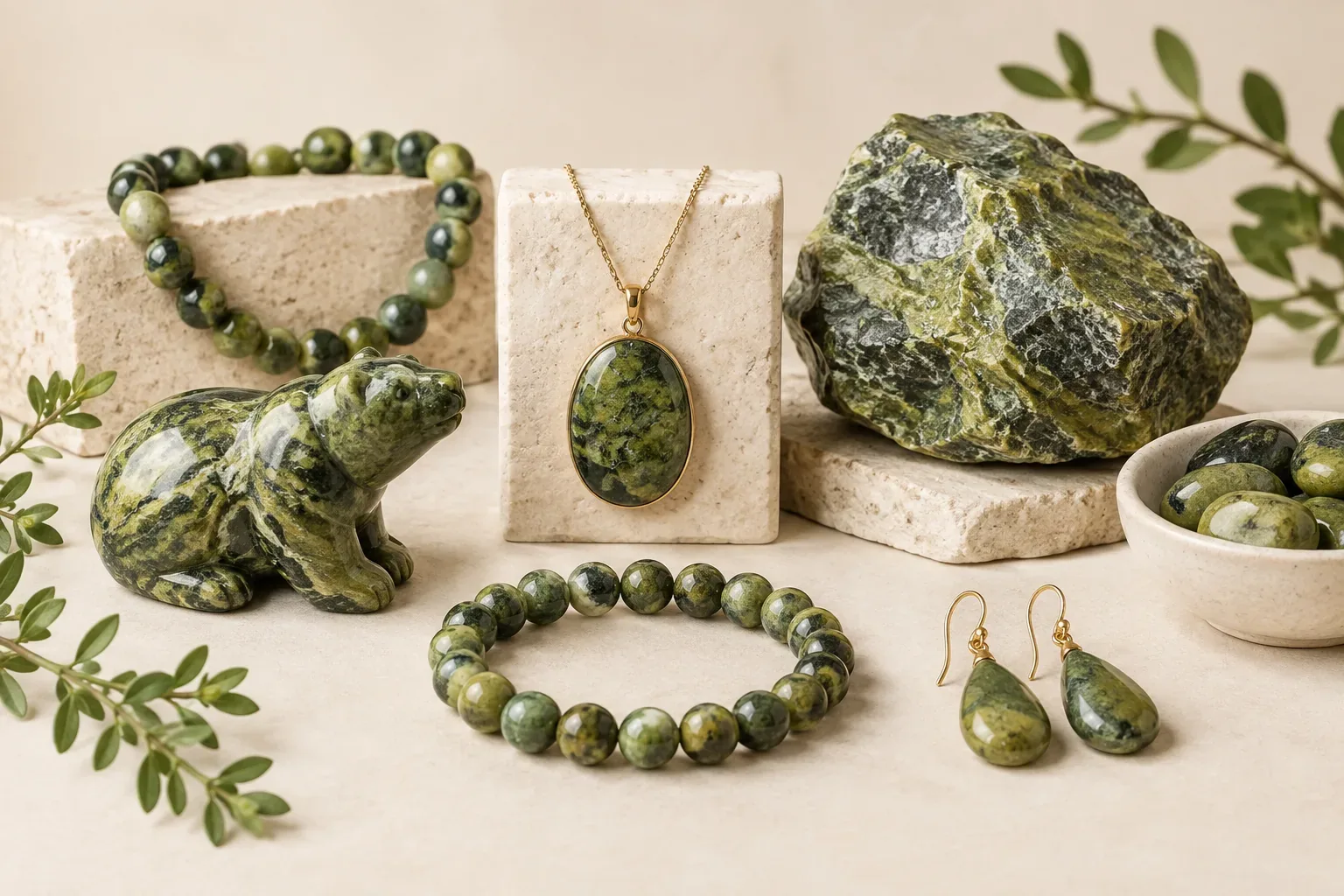
Serpentine names a group of relatively soft minerals commonly worked as beads, carvings, and cabochons; it is sometimes called or mistaken for jade, and buyers should be aware of dyeing, imitations, and softness so they can select, authenticate, and care for pieces appropriately.
What serpentine is: mineral context
Serpentine refers to several related magnesium-rich silicate minerals rather than a single chemical species. Museum and earth‑science resources place serpentine within the broader context of gem and mineral materials used for ornamental work, alongside true jade and other greenstones. That context helps explain why serpentine appears in the same jewelry forms as harder green gems because it takes a polish and can be carved, but it is a distinct mineral group whose physical properties differ from true jade.
Historical evidence: where serpentine appears
Published museum and natural history presentations summarize that human cultures have long used greenstones and other attractive minerals for beads, amulets, and carved objects. Museum literature cites examples across world regions where polished green minerals were valued, and serpentine has been among the materials available to lapidaries for such work. These institutional descriptions identify different cultures and periods in broad terms rather than equating every green carving with a single mineral; specific attribution of an archaeological object to serpentine requires laboratory or expert identification.
Separating documented history from modern interpretation
Documented history, as described in museum and scientific resources, focuses on what materials were used, how they were worked, and where they were traded. Those sources do not universally ascribe singular spiritual or symbolic meanings to serpentine across cultures; meanings recorded in the archaeological and ethnographic literature are culture‑ and period‑specific. Modern sellers, designers, and wearers often layer new personal or New Age symbolism onto serpentine jewelry—for example, referring to qualities like protection or healing—but such contemporary interpretations are personal or commercial additions and should be distinguished from what is documented in primary historical records.
How the mineral and the serpent motif appear in jewelry
Two related things circulate as 'serpentine' in jewelry: the mineral material and serpent imagery. The mineral serpentine is cut into beads, cabochons, tumbled stones, small plaques, and carved figures because it polishes to a lustrous surface. Separately, snake or serpent motifs—rendered in metal, gemstone inlay, or carving—are a longstanding decorative theme in many jewelry traditions. Both the material and the motif can appear together when serpentine is carved into coils or snake forms, but they also appear independently; for instance, a metal snake bracelet may use other gemstones or plain metal.
Naming, treatments, and imitations: what buyers must know
The Gemological Institute of America (GIA) explains that gem materials are subject to treatments and that some stones may be dyed, stabilized, or sold as look‑alikes. Serpentine can be dyed to deepen or even out color and may be offered alongside or in place of greener, more valuable materials. The marketplace also contains imitations and marketing names that blur distinctions between actual mineral identity and trade terms. For consumers, that means asking for clear identification and any treatment disclosures when a seller uses names that imply a different, more valuable material.
Practical buying and authentication guidance
When buying serpentine or greenstone jewelry, ask the seller whether the piece is natural, treated, dyed, stabilized, or an imitation and request written confirmation where possible. The Federal Trade Commission recommends that sellers disclose whether gems are natural, treated, lab‑grown, or imitations; buyers can use those disclosure practices as a checklist when comparing offers. If precise identification matters to you, purchase from a reputable dealer who will provide a gemological report or allow returns, or seek an independent gemologist for testing.
Care and maintenance: respect the material
Serpentine is relatively soft compared with many jewelry gemstones and can scratch, chip, or absorb dyes and oils that alter its appearance. Because of its softness, avoid wearing serpentine rings or bangles during heavy manual tasks, and keep pendants and beads away from sharp impacts. Clean serpentine jewelry gently with a soft cloth and mild soapy water, rinse carefully, and dry thoroughly. Avoid harsh chemicals, strong acids, and prolonged soaking in cleaning solutions; ultrasonic or steam cleaners are not recommended unless an expert confirms they are safe for a particular treated or stabilized piece.
Selection and gifting guidance: practical and respectful choices
If you are choosing serpentine jewelry as a gift, consider the recipient’s lifestyle and taste as well as how often the piece will be worn. For daily‑wear items choose sturdier settings and lower‑profile designs; for sentimentally important carvings or heirlooms, prefer secure pendants or display pieces. Ask the seller about treatment and origin, and keep purchase documentation in case the recipient wants independent identification later. Be culturally respectful: if a design or material is described with cultural or spiritual significance, ask the seller for documentation and be mindful that such meanings may be specific to particular communities and not appropriate to generalize or repurpose without permission.
Summary
Serpentine is a useful, often beautiful mineral group commonly used for beads, carvings, and cabochons and is sometimes confused with or marketed near jade. Practical buying relies on clear naming and treatment disclosure, and caring for serpentine means recognizing its relative softness and sensitivity. Historical usage of greenstones is well attested in museum and natural‑history literature, but symbolic meanings vary by culture and period; modern personal or protective symbolism is a separate layer that belongs to the wearer or giver.
Frequently asked questions
Is serpentine the same as jade?
No. Serpentine is a group of magnesium silicate minerals that can look similar to some jade varieties, but they are distinct mineral groups. Visual similarity can cause confusion in the marketplace, so rely on seller disclosure or gemological testing for precise identification.
How can I tell if a serpentine piece has been dyed or treated?
Ask the seller for treatment disclosure and look for uneven color concentrated in cracks or drill holes, which can indicate dye. For confirmation, request a written statement or an independent gemological report; the Gemological Institute of America provides guidance on common treatments and disclosures.
Can I wear serpentine jewelry every day?
You can wear serpentine jewelry frequently, but because the mineral is relatively soft compared with many gem materials, choose protective settings and avoid hard impacts, rough work, and prolonged exposure to chemicals or cosmetics to minimize scratching and damage.
What is the safest way to clean serpentine jewelry?
Clean serpentine gently with a soft cloth and mild soapy water, rinse thoroughly, and dry. Avoid harsh chemicals, strong acids, and aggressive mechanical or steam cleaners unless a qualified gemologist confirms they are safe for a specific piece.
What should I ask a seller when buying serpentine as a gift?
Ask whether the stone is natural, dyed, treated, stabilized, or an imitation and request written disclosure when possible. Consider the recipient’s lifestyle and the intended use of the piece, and keep receipts and any identification documents for future verification or care.
Sources and further reading
- Gems and Minerals: Beauties and Building Blocks — Smithsonian National Museum of Natural History
- An Introduction to Gem Treatments — Gemological Institute of America
- Buying Gemstones, Diamonds, and Pearls — Federal Trade Commission