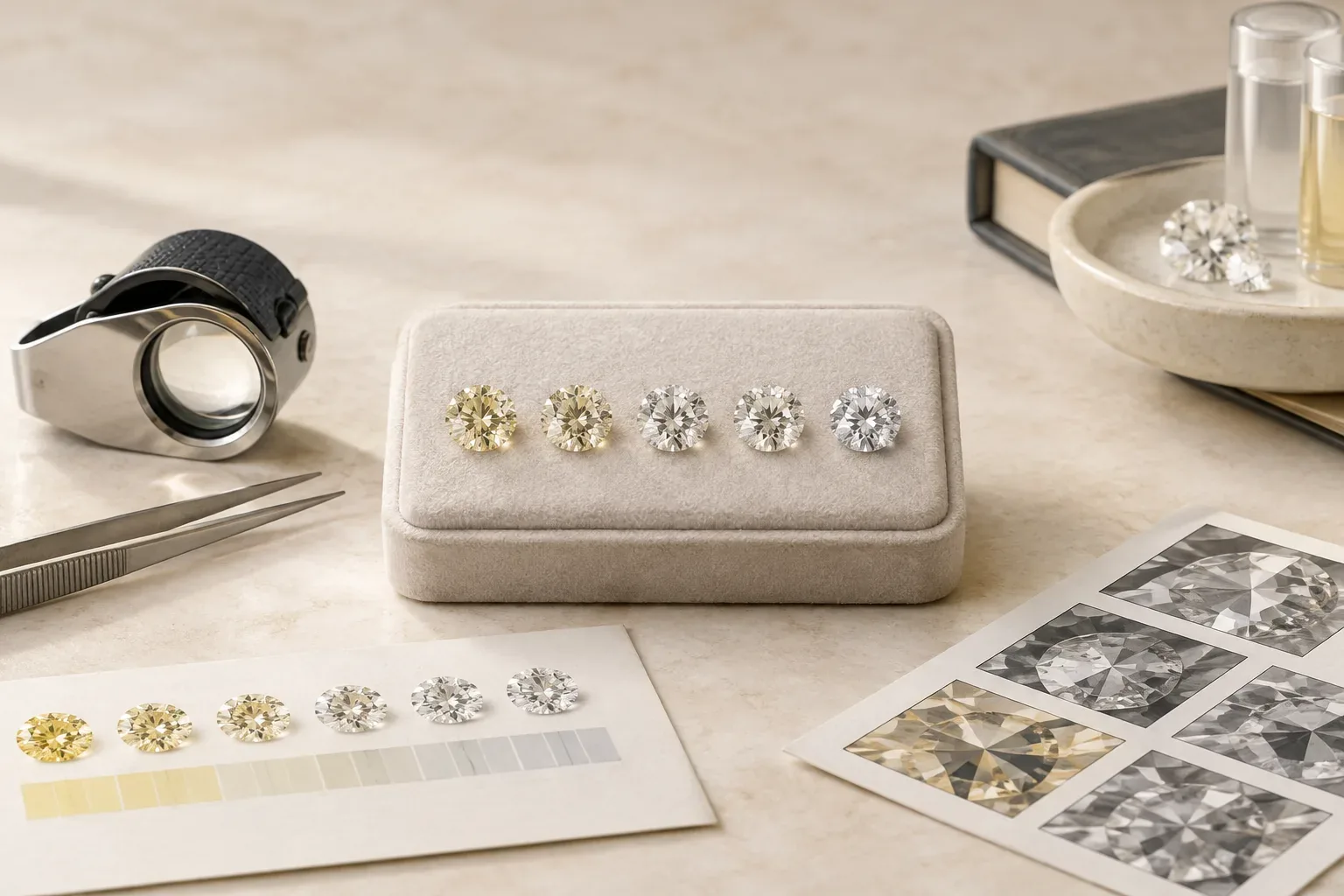
Meaning at a glance
This guide explains what a diamond color treatment report is, summarizes the decision criteria a shopper should use, clarifies practical trade-offs and care needs, and stresses the clear limits on what a buyer can verify without a qualified jeweler or a gemological laboratory, using guidance from the Gemological Institute of America and the U.S. Federal Trade Commission.
Direct answer — what this guide will give you
A diamond color treatment report guide should give you evidence-led definitions of the treatment types reported, clear decision criteria for purchase, practical trade-offs (appearance, permanence, cost and resale), safe-care instructions for treated stones, and an explicit list of what a non-expert can and cannot verify without a qualified jeweler or a gemological laboratory. This article uses the Gemological Institute of America’s approach to treatments and detectability and the Federal Trade Commission’s consumer-disclosure principles to explain how to read and act on color-treatment documentation.
What a diamond color treatment report is, in plain terms
A diamond color treatment report is a document—issued by a seller, retailer or gemological laboratory—that records whether a diamond’s color has been changed or improved by human processes, and if so, what type of treatment was used and any relevant durability or disclosure considerations. The Gemological Institute of America (GIA) explains that treatments, disclosure, detectability and durability each raise distinct consumer questions for gemstones, and a reliable report addresses those points.
Reports can range from a simple seller statement on an invoice to a detailed laboratory certificate. A laboratory report will usually state whether treatment is detected, name the treatment type where possible, and provide comments on permanence and care. A seller’s written disclosure is vitally important too: the Federal Trade Commission (FTC) says consumers need clear distinctions among natural, lab-created, treated, cultured and imitation materials and written seller disclosures.
Historical evidence and the relevant 'cultures' or practices
When we talk about historical evidence for treatment reporting and disclosure we are referring to three modern cultures of practice rather than ancient cultural symbolism. First, the gemological laboratory culture—exemplified by organizations such as the Gemological Institute of America—has developed methods to study, detect and report treatments and to publish guidance for consumers and trade. GIA’s public materials discuss how treatments are detected, their durability and why lab reporting matters.
Second, the consumer‑protection regulatory culture—represented in the United States by the Federal Trade Commission—has shaped the legal and commercial norms for disclosure. The FTC emphasizes written disclosures and clear distinctions between natural, lab-grown, treated and imitation stones to protect shoppers from misleading claims.
Third, retail and market-culture evidence, including search and purchase behavior, affects how treated diamonds are marketed. Industry observers such as Imaginaire Digital report on current market demand patterns for engagement rings and other diamond jewelry, which influence how sellers choose to present treated versus untreated stones to shoppers.
Documented history versus modern personal interpretation
Documented history in the context of treatment reports is primarily about how laboratories, regulators and retailers have handled disclosure and detection. GIA documents the scientific record: how treatments are identified, what their likely durability is, and how detection limits affect reporting. The FTC documents the consumer‑protection record: what sellers are required or expected to disclose and why clarity matters.
Modern personal interpretation is different and often unrecorded by those institutions. People choose color-treated diamonds for fashion, budget, or symbolic reasons, and those meanings are subjective. Those personal interpretations—such as choosing a treated fancy-color stone because its hue matches a birthstone or a fashion palette—are valid personal choices but are not the kind of documented evidence that laboratories or regulators provide.
How diamond color treatments and their reports appear in jewelry
Treated-color diamonds appear in the same kinds of jewelry as untreated diamonds: engagement rings, studs, pendants, and fashion pieces. Retailers may market them as 'color enhanced' or 'treated fancy color' on invoices, or the stones may come with a laboratory report that states the treatment. Imaginaire Digital’s market reporting shows continuing strong demand for engagement rings and diamond items, which helps explain why sellers include treated options in their assortments to meet price and color preferences.
In practice, treated stones are often used to offer vivid colors that would be unaffordable or rare in untreated diamonds. Treatments are sometimes used to create consistent color across a matched set or to produce a vivid single-stone color for a statement piece. A report that accompanies such a stone will help you understand whether that color is natural, lab-created, or the result of a treatment and whether the treatment is considered stable under normal wear and cleaning.
How to read the key elements of a color treatment report
Start with the headline finding: treated or not detected. A laboratory report typically begins with a clear statement about whether a treatment was detected. If a treatment is detected, the report should identify the treatment type when possible and include comments on permanence and detectability. GIA’s materials make clear that detectability and the ability to name a treatment depend on the laboratory’s testing methods and the treatment’s characteristics.
Look for the treatment name and description. When a report names a treatment, it may also indicate whether the color change is expected to remain permanent under normal conditions or whether it is more delicate and requires special care. If the report is silent about permanence, ask the issuing laboratory or seller for clarification.
Check for laboratory versus seller-issued statements. Laboratory reports typically carry more weight because they are based on standardized testing; seller-issued disclosures are important and required by consumer-protection norms such as those promoted by the FTC, but they are not a substitute for an independent laboratory opinion when you need certainty.
Note any limits or disclaimers. Reputable reports will state detection limits and whether certain treatments might escape detection with the tests used. GIA highlights that treatments, detectability and durability create distinct consumer questions; a report that includes clear limits helps you understand residual uncertainty.
What you can and cannot verify without a qualified jeweler or laboratory
As a non-expert, you can verify paper evidence: compare the seller’s written disclosure to any accompanying laboratory report, check that the report number matches the stone, and confirm that the issuing laboratory is clearly identified. You can also visually inspect the stone for surface coatings, unusual color zones, or inconsistent color that might suggest treatment, but visual checks alone cannot reliably identify many treatments.
You cannot reliably detect most internal or subtle treatments by eye, even with a high-quality loupe. You cannot confirm long-term stability or the precise treatment method without laboratory instrumentation and expertise. The GIA explains that detectability varies by treatment and that laboratories play a central role in identification; the FTC likewise underscores that consumers need accurate written disclosure rather than relying on unaided observation.
Practical selection and gifting guidance
When choosing or gifting a diamond where color treatment could be relevant, begin by asking the seller for a written disclosure and, where available, an independent laboratory report that specifically addresses color treatment. The FTC’s guidance on buying gemstones stresses clear distinctions among natural, lab-created, treated and imitation materials and the importance of written seller disclosures.
Decide what matters most to the recipient: color intensity, rarity, permanence or budget. If permanence and long-term value are priorities, a natural untreated fancy-color diamond with laboratory certification may be preferable. If the recipient values vivid color and a lower price, a treated-color diamond with clear written disclosure and a reputable lab report can be an excellent, ethical choice.
Respect preferences and context. If you are unsure whether the recipient would prefer a natural versus treated color, consider requesting a return option or choosing a presentation that emphasizes the aesthetic choice rather than implied rarity. When in doubt, buy from a retailer who will provide clear documentation and who will answer questions about durability and care.
Care guidance and practical trade-offs
Safe care depends on the treatment type. Many treatments are stable for everyday wear, but some require gentler cleaning methods or avoidance of certain chemicals or extreme heat. GIA’s resources on gem treatments explain that detectability and durability are both treatment-specific, and a responsible report will advise on care.
Weigh trade-offs: treated-color diamonds can offer remarkable color and affordability but may carry lower resale value and more complicated care instructions than comparable untreated stones. A laboratory report that names the treatment and comments on permanence helps you weigh that trade-off with evidence rather than assumption.
A short decision checklist before you buy
Ask for written seller disclosure and, where possible, an independent laboratory report that specifically addresses color treatment. Confirm that the report number and description match the stone. Ask about permanence and recommended care based on the named treatment. Consider the recipient’s priorities—color, rarity, resale potential, durability—and choose accordingly. If you need certainty about whether a stone has been treated, plan to consult a qualified jeweler or request a lab re-check rather than relying on visual inspection alone.
Frequently asked questions
What is the difference between a seller disclosure and a laboratory color treatment report?
A seller disclosure is a written statement from the retailer or seller describing whether the stone has been treated; it is required or expected under consumer-protection norms such as those described by the FTC. A laboratory report is an independent analysis from a gemological laboratory that tests the stone and reports findings about treatment, detectability and permanence; laboratory reports generally carry more weight when you need technical certainty.
Can I tell if a diamond’s color has been treated just by looking at it?
No. Visual inspection alone—even with a loupe—cannot reliably detect many internal or subtle treatments. The Gemological Institute of America explains that detectability varies by treatment and that laboratory testing is needed for reliable identification.
Are treated-color diamonds less durable?
Durability depends on the treatment type. Some treatments are considered stable under normal wear while others may require gentler cleaning or avoidance of extreme heat or chemicals. A reputable laboratory report will comment on expected permanence and care.
Does the FTC require sellers to disclose color treatments?
The FTC’s consumer guidance emphasizes clear distinctions among natural, lab-created, treated and imitation materials and supports written seller disclosures so consumers are not misled. Buyers should ask for and keep written disclosure as part of the purchase record.
If a report says 'treatment detected,' can the lab always name the exact process?
Not always. Laboratories will identify treatments when they can, but detectability and the ability to name a specific process depend on the treatment, the testing methods used and any limits stated on the report. Useful reports will state what was tested and any detection limits or disclaimers.
What should I ask a seller before buying a diamond with a color I love?
Ask for written disclosure of any treatments, request an independent laboratory report that addresses color treatment where possible, confirm the report number and issuing lab, ask about permanence and recommended care, and clarify the retailer’s return or upgrade policy if you later seek a different stone.
Sources and further reading
- Imaginaire Digital — Imaginaire Digital
- Gemological Institute of America — Gemological Institute of America
- Federal Trade Commission — Federal Trade Commission