Meaning at a glance
Scapolite is a mineral-group gem that appears in a range of colors and sometimes shows chatoyancy or other optical phenomena; treat rarity, identification, durability, and disclosure as technical concerns, and treat any metaphysical symbolism as modern and personal.
Short, direct answer
Scapolite jewelry meaning: Scapolite is a mineral-group gem that can occur in several colors and occasionally show chatoyancy or other optical effects; rarity, identification, durability, and treatment disclosure should be separated from modern purpose symbolism. In practice, responders should treat scapolite first as a gem material — with specific physical and market considerations — and second as a subject for personal or contemporary symbolic interpretation.
What scapolite is (materials, colors, and optical effects)
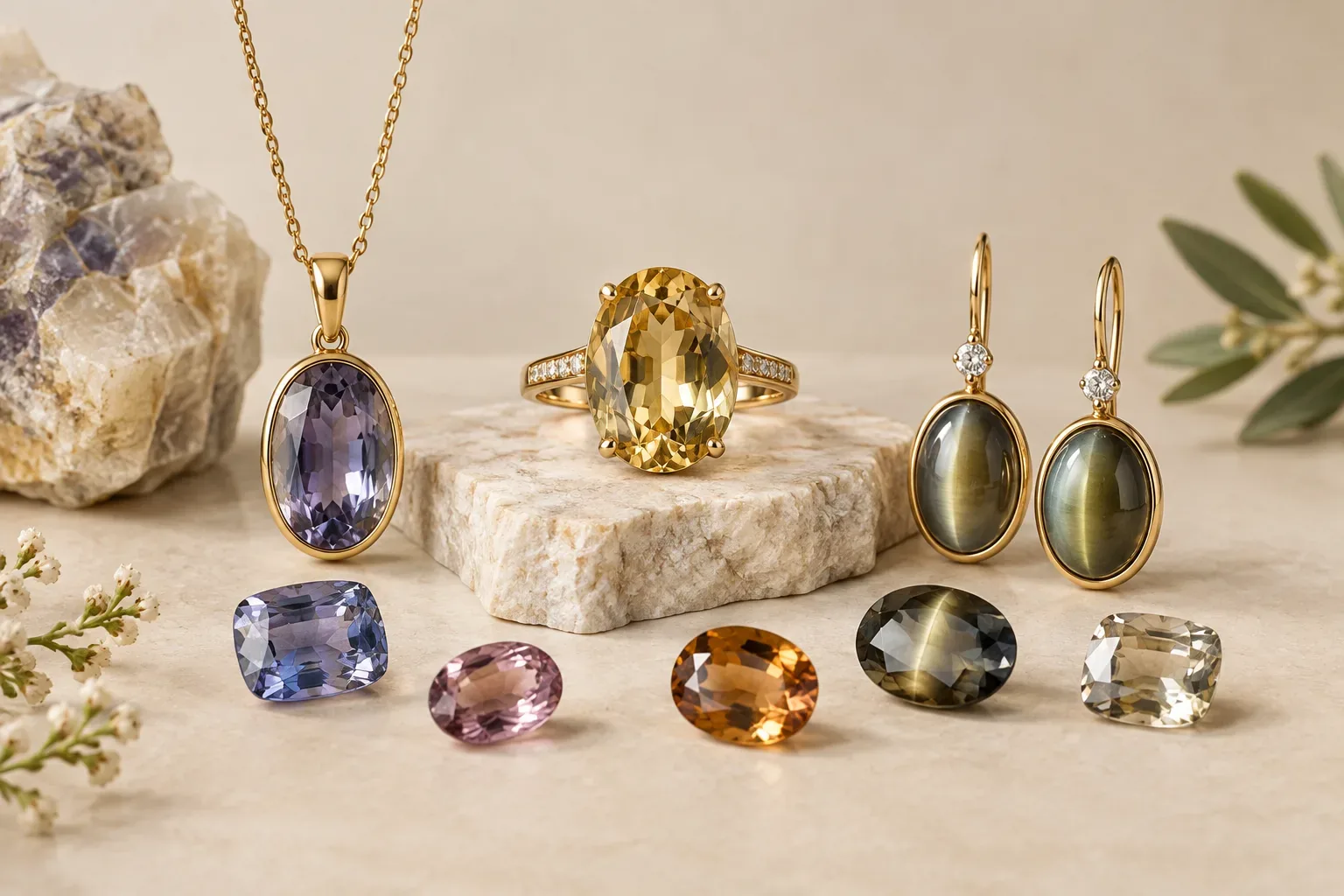
Scapolite refers to a group of silicate minerals that are used as gem material rather than to a single species. Museum-grade references describe scapolite in the broader context of gems and minerals and explain how mineral identity informs a gem’s color and behavior in jewelry. Scapolite occurs in a palette that includes yellow, pink, violet, purple, and gray tones, and in some stones you may also see chatoyancy (a cat’s-eye effect) or other optical phenomena when the crystal structure and cutting style align.
Because scapolite is a mineral-group name, individual stones vary in chemistry and appearance. The range of colors and occasional distinctive effects make scapolite appealing to collectors and designers who value less-common gems, but those same variations mean buyers should confirm identity and disclosures rather than rely on appearance alone.
Historical evidence and cultural claims — what is documented
When examining historical meanings, reliable museum and gemological references emphasize the mineral and gemological record more than a long, clearly documented tradition of cultural symbolism for scapolite. The Smithsonian National Museum of Natural History presents scapolite in its gem and mineral context, focusing on formation, properties, and classification rather than a body of specific cultural uses or ancient symbolic practices tied to this mineral group.
In short, mainstream museum and gemological literature does not present a widely documented, continuous cultural symbolism for scapolite the way it does for, for example, diamonds or lapis lazuli. That absence of strong historical evidence does not prevent modern people from assigning meaning to scapolite, but it does mean claims of an ancient, broadly shared symbolic history should be treated cautiously unless backed by specific historical sources.
Documented facts versus modern personal interpretations
Separate the measurable facts about scapolite (its mineral nature, color range, and occasional optical effects) from symbolic claims. The documented facts are matters of mineralogy, gem cutting, durability, treatments, and market practice. Modern symbolic meanings — those linking scapolite to healing, emotional balance, or personal transformation — are contemporary interpretations and vary widely among individuals and groups.
If a seller or writer attributes a specific traditional meaning to scapolite, ask for the source. Many contemporary symbolic frameworks are valuable to people on a personal level, but they are not the same as documented, historically continuous cultural beliefs. Keeping that distinction clear helps buyers and givers make informed and respectful choices.
How scapolite appears in jewelry
Jewelry makers use scapolite in a variety of forms. Transparent stones with good color and clarity are faceted for rings, pendants, and earrings, while stones that display chatoyancy or attractive color zones are commonly cut en cabochon to highlight that effect. Scapolite can also appear as beads, small accent stones, or centerpieces in artisanal and designer work where a unique color or pattern is desired.
Because scapolite is less common than mainstream gem materials, it is often featured in jewelry that highlights the stone itself — open settings to show light through a faceted pavilion, or bezel settings to protect a cabochon. Designers sometimes pair scapolite with metals and accent gems that complement its color range, emphasizing the individual character of each stone rather than seeking mass-market uniformity.
Selection and buying guidance
Treat buying scapolite the same way you would any less-common gem: ask direct questions, request documentation, and verify disclosures. The Gemological Institute of America emphasizes that treatments and enhancements are common across many gem types, and sellers should disclose such treatments. The Federal Trade Commission advises consumers to insist on clear terms describing whether a gemstone is natural, treated, lab-grown, or an imitation.
Ask the seller or jeweler whether the scapolite is natural, whether it has been heat-treated or otherwise enhanced, and whether any imitations are present in the piece. For high-value purchases, request a report from a qualified gemological laboratory or an independent professional appraisal that identifies the material and notes treatments. Because scapolite spans a range of appearances, a lab report is the most reliable way to confirm identity and to understand any limitations the stone may have for everyday wear.
Durability, care, and what to expect
Scapolite is not treated like the hardest gems; its relative hardness and cleavage properties affect how it should be worn and cared for. When you buy scapolite, ask about the stone’s stability and any treatments that could affect cleaning or exposure to heat and chemicals. The GIA’s guidance on gem treatments reminds buyers that certain enhancements influence how a gem reacts to cleaning, temperature changes, and wear.
As a practical rule, store scapolite pieces separately to avoid abrasion, clean them gently with a soft brush, mild soap, and water, and avoid harsh chemicals or rough mechanical cleaning unless you have confirmation a stone and its setting can tolerate them. If a scapolite has an unusual optical effect or inclusions, choose protective settings such as bezels for rings and bracelets intended for regular wear.
Practical and respectful selection and gifting guidance
If you are choosing scapolite as a gift, consider both the gem’s physical characteristics and the recipient’s taste and beliefs. Because scapolite does not carry a widely documented cultural symbolism, a thoughtful gift often pairs information about the stone’s color and origin with a personal note explaining why this particular gem felt meaningful to you and to the recipient.
Respect cultural sensitivity by avoiding claims that a gem carries an ancient or widely shared spiritual power unless you can cite specific sources. For recipients who prefer certified gems, present the stone with any lab reports or seller documentation. For artisanal or ethically sourced pieces, ask the maker for provenance details and share that information with the recipient so the gift conveys both beauty and transparency.
When to consult a professional
Consult a qualified gemologist or a reputable jeweler when you need firm answers about identification, treatments, or suitability for daily wear. Laboratory reports are especially useful for higher-value pieces or when a buyer wants assurance about a gem’s origin or enhancement history. For consumers, the Federal Trade Commission’s guidance on buying gemstones is a useful reference point for asking the right questions and understanding seller responsibilities.
If you inherit or receive an old scapolite piece whose history is unclear, a professional evaluation can determine whether the stone has been altered, whether it is original to the setting, and how best to preserve it. Professionals can also advise on secure settings and repair methods that respect the stone’s physical properties.
Frequently asked questions
What colors does scapolite come in?
Scapolite occurs in a range of colors including yellow, pink, violet, purple, and gray tones, and some stones show optical effects such as chatoyancy; color and effect depend on the stone’s chemistry and cut.
Is scapolite historically associated with specific cultures?
Mainstream museum and gemological references focus on scapolite’s mineral and gemological properties and do not document a widely shared, long-standing cultural symbolism for scapolite; modern symbolic meanings tend to be contemporary and personal.
Are scapolite gems commonly treated?
Gemological authorities note that treatments and enhancements occur across many gem types and should be disclosed; always ask the seller whether a scapolite has been heat-treated, color-enhanced, or otherwise altered and request documentation if needed.
Is scapolite suitable for everyday wear?
Suitability depends on the individual stone’s durability and setting; because scapolite is not among the hardest gem materials, buyers should discuss wear expectations with a jeweler, choose protective settings for rings, and follow care advice.
How can I be sure a scapolite I’m buying is genuine?
Request identification from a reputable seller, ask for a gemological laboratory report for higher-value pieces, and seek an independent appraisal when in doubt; visual similarity to other stones makes professional testing the most reliable route to confirmation.
How should I clean and store scapolite jewelry?
Clean scapolite gently with mild soap, water, and a soft brush; store pieces separately to prevent abrasion and avoid harsh chemicals, extreme heat, or mechanical cleaners unless a professional has confirmed the stone and setting are safe for those methods.
What should I ask a seller before buying scapolite?
Ask whether the stone is natural or treated, whether any enhancements were performed, whether the seller provides a lab report or guarantee, and what the recommended care and suitability are for the intended piece.
Sources and further reading
- Gems and Minerals: Beauties and Building Blocks — Smithsonian National Museum of Natural History
- An Introduction to Gem Treatments — Gemological Institute of America
- Buying Gemstones, Diamonds, and Pearls — Federal Trade Commission