Meaning at a glance
This guide explains practical decision criteria for an alexandrite engagement ring: who it's suitable for, common setting trade-offs, how to care for the stone, and what only a jeweler or gem lab can verify, drawing on market trend and consumer-protection guidance.
What the available evidence can and cannot tell you historically
Published consumer- and trade-facing sources in this guide do not provide detailed primary historical documentation about alexandrite as a cultural symbol; those sources instead focus on market demand, gemstone consumer issues, and laboratory practices. For the purposes of a shopping or gifting decision, rely on documented trade guidance for disclosure and testing rather than on folklore or unverified antiquarian claims.
When you encounter statements about an individual gemstone’s historical role in a particular culture or era, treat them as cultural or literary interpretations unless an accepted gemological reference or primary historical source is cited. The sources used here make clear distinctions between modern market trends and the laboratory or legal processes that underpin trust and disclosure in the jewellery trade.
Documented meanings versus modern personal interpretations
Documented meanings in authoritative consumer and trade sources focus on commercial attributes—origin, treatment, and disclosure—rather than on symbolic or mystical claims about gemstones. For example, government and laboratory guidance emphasize the need for clear, factual buyer information rather than symbolic assertions.
Modern personal interpretations—such as associating a gemstone with particular personal qualities or relationship milestones—are common and meaningful to many buyers but are not the same as historically documented meanings. If symbolism matters to you or the recipient, treat that symbolism as a personal or contemporary choice and make it part of your gifting conversation rather than as a verified historical fact.
How alexandrite appears in jewelry and current market context
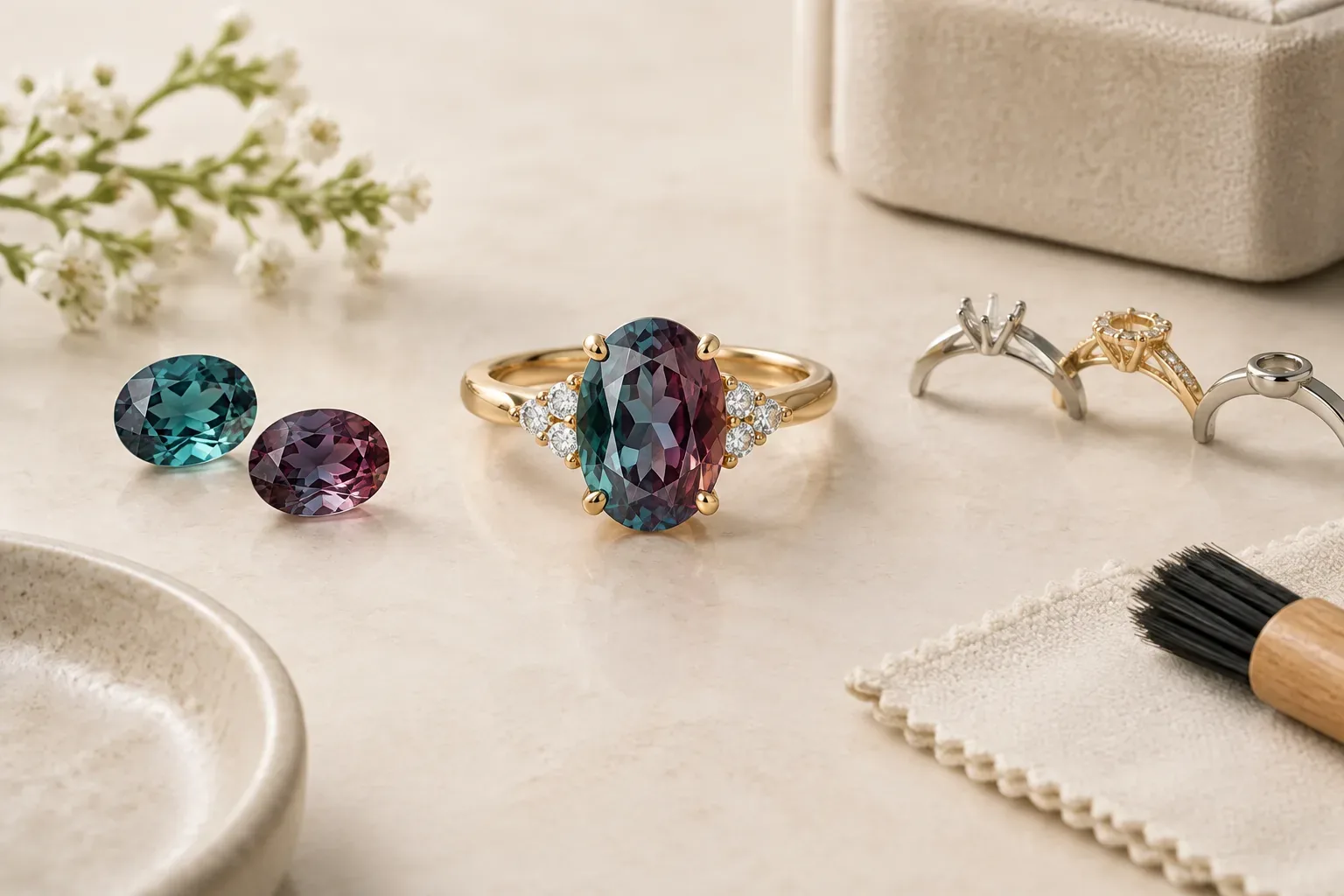
In contemporary jewellery offerings, alexandrite is typically marketed as a colored gemstone option for rings, often set as a solitaire or paired with accent stones. Trade reporting indicates growth in consumer interest in gemstone engagement rings and sculptural or vintage-inspired styles, which makes unusual gemstones such as alexandrite part of a broader trend toward non-traditional centre stones.
Design choices vary: some jewellers present alexandrite in classic solitaires to showcase the gem, while others use halo settings, three-stone arrangements, or mixed-metal settings to give the piece a more contemporary or durable profile. Market- and search-trend reporting shows sustained consumer demand for gemstone engagement rings and related categories, which sellers often reflect in their product mixes.
Suitability: Who should consider an alexandrite engagement ring?
Consider alexandrite if you want a distinctive, gemstone-led aesthetic and are prepared to prioritize beauty and individuality over the ubiquity and resale familiarity of a diamond. If the intended wearer values unusual colour, colour-shifting effects, or a strong gemstone presence, alexandrite can be a great match.
Avoid—or at least reconsider—an alexandrite ring if the wearer has an active daily routine with frequent hand impact or exposure to chemicals, unless you choose a protective setting. Also be realistic about budget: rarer gemstones in higher-quality material may command prices that exceed many common alternatives. Finally, if you need the highest possible liquidity or resale recognition, know that gemstones other than diamonds typically have a more specialized market.
Settings and trade-offs: choosing a mounting
Setting choice balances protection, light performance, and style. Open prong or cathedral solitaires maximize visible surface area and brightness but expose the gem to more knocks and abrasion. Bezel settings offer the best edge protection and are well suited to someone who uses their hands a lot, though they can reduce visible surface area and alter the perceived brilliance.
Halo and three-stone settings increase apparent size and protect the centre stone by surrounding it with smaller gems, and they can emphasize colour contrast if you choose accent stones deliberately. Consider split-shank or protective gallery work if you want the look of an open design with some additional shielding. For any setting, ensure the mounting is engineered and checked by a qualified bench jeweller to secure the stone safely.
Selection checklist: practical buying criteria
Confirm what you are buying in writing: whether the piece contains a natural stone, a lab-created stone, a treated stone, or an imitation. The Federal Trade Commission requires clear distinctions among these categories, and you should get those representations in the invoice or certificate.
Ask for a gemological report or certification when relevant for the price point; know that only a qualified gemological laboratory can provide definitive statements about origin, treatments, and whether a specimen is natural or lab-grown. Inspect the return policy, warranty, mounting security, and any recommended insurance or appraisal services before purchase.
Consider practical dimensions for daily wear: a modest table size in a protective setting will be more durable than a large exposed stone. If colour change or special optical effects are part of the appeal, view the stone in multiple light sources and document what you see; sellers should welcome this and note any variability in their descriptions.
Care and maintenance
Follow conservative care practices for valuable coloured gemstones. The Gemological Institute of America emphasizes that treatments, detectability, durability, and special care vary by gemstone, so you should follow seller and laboratory recommendations specific to the stone you buy. In general, avoid household chemicals, remove rings for heavy manual work, and clean gently with warm soapy water and a soft brush unless the seller or a lab advises otherwise.
Ultrasonic cleaners and steam cleaners can be appropriate for many gems but may not be safe depending on treatments or internal features; consult a qualified jeweller or the gemological report before using mechanical cleaners. Schedule professional inspections periodically to check prongs, bezel edges, and the tightness of the mounting.
What only a qualified professional or laboratory can verify
A jeweller can check setting security and provide practical wear recommendations, but authoritative identification of whether a gem is natural, lab-grown, or treated normally requires a reputable gemological laboratory. The FTC advises consumers to seek clear, written disclosures and to understand that only trained labs can reliably test origin and many treatments.
If provenance, specific geographic origin, or the absence of certain treatments is important to you, plan to obtain a laboratory report from a recognized gemological lab and factor that into the purchase budget and timeline. Sellers should disclose when a stone has been treated or created in a lab; if they do not, walk away or request written confirmation.
Gifting guidance and respectful presentation
When gifting an alexandrite engagement ring, align the choice with the recipient’s style, lifestyle, and values. Ask discreet questions about metal preference, ring size, and daily activities so the ring is both meaningful and practical. If surprise is essential, consider asking a close friend or family member for help with size and style clues, or use an inexpensive placeholder ring to preserve the surprise while you confirm details.
Be transparent about the stone’s nature and any certification: a thoughtful note explaining why you chose this particular gemstone—its aesthetic, its place in your relationship, or a shared preference—adds personal meaning without relying on unverified historical claims.
Frequently asked questions
Is an alexandrite engagement ring suitable for everyday wear?
Suitability depends on the specific stone quality and the wearer’s activities. For everyday wear choose a protective setting (bezel or halo) and inspect prongs regularly. Follow conservative care practices and ask a jeweller about the stone’s durability and any treatments before daily use.
How can I verify if an alexandrite is natural or lab-created?
Only a qualified gemological laboratory can provide authoritative verification of whether a gemstone is natural, lab-created, or treated. Ask the seller for written disclosures and, if the price or provenance warrants it, obtain a laboratory report from a recognized lab.
Do sellers have to disclose treatments or lab creation?
Yes. Consumer protection guidance requires clear distinctions between natural, lab-created, treated, and imitation materials, and sellers should provide written disclosures. If the seller cannot or will not disclose this information, consider other vendors.
What cleaning methods are safe for coloured gemstones?
Warm soapy water and a soft brush are generally safe for many coloured gemstones, but some stones and treatments are sensitive to heat, solvents, or ultrasonic cleaners. Consult the seller or a gemological report before using mechanical cleaners.
Should I get insurance or an appraisal for an alexandrite engagement ring?
Yes. For valuable gemstone engagement rings, get a formal appraisal for insurance, and review the insurer’s requirements about certification and replacement value. Maintain purchase receipts and any laboratory reports.
Sources and further reading
- Imaginaire Digital — Imaginaire Digital
- Professional Jeweller / PRYA Jewellery Search Insights — Professional Jeweller / PRYA Jewellery Search Insights
- Gemological Institute of America — Gemological Institute of America
- Federal Trade Commission — Federal Trade Commission