Meaning at a glance
Explain the documented history and changing contexts of the opal cuts and settings motif, separate cultural or religious evidence from later popular interpretations, and give practical guidance for choosing and wearing the motif in modern jewelry.
What the historical record shows
Museums and curators document that attitudes to gemstones, their cuts, and the ways jewelers set them have changed across cultures and periods rather than remaining fixed. The Victoria and Albert Museum’s survey of jewelry history emphasizes that cutters and setters adapted techniques to the properties of individual gems and to changing tastes from antiquity through the modern era. This museum-level scholarship is the basis for the historical claims below (Victoria and Albert Museum, "Bedazzled: A History of Jewellery" and "An A–Z of Gemstones").
Ancient Mediterranean and Near Eastern artisans worked with cabochon-style shapes for many soft or difficult stones, favoring smooth domes that revealed color and pattern without relying on facets. Medieval European jewelry continued to emphasize settings that held stones securely and showcased surface color. During the Renaissance and into Georgian and Victorian Britain, lapidaries and goldsmiths refined cutting and mounting methods; the Victorian period in particular saw both a flourish of gemstone variety in decorative pieces and more attention to how settings protected softer materials (Victoria and Albert Museum, "Bedazzled").
In the 19th and 20th centuries, gem cutters and jewelry houses responded to new market demands and new sources of stones by experimenting with faceting and with assembled stones (later known as doublets and triplets) to make opal’s play-of-color more durable and affordable. Museums’ A–Z treatments of gemstones note that assemblages and specific cutting choices often reflect an attempt to display the opal’s optical effects while compensating for its physical sensitivities (Victoria and Albert Museum, "An A–Z of Gemstones").
Documented meanings versus later or popular interpretations
Documented historical meanings are those established by period records, inventories, and museum interpretation. Curators at the Victoria and Albert Museum show that jewelry choices across eras often signaled social status, taste, or technological skill rather than an unbroken symbolic meaning attached to a single gemstone. That is, an opal’s presence in a ring or brooch historically reflected availability, fashion, and the jeweler’s technique as much as any stable symbolic value (Victoria and Albert Museum, "Bedazzled").
By contrast, many modern popular attributions — for example, the idea that opals necessarily bring bad luck or that a specific cut guarantees spiritual properties — are later cultural overlays and personal interpretations rather than stable historical facts. Separating these requires noting when a claim comes from contemporary superstition, advertising, or personal belief rather than period documentation. The museum sources caution readers to distinguish documented usage and decorative trends from retrospective symbolic readings (Victoria and Albert Museum, "Bedazzled" and "An A–Z of Gemstones").
How opal cuts and settings appear in jewelry (practical descriptions)
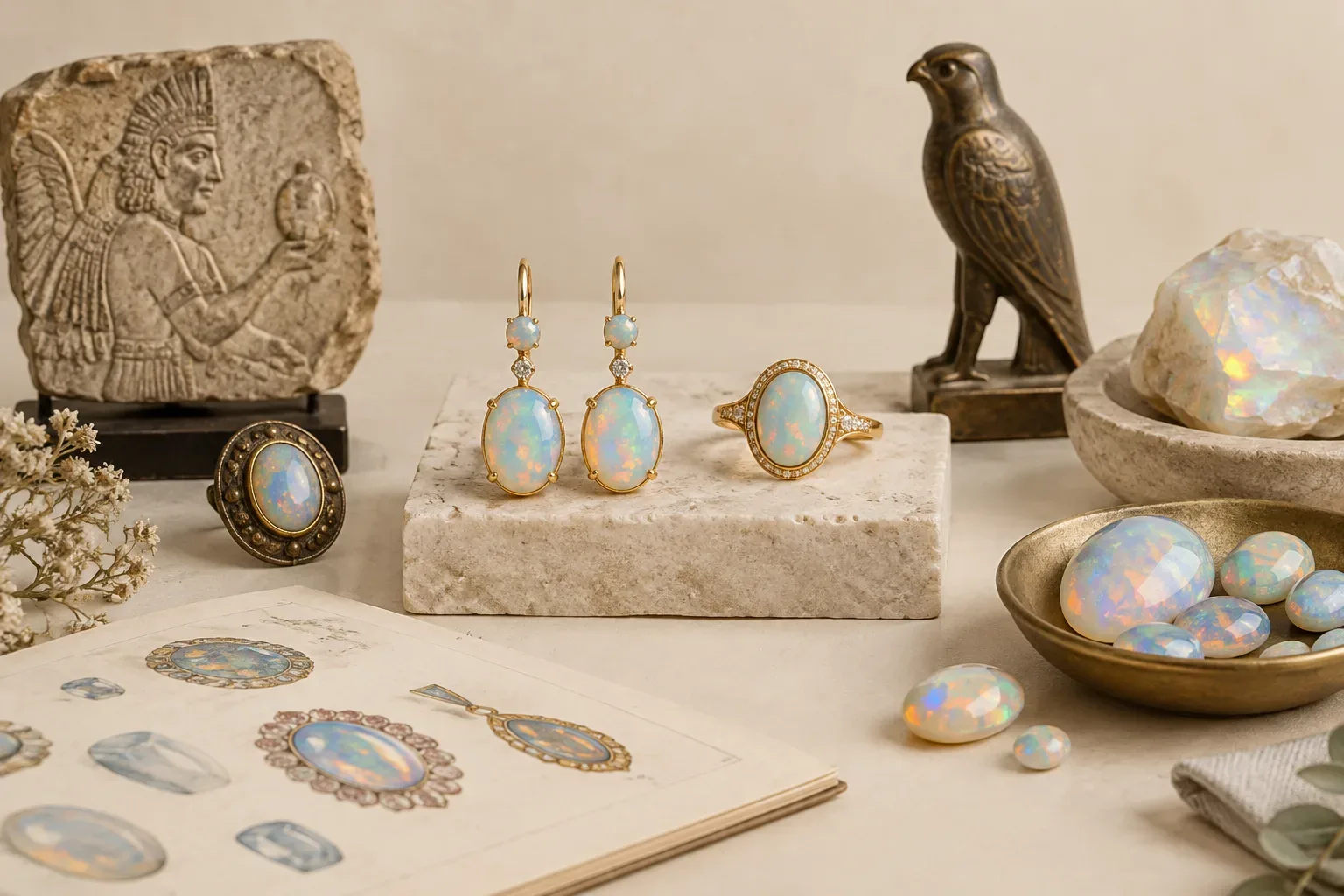
Opals are most commonly cut en cabochon (a smooth, domed surface) because the gentle curve shows play-of-color without the risk that faceting will disrupt the visual effect. Cabochons appear in rings, pendants, and brooches and are often set low and flush to reduce the chance of knock damage. Museum descriptions explain that cut choices are responses to the stone’s optical and physical traits (Victoria and Albert Museum, "An A–Z of Gemstones").
To improve durability and cost, jewelers also present opals as assembled stones. Doublets are thin slices of opal glued to a dark backing to intensify color, and triplets add a protective clear cap. These appear in costume jewelry, commercial pieces, and also in higher-end work when a protective cap is wanted. Assembled stones increase resilience but require disclosure to buyers, a practice the Federal Trade Commission makes clear is necessary for transparent commerce (Federal Trade Commission, "Buying Gemstones, Diamonds, and Pearls").
Settings for opals tend to favor metal bezels, low-profile mounts, and surround-style halos that shield edges rather than tall prongs. In heavier jewelry—pendants, earrings, brooches—opals are often recessed into cups or frames. You will also find opals used as inlay in signet rings and decorative surfaces where a flush fit reduces exposure to impact.
Choosing for beauty and durability: practical guidance
Decide how the piece will be worn. For everyday rings, prioritize protective settings: solid bezels, low galleries, and metal rims that cover vulnerable edges. For occasional-wear pendants and earrings you can be more adventurous with exposed cuts, but still favor mounts that prevent chipping. Historical practice, as documented by museum collections, shows jewelers long preferred protective mounts for softer stones (Victoria and Albert Museum, "Bedazzled").
Prefer cabochons when you want the most reliable display of play-of-color. Faceted opals exist but are less common precisely because facets interrupt the shifting color fields. If you choose an assembled stone (doublet or triplet) for affordability or durability, ask the seller for explicit disclosure and details about the assembly. The Federal Trade Commission advises consumers to request clear information about treatments and imitations when buying gemstones (Federal Trade Commission, "Buying Gemstones, Diamonds, and Pearls").
Ask about treatments and origin. Some opals are stabilized, treated, or assembled; these practices affect value and care. Request written confirmation of any treatment or assembly and, for higher-value purchases, an independent report or appraisal. Museums’ gemstone guides and consumer-protection guidance both point to transparency as good practice for buyers and sellers (Victoria and Albert Museum, "An A–Z of Gemstones"; Federal Trade Commission, "Buying Gemstones, Diamonds, and Pearls").
Match metal and setting style to the opal’s color. Darker backs or blackened settings can intensify an opal’s colors visually, while pale metals like white gold or platinum create a different aesthetic. Choose a setting that reflects the wearer’s taste and lifestyle: stiffer, protective mounts for active wear; more open and decorative settings for jewelry kept for special occasions.
Care and handling: avoid sudden temperature changes, prolonged exposure to heat, and harsh chemicals. Clean gently with a soft, damp cloth and avoid ultrasonic cleaners unless the seller confirms the stone’s treatment makes it safe. Historic practice shows jewelers have long considered certain stones too fragile for rough wear; contemporary care advice follows that same pragmatic line (Victoria and Albert Museum, "An A–Z of Gemstones").
Gifting guidance and cultural respect
When gifting opal, be transparent about the piece’s construction and care needs. Explain whether it is a natural solid opal, a doublet, or a triplet, and whether any stabilizing treatments were applied. A thoughtful note or care guide accompanying the gift helps recipients understand the piece’s practical needs and its intended use.
Respect cultural contexts and personal beliefs. Museums document how gemstones have different meanings in different periods and societies; avoid assuming a single symbolic meaning applies across cultures or individuals. If you know the recipient values historical accuracy or has particular cultural associations with gemstones, choose a design and setting that align with that awareness. If unsure, select a protective setting and include a short explanation of materials and recommended wear.
For high-value pieces, consider professional appraisal and insurance as part of the gift. Opals can be beautiful centerpieces in sentimental jewelry, but their vulnerability means a prudent approach to valuation and protection benefits both giver and recipient.
Summary: practical checklist
Prioritize cabochon cuts and protective settings for everyday wear; consider assembled stones only with full disclosure; ask sellers about treatments and origin; choose metal and setting consistent with the recipient’s lifestyle; and follow gentle cleaning and handling practices. The Victoria and Albert Museum’s historical surveys and the Federal Trade Commission’s consumer guidance underline two constant practices: adapt cuts and settings to the stone’s physical needs, and insist on transparent information when buying.
Frequently asked questions
Are opals fragile?
Opals are relatively soft compared with many gemstones and can chip or crack if struck or exposed to sudden temperature changes. Choose protected settings for frequent wear and handle opal jewelry gently.
What is the best cut for an opal?
Cabochon cuts are most common for opal because the smooth dome shows play-of-color consistently; faceting is less typical and may diminish the visual effect. For durability, cabochons set in bezels or recesses are ideal.
What are doublets and triplets?
Doublets are assembled stones made by bonding a thin slice of opal to a backing to intensify color; triplets add a protective clear cap. They can be durable and affordable but must be disclosed to buyers.
Can I wear an opal engagement ring every day?
You can, but choose a protective setting such as a bezel and accept that opal requires more care than harder stones like sapphire or diamond. Consider the wearer’s lifestyle before committing to daily wear.
How should I clean opal jewelry?
Clean opal jewelry with a soft, damp cloth and mild soap if needed; avoid ultrasonic cleaners and steam. Do not expose opals to harsh chemicals, intense heat, or sudden temperature changes.
How can I be sure a seller is honest about treatments?
Ask for written disclosure of any treatments or assembly. For significant purchases, request an independent report or appraisal. The Federal Trade Commission advises buyers to seek clear information about gemstone treatments and imitations.
Sources and further reading
- Bedazzled: A History of Jewellery — Victoria and Albert Museum
- An A-Z of Gemstones — Victoria and Albert Museum
- Buying Gemstones, Diamonds, and Pearls — Federal Trade Commission