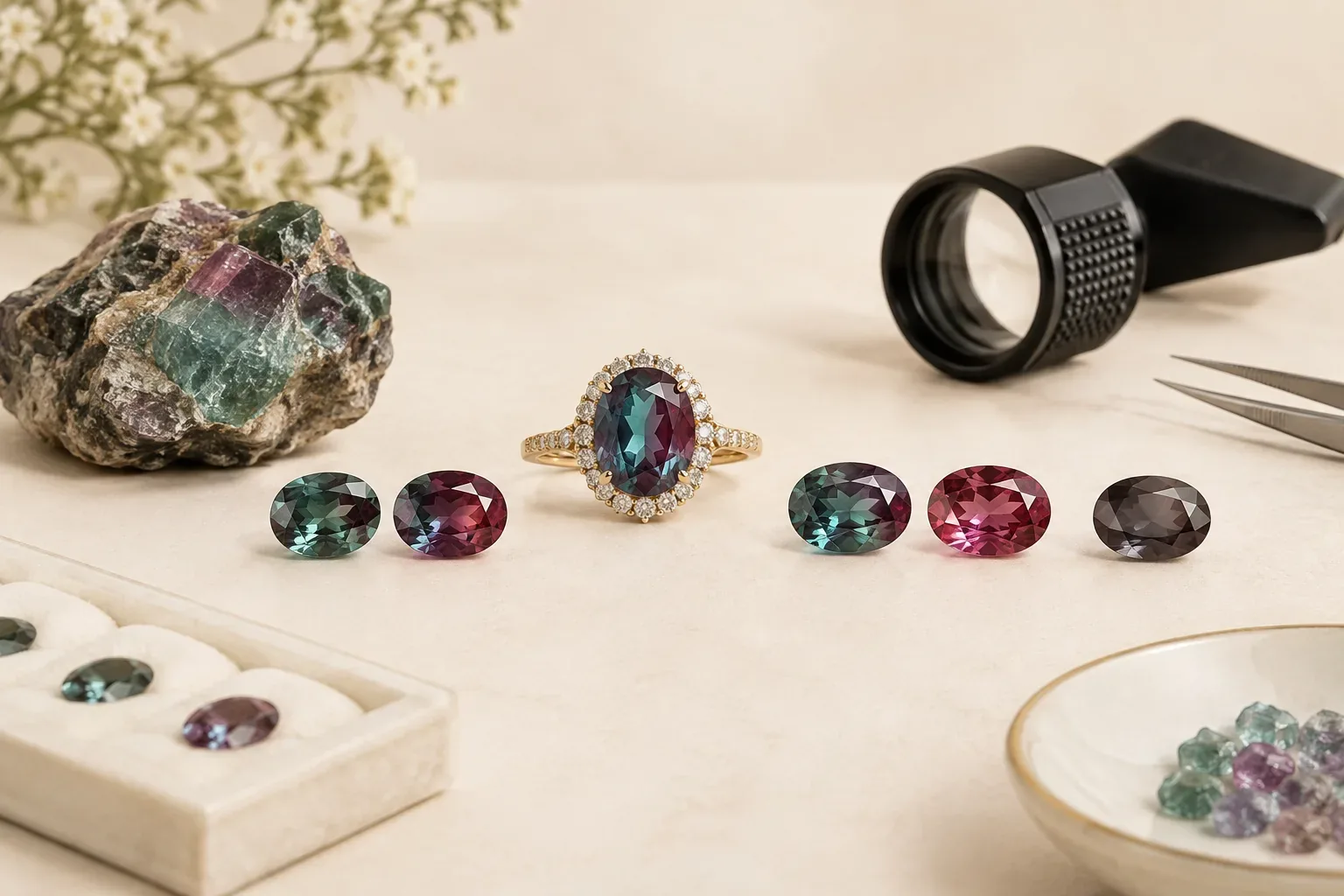
Meaning at a glance
This guide defines natural, lab-created, treated, and imitation alexandrite; explains why clear seller disclosure and laboratory reports matter; lists what a buyer can check without a gemologist; and offers selection, care, and gifting guidance grounded in consumer and gemological practice.
Defining the categories and why each matters
Natural: A natural alexandrite is a gemstone formed in nature. Natural stones typically command the highest market prices because of their rarity. The FTC emphasizes the need for clear labeling of natural material so consumers can compare value fairly.
Lab-created: A lab-created alexandrite is made in a controlled laboratory environment with essentially the same chemical composition and physical structure as a natural stone. Lab-created stones generally sell for substantially less than comparable natural stones. The FTC and consumer protection guidance require sellers to disclose lab origin so buyers understand the difference in scarcity and price.
Treated: A treated alexandrite has been subjected to a process intended to change or improve its color, clarity, or stability. Treatments can affect a stone’s durability and resale value. The GIA notes that consumers commonly ask whether treatments are detectable, whether they are stable in normal wear, and whether they must be disclosed.
Imitation: An imitation is a material that looks like alexandrite but is not the same mineral and lacks the same chemical and physical properties. Imitations are legitimate low-cost alternatives if clearly labeled, but they are not substitutes for natural or lab-created stones if authenticity is the buyer’s priority.
Historical evidence and cultural associations — what the approved record shows
Within the set of approved sources for this guide there is limited material that documents ancient or classical cultural meanings specific to alexandrite. The available industry and consumer-protection sources focus on market behavior, disclosure, and gem treatment rather than detailed historical provenance. Because those sources do not provide a comprehensive cultural history, claims about specific historical periods or cultures assigning particular meanings to alexandrite cannot be supported here without additional specialist references.
What the trade publications do document is how gemstones, including colored gems, have been marketed and adopted in contemporary jewelry trends. Professional Jeweller and related industry insights describe growing consumer interest in gemstone rings, birthstone-style necklaces, and vintage-inspired designs, which shape modern demand and personal meanings assigned to stones by buyers and jewelers. Imaginaire Digital’s search data similarly shows demand patterns for categories like engagement rings, gemstone rings, and necklaces that influence how particular gems are used in modern jewelry.
Separating documented historical meanings from modern personal interpretations
Documented historical meanings require primary historical or scholarly sources; the approved sources used here do not provide those citations for alexandrite specifically. Therefore, any statement about historical symbolism must be labeled speculative or described as a modern interpretation unless backed by dedicated historical research.
Modern personal interpretations are common and legitimate in jewelry: consumers and designers attribute personal or contemporary symbolic value to gems based on color, rarity, or marketing narratives. Industry reporting makes clear that these meanings are often shaped by current trends, retailer storytelling, and individual preference rather than established historic consensus.
How alexandrite typically appears in jewelry today
In contemporary jewelry markets, color-change gems and other colored gemstones appear in many forms: rings, especially engagement and gemstone rings, necklaces and pendants, earrings, and bespoke designer pieces. Trade reporting highlights growing interest in sculptural designs, gemstone rings, and birthstone necklaces; these trends influence how retailers present stones like alexandrite to buyers.
Because of price and rarity differences among natural, lab-created, and treated stones, sellers commonly offer alexandrite in a range of settings and price points. Lower-cost imitations or lab-created stones appear in fashion jewelry and more affordable classic settings, while verified natural stones are typically set in higher-end metalwork and accompanied by lab reports or strong provenance documentation.
Practical decision criteria and trade-offs for buyers
Price versus rarity: Natural stones are generally pricier; lab-created stones provide the visual characteristics at a lower cost. Buyers should decide whether natural origin is essential or whether visual appeal and budget are more important.
Disclosure and documentation: For any purchase above modest retail value, insist on written disclosure about origin and treatments and, for high-value stones, an independent gemological report. The FTC emphasizes that consumers need clear distinctions and seller disclosures among natural, lab-created, treated, and imitation materials.
Detectability and limits: Some treatments and lab origin can be detected only with specialized gemological equipment; the GIA advises that detectability, disclosure, and documentation are central consumer concerns. A jeweler’s loupe or unaided visual inspection can spot obvious imitations or surface treatments, but conclusive origin or subtle treatment detection typically requires a qualified gemological laboratory.
What you can verify at home and what requires a professional
At home you can check seller reputation, written disclosure, return policy, and whether a gem report is provided. You can observe the stone’s color range under different light sources, check for obvious surface damage or adhesive, and compare weight and size expectations for a given metal setting.
A qualified jeweler or gemological laboratory is required to verify origin (natural versus lab-created) and to identify many treatments reliably. The GIA explains that treatments, their detectability, and their effects on care and durability are complex questions that gemological testing addresses best. For any significant purchase, obtain a laboratory report from a recognized lab to confirm the stone’s origin and any treatments.
Care, durability, and special considerations
Treatments can affect how a stone should be cleaned and worn. The GIA’s guidance about treatment disclosure and care implies that consumers should ask whether a stone has been treated and what care those treatments require.
General cautious care for colored gemstones includes avoiding strong chemicals, sudden temperature changes, and hard knocks. If a stone is confirmed to have surface-reaching treatments or enhancements, take the seller’s care recommendations seriously and ask whether routine professional maintenance is advised.
Selection and gifting guidance — respectful and practical
Decide what matters most: origin, visual effect, price, or ethical traceability. If origin matters, budget for a stone accompanied by an independent gemological report. If visual impact and budget matter more, a lab-created or well-disclosed treated stone can be an excellent and ethical choice.
When gifting, be respectful of the recipient’s preferences and the symbolic expectations that might accompany a gemstone. If you present a stone as a natural alexandrite, ensure the documentation supports that claim. If you choose a lab-created or imitation piece, label it honestly and consider framing the gift as a design or color choice rather than a rarity claim.
For significant purchases such as engagement rings, emphasize written return and upgrade policies and verify whether the retailer will provide or replace a lab report at resale. Industry reporting indicates that consumer interest in gemstone engagement rings is strong; clarity about origin and treatment will protect both buyer and recipient.
Closing practical checklist
Before buying, ask for written disclosure of origin and treatments, request an independent laboratory report for higher-value stones, confirm the seller’s return and repair policy, and be prepared to consult a qualified jeweler or gemological lab for definitive testing. The FTC and GIA guidelines together show that clear disclosure and laboratory verification are the central consumer protections when authenticity matters.
Frequently asked questions
How can I tell if an alexandrite is natural without a lab report?
You can check seller disclosures, request documented provenance, confirm a transparent return policy, and look for obvious signs of imitation such as poor color uniformity or glued-in settings. However, conclusive determination of natural origin typically requires a qualified jeweler or a recognized gemological laboratory; the FTC advises buyers to rely on written disclosure for material origin.
Do lab-created alexandrite and natural alexandrite look different?
Visually, lab-created stones can closely mimic natural stones. While some experienced gemologists may spot growth patterns or inclusions that differ between natural and laboratory-grown material, many distinctions require specialized equipment and testing. For consumer protection and fair pricing, sellers should disclose lab origin.
What are common treatments and why do they matter?
Treatments can include processes to alter color or clarity. Treatments may affect a stone’s durability, how it must be cared for, and its resale value. The GIA notes that treatment disclosure and advice on care are important consumer questions, so ask the seller whether any treatment was applied and how it changes care requirements.
Is an imitation stone a bad choice?
Not necessarily. Imitation stones can be an honest, budget-friendly option if clearly labeled and chosen for aesthetic reasons rather than rarity. The key is transparent disclosure so the buyer understands what they are purchasing, as the FTC recommends.
When should I insist on a laboratory report?
For high-value purchases or stones you plan to insure or resell, insist on a report from a recognized gemological lab that states origin and documents treatments. Written laboratory verification is the most reliable way to confirm whether a stone is natural, lab-created, or treated.
How should I care for a treated or lab-created alexandrite?
Ask the seller for specific care instructions, because some treatments change cleaning or maintenance needs. In general, avoid harsh chemicals, extreme temperatures, and physical impacts; seek professional cleaning and maintenance when uncertain.
Sources and further reading
- Imaginaire Digital — Imaginaire Digital
- Professional Jeweller / PRYA Jewellery Search Insights — Professional Jeweller / PRYA Jewellery Search Insights
- Gemological Institute of America — Gemological Institute of America
- Federal Trade Commission — Federal Trade Commission