Meaning at a glance
Black opal engagement ring guide: black opal can be a distinctive engagement choice when you accept trade-offs in durability and verification; prioritize protective settings, ask for written disclosure and lab reports, choose care-friendly designs, and insure the finished ring.
What black opal is and how it appears in jewelry
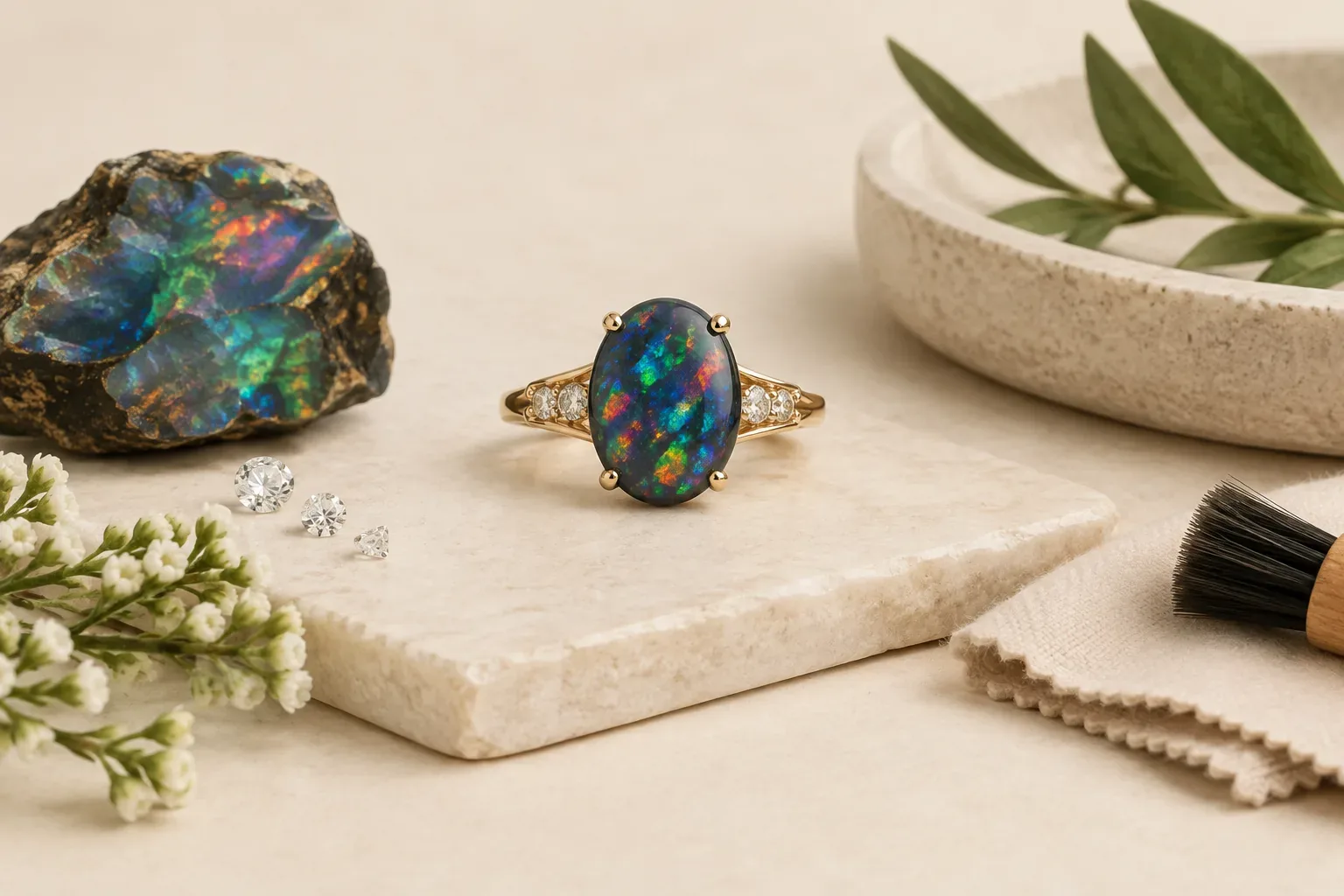
In modern jewelry descriptions, a black opal refers to opal material with a dark body tone that enhances flashes of iridescent color, often called play-of-color. Jewelers highlight this contrast to emphasize vivid reds, greens, blues or multicolored flashes that appear as the stone moves. Because the effect depends on light and viewing angle, black opals are prized for visual impact rather than hardness or scratch resistance.
Designers and retail trend reports show increasing interest in gemstone engagement rings and opal rings specifically, which helps explain wider availability and more creative settings. Professional Jeweller / PRYA Jewellery Search Insights lists opal and gemstone rings among trends shaping contemporary jewelry, while Imaginaire Digital reports strong consumer demand for engagement rings and other gemstone pieces in 2026, supporting why opal engagement options are more visible in the market.
Historical evidence and what these sources document
None of the approved sources in this brief supply detailed ancient cultural histories for black opal specifically. The four approved references focus on contemporary market trends, consumer protection, and gem-treatment and care principles rather than primary historical accounts about opal symbolism or ritual use.
Because the approved evidence set does not include museum, anthropological, or historic primary sources, this guide does not attribute ancient or traditional cultural meanings to black opal. Any historical claims beyond what these approved sources document would require additional, specialized sources.
Documented meanings versus modern personal interpretations
From the available evidence, documented meanings in the approved sources are market- and consumer-focused rather than symbolic. Professional publishing on jewelry trends notes the popularity and stylistic role of opals in contemporary designs, but these reports do not assert universal symbolic meanings.
Modern personal interpretations—what an individual wearer believes a black opal stands for—are valid as private meaning but are not the same as documented historical symbolism. Many buyers choose opal for its uniqueness, iridescence, or emotional resonance. Those personal attributions are subjective and should be presented as personal preference rather than universal fact.
How black opal is used in engagement-ring settings and design trade-offs
Because black opal shows color most effectively with a dark background, designers often set it as a single striking center stone, sometimes flanked by small accent diamonds or colored gems to enhance contrast. Trend reporting shows a rise in sculptural, gemstone-forward engagement styles, which includes opal centers paired with halos or cluster arrangements to protect and frame the stone.
Trade-offs to weigh include visibility versus protection. High-prong mounts allow more light and visibility but leave the stone exposed to knocks and abrasion. Protective settings such as bezel mounts or low-profile halos reduce exposure at the cost of some surface visibility. Buyers should balance aesthetic priorities and the recipient’s daily activities when choosing between showier or more protective settings.
What a shopper must verify and what requires a lab or qualified jeweler
The Federal Trade Commission advises that consumers need clear distinctions among natural, lab-created, treated, cultured and imitation materials and that sellers provide written disclosures. For black opal purchases, ask the seller for explicit, written information about whether the stone is natural, treated, assembled, lab-created, or an imitation.
A qualified gemological laboratory report or in-store certification from a trusted independent gemologist is the most reliable way to verify natural origin and detect many common treatments. According to the Gemological Institute of America, treatments, disclosure, detectability and durability are central consumer concerns for gemstones. Some treatments are detectable only by laboratory testing, and some durability problems require magnification or professional inspection to spot, so a lab report or qualified jeweler’s assessment is often necessary for high-value purchases.
Practical selection and gifting guidance
Match the stone and setting to the recipient’s lifestyle. If the wearer leads an active life or works with their hands, favor protective settings such as bezel mounts or low-profile halos and accept a slightly less exposed view of play-of-color in exchange for resilience. If they prize visual drama and seldom wear rings during manual tasks, a prong or high-setting may be appropriate.
Require written disclosures and, where available, an independent laboratory report. If the seller cannot provide clear written documentation describing whether the opal is natural, treated, assembled, or an imitation, consider walking away or insisting that the sale include a return window pending independent verification. Keep receipts, the seller’s disclosure, and any lab reports together for insurance and resale.
Think ahead about sizing and alternates. Because opal is relatively more fragile for resizing interventions, try to buy in the correct size or select styles and jewelers known to perform resizing on opal rings. If you expect sizing uncertainty, consider a design that uses a setting easily transferable to a new band, or order with a clear resizing policy from the jeweler.
Care and maintenance: safe everyday routines and longer-term upkeep
Treat black opal as a delicate gemstone in daily wear. The Gemological Institute of America emphasizes that treatments, durability and special care create distinct consumer questions for gemstones. Avoid exposure to household chemicals, perfumes, cosmetics and strong detergents. Remove opal rings for heavy manual work and for activities that risk impact or sudden temperature changes.
For routine cleaning, use a soft cloth and warm soapy water; rinse gently and dry with a soft lint-free cloth. Avoid ultrasonic cleaners and steam cleaning unless an independent qualified jeweler confirms that the particular stone and setting are safe for those processes. Store opal jewelry separately to prevent abrasion against harder gemstones or metal.
Schedule periodic inspections with a professional jeweler to check prongs, bezels and the stone’s stability in the setting, and to confirm whether any protective measures or reconditioning are necessary. Maintain written records of inspections, cleanings, and any treatments for insurance and resale.
Insurance, appraisal and resale considerations
Because black opal engagement rings combine aesthetic rarity with specialized care needs, consider an insurance policy and an appraisal by a qualified independent appraiser. Keep the appraisal and any lab reports with the purchase documentation. The Federal Trade Commission guidance on disclosure underscores that transparent documentation helps consumers later verify what they bought, which supports insurance claims and future resale.
Understand that resale dynamics for opal rings differ from more conventional diamond engagement rings. Market demand for distinctive gemstone engagement rings has grown in recent trend reporting, but resale values depend on the stone’s documented origin, any treatments, and current market interest.
Frequently asked questions
Are black opals suitable for engagement rings?
Yes, black opals can be suitable for engagement rings if you accept trade-offs: opal is generally less tough than traditional engagement stones, so choose protective settings, obtain written disclosure about the stone’s origin and treatments, and plan for careful everyday wear and routine professional inspections.
How can I verify that a black opal is natural or untreated?
Request written disclosures from the seller and, for high-value purchases, insist on an independent gemological laboratory report or a qualified jeweler’s documented assessment. The Federal Trade Commission highlights the need for clear distinctions and written seller disclosures, while the Gemological Institute of America notes that detecting some treatments requires laboratory testing.
What settings protect a black opal best?
Protective settings such as bezels, low-profile halos, or designs that shelter the stone’s edges reduce the risk of impact and abrasion. These settings trade some surface visibility for durability; choose the balance that fits the wearer’s lifestyle.
How should I clean and care for a black opal ring?
Clean gently with warm soapy water and a soft cloth and avoid ultrasonic cleaners or steam unless a qualified jeweler confirms safety. Keep the ring away from household chemicals, extreme temperature changes, and abrasive jewelry. Schedule periodic professional inspections.
Do I need insurance and an appraisal for a black opal engagement ring?
Yes. Because black opal combines aesthetic rarity with specialized care needs, obtain a written appraisal from a qualified independent appraiser and consider jewelry insurance. Keep all purchase documents, lab reports and appraisals for claims and future resale.
Sources and further reading
- Imaginaire Digital — Imaginaire Digital
- Professional Jeweller / PRYA Jewellery Search Insights — Professional Jeweller / PRYA Jewellery Search Insights
- Gemological Institute of America — Gemological Institute of America
- Federal Trade Commission — Federal Trade Commission