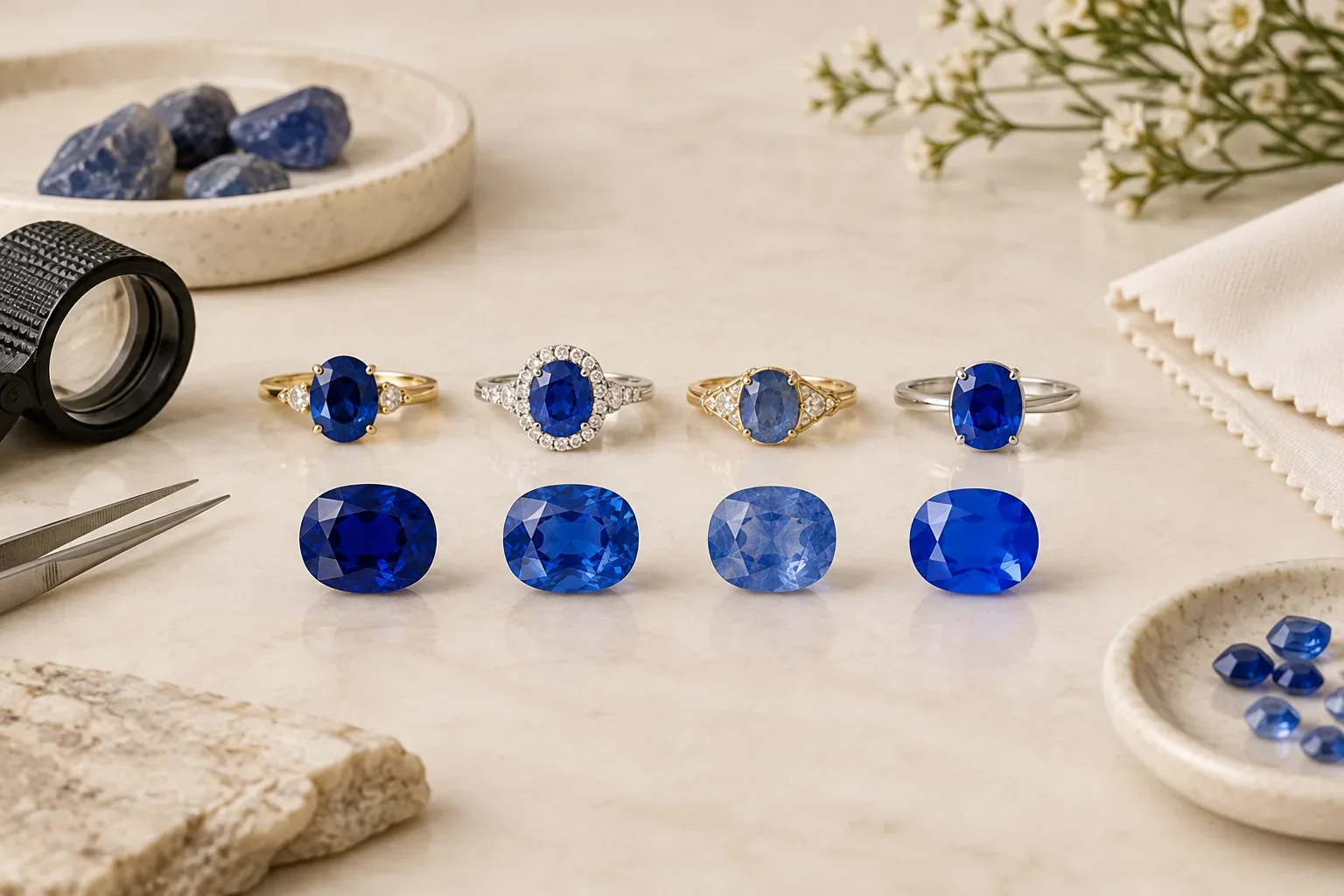
Meaning at a glance
This guide defines natural, lab-created, treated, and imitation blue sapphires; gives clear decision criteria and practical trade-offs for buyers; explains what tests require a qualified jeweler or gemological laboratory; and offers safe care and selection advice based on gemological and consumer-protection guidance.
Quick answer
Short answer: Use clear, evidence-led definitions and seller disclosure to sort natural, lab-created, treated, and imitation blue sapphires; ask for a written description and, for higher-value stones, an independent report from a recognized gemological laboratory. Many basic checks (visual consistency, price, mounting, seller reputation) are useful, but you cannot reliably determine treatment status, origin, or whether a sapphire is natural versus lab-created without testing by a qualified jeweler or a gemological laboratory. This article follows the practical approach and consumer-protection principles advised by the Gemological Institute of America (GIA) and the U.S. Federal Trade Commission (FTC).
Definitions and decision criteria
Natural blue sapphire: A corundum (aluminum oxide) crystal formed in nature whose blue color comes from trace elements such as iron and titanium. When sellers use the term "natural," the FTC expects clear disclosure of any treatments and the stone's full condition.
Lab-created (synthetic) blue sapphire: A corundum crystal grown in a laboratory to have the same chemical composition and crystal structure as natural sapphire. Lab-created sapphires are not imitation materials; they are real corundum but manufactured. The FTC requires that sellers conspicuously and honestly label lab-created gems as such.
Treated blue sapphire: A natural sapphire whose color, clarity, or overall appearance has been altered by human intervention. Heat treatment is common and generally accepted in the trade, but other treatments (such as glass filling or diffusion) have different durability and disclosure implications. The GIA explains that treatments affect detectability, durability, and required care, and that accurate disclosure is central to fair practice.
Imitation (simulant) blue sapphire: A material that only looks like sapphire but is a different mineral or glass. Common simulants include glass, spinel, and other synthetic materials that mimic the look of sapphire but do not share its hardness or composition. The FTC guidance makes a clear distinction between natural, lab-created, treated, and imitation materials and requires sellers to state which category applies.
What shoppers can and cannot verify without a laboratory
Checks you can reasonably perform yourself or with a retail jeweler include visual inspection for obvious signs: sharp facet edges and durable mounting for a harder stone, consistent color saturation, the presence of bubbles (which suggest glass), and a price that aligns with market expectations. Asking for recent, written disclosure of treatments and lab reports is critical and supported by FTC consumer guidance.
Limits to home or in-store verification: You cannot reliably determine whether a sapphire is natural versus lab-created, whether it has undergone certain treatments (for example, subtle diffusion or some filled fractures), or its geographic origin without specialized instrumentation and expertise. The GIA notes that detectability varies by treatment type and that some processes require advanced testing to confirm.
When independent verification matters: For stones of significant value (engagement rings, heirlooms, or investment purchases), insist on an independent gemological report from a recognized laboratory. If a seller resists providing a report or clear written disclosure about treatments, treat that as a material red flag in the buying decision.
How blue sapphire authenticity and treatments appear in jewelry
Design and mounting can provide clues but are not definitive proof. High-value natural or certified stones are commonly mounted in secure settings of higher karat gold or platinum and accompanied by documentation; less expensive or imitation stones may appear in lower-cost mountings. Industry trend research from Imaginaire Digital and Professional Jeweller shows strong consumer interest in gemstone rings, birthstone necklaces, and sculptural jewelry, which increases the number of treated and lab-created stones in the market because these options make vivid color and larger sizes more affordable.
Surface and facet appearance: Heat-treated sapphires often display improved color uniformity and fewer visible inclusions compared with untreated stones of similar origin; filled fractures or glass-filled stones can show telltale surface-reaching areas where the filler pools or alters light performance. However, these signs can be subtle, and only a trained gemologist using magnification and spectroscopic tools can reliably identify many treatments.
Documented historical meanings versus modern personal interpretations
This guide separates verifiable, documented information from modern or personal symbolism. The four evidence sources used here focus on consumer guidance, market trends, and gemological treatment issues rather than original cultural histories of sapphire symbolism. Therefore, while historical associations (for example, sapphires being prized by certain courts or religious figures) are widely discussed in general historical literature, those cultural claims are outside the scope of the specific sources cited in this article.
Modern personal interpretations are common and vary by individual and culture. When a buyer or recipient values a sapphire for a particular symbolic meaning, treat that as a personal choice rather than a universal or historically proven attribute. Sellers should clearly distinguish claims about cultural or spiritual meanings from verifiable gemological facts, and buyers who prize an historical narrative should seek specialist historical sources beyond the gemological and consumer-protection references used here.
Practical selection and gifting guidance
Decide what matters most: color and appearance, natural origin, price, or ethical and durability concerns. If your priority is vivid color and value for money, lab-created sapphires and some treated natural sapphires offer large, eye-catching stones at lower price points. If natural origin is essential, budget for a smaller stone or accept more visible inclusions, and expect to pay a premium for a laboratory report.
Ask for and read written disclosures: The FTC emphasizes that sellers must clearly distinguish natural, lab-created, treated, and imitation materials. For a meaningful gift purchase, request a dated, written description of the stone's type and any treatments. For higher-value stones, ask for a report from a recognized gemological laboratory and verify the report's details with the issuing laboratory if possible.
Gifting practicalities: For an engagement ring or a high-value present, prefer stones accompanied by an independent lab report. If gifting an affordable, fashion-oriented piece, a reputable retailer's clear labeling about whether a stone is lab-created or treated is usually adequate; treat vague language or missing disclosures as reasons to consider alternate sellers.
Respectful communication: When the recipient cares about authenticity or symbolism, be transparent about whether a sapphire is natural, lab-created, treated, or imitation. Many recipients appreciate honesty and context more than a surprising label discovered after gifting.
Care, durability, and treatment-specific warnings
Hardness and general care: Sapphire is a hard gem (corundum), and under normal wear it is durable. Routine cleaning with mild soap, warm water, and a soft brush is safe for most untreated, treated, and lab-created sapphires, but always follow the seller’s care advice and check for fragile mountings before cleaning.
Treatment-specific cautions: Some treatments change how a stone should be handled. The GIA explains that certain fills or unstable surface treatments can be damaged by heat, chemicals, or ultrasonic cleaners. If a stone has a fracture fill or glass filling, avoid exposure to heat and harsh chemicals and do not use ultrasonic cleaning unless a qualified professional confirms it is safe.
When to seek professional help: If a sapphire has visible surface-reaching inclusions, is fracture-filled, or if you are unsure about its treatment history, have it inspected by a qualified jeweler or gemologist before doing any repair, resizing, or aggressive cleaning.
Verification, labs, and professional testing
What reputable gem labs provide: Recognized laboratories analyze stones with microscopy, spectroscopy, and other advanced tools to determine whether a sapphire is natural or lab-created and to detect treatments. For important purchases, ask for a report from a widely recognized laboratory and be aware that laboratories vary in the format and scope of their reports.
Cost and timing trade-offs: Independent reports add cost and waiting time but materially reduce risk for higher-value purchases. For smaller fashion purchases, a trustworthy retailer's clear disclosure may be adequate. The FTC recommends written disclosures so consumers can compare offerings fairly.
Choosing a qualified jeweler: Look for credentials, transparency about testing and treatments, and willingness to provide written documentation. If a seller claims a stone was independently tested, verify the issuing laboratory and report number directly with the lab when possible.
Practical trade-offs and final decision framework
Budget versus authenticity: If you require a natural, untreated sapphire, accept smaller sizes or more visible inclusions per your budget. Lab-created stones and treated natural stones let you prioritize size and color at lower cost, but they require honest labeling and differing care.
Emotional value versus resale: Natural, well-documented sapphires typically retain resale value better than treated or imitation stones. If long-term value is a priority, insist on independent laboratory documentation.
Risk management: The most practical buyer strategy is to set clear priorities, demand written disclosure consistent with FTC guidance, and obtain laboratory verification when the stone’s value justifies the cost. For everyday fashion jewelry, rely on reputable sellers who provide clear labeling and return policies.
Frequently asked questions
Can I tell if a blue sapphire is natural just by looking at it?
No. Visual inspection and a jeweler’s loupe can reveal clues—such as bubbles suggesting glass or certain inclusion patterns—but distinguishing a natural sapphire from a lab-created one or identifying subtle treatments usually requires laboratory testing and specialized instruments, as explained by the Gemological Institute of America.
What should I ask a seller before buying a blue sapphire?
Ask whether the stone is natural, lab-created, treated, or an imitation, and request written disclosure of any treatments. For valuable stones, ask for an independent gemological report. The Federal Trade Commission highlights the importance of clear, written seller disclosures for gemstones.
Are lab-created sapphires ‘fake’?
No. Lab-created sapphires are real corundum crystals with the same chemical composition as natural sapphires but grown in a laboratory. They are distinct from imitation materials (simulants) and should be clearly labeled as lab-created per FTC guidance.
How does treatment affect care and durability?
Certain treatments—especially fracture filling or glass filling—can reduce a stone’s resistance to heat, chemicals, and ultrasonic cleaning. The GIA advises that treatment type affects detectability, durability, and recommended care, so follow treatment-specific cleaning instructions.
When is a lab report worth the cost?
Obtain an independent report when the stone’s value is significant to you, when natural origin is a priority, or when you plan to resell. Reports reduce uncertainty about origin and treatment and are an appropriate cost for higher-value purchases.
Sources and further reading
- Imaginaire Digital — Imaginaire Digital
- Professional Jeweller / PRYA Jewellery Search Insights — Professional Jeweller / PRYA Jewellery Search Insights
- Gemological Institute of America — Gemological Institute of America
- Federal Trade Commission — Federal Trade Commission