Meaning at a glance
For routine cleaning of blue sapphire jewelry, gently wash with warm water, a mild detergent, and a soft brush; avoid harsh chemicals, high heat and unknown ultrasonic or steam cleaning when a stone’s treatments or setting are undisclosed; ask sellers for written disclosures or a lab report because only a qualified jeweler or gemological laboratory can confirm treatments and origin.
Direct answer — the short, practical thesis
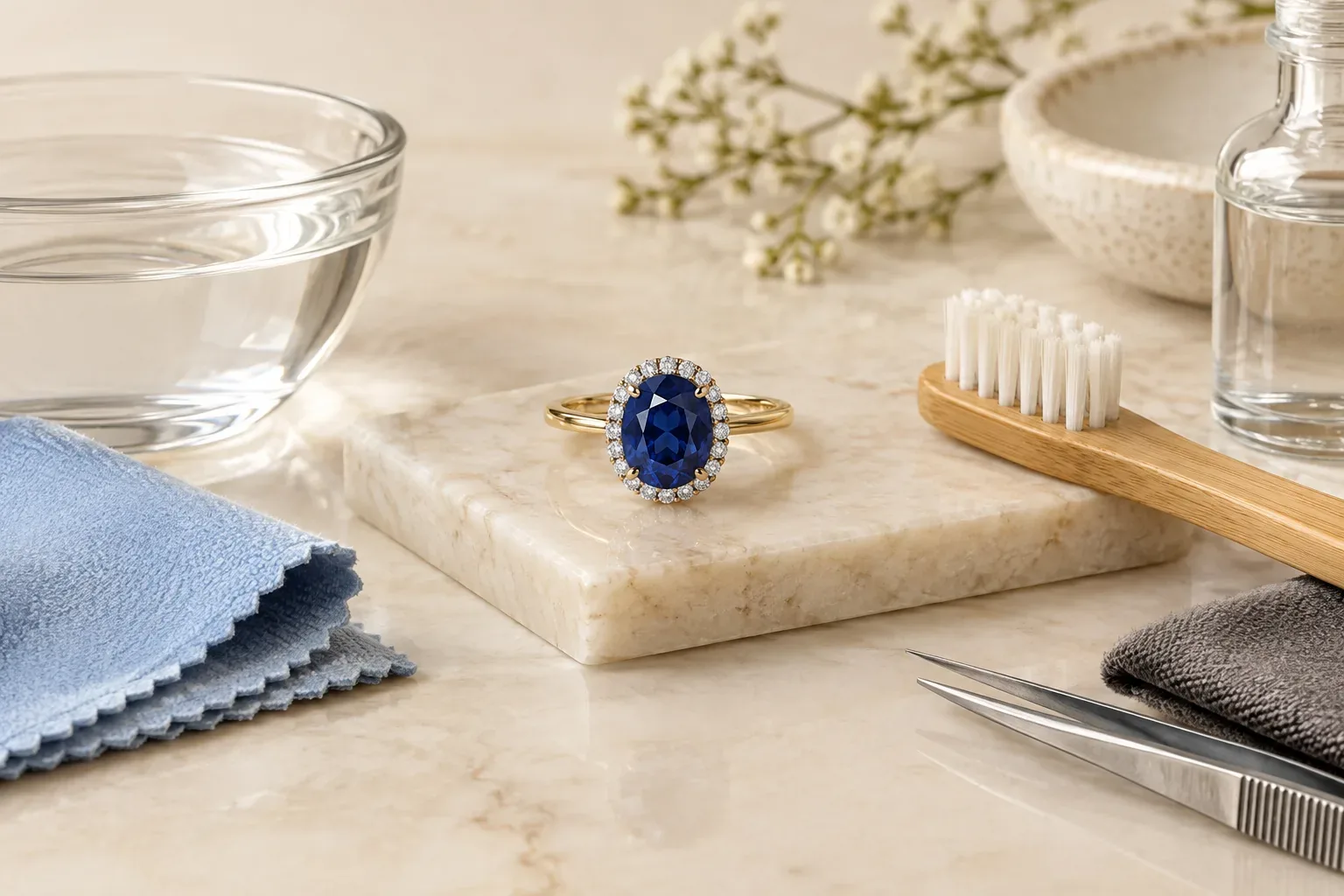
For most blue sapphire jewelry, the safest home method is a short soak in warm water with a mild liquid soap followed by gentle brushing with a soft toothbrush, a thorough rinse, and careful drying. Avoid household chemicals, strong acids or bases, and aggressive mechanical or thermal cleaning if the sapphire’s treatments or the setting’s stability are unknown. Request written treatment and origin disclosures from the seller and, when in doubt, consult a qualified jeweler or a gemological laboratory for testing before using ultrasonic or steam cleaners.
Historical evidence and cultural claims — what the approved sources support
The set of approved, evidence sources for this article does not include detailed primary sources on the ancient or medieval uses of blue sapphire in specific cultures. The referenced industry publishers (Imaginaire Digital and Professional Jeweller) focus on contemporary market demand and design trends rather than primary historical scholarship, and the Gemological Institute of America (GIA) and the Federal Trade Commission (FTC) provide guidance on treatment, disclosure and consumer protection rather than cultural histories.
Because the available sources do not document precise historical beliefs or rituals tied to blue sapphire for named cultures or periods, this article does not assert specific historic meanings. If you need documented historical claims (for example, a medieval European court tradition, a Persian reference, or South Asian uses), consult specialized museum catalogs, academic histories of gems, or primary sources in institutional collections rather than relying on modern market reports.
Documented history versus modern interpretation
Documented history requires primary or specialist secondary sources that record how a culture used, valued, or described a gemstone. The approved sources here do not provide those primary historical records, so this article separates historical scholarship from modern meanings and interpretations.
Modern personal and commercial interpretations — how people today attribute symbolism, birthstone meaning, or emotional value to blue sapphires — are visible in market research and trend reports. Professional Jeweller and Imaginaire Digital document growing interest in gemstone and engagement jewelry trends, which is part of how modern meaning is communicated through design and retail, but these sources do not replace historical documentation.
How blue sapphire appears in contemporary jewelry
Market research and industry reporting show that blue sapphires are widely used in engagement rings, cocktail rings, pendants, and fine necklaces as part of broader interest in gemstone jewelry. Professional Jeweller’s trend insights identify increased interest in gemstone rings and birthstone necklaces as part of contemporary buying behaviour.
Imaginaire Digital’s search and visibility analysis shows ongoing consumer demand for engagement-related categories and classic gemstone cuts and shapes, which helps explain why sapphires frequently appear in oval, round and cushion cuts for engagement rings and fashion pieces. These modern appearances are design and retail phenomena rather than claims about older cultural practices.
Safe cleaning methods: step-by-step, with decision criteria
A careful home cleaning routine that balances cleanliness with safety begins with a short soak in warm (not hot) water mixed with a few drops of a mild liquid dish soap. After the soak, use a soft bristle toothbrush to dislodge jewellery dust and oils gently, paying attention to the underside of the stone and the edges where dirt collects. Rinse thoroughly under warm running water and dry with a soft, lint-free cloth.
Decision criteria to choose this method: prefer it when you are unsure about the stone’s treatment history or whether the mounting is secure; it is low-risk for most metals and sapphire surfaces. The trade-off is that a gentle home clean may not remove deeply embedded residues or restore a professional polishing finish. For those deeper issues, a jeweler’s service is appropriate.
When the stone and setting are documented as stable and untreated, some jewelers allow ultrasonic or steam cleaning to reach crevices. The Gemological Institute of America (GIA) highlights that treatments, disclosure and durability matter for care. Use ultrasonic or steam cleaners only after confirming the sapphire is not fracture-filled, surface diffusion treated in a way that affects stability, or mounted in a setting that could trap moisture or be loosened by vibration.
What to avoid and why — common risks
Avoid household bleach, strong acids or alkalis, and commercial jewelry cleaners that do not specify suitability for sapphires and your setting’s metal. These chemicals can damage some metals, remove protective coatings, or react with residues from treatments. Avoid exposing the piece to sudden, high heat or flame, because thermal shock can damage fragile settings, glues, or fillers that may be present in treated stones.
Avoid using ultrasonic or steam cleaning when you do not have written disclosure from the seller about treatments and when the mounting is delicate or contains fracture-filled stones. The FTC stresses that consumers need clear distinctions among natural, lab-created, treated, and imitation materials and written seller disclosures; decisions about deep cleaning should follow those disclosures.
Limits on what a shopper can verify at home
A buyer can visually inspect a sapphire for obvious signs — chips, large surface-reaching fractures, loose prongs, or visible residues — and can request written disclosures about treatments and origin. However, determining whether a sapphire is natural versus lab-grown, or whether it has undergone heat treatment, diffusion, or fracture filling, usually requires specialized gemological testing. The FTC reminds consumers that sellers should provide clear disclosures and that some distinctions are not reliably verifiable without laboratory testing.
For absolute verification of treatment type, origin, or whether a stone has been fracture-filled, a qualified gemological laboratory or accredited gemologist using proper instrumentation is the practical limit. A trusted jeweler can often give initial advice, but only a laboratory report gives the highest level of certainty for treatment and origin claims.
Selection and gifting guidance — practical and respectful
When selecting or gifting a blue sapphire, ask the seller for written information on whether the stone is natural, lab-created, or treated, and whether a reputable laboratory report exists. Consider the recipient’s lifestyle: choose a secure setting and low-profile mount for someone who wears jewelry daily, and accept that heavier wear increases the need for periodic professional inspection and cleaning.
Balance aesthetic priorities and budget by understanding trade-offs: untreated natural sapphires typically command premiums and may tolerate routine home cleaning well, but treated or fracture-filled sapphires can be more affordable while requiring gentler care. Professional Jeweller and Imaginaire Digital’s market reporting can help you understand what styles and treatments are currently common in retail, but the FTC’s guidance reminds buyers to require honest written disclosures when purchase decisions depend on treatment or origin.
Routine maintenance and when to see a professional
For routine maintenance, perform the warm-soapy-water clean described above every few months or more frequently if the piece is worn daily. Inspect prongs and settings visually for looseness, and keep the jewelry stored separately to avoid metal-to-metal knocks. If you notice persistent dirt, a loose stone, or signs of filling or coating degradation, stop home cleaning and bring the piece to a qualified jeweler.
Consult a professional before using ultrasonic or steam cleaning, before attempting any aggressive polishing, and whenever written disclosures about treatment are absent or ambiguous. For consumers seeking authoritative verification of a stone’s treatment or origin, a gemological laboratory report is the definitive route.
Frequently asked questions
Can I clean a blue sapphire at home?
Yes. For routine cleaning, a short soak in warm water with a mild dish soap followed by gentle brushing with a soft toothbrush, rinsing, and drying is generally safe. Stop home cleaning if you suspect the stone has been treated, is fracture-filled, or if the mounting is loose.
Is it safe to use an ultrasonic cleaner on a sapphire?
Ultrasonic cleaning can be safe for many sapphires but should only be used after you have written confirmation that the stone is not fracture-filled or otherwise treated in a way that could be damaged by vibration. The Gemological Institute of America notes that treatments and durability affect appropriate care, so consult a jeweler or lab report first.
How can I tell if my sapphire has been treated?
Some visual clues can suggest treatment, but many treatments are not visible to the naked eye. The Federal Trade Commission advises requesting written disclosure from the seller. Only a qualified gemological laboratory or accredited gemologist can reliably determine many treatment types.
What chemicals should I avoid when cleaning sapphire jewelry?
Avoid household bleach, strong acids, strong alkalis and commercial cleaners that do not specify suitability for your stone and metal. These substances can damage certain metals, remove coatings, or harm treatment residues.
How often should I professionally inspect and clean a sapphire piece?
If worn regularly, have the setting and stone inspected by a jeweler at least once a year and more often if you notice looseness, persistent dirt, or visible wear. Professional cleaning can restore settings and remove residues that safe home cleaning cannot.
What documentation should I ask for when buying a blue sapphire?
Ask for written disclosures about whether the stone is natural, lab-created or treated, and request any available laboratory reports. The FTC recommends clear written distinctions among natural, lab-created, treated and imitation materials to support consumer decisions.
Sources and further reading
- Imaginaire Digital — Imaginaire Digital
- Professional Jeweller / PRYA Jewellery Search Insights — Professional Jeweller / PRYA Jewellery Search Insights
- Gemological Institute of America — Gemological Institute of America
- Federal Trade Commission — Federal Trade Commission