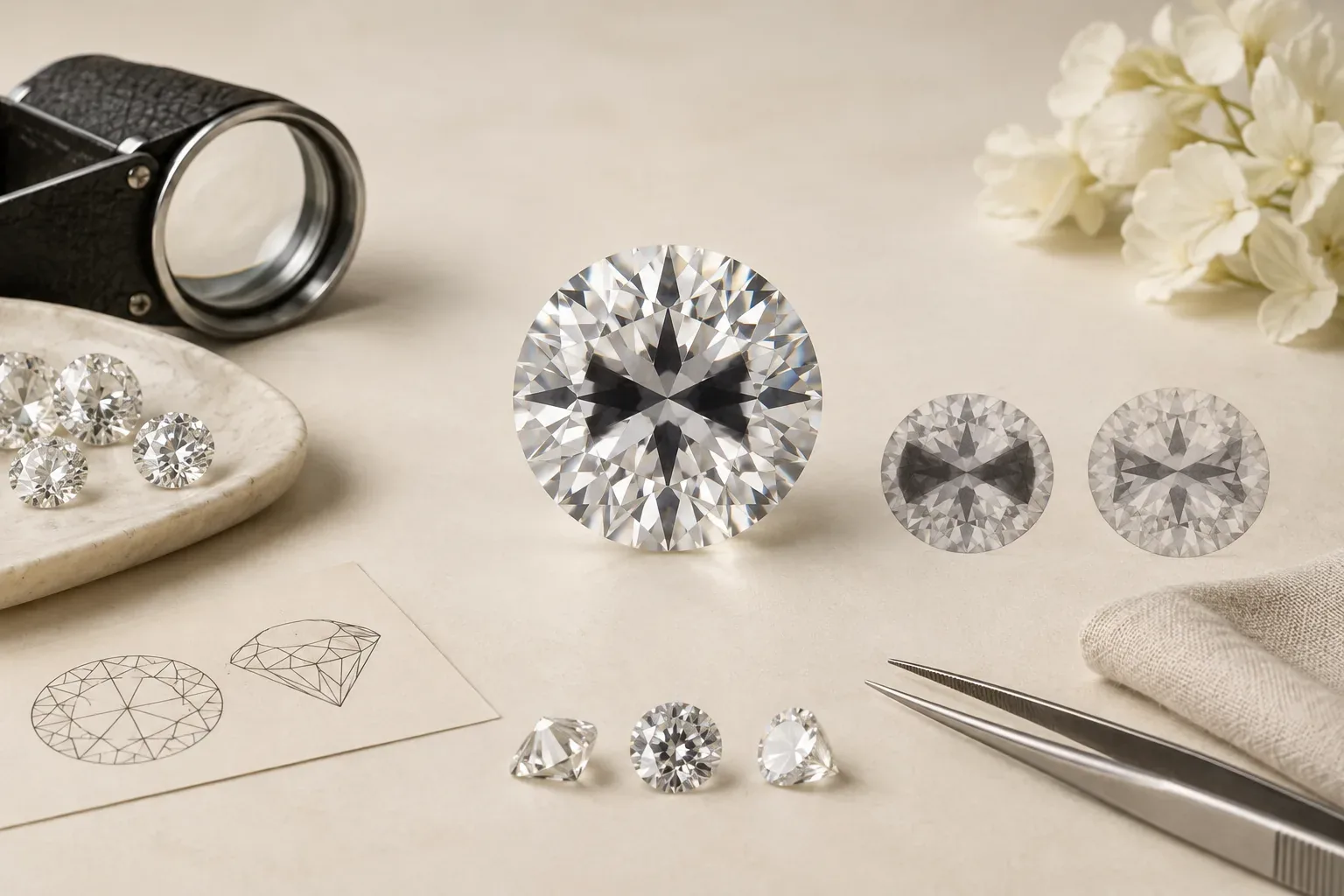
Meaning at a glance
The diamond bow-tie effect is an optical dark band commonly seen in fancy-shaped diamonds (marquise, pear, oval) caused by light leakage; it affects face-up brightness and personal preference more than standardized value metrics, and buyers should weigh visual appeal, cut quality, and disclosure. Verify basic carat, weight, and documented treatments from sellers, but rely on a qualified jeweler or a gemological laboratory for definitive cut assessments, origin or treatment detection, and grading reports.
Short answer
The diamond bow-tie effect is an optical shadow that appears across the table and crown of certain elongated or modified brilliant cuts. It can reduce perceived brightness and change a diamond's look, but it is not inherently a defect or a guarantee of reduced value. Use appearance, cut proportion notes, seller disclosure, and independent grading reports to decide whether a particular bow-tie suits your visual preferences and budget. For treatment, origin, durability, and formal grading you must rely on a qualified jeweler or a gemological laboratory; consumer protections demand written disclosure from sellers about treatments and synthetic origin, as the Federal Trade Commission explains.
What the bow-tie effect is and why it happens
The bow-tie effect is an optical phenomenon: a darker band shaped like a bow tie or butterfly across the center of a diamond when viewed face up. It results from how facets on certain shapes redirect or fail to return light to the viewer's eye, creating zones of light return and zones of light leakage.
You will most often encounter this effect in marquise, pear, oval and some elongated cushion and radiant cuts because those shapes have long axes and facet arrangements that permit a central band of light loss. Whether the band is faint, moderate, or strong depends on facet alignment, pavilion depth, crown height, and the exact relationship of crown and pavilion facets to the stone's outline.
Historical evidence and cultural context
Among the approved reference materials for this guide there is no documented cultural or historic tradition that connects the optical ‘bow-tie’ phenomenon in faceted diamonds to a discrete symbolic meaning assigned by a particular culture or historical period. The Gemological Institute of America focuses on gem treatments and consumer questions about durability and disclosure, while the Federal Trade Commission sets standards for what sellers must disclose to consumers, and Imaginaire Digital reports on contemporary market search demand for ring styles and shapes. None of these sources presents a historical cultural meaning for the bow-tie optical effect itself.
That absence matters: because the bow-tie is primarily an optical property of cut geometry rather than a long-standing motif with documented symbolism, you should not assume any historical cultural meaning for a diamond’s internal light pattern unless you have independent, primary-source evidence identifying such symbolism for a named culture or period.
Documented historical meanings vs modern personal interpretations
Documented historical meanings: The approved sources for this article do not provide historical claims that the bow-tie effect had a documented symbolic meaning in any specific culture or era. Therefore this guide separates documented history from later interpretation and does not present the optical bow-tie as having an established historical symbolism.
Modern personal interpretations: Today buyers and wearers sometimes ascribe personal meanings to the bow-tie look—a sign of uniqueness, an aesthetic accent, or a conversation piece. Those contemporary interpretations are personal and stylistic preferences rather than historically documented symbolism. Treat them as individual taste factors when selecting or gifting.
How the bow-tie effect appears in jewelry
As an optical feature, the bow-tie shows up when you view the stone face up, and it can be more or less conspicuous depending on cut proportions and the stone’s setting. In a solitaire marquise or pear engagement ring the effect sits along the long axis of the stone; in an oval it runs across the center. A bezel or halo setting can reduce contrast and make a bow-tie less visible, while open prong settings and deeply recessed tables can make it more pronounced.
Designers sometimes choose shapes known to show bow-ties for the character they add. Conversely, commercial cutters and labs annotate cut proportion notes that affect the phenomenon. Because the effect is optical, two visually similar stones can show different bow-tie intensity under the same light due to small differences in facet angles.
Value implications and practical trade-offs
There is no single market rule that prices a stone up or down solely because of a bow-tie. Value is influenced by how the effect interacts with overall brightness, scintillation, color, clarity, and carat. A faint bow-tie that does not noticeably reduce face-up brightness may have negligible impact on price. A strong, very dark band that dominates the table can lower a stone’s appeal and therefore its marketability to certain buyers.
Trade-offs you may face include choosing a cut that maximizes carat weight and face-up size but accepts a more noticeable bow-tie, or choosing a cut and proportions optimized for light return that minimize the bow-tie at the cost of slightly less spread. Settings can mitigate visual impact, and some buyers prefer the distinctive look and will accept the trade-off for shape and size.
What you can verify yourself and what requires an expert
Do-it-yourself checks: You can compare stones in person under natural light to assess how obvious the bow-tie looks to your eye. Ask the seller for high-quality face-up photos or videos taken in diffuse, daylight-balanced lighting, and request any available grading or cut reports. Confirm basic facts such as carat weight and measurements, and ask whether the stone is natural, lab-grown, treated, or imitation; the FTC requires sellers to provide accurate written disclosure about these distinctions.
What requires a qualified jeweler or laboratory: Determining precise pavilion and crown angles, subtle cut quality metrics, confirmation of treatments (for example clarity or color enhancements) and origin claims generally require a gemological laboratory or an experienced independent appraiser. The Gemological Institute of America explains that treatments and detection have distinct consumer implications and that laboratory services are the right avenue for authoritative answers about treatment and durability. If a seller makes origin or treatment claims without a lab report, treat those claims as unverifiable until independently tested.
Selection and gifting guidance
If you are buying for yourself, prioritize the appearance you love. Compare stones in person, and evaluate how the bow-tie looks in the ring style and lighting you expect to wear. Remember that settings change perception: halos and micro-pavé can distract from a bow-tie, while open prongs and solitaire mounts can emphasize it.
If you are buying a gift, consider the recipient’s likely tastes rather than theoretical rules. If they prefer bright, sparkly diamonds, choose a stone with minimal visible bow-tie when viewed face up. If they value distinctive shapes or vintage character, a mild or moderate bow-tie might be acceptable or even desirable. Always obtain seller disclosure in writing about whether the stone is natural or lab-grown, and whether it has undergone any treatments, as the FTC recommends, so the recipient has accurate provenance and care information.
Care and maintenance
Care for a stone that shows a bow-tie is the same as for any other diamond. Regular cleaning restores light return; oils and dirt on the surface can exaggerate contrast and make a bow-tie look stronger. Use mild detergent and warm water or a jeweler’s ultrasonic cleaner if the setting and any side stones are safe for sonic cleaning. For questions about treated stones and special care, refer to guidance from the Gemological Institute of America, which discusses how treatments affect care and detectability.
When in doubt, leave ultrasonic cleaning to professionals and store jewelry separately to avoid abrasion. Keep written seller disclosures and any lab reports with the piece for future resale, insurance, or maintenance needs.
Final checklist: questions to ask a seller
Ask for clear face-up photos and videos in diffuse, daylight-like lighting, and request a face-up comparison with a known reference if possible. Request any grading or cut reports, and ask whether the stone is natural, lab-grown, treated or imitated; insist on written disclosure per the Federal Trade Commission’s guidance. Ask whether the seller can supply pavilion and crown angle information or a light-performance analysis, and whether they will allow you to view the stone in person before purchase or offer a return window. For claims about treatment or origin seek a gemological lab report or independent appraisal—these claims are often not reliably verifiable without testing.
Frequently asked questions
Does a bow-tie always lower a diamond's value?
Not always. Value depends on how the bow-tie affects face-up brightness and market preferences. A faint or well-diffused bow-tie may have little to no price impact, while a pronounced, dark bow-tie that reduces sparkle can reduce appeal and marketability for some buyers.
Which diamond shapes most commonly show the bow-tie effect?
Elongated and modified brilliant shapes such as marquise, pear, oval, and some cushions and radiant cuts commonly show bow-tie effects because of their facet geometry and long axes.
Can I tell if a diamond is treated or synthetic by looking at it?
You cannot reliably determine treatments or synthetic origin just by unaided visual inspection. The Federal Trade Commission requires sellers to disclose such information in writing, and definitive identification generally requires laboratory testing or an expert appraisal, as noted by the Gemological Institute of America.
How can I reduce the visibility of a bow-tie in a ring setting?
Choose settings that distract from the center such as halos, pavé, or split-shank styles. A bezel may also reduce visible contrast. Viewing the stone mounted in the intended setting before purchase is the best test.
What should I insist on from a seller before buying?
Ask for clear photos and videos in diffuse daylight-like lighting, any available grading or cut reports, written disclosure about whether the stone is natural or lab-grown and whether it has been treated, and a clear return policy. For claims about treatment or origin, request a laboratory report or independent appraisal.
Is professional cleaning enough to eliminate a bow-tie?
Cleaning can improve overall light return and sometimes soften the visual contrast of a bow-tie by removing surface dirt and oils, but it cannot change cut geometry. A bow-tie caused by facet relationships remains unless the stone is recut.
Sources and further reading
- Imaginaire Digital — Imaginaire Digital
- Gemological Institute of America — Gemological Institute of America
- Federal Trade Commission — Federal Trade Commission