Meaning at a glance
This guide explains what shoppers need to decide when considering a blue sapphire engagement ring: definitions and trade-offs for natural, lab-created and treated sapphires; how the stone appears in common engagement settings; selection criteria tied to durability and budget; daily care and cleaning; and clear limits on which authenticity and treatment questions require a qualified jeweler or gemological laboratory.
Quick answer
A blue sapphire engagement ring guide should give you evidence-led definitions, practical decision criteria, and safe care instructions, and it must also tell you which claims you can verify yourself and which require a qualified jeweler or a gemological laboratory. This article follows that approach: it summarizes the key trade-offs between natural, lab-created and treated sapphires; describes how sapphires are used in common engagement-ring settings; recommends selection and gifting guidance for different priorities; explains routine and deep-care methods; and clarifies what testing and disclosure you must rely on a professional to confirm.
What this guide is based on
This guide follows a consumer- and gemology-focused brief: market and trend context is drawn from trade reporting, while treatment, durability and consumer disclosure obligations are sourced from recognized authorities. Trend data and search behavior context are noted from Imaginaire Digital and Professional Jeweller, and authoritative technical guidance about gemstone treatments, detectability and special care is taken from the Gemological Institute of America. Consumer-protection principles about seller disclosure and what a buyer may expect to see in writing come from the U.S. Federal Trade Commission.
Historical evidence and cultural context — what the approved sources show
The specific, documented cultural or historical meanings for blue sapphires are not the focus of the industry and regulatory sources used for this guide. The publications cited here address market trends, consumer search behavior and technical gemology rather than primary historical scholarship about particular cultures or time periods. If you seek precise historical or cultural meanings attributed to sapphires by a named culture or era, those claims require specialist historical or anthropological sources that are outside the scope of the trade, gemological and consumer-protection documents summarized here.
Because the approved references do not provide primary historical claims, the rest of this guide treats historical meaning as a separate topic: you may encounter many cultural stories about sapphires in popular writing and modern marketing, but such narratives should be verified against dedicated historical scholarship rather than inferred from marketing or gemological treatment literature.
Documented technical meanings versus modern personal interpretation
In the sources used here, the only ‘meanings’ about sapphires that are documented and relevant to a buyer are technical: whether a stone is natural or lab-created, whether it has undergone heat or other treatments, and how such treatments affect value, durability and disclosure obligations. The Gemological Institute of America documents treatments and their detectability and explains why those treatments matter for care and value. The Federal Trade Commission establishes that sellers must use clear terms such as “natural,” “lab-created,” “treated” and “imitation” and provide written information when required.
Separately, many people choose sapphires for personal symbolic reasons—family tradition, birthstone associations, or aesthetic preference—but such modern, individual meanings are personal and culture-specific and should not be described as universal. Treat modern symbolic claims as buyer preference rather than as a verified historical fact unless you consult specialist historical sources.
How blue sapphire appears in engagement jewelry
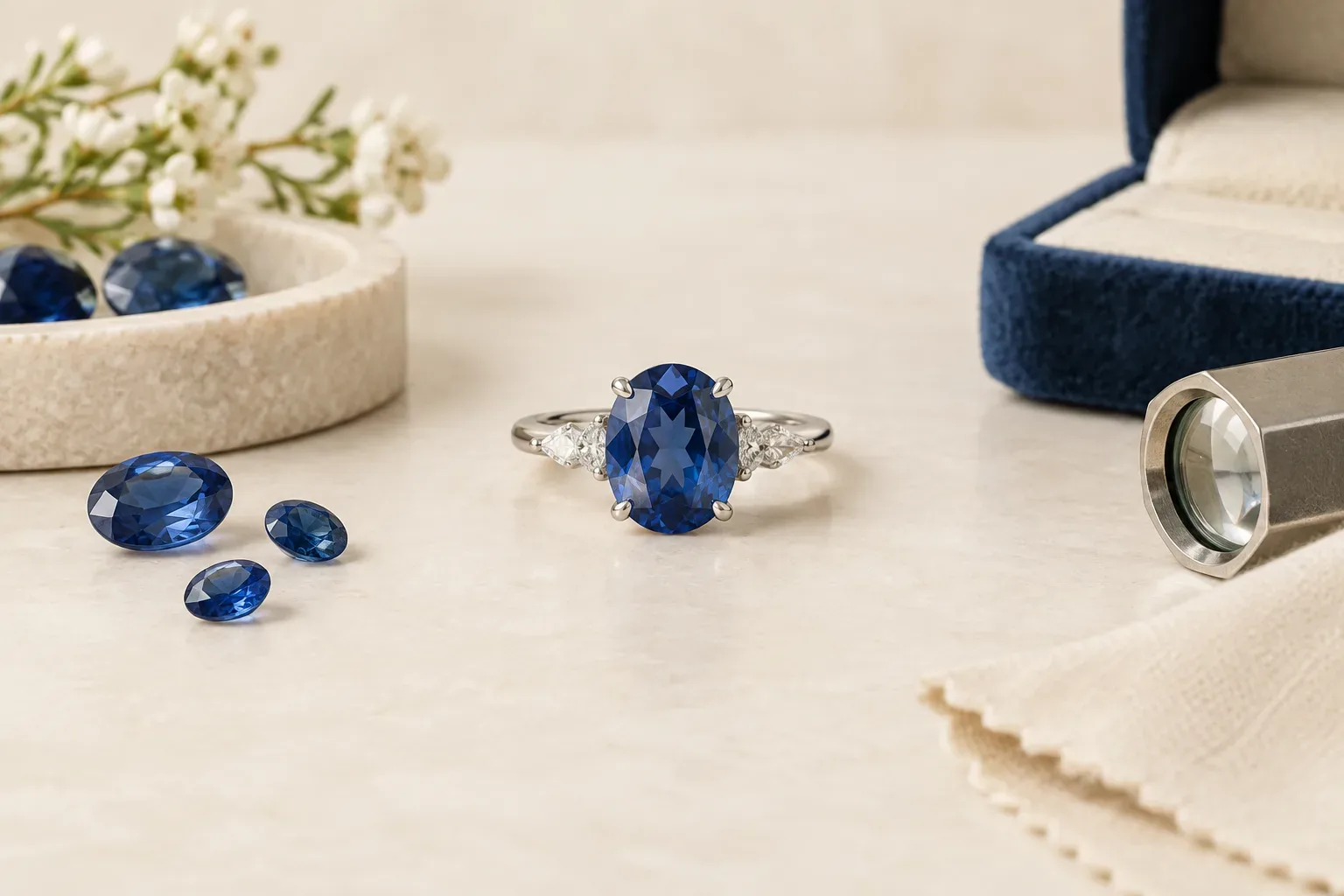
Blue sapphire is used both as a center stone and as accent stones in engagement rings. Common designs place a single oval, round, cushion or emerald-cut blue sapphire at the center, sometimes flanked by diamonds or smaller sapphires to emphasize color contrast or to increase perceived size. The trade reporting summarized by Professional Jeweller highlights an appetite for sculptural and vintage-inspired designs, and blue sapphires are often paired with Art Deco or cluster settings to create a classic or antique look.
Retailers and designers also set blue sapphires in modern bezel, halo and three-stone rings. A bezel setting protects the gem's edges, which is relevant because while corundum (the mineral family that includes sapphires) is hard, it can be chipped by sharp knocks at the girdle or at facet junctions. Imaginaire Digital’s market analysis indicates sustained consumer search demand for engagement rings and specific shapes, which maps to the variety of sapphire cuts commonly seen in the marketplace.
Suitability: who should choose a blue sapphire engagement ring
Blue sapphire is suitable for many wearers because corundum scores 9 on the Mohs hardness scale, second only to diamond, which makes it very hard and generally durable for daily wear when properly set. If your priority is everyday toughness combined with color, a high-quality blue sapphire is a strong choice.
Choose a sapphire ring if color and ethical clarity are priorities for you and your partner, recognizing the trade-offs between budget and origin or treatment. Lab-created sapphires offer strong color at a lower price point and are chemically and optically equivalent to natural sapphires, but they are not the same as natural, untreated stones in value or collectibility. Natural sapphires may be treated to improve color and clarity; these treatments are common and acceptable when fully disclosed, but they affect price and sometimes care needs.
Settings and practical trade-offs
Practical setting choices depend on lifestyle, stone cut and desired protection. A bezel or semi-bezel setting offers more protection for active wearers because the metal surrounds and cushions the stone, while prong settings increase brightness and light return at the cost of slightly more exposure at the crown and girdle. Halo settings enhance apparent size and add diamond sparkle but raise the ring's complexity and maintenance needs.
When selecting metal, consider that platinum and white gold suit blue color tones differently; white metals create a contemporary contrast while yellow gold warms the overall palette. For a partner who prefers low maintenance, choose a setting that minimizes exposed edges and ask the seller about secure prong work and the ring’s warranty.
Selection criteria and buyer decision checklist
Base your decision on a short set of priorities: color preference and saturation, durability for daily wear, whether you require a natural versus lab-created stone, documented treatment history, budget, and the ring setting that fits your partner’s lifestyle. Use the seller’s written disclosures to confirm whether the sapphire is natural, lab-created, treated or an imitation, as recommended by the Federal Trade Commission.
Ask the seller for any available gemological reports and for clear language about treatments. The Gemological Institute of America explains that some treatments are detectable and some are more difficult to identify without advanced laboratory testing. If origin, rarity or untreated status matters to you, be prepared to ask for testing from an independent gemological laboratory and to pay for that service.
Care and cleaning: routine and deeper maintenance
For routine cleaning, warm soapy water and a soft brush are appropriate for most sapphires and settings. The Gemological Institute of America advises avoiding harsh chemicals and extreme heat; if a stone has been filled or fracture-filled, specific cleaning limitations may apply and could be detailed in the stone’s treatment disclosure. Ultrasonic cleaners are safe for many sapphires but may be unsafe if the stone has been treated or if it is set with fragile accents; check the seller’s treatment disclosure before using mechanical cleaners.
Have prongs and settings inspected annually by a jeweler to reduce the risk of loss or damage. For deep cleaning or for any repair that requires heating or soldering, remove the stone if the jeweler advises; some treatments or fillings can be affected by heat, making professional handling essential.
What you cannot verify without a qualified jeweler or laboratory
There are clear limits to what a buyer can reliably verify at home. You cannot conclusively determine natural versus lab-created origin, or certain advanced treatment histories, without either a qualified independent jeweler’s instrument assessment or a recognized gemological laboratory report. The Gemological Institute of America details which treatments are detectable and the methods laboratories use to identify them, and the Federal Trade Commission requires sellers to disclose known treatments and to not misrepresent origin.
If the difference between ‘natural untreated,’ ‘natural treated,’ and ‘lab-created’ is important to your purchase decision, request a current report from an accredited laboratory before completing a high-value transaction. Expect to pay for independent testing if the seller does not provide a recent lab report, and remember that written seller disclosures are legally important but do not substitute for laboratory confirmation when origin or rare-treatment status is central to value.
Practical and respectful gifting guidance
When gifting a blue sapphire engagement ring, match the ring’s style and protection features to the recipient’s lifestyle and taste. If the partner is active or works with their hands, choose a protective setting and confirm ring sizing policies and return or exchange options in case the fit needs adjusting. Respectful gifting also means transparent conversation about budget and expectations if the ring is intended to be a mutual or surprise decision.
Ask the seller for full written disclosure about the stone and any warranties, and request that any promised paperwork travels with the gift. If the ring will be a surprise, keep receipts and gemological paperwork accessible to give the recipient the option of independent verification or resizing without delay.
Conclusion
A blue sapphire engagement ring combines striking color with strong durability, but making the best choice requires clear priorities about natural versus lab-created stones, treatment disclosure, protective settings and proper care. Use seller disclosures as your first filter, consult the Gemological Institute of America’s guidance on treatments and care, and rely on an accredited gemological laboratory for definitive origin or advanced-treatment verification. Finally, pair thoughtful selection with practical gifting steps so the ring suits the recipient’s life and can be enjoyably worn for years.
Frequently asked questions
Are blue sapphires durable enough for daily wear?
Yes. Blue sapphires are corundum and score 9 on the Mohs hardness scale, making them highly resistant to scratches. However, hardness is not the same as toughness; chips and fractures can still occur from sharp blows or poor settings, so choose protective settings for active wear and have settings inspected regularly.
Do sellers have to disclose sapphire treatments?
Yes. The Federal Trade Commission requires sellers to accurately describe whether a gemstone is natural, lab-created, treated, or an imitation and to provide required written disclosures. Ask the seller for explicit language about any heat treatment, filling or other enhancement before purchase.
Can I tell if a sapphire is lab-created or natural at home?
No. Distinguishing natural from lab-created sapphires and identifying many treatments requires gemological instruments and expert analysis. If origin or untreated status matters, request a report from an accredited gemological laboratory or arrange independent testing.
Is it safe to clean a sapphire ring in an ultrasonic cleaner?
It depends. Many sapphires and settings tolerate ultrasonic cleaning, but stones that have been fracture-filled or otherwise treated may be damaged by ultrasonic or steam cleaning. Check the seller’s treatment disclosure and when in doubt, use warm soapy water and a soft brush or consult a professional jeweler.
Should I buy a lab-created sapphire to save money?
A lab-created sapphire can offer vivid color and lower cost compared with a natural stone of similar appearance. The trade-off is collectibility and resale value, as natural, untreated stones typically command higher prices. Decide based on your partner’s preferences and whether natural origin is important to you.
What paperwork should come with a sapphire engagement ring?
Ask for written seller disclosures that state whether the stone is natural, lab-created, treated, or an imitation, and request any available gemological reports or certifications. Keep receipts and paperwork to support returns, resizing, insurance, or future independent testing.
Sources and further reading
- Imaginaire Digital — Imaginaire Digital
- Professional Jeweller / PRYA Jewellery Search Insights — Professional Jeweller / PRYA Jewellery Search Insights
- Gemological Institute of America — Gemological Institute of America
- Federal Trade Commission — Federal Trade Commission