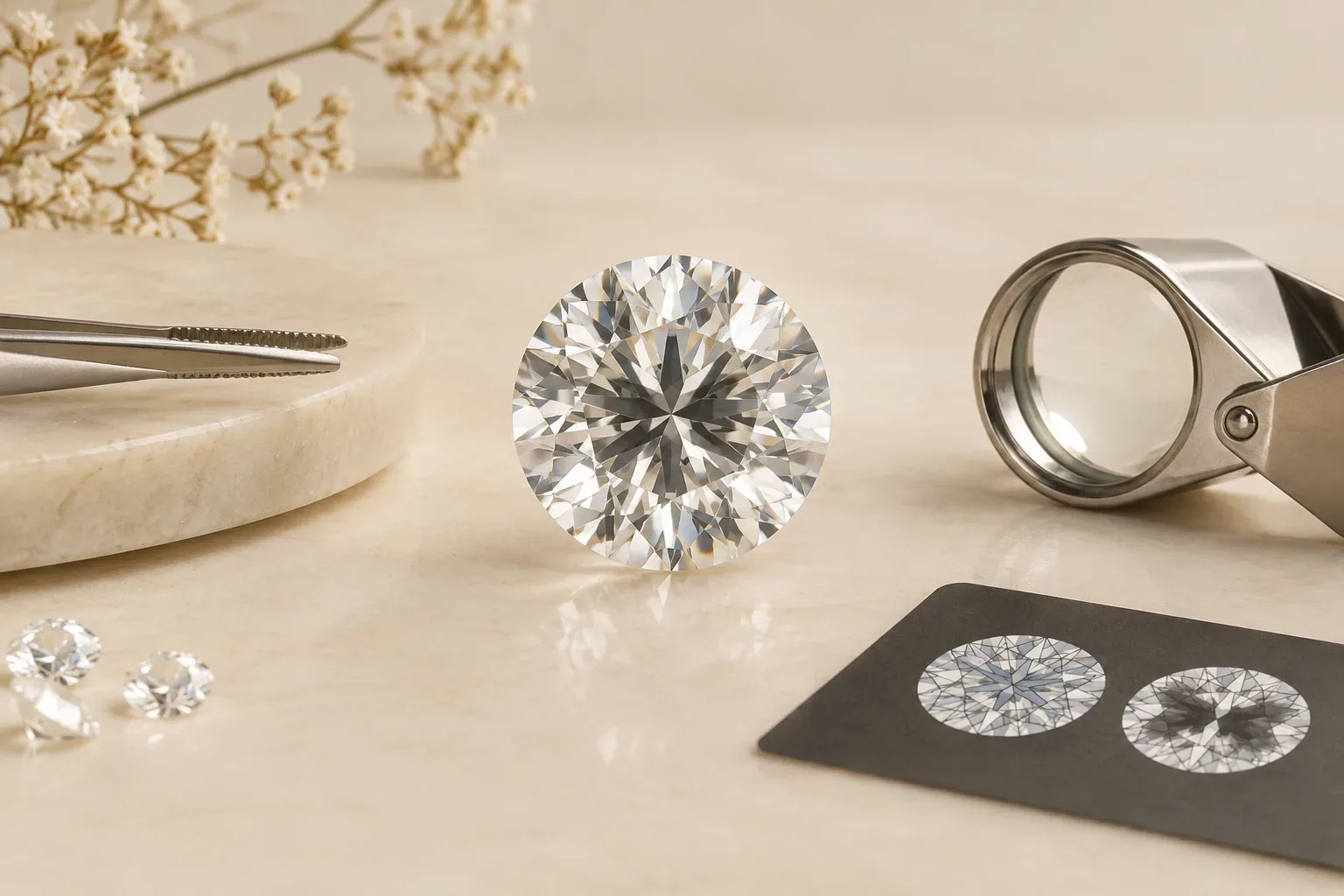
Meaning at a glance
The diamond bow‑tie effect explained: it is an optical shadow that can appear in many elongated or fancy shapes and that affects face‑up appearance and tradeoffs between brilliance and spread; buyers should weigh personal taste against a stone’s light performance, ask for light‑performance images or videos, request written disclosures and a lab report where relevant, and understand that only a qualified jeweler or gemological laboratory can definitively measure light leakage, treatments, or origin.
Direct answer — what the bow‑tie effect means
Concise answer: the "bow‑tie effect" is an optical shadow that sometimes appears across the center of faceted diamonds (and some other gemstones), typically looking like a dark, bow‑shaped band that reduces the stone's face‑up brightness in that area. It is a performance issue tied to cut geometry and light return, not a chemical impurity or standard grading defect, and it can affect how bright or evenly lit the diamond appears to the eye.
A straightforward gemological definition
In practical terms, the bow‑tie is caused when light entering the stone is not returned evenly to the viewer's eye across the table and crown because of the stone’s facet angles and outline. The effect is most commonly seen in elongated and modified brilliant cuts where centre light leakage can create a dark shape across the middle. Whether the bow‑tie is noticeable, distracting, or acceptable is a matter of degree and of the viewer’s taste.
Historical evidence and cultural references
There is very little documented historical evidence that the optical bow‑tie effect itself carried a specific symbolic meaning in past cultures. Major consumer, regulatory and gemological organizations focus on material, treatments, and consumer protection rather than cultural symbolism for such optical phenomena. For example, references from the Gemological Institute of America concentrate on treatments, disclosure and physical characteristics rather than historic symbolic meanings, and the Federal Trade Commission emphasizes consumer disclosure and clear distinctions between natural, lab‑created, treated, and imitation materials.
That said, the decorative motif of a "bow" — ribbons fashioned into bow shapes — does have a long history in European jewelry as a decorative element in the 18th and 19th centuries, where bows were used as ornamental motifs. This decorative bow motif is distinct from the optical bow‑tie effect in faceted gemstones: the former is a shaped, symbolic design applied by the maker, while the latter is an optical result of cutting geometry.
Separating documented historical meanings from modern interpretation
Documented history: there is no scholarly consensus or major archival record that the optical bow‑tie in a faceted diamond had symbolic meaning in historical cultures; authoritative technical sources center on physical properties, treatment, and consumer disclosure rather than symbolic interpretation.
Modern personal and marketing interpretations: in contemporary practice, sellers, designers and wearers sometimes assign symbolic or aesthetic meaning to a visible bow‑tie — for example describing it as "character", a fashionably moody look, or a reason to prefer one shape over another. Those modern meanings are personal or commercial, not historically documented, and should be treated as individual or brand messaging rather than universal symbolism.
How the bow‑tie effect appears in jewelry
The bow‑tie shows up most often in elongated or fancy shapes where facet arrangement can produce a central band of light loss. Common shapes where buyers notice this phenomenon include marquise, oval and pear cuts, and it can also be present in some cushion or elongated radiant cuts. In finished jewelry, the visibility of the bow‑tie depends on the setting, the mounting height, and the surrounding metal or accent stones: settings with higher crowns or open galleries let more light reach the stone from varied angles and can make the bow‑tie more visible, while certain halo, pavé or bezel settings can soften the appearance visually.
Retail images, videos and in‑hand viewing reveal the effect differently. Photographs under flash or directional lighting can exaggerate or hide the bow‑tie; a short video that shows the stone moving under mixed lighting is often more informative for assessing how noticeable the effect will be in everyday wear.
Decision criteria and practical trade‑offs for buyers
When shopping, decide which of these priorities matters most to you: maximum face‑up brightness (even light return), greatest visible size for a given carat weight (spread), symmetry of appearance, or the overall shape and design for how the ring will look on the hand. The bow‑tie is a trade‑off: some cutters prioritize spread and weight retention in elongated shapes at the cost of central light return, which can produce a bow‑tie, while others prioritize optical performance and brighter faces but may sacrifice some spread or carat yield.
Practical buying steps: view the stone in mixed natural light and in store lighting, ask the seller for light‑performance imagery or a video of the actual stone, and ensure the seller provides written disclosures about treatments or enhancements. The Federal Trade Commission advises consumers to seek clear, written distinctions among natural, lab‑created, treated and imitation materials, and reputable sellers should disclose anything that materially affects appearance or value.
What you can verify yourself and what requires a pro
What a buyer can check without a lab: you can judge whether a bow‑tie is visible and whether you find it acceptable by viewing the actual stone under a range of lighting and on the hand. You can compare photos and videos, ask for light‑performance images such as ASET or Idealscope images if the seller provides them, and confirm basic seller disclosures and return policies in writing.
What requires a qualified jeweler or laboratory: definitive statements about a diamond’s optical performance metrics, the presence and detectability of treatments, or claims about origin (natural vs lab‑grown) should be confirmed by a qualified independent jeweler or a gemological laboratory. The Gemological Institute of America explains why treatments, disclosure and detectability are distinct consumer issues that often require specialized testing, and the Federal Trade Commission reminds buyers that written seller disclosure is essential for material distinctions. Without a lab report or expert evaluation you cannot reliably settle some technical claims.
Safe care guidance and considerations about treatments
Diamonds are among the hardest gemstones, but that does not eliminate the need for careful handling, especially when stones have been subjected to treatments or when mounted in delicate settings. The Gemological Institute of America explains that treatments, their disclosure and detectability raise specific durability and care considerations. If a seller discloses surface or structural treatments, ask how they affect cleaning, exposure to heat, ultrasonic cleaning and any warranty or return conditions.
Routine care: clean a diamond ring with a mild detergent and warm water and a soft brush or by following the jeweler’s advice. Avoid harsh chemicals that could affect metal or any treated accents, and store jewelry separately to prevent abrasion. When in doubt about a stone’s treatment history or structural condition, seek a professional jeweler’s guidance before choosing aggressive cleaning or repair methods.
Practical selection and gifting guidance
If you are buying for yourself, prioritize your visual preferences: inspect multiple stones and shapes to decide how much bow‑tie you find acceptable. If you are buying as a gift and cannot personally view the stone, ask the seller for a recent video of the actual stone on a plain background, a description of how visible the bow‑tie is under normal lighting, and written disclosure of any treatments and the return policy.
When gifting an engagement ring, remember that market demand for certain shapes (for example oval engagement rings) remains high in many markets, so sellers will often list those options; Imaginaire Digital’s market analysis indicates strong consumer interest in engagement rings and specifically mentions oval engagement rings among popular searches. If masking is desirable, consider settings that visually soften the center (halo or pavé surrounds) but be transparent with the recipient about the style trade‑offs. For any significant purchase, ask for a reasonable return or exchange period and insist on written disclosures per FTC guidance so the recipient can pursue an independent evaluation if desired.
Bottom line
The diamond bow‑tie effect explained: it is an optical light‑return phenomenon tied to cut geometry that affects how evenly a stone appears to glow across its face. It has little if any documented historical symbolism as an optical effect and is primarily a technical and aesthetic consideration for modern buyers. Use in‑person viewing, videos, written disclosures and, when needed, laboratory or expert assessment to make buying decisions that match your aesthetic priorities and budget.
Frequently asked questions
Is a bow‑tie considered a flaw in a diamond?
The bow‑tie is an optical performance issue rather than a structural flaw; it is caused by facet geometry and light leakage. Whether it matters is subjective: some buyers accept or like a slight bow‑tie, others prefer stones with minimal central darkening.
Which shapes are most likely to show a bow‑tie?
Elongated shapes and modified brilliants such as marquise, oval and pear cuts commonly show a bow‑tie because their outline and facet layout can produce central light leakage, though it can appear in other shapes, too.
Can a setting hide or reduce the appearance of a bow‑tie?
Certain settings, like halos or pavé surrounds, can visually distract from or soften the appearance of a central bow‑tie, but they do not change the stone’s internal light return; review a mounted stone in person or via video to judge the final look.
Does a bow‑tie reduce a diamond’s value?
A very strong, distracting bow‑tie can affect desirability and therefore value for some buyers, but value depends on multiple factors including cut quality, carat, color, clarity, market demand and how visible the effect is. Objective value judgments may require expert appraisal.
How can I check for a bow‑tie before buying online?
Ask the seller for current, unstaged videos of the actual stone under mixed lighting, and request any light‑performance images the seller provides. Confirm return policies and written disclosures about treatments and origin as recommended by the FTC.
Can I tell if a diamond has been treated from photos alone?
No. Detecting many treatments and confirming origin may require specialized testing. The Gemological Institute of America explains why treatments, disclosure and detectability are distinct consumer issues; rely on written disclosures and lab reports for technical claims.
Who can definitively evaluate a stone’s light performance or treatment status?
A qualified independent jeweler or a recognized gemological laboratory can provide definitive assessments of light performance metrics and detect many treatments. For material distinctions and warranties, insist on written documentation.
Sources and further reading
- Imaginaire Digital — Imaginaire Digital
- Gemological Institute of America — Gemological Institute of America
- Federal Trade Commission — Federal Trade Commission