Meaning at a glance
This article defines what a ruby engagement ring is, explains practical selection criteria and trade-offs (natural vs lab-created, treatments, color vs size, setting security), summarizes how rubies and related motifs appear in modern jewelry, offers safe care and inspection guidance, and clarifies which claims a buyer must verify with a qualified jeweler or gemological laboratory.
What a ruby engagement ring is and who it suits
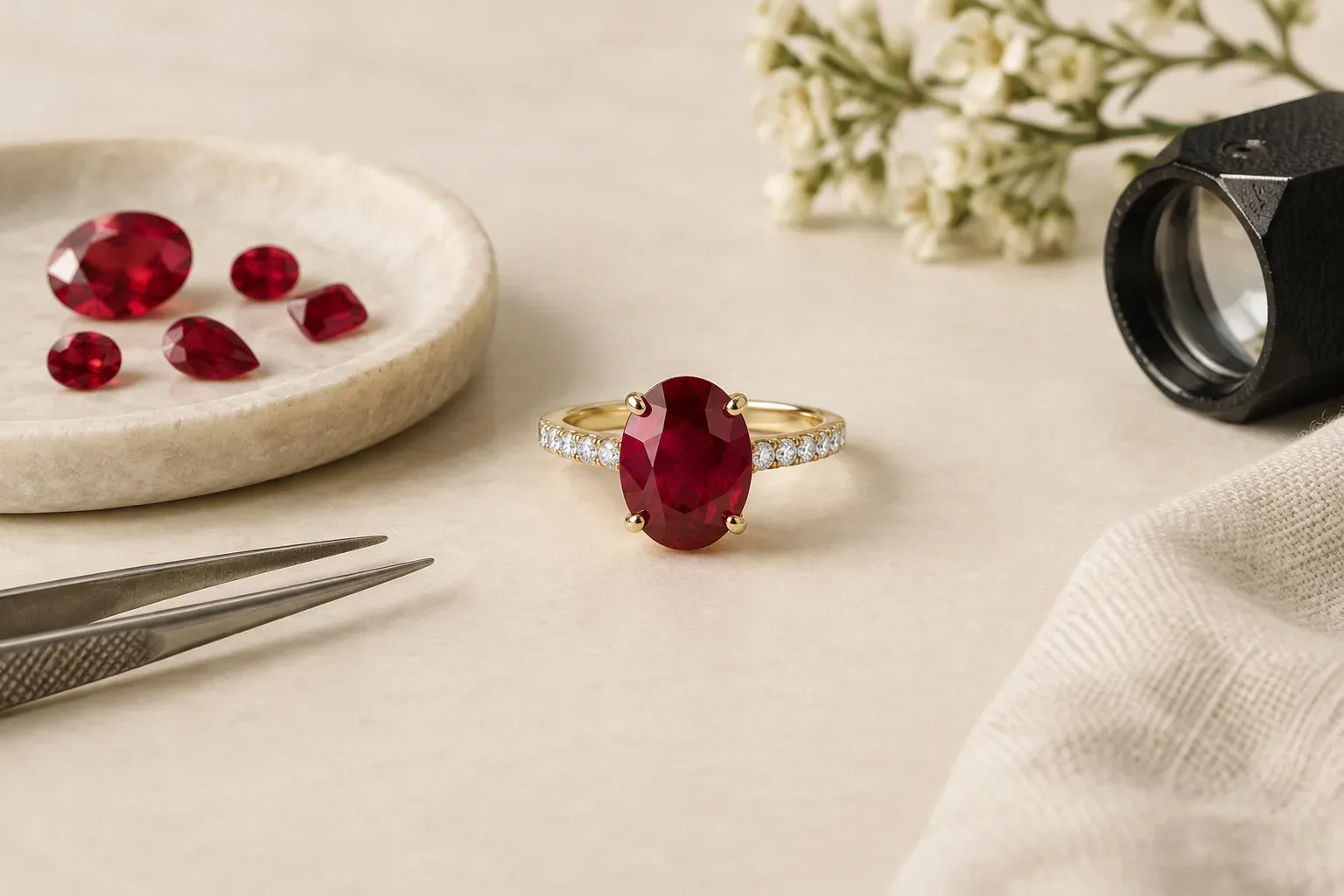
A ruby engagement ring is a ring in which the central or focal gemstone is a ruby, used as the primary symbol of commitment instead of, or alongside, other gemstones. Buyers choose rubies for their color, relative rarity, and the way they work with particular ring styles. Contemporary market data shows strong demand for a variety of gemstone engagement styles alongside traditional diamond rings, including sculptural and gemstone rings, which helps explain ruby popularity in recent years (see Professional Jeweller and Imaginaire Digital).
Historical evidence and what our approved sources cover
The approved sources provided for this article do not supply primary historical documentation of ruby meanings across specific ancient cultures or precise historical periods. Where the approved evidence speaks to history or trends it focuses on modern market behaviour and trade issues rather than ancient beliefs. Professional Jeweller and Imaginaire Digital report on contemporary trend patterns and search demand in the jewelry market, which explains how ruby rings fit current tastes and search behaviour but does not serve as a primary source for ancient cultural claims.
If you require precise historical attributions (for example, which culture in which century used rubies to mean a particular thing), those claims should be verified through specialist historical or museum publications and primary documents. This guide therefore separates what is documented in the available trade and consumer sources from the longer cultural narratives that people commonly repeat today.
Documented trade and consumer concerns (treatment, disclosure, and durability)
Modern buyers most often face questions about whether a ruby is natural or lab-created, whether it has been treated, and how durable it will be in daily wear. The Gemological Institute of America (GIA) explains that treatments, disclosure, detectability, durability and special care create distinct consumer questions for gemstones, and that some treatments require laboratory analysis to detect reliably.
The U.S. Federal Trade Commission (FTC) advises consumers to expect clear distinctions among natural, lab-created, treated, and imitation materials, and to receive written seller disclosures. Together these organizations establish the practical baseline for buying: ask for written disclosure of treatments and origin, request any available reputable laboratory report, and treat durability and care instructions as part of the purchase conversation.
Documented historical meanings versus modern personal interpretations
Because the approved sources for this guide do not document specific ancient cultural meanings for rubies, this article does not assert historical symbolic claims as established fact. Modern symbolic uses are often personal or community-based: a buyer may assign meanings such as love, passion, courage, or protection based on family tradition, popular culture, or personal preference.
Treat modern symbolism as personal expression rather than universal truth. Where cultural traditions are cited by sellers or in conversation, request sources or scholarly references if the provenance of a particular meaning matters to you.
How rubies and related motifs appear in jewelry
In contemporary ring design rubies appear in a broad range of motifs and settings. Current trend reports published by trade sources note interest in sculptural jewelry, Art Deco revival details, charm clusters, and gemstone focal pieces, which all accommodate ruby use in both classic and modern silhouettes (see Professional Jeweller / PRYA Jewellery Search Insights and Imaginaire Digital).
Common jewelry motifs that feature rubies include halo settings where smaller stones frame the ruby, three-stone rings pairing a ruby with accent diamonds or other gems, vintage or Art Deco inspired settings with geometric metalwork, and cluster rings that combine rubies with mixed gemstones. Rubies also appear as accent stones in pavé bands, in bezel settings for a low-profile, secure mount, and in mixed-metal designs where warm or contrast metals highlight the red color.
Selection criteria and practical trade-offs
Define priorities before shopping: color preference, size, budget, treatment status, and whether provenance (for example, geographic origin or ethical sourcing) matters. Trade-offs are inevitable: for a given budget, buyers commonly trade off color intensity versus carat weight, and untreated natural stones typically command higher prices than treated or lab-created equivalents.
Decide whether a lab-created ruby is acceptable. The FTC requires sellers to distinguish lab-created from natural gemstones in writing, which affects both price and long-term value expectations. Lab-created stones can offer excellent color and clarity for a lower price and are chemically the same material, but they have different market and resale dynamics compared with natural stones.
Understand treatments. The GIA notes that many gemstones are treated to improve appearance and that some treatments are detectable only by laboratory testing. If an untreated or 'natural, unheated' ruby is a priority, request a reputable laboratory report that explicitly states treatment status.
Choose a setting with the stone's protection in mind. Settings with higher metal coverage such as bezels or low-profile prongs reduce exposure to knocks and abrasion. More open settings and elaborate mounts may showcase the ruby's facets but increase exposure to wear. Consider ring shanks, prong security, and the daily activities of the wearer when selecting a setting.
What you can and cannot verify without a laboratory
You can verify many practical aspects with a qualified jeweler: the mount quality, the security of prongs or bezel, visual characteristics such as visible chips or surface wear, and whether a seller provides written statements about treatments, origin, and whether the stone is lab-grown or natural. The FTC requires such distinctions in communicating with consumers.
You generally cannot conclusively verify complex scientific claims—such as geographic origin or subtle treatment histories—without a reputable gemological laboratory report. Laboratories can test for certain heat treatments, diffusion, and, in some cases, geographic indicators. If provenance or treatment status is central to your decision, obtain or commission a laboratory report from a recognized lab and include it in the purchase terms.
Care and maintenance guidance
Treat care instructions as part of the purchase conversation. The GIA highlights that treatment status and durability relate to special care needs. Ask the seller whether the ruby has been treated and whether the treatment influences cleaning or repair recommendations.
General safe practices include removing the ring for heavy manual tasks, avoiding exposure to harsh chemicals (household bleach and strong acids), and avoiding extreme temperature shocks. Regularly inspect prongs and settings for wear and loose stones and have a qualified jeweler check and tighten settings as needed. For cleaning, use mild soap, warm water, and a soft brush unless the seller specifies otherwise due to treatment type; when in doubt, have the ring cleaned by a professional jeweler.
Keep written documentation and lab reports with the ring's records. If the seller provides a warranty, repair policy, or cleaning plan, retain those documents for future servicing.
Practical and respectful selection or gifting guidance
Consider the recipient’s style, daily activities, and ethical preferences. Some people prefer the symbolism or rarity of untreated natural gemstones; others prefer the cost-effectiveness and color consistency of lab-created stones. Ask about ring size, preferred setting profile (low-profile for active wearers, elevated for style), and whether engraved or personal details matter.
Communicate clearly with a seller about the feature set you expect: written disclosure on treatments and origin, a request for any available laboratory report, return and warranty terms, and a clear invoice describing the gemstone and setting. If gifting a surprise, discuss return policies beforehand to ensure an exchange is possible if the recipient prefers a different style.
Finally, treat symbolic language as personal. If you attach a particular meaning to a ruby, say so when you present the ring; if a cultural meaning is important to the recipient, verify it with credible cultural or historical sources and respect their preferences.
Buying checklist and next steps
Before you buy, prioritize the attributes that matter most to you, ask the seller for written disclosure on natural versus lab-grown status and treatments, and request any existing laboratory report. Inspect the setting for security and ask about return, resizing, and warranty policies. If provenance or treatment detection is critical to you, obtain a report from a recognized gemological laboratory prior to finalizing the purchase.
Use current market trend information when deciding on style, but place equal weight on fit, wearability, and documented disclosures. Industry trend sources report strong interest in sculptural and gemstone-focused rings in current search and retail behaviour, which can inform design choices but should not replace technical verification or personal suitability considerations (see Professional Jeweller and Imaginaire Digital).
Frequently asked questions
Are rubies suitable for everyday wear in an engagement ring?
Rubies are commonly used in everyday engagement rings, but durability and care depend on treatment status and setting security. Ask the seller whether the stone has been treated and request guidance from a qualified jeweler on the best setting and maintenance for daily wear.
How do I know if a ruby is natural, treated, or lab-created?
The FTC requires sellers to disclose whether a gemstone is natural, lab-created, or treated. For conclusive answers about specific treatments or origin, obtain a report from a recognized gemological laboratory; many treatments are detectable only by laboratory analysis, as noted by the GIA.
What should I ask the seller before buying a ruby engagement ring?
Ask for written disclosure of whether the ruby is natural, lab-created, or treated; request any available laboratory report; ask about return, resizing, and warranty policies; and confirm how the seller recommends cleaning and maintaining the ring given the stone's treatment status.
Can cleaning damage a ruby or affect its treatments?
Certain treatments can affect how a stone responds to cleaning. The GIA advises that treatment status and durability influence care recommendations. Use mild soap, warm water, and a soft brush for routine cleaning unless a seller advises otherwise, and have professional cleaning done by a jeweler when in doubt.
Do lab-created rubies have the same appearance as natural ones?
Lab-created rubies can exhibit excellent color and clarity similar to natural rubies, but they have different market values and resale expectations. The FTC requires sellers to disclose lab-created status so buyers understand those differences.
Sources and further reading
- Imaginaire Digital — Imaginaire Digital
- Professional Jeweller / PRYA Jewellery Search Insights — Professional Jeweller / PRYA Jewellery Search Insights
- Gemological Institute of America — Gemological Institute of America
- Federal Trade Commission — Federal Trade Commission