Meaning at a glance
Sugilite is a typically purple cyclosilicate used in cabochons, inlay, and beads; evaluate color quality, check for composites and imitations, insist on treatment disclosure, and follow gentle cleaning and storage practices while keeping modern spiritual symbolism distinct from the mineral facts.
Quick answer
Sugilite jewelry meaning: Sugilite is a typically purple cyclosilicate most often used in cabochons, beads, and inlays; when evaluating meaning for gifting or wearing, keep the stone’s material qualities, market issues (color quality, composites and imitations, and disclosure) and care needs distinct from modern spiritual or New Age interpretations.
What sugilite is and how it appears in jewelry
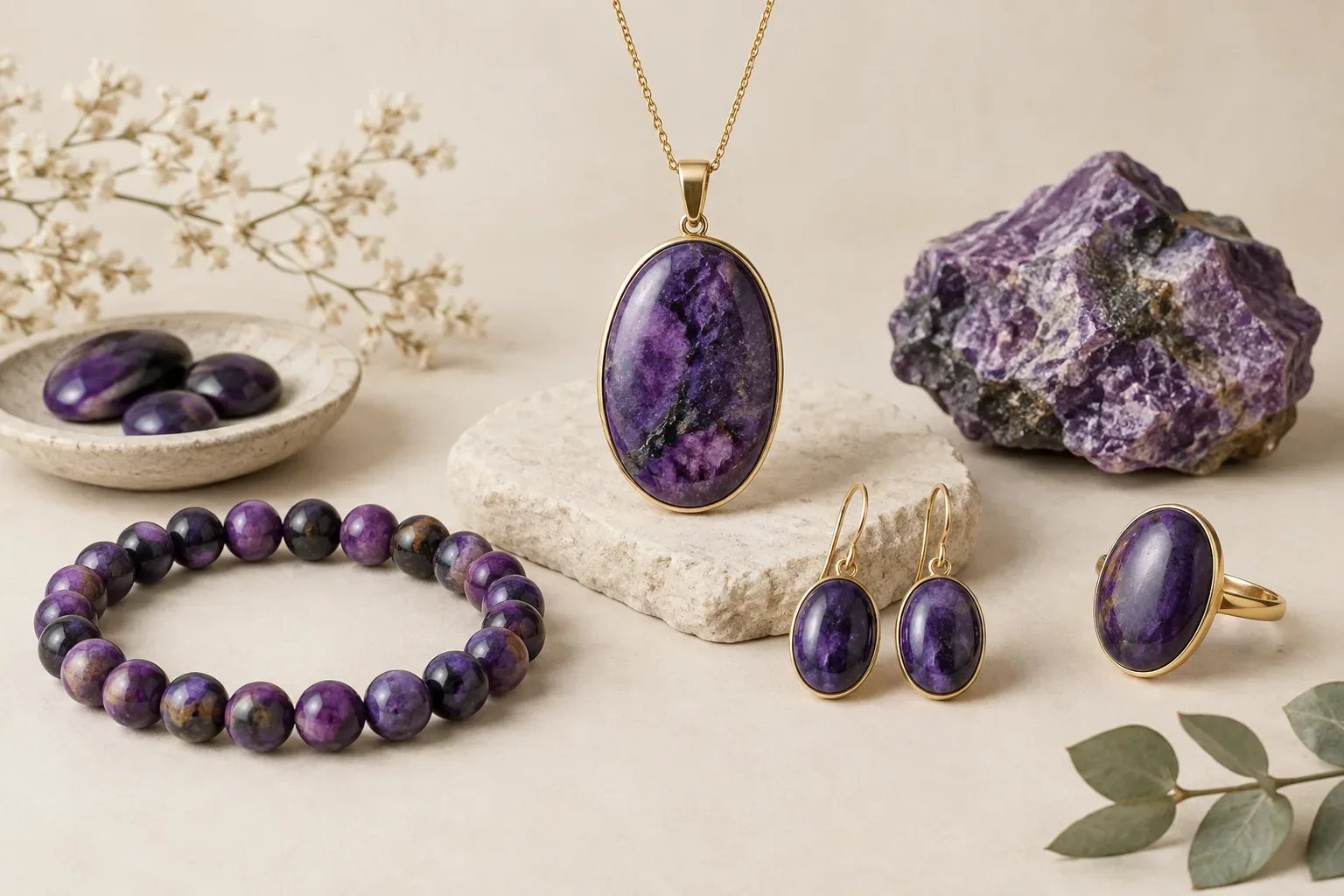
As a gemstone in the jewelry market, sugilite is treated primarily as a colored ornamental mineral. It is commonly fashioned into cabochons, beads, small carvings, and pieces used for inlay work. Those cutting and mounting the material often choose smooth, polished cabochons that emphasize its color and any banding or matrix that may be present.
In jewelry settings sugilite is most often presented as a polished single-stone cabochon in rings, pendants, and earrings, or as strings of beads. The material is also used in small inlay panels and decorative accents. Because sugilite is usually shown for its color and polish rather than faceting, the visual qualities buyers evaluate are color saturation, uniformity, and the presence or absence of contrasting host rock (matrix) rather than brilliance or light return.
Historical evidence and documented cultural use
When discussing historical meanings, it is important to separate well-documented cultural use from modern storytelling. The Smithsonian National Museum of Natural History provides broad context about gems and minerals, their geology, and how societies use gem materials, but the museum’s general material does not document a long, continuous pre-modern cultural tradition specifically tied to sugilite. In other words, among the authoritative museum and gem literature in the sources provided, there is no recorded body of ancient symbolic use for sugilite comparable to the well-documented histories of materials like jade or amber.
Because the authoritative sources here focus on mineral identity and general gem-market context rather than a detailed ethnographic history for every mineral, scholars and sellers commonly treat the historical record for sugilite as sparse or primarily modern. If you are researching a specific cultural claim about sugilite’s ancient symbolism, seek primary archaeological or ethnographic publications that explicitly document that culture and period; the Smithsonian resource cited here is a starting point for understanding how museums contextualize gem materials overall.
Documented history versus modern personal and spiritual interpretations
Documented historical meanings are claims supported by records, artifacts, or contemporaneous writings tied to a specific culture or era. In the sources available for this article, documentary evidence tying sugilite to ancient rituals or classical symbolism is not provided. That absence should be noted: lack of documentation does not prove absence of any cultural interest, but it does mean historical claims require explicit sources before they are presented as fact.
By contrast, many modern spiritual, healing, or personal-meaning narratives around sugilite are contemporary interpretations offered by practitioners, retailers, and wearers. These modern narratives—often framed in New Age or personal-symbolism terms—are valid as individual beliefs or contemporary trends, but they are not the same as a documented historical tradition. When describing sugilite’s meaning, present modern spiritual attributions as personal or contemporary interpretations rather than as universal or ancient facts.
Color quality, treatments, composites, and imitations to watch for
Color quality is the primary visual attribute buyers assess in sugilite. Strong, even purple tones are typically considered more desirable in the marketplace than pale or heavily mottled material, and some pieces include contrasting host rock (matrix) that collectors may find attractive. However, buyers should know that gems can be altered, assembled, or imitated in ways that affect both appearance and value.
Industry guidance emphasizes transparency about treatments and imitations. The Gemological Institute of America explains common types of gem treatments and the importance of disclosure, and the Federal Trade Commission provides consumer guidance on terms such as “natural,” “treated,” “lab-grown,” and “imitation.” Ask sellers to disclose whether a sugilite item has been stabilized, dyed, cut as a composite (for example, reconstituted material or assembled doublets), or whether it is an imitation. Requesting clear, written disclosure helps you compare items accurately and protects you from unintentional misrepresentations.
How to buy and practical gifting guidance
When buying sugilite, ask straightforward questions and expect clear answers. Confirm whether the piece is natural sugilite, whether any treatment or stabilization has been applied, and whether the item is assembled from multiple materials. Request a return policy or warranty and ask whether any grading, origin, or treatment documentation accompanies the piece. If a seller cannot or will not provide clear disclosure, consider walking away or shopping elsewhere.
For gifting, match the stone to the wearer’s style and priorities. Consider whether the recipient prefers bold, saturated color or subtler, patterned stones with matrix; whether they prefer polished cabochons, beads, or inlaid items; and whether they value a traceable purchase with documented disclosure. If the gift is intended to carry a symbolic meaning, be explicit that the symbolism is a modern, personal interpretation unless you can verify an older cultural association with authoritative sources. Also consider practical issues such as the recipient’s daily activities and how they care for jewelry, because that will affect which settings and cuts are appropriate.
Care and maintenance: gentle, common-sense practices
Handle sugilite jewelry with basic, conservative care used for many colored gem materials. Clean with a soft cloth and mild soap and water, rinsing thoroughly and drying with a lint-free cloth. Avoid harsh household chemicals, prolonged exposure to intense heat or direct sunlight, and rough impacts that could damage the polish or, if present, an assembled surface.
If a piece is a composite, assembled item, or contains adhesive, avoid ultrasonic cleaners and steam cleaning. When in doubt about a particular cleaning method for a specific piece, consult the seller or a trusted jeweler who can inspect the construction and advise on safe cleaning. Store sugilite separately from harder stones and metals to reduce the chance of scratching and check mounts and settings periodically to ensure the stone remains secure.
Putting meaning and material together responsibly
Sugilite can be meaningful in many ways: as a favorite color, an attractive design element, an expression of personal style, or a contemporary spiritual choice. When presenting that meaning to others—especially across cultural contexts—be explicit about whether your statement is a documented historical claim or your own modern interpretation.
Respect and clarity are practical courtesies. If someone expects ancient cultural significance, ask for the specific cultural source and period. If you are gifting sugilite as a token of a particular belief, make clear it is a contemporary symbolic choice. Separating the stone’s material facts (color, cut, market practices, care) from symbolic claims helps recipients and buyers appreciate the piece honestly and usefully.
Frequently asked questions
Is sugilite a natural gemstone?
Sugilite is sold in the jewelry market as a mineral material, and many items are made from natural sugilite. However, sellers may also offer stabilized, composite, or imitation materials. Ask the seller for written disclosure about whether the piece is natural, treated, assembled, or an imitation and keep documentation with the purchase.
How can I tell if a sugilite piece is an imitation or composite?
Distinguishing natural sugilite from imitations or composites visually can be difficult. Request full disclosure from the seller and, when possible, a certificate or independent appraisal. For assembled pieces (doublets, reconstituted material) or dyed/stabilized stones, reputable sellers will describe the treatment and materials used. If in doubt, have a qualified gemologist inspect the item.
What should I ask a seller before buying sugilite jewelry?
Ask whether the stone is natural or treated, whether the piece is assembled from multiple materials, what cleaning and care the seller recommends, and what return or warranty policy applies. Request written answers and any available documentation about treatments or origin, and prefer sellers who follow industry disclosure guidance.
Is sugilite suitable for everyday wear?
Suitability for everyday wear depends on how the stone is cut and set, and whether the piece is a simple polished cabochon, an assembled item, or has fragile settings. As with many colored gemstones, avoid hard knocks and consult a jeweler about protective settings if you plan to wear a piece daily.
Does sugilite have an established historical symbolic meaning?
Based on the museum and gem-market context in the provided sources, there is no well-documented, long-standing historical cultural tradition specifically associated with sugilite. Many symbolic meanings attributed to sugilite today are modern or personal interpretations rather than historically documented cultural meanings.
How should I clean and store sugilite jewelry?
Clean sugilite with a soft cloth and mild soap and water, rinse and dry thoroughly. Avoid harsh chemicals, prolonged exposure to heat or intense sunlight, and ultrasonic or steam cleaning for assembled or stabilized pieces. Store separately from harder stones to reduce scratching and check settings periodically.
Sources and further reading
- Gems and Minerals: Beauties and Building Blocks — Smithsonian National Museum of Natural History
- An Introduction to Gem Treatments — Gemological Institute of America
- Buying Gemstones, Diamonds, and Pearls — Federal Trade Commission