Meaning at a glance
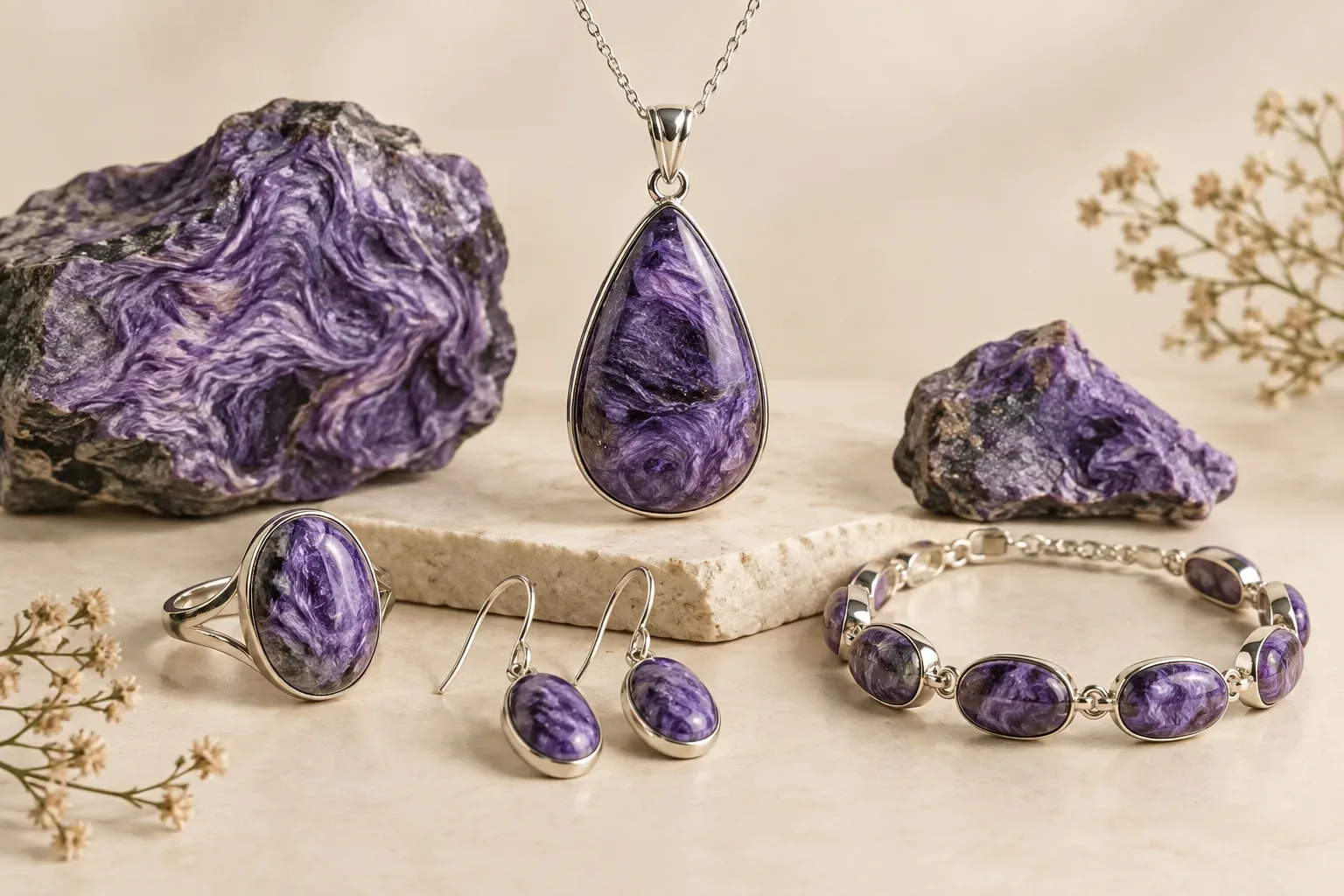
Charoite jewelry meaning centers on the stone’s striking purple color and swirling fibrous pattern; documentary evidence shows it is a modern ornamental rock with a restricted geological occurrence, while contemporary symbolic uses are personal and not historically documented.
What charoite is — pattern, mineral context, and occurrence
Charoite is best described as an ornamental, fibrous purple rock whose most visible characteristic is a chatoyant, swirling pattern that many find attractive when cut as cabochons, beads, or inlays. The Smithsonian National Museum of Natural History places stones like this within the broader context of gems and minerals as materials whose identity, patterning, and geological setting are central to their classification and use in jewelry and ornament.
That authoritative museum context emphasizes the difference between mineralogical description and cultural meaning. In other words, the observable features—color, fibrous structure, and polishability—are geological facts documented by museums and scientific collections, while any symbolic reading is applied later by people who use the material.
Historical evidence and cultural record
There is little in the way of documented ancient or medieval cultural meaning for charoite as a named material in museum or mineralogical literature. Museum resources that survey gems and minerals emphasize the geological and material identities of stones and do not record far-reaching historical symbolism for materials whose use is mainly modern. This absence in museum and mineralogical overviews should be read as a lack of historical documentary evidence for long-standing cultural meanings tied specifically to charoite.
Because organized records and museum catalogues prioritize proven provenance and geological context, they are the reliable sources for statements about whether a stone has a deep cultural history. For charoite, the primary, documented emphasis in those resources is on its material characteristics and limited geological occurrence rather than an ancient or cross-cultural tradition of symbolic meaning.
Documented history versus modern interpretation
Documented history refers to evidence recorded by geological surveys, museums, or other primary sources about where a material occurs and how it has been used. Modern interpretation refers to symbolic, spiritual, or aesthetic meanings that designers, sellers, and wearers attach to a material today. For charoite, the documentary record focuses on its material and geological identity. Any modern symbolic meanings—such as associations with transformation, intuition, or emotional balance—are contemporary interpretations promoted by makers, retailers, or individuals and are not documented historical traditions.
It is important to keep those two categories separate when discussing meaning. If you prize charoite for a modern symbolic quality, that is a valid personal or cultural choice. But it should not be presented as a universal or historically continuous meaning unless primary historical evidence supports that claim.
How charoite appears in jewelry and motifs
Charoite’s visual appeal is its purple color range and swirling fibrous patterning, which jewelry makers highlight by cutting the material as polished cabochons, beads, or flat inlays. The fibrous chatoyancy and pattern often read best when the stone is left in larger polished pieces rather than faceted, so you will commonly see charoite used in statement pendants, brooches, beads for necklaces and bracelets, and in small sculptural carvings set into silver or gold settings.
Design motifs range widely. Some designers emphasize the stone’s natural movement with minimalist bezel settings that let the pattern read uninterrupted, while others contrast charoite with geometric metalwork or accent gemstones. Because charoite is typically an opaque to translucent material with a striking surface pattern, it functions well as a focal stone rather than as a traditional brilliant-cut gem in halo or pavé styles.
Selection: distinguishing natural material, treatments, and imitations
When buying charoite, ask sellers for clear disclosure about whether the material is natural, stabilized, dyed, or a composite. The Gemological Institute of America explains the importance of disclosing gem treatments and the difference between a natural material, a treated material, and an imitation. Common seller disclosures should include any stabilization with resin, dyeing, or backing that affects the appearance or durability of the piece.
Consumer protection guidance from the U.S. Federal Trade Commission stresses that buyers deserve transparent information about whether a stone is natural, treated, or an imitation. Use FTC guidance on terminology as a baseline for evaluating seller claims, and be cautious when language is vague. If provenance or testing is important to you, request a written statement or a reputable laboratory report describing the material and any treatments used.
Practical care and maintenance
Charoite is commonly worked and polished in ways that make it attractive but sometimes sensitive to harsh chemicals and abrasion. General safe-care practice for ornamental stones with fibrous structure is to avoid prolonged exposure to household chemicals, ultrasonic cleaners, and steam-cleaning unless a gem specialist confirms those methods are safe for your specific piece. Avoid knocks and hard abrasion that could fracture a polished cabochon or damage a resin-stabilized surface.
For routine cleaning, use a soft cloth and mild soap with lukewarm water, rinsing and drying thoroughly. Store charoite pieces separately from harder gemstones to prevent scratching and consider a soft pouch or compartmentalized jewelry box. For pieces with setting issues, chips, or uncertain treatment history, consult a qualified jeweler before attempting repair or deep cleaning. The Smithsonian’s museum resources on gem materials remind collectors that the physical treatment and preservation of gems belong to the domain of material science and conservation practice.
Gifting and selection guidance with respect
If you plan to give charoite as a gift, think about the recipient’s style, the stone’s bold visual character, and the importance of transparent origin and treatment information. Choose a setting and scale that match the wearer’s daily activities and sensitivity to statement pieces. If the meaning you attach to the stone matters to the recipient, be candid that such meanings are modern interpretations rather than historically documented facts.
For ethical and practical peace of mind, ask the seller about origin, whether the material is natural or treated, and how to care for the piece. Consider complementing the gift with a short note explaining why you chose charoite for its aesthetic or personal significance. If provenance or certification matters, select a piece accompanied by documentation or from a dealer who follows the disclosure practices recommended by professional gemological organizations and consumer protection guidance.
Summary
Charoite’s meaning in jewelry is rooted first in visible material qualities—its purple hues and swirling fibrous pattern—and secondarily in the modern symbolic associations people assign to it. Museum and mineralogical resources emphasize its material identity and limited occurrence but do not provide evidence of long-standing cultural meanings tied specifically to charoite. When buying or gifting, prioritize transparent disclosure about treatments and origins, follow established care practices for polished ornamental stones, and present any symbolic interpretation as contemporary and personal rather than universal.
Frequently asked questions
What exactly is charoite?
Charoite is an ornamental purple rock known for its fibrous, swirling pattern. Museum mineral resources describe it in terms of material identity and geological occurrence rather than as a material with long-standing cultural symbolism.
Does charoite have an ancient cultural meaning?
There is no documented ancient cultural tradition widely recorded in museum or mineralogical literature for charoite; documented sources focus on its material and geological identity rather than historical symbolic uses.
How is charoite typically cut and set in jewelry?
Charoite is most often cut as cabochons, beads, inlays, or small carvings to showcase its swirling fibrous pattern and is usually set in bezels, minimalist frames, or ornamental settings that keep the surface visible.
Can charoite be treated or imitated?
Yes, like many ornamental materials, charoite can be stabilized with resins, dyed, or represented by imitations; the Gemological Institute of America emphasizes the need for disclosure of such treatments and the FTC recommends transparent labeling for consumers.
How should I clean and care for charoite jewelry?
Clean charoite gently with a soft cloth and mild soap with lukewarm water, avoid ultrasonic and steam cleaning unless a professional confirms safety, and store pieces separately to prevent scratches.
What should I ask when buying charoite as a gift?
Ask the seller whether the material is natural or treated, request written disclosure about any stabilization or dyeing, consider the recipient’s style and daily activities, and look for sellers who follow gemological and consumer-protection disclosure practices.
Sources and further reading
- Gems and Minerals: Beauties and Building Blocks — Smithsonian National Museum of Natural History
- An Introduction to Gem Treatments — Gemological Institute of America
- Buying Gemstones, Diamonds, and Pearls — Federal Trade Commission