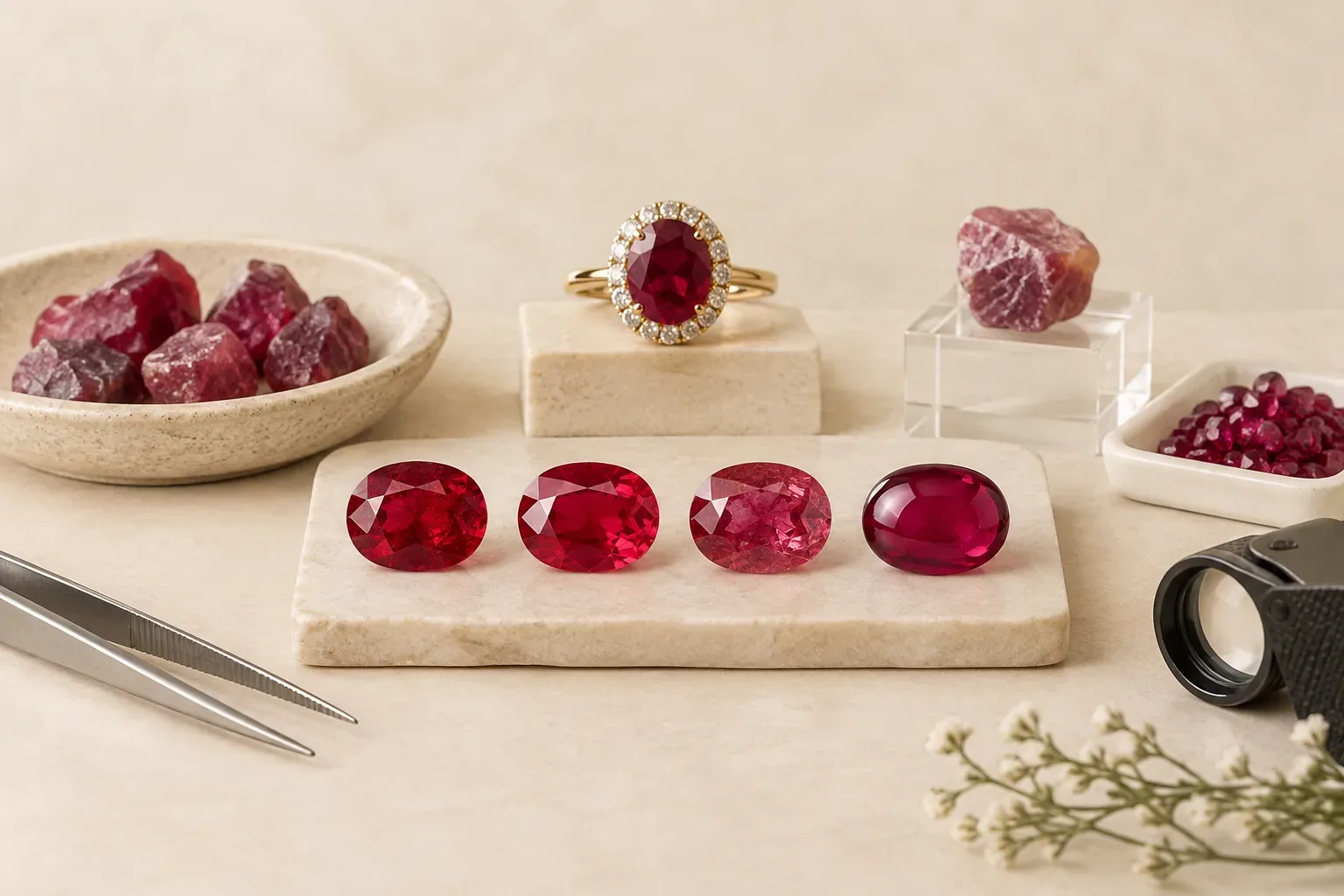
Meaning at a glance
This guide defines natural, lab-created, treated, and imitation rubies; explains how to decide which option fits your budget and purpose; lists practical checks a shopper can perform; explains what only a qualified gemologist or lab can confirm; and gives safe-care and gifting advice based on gemological and consumer-protection guidance.
What the approved evidence covers and limits
The formal, documented evidence used in this guide focuses on gem-treatment detection, seller disclosure, and modern jewelry market trends rather than cultural symbolism. The Gemological Institute of America explains how treatments affect detectability, durability, and consumer questions about gemstones. The Federal Trade Commission sets consumer expectations for clear distinctions and written disclosures among natural, lab-created, treated, and imitation materials. Market reports from Imaginaire Digital and Professional Jeweller document contemporary demand and jewelry styles where gemstones, including rubies, commonly appear. This article follows that evidence and does not attempt to substitute specialist historical scholarship on cultural symbolism.
Definitions and decision criteria
Natural ruby: A natural ruby is a corundum mineral with the chemical characteristics of ruby (aluminum oxide with chromium causing red color) that formed in nature. Natural stones may be sold untreated, or they may have undergone post‑mining treatments. For high-value natural rubies, buyers should expect documentation that discloses treatments and origin when available.
Lab-created ruby: Lab-created rubies are produced in controlled environments to replicate the crystal chemistry of natural ruby. They can be visually and chemically very similar to natural stones but are typically priced lower. The FTC requires that lab-created materials be identified clearly to consumers, and independent gemological reports will state whether a stone is natural or lab-created.
Treated ruby: 'Treated' refers to a natural ruby that has been intentionally altered after mining to improve color, clarity, or stability. Common treatments can include heating and filling. The Gemological Institute of America provides guidance on which treatments are stable, which are detectable, and which require disclosure, and it emphasizes that treatment type affects care and value.
Imitation ruby: An imitation is a material that only looks like ruby rather than sharing its chemistry or structure. Glass, spinel, and other colored stones have historically been used as imitations. The FTC and gemological authorities expect sellers to distinguish imitations clearly from genuine rubies.
What you can check yourself and what requires experts
Checks a shopper can perform without a lab include asking for written disclosure, checking the seller’s reputation and return policy, comparing price to market expectations, and asking whether a stone is accompanied by a recognized laboratory report. Physical observations that can raise questions include obvious bubbles (common in glass imitations), unusually low price for a large, vivid stone, or inconsistent seller answers.
Limits of DIY verification: Detecting many treatments, distinguishing certain lab-created stones from natural material, and reliably assigning geographic origin are tasks that usually require a qualified gemologist and instruments. The GIA and similar labs use microscopic analysis, spectroscopy, and other tests that are not available to a typical buyer. The FTC specifically advises consumers to rely on clear seller disclosure and to ask for independent verification for high-value purchases.
Trade-offs: price, durability, permanence, and resale
Price: Lab-created rubies generally offer the best value by size and color, followed by treated natural rubies, with untreated high-quality natural rubies often commanding the highest prices. Expect a clear price differential when shopping; an unrealistically low price should prompt further questions.
Durability and permanence: Rubies are corundum and are generally durable for everyday wear, but the permanence of enhancements varies. Some heat treatments are stable, while some filling treatments can be damaged by heat or chemicals. The GIA outlines how treatment type affects durability and care, and buyers should request disclosure of specific treatments.
Resale and provenance: Untreated natural rubies with verifiable origin and a lab report tend to retain value better than treated or lab-created stones. The FTC recommends clear labeling to protect buyers and helps ensure expectations about resale are based on accurate descriptions rather than marketing terms.
How rubies appear in jewelry today
Contemporary jewelry trends confirm strong demand for gemstone engagement rings, necklaces, and statement rings where rubies are common choices for color and symbolism. Market analyses from Imaginaire Digital show continued demand for engagement rings and other classic categories, and Professional Jeweller’s trend reports list gemstone rings, Art Deco references, and birthstone necklaces among growing styles. These reports help explain why rubies are often used in engagement, anniversary, and vintage-inspired designs today.
Design considerations: Because rubies are hard and can be faceted, they appear in a wide range of settings from solitaires to cluster and halo designs. Jewelers will choose settings and metalwork to protect the stone and to showcase color; ask how the chosen setting will affect cleaning and maintenance.
Safe care guidance tied to treatments and durability
General care: Rubies are hard but not indestructible. Clean them in warm soapy water or with a soft-bristled brush unless seller documentation specifies a vulnerable treatment. Avoid ultrasonic or steam cleaners for stones that have been filled or treated in a way that may be damaged by heat or vibration.
Treatment-specific care: Because treatment types affect what cleaning is safe, always ask the seller to disclose treatments and follow the care recommendations that accompany those disclosures. The GIA emphasizes that disclosure of treatments is important because it changes recommended care and expected longevity.
Practical selection and gifting guidance
Decide purpose first: If the intended use is daily wear (for example, an engagement ring), prioritize durability and documented stable treatments or lab-created stones with known behavior. If the ruby is for occasional wear or a display piece, you may accept more delicate enhancements if disclosed.
Set a verification threshold: For modest purchases, rely on reputable retailers with clear return policies and disclosures. For significant sums, insist on a current independent gemological report naming the stone type and treatment status, and consider an insured appraisal. The FTC advises that consumers receive clear, written disclosures about whether a gem is natural, lab-created, treated, or an imitation.
Gifting with respect: If the gift’s meaning depends on a natural origin (for example, a family heirloom intended to be 'natural'), be explicit in your request when buying and retain documentation for the recipient. If value is a practical concern and you prefer a visually impressive stone, disclose that a lab-created or treated stone was chosen so the recipient understands care and resale implications.
When to get professional help and what to expect from reports
Get a qualified gemologist or laboratory report when the stone is valuable relative to your budget, when you suspect undisclosed treatment, or when origin or authenticity materially affects your purchase decision. Laboratories such as GIA issue reports that state whether a ruby is natural or lab-created, whether it shows evidence of treatment, and sometimes whether the treatment is permanent or potentially unstable.
Expect the report to use technical language; ask the issuing lab or your jeweler to explain what the report means for wearing, cleaning, insuring, and reselling the stone. The FTC supports consumer access to this kind of clear information to avoid misleading claims.
Summary: a practical checklist
Before buying, ask for written disclosure of whether a ruby is natural, lab-created, treated, or imitation; ask what specific treatments, if any, have been performed; check for an independent lab report for high-value items; compare price to market norms; and confirm the seller’s return policy and reputation. Follow treatment-specific care instructions and consider insurance for valuable pieces. Use a qualified gemological laboratory for any verification beyond these checks.
Frequently asked questions
How can I tell if a ruby is natural without a lab report?
You can ask the seller for written disclosure, compare price to market expectations, inspect for visual red flags such as bubbles (common in glass), and check the seller’s reputation and return policy. However, many treatments and the distinction between certain lab-created and natural stones require laboratory testing and cannot be reliably determined by eye.
Do lab-created rubies hold value?
Lab-created rubies offer good visual value and are typically priced lower than natural stones of comparable size and color. They usually do not retain resale value the way rare, high-quality natural, untreated rubies can, so consider purpose—wearability versus investment—when choosing.
What treatments should I ask about and why?
Ask whether the ruby has been heated, filled, or otherwise altered. Some heat treatments are stable and common, but filling and other enhancements can be vulnerable to heat, steam, or chemicals. The Gemological Institute of America recommends disclosure because treatment type affects durability, care, and value.
When should I insist on a laboratory report?
Insist on a current independent gemological report when you are paying a significant sum relative to your budget, when the seller’s disclosure is incomplete, or when origin or treatment status materially affects your purchase decision. The FTC supports consumers receiving clear, written information for higher-value purchases.
How should I clean a ruby?
Clean most rubies in warm soapy water with a soft brush. Avoid ultrasonic and steam cleaners for stones that are filled or otherwise treated in ways that could be damaged; always follow the care guidance tied to the stone’s disclosed treatments.
Sources and further reading
- Imaginaire Digital — Imaginaire Digital
- Professional Jeweller / PRYA Jewellery Search Insights — Professional Jeweller / PRYA Jewellery Search Insights
- Gemological Institute of America — Gemological Institute of America
- Federal Trade Commission — Federal Trade Commission