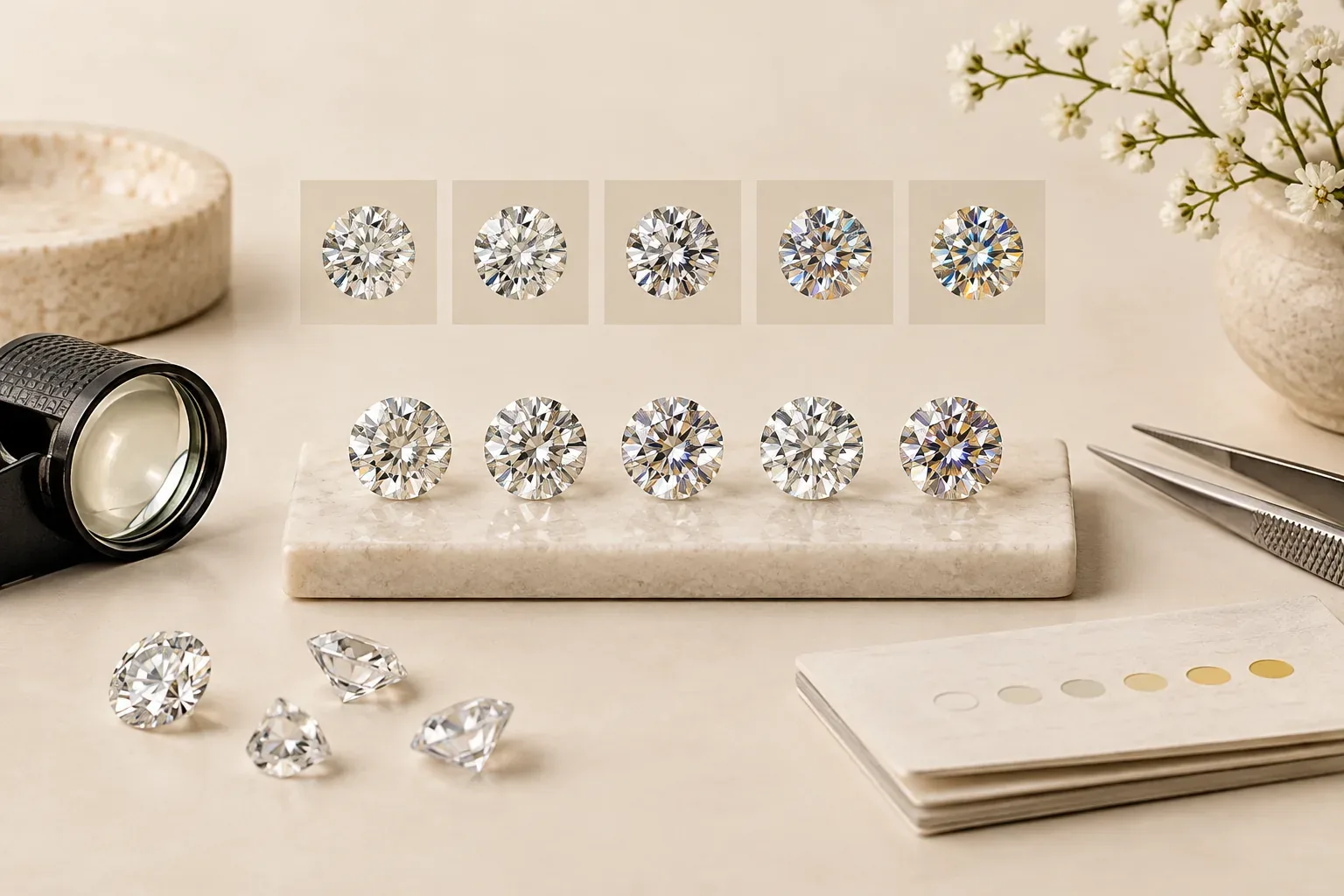
Meaning at a glance
Diamond light performance depends most on cut (proportions, symmetry, polish), followed by clarity, color, carat, treatments or origin, and the setting; price reflects the balance of these factors and what a qualified lab or jeweler can verify versus what a shopper can judge unaided.
Short answer — the direct answer
The single most important factor for a diamond’s light performance is cut quality (how facets are proportioned, finished and aligned). Secondary factors that change appearance and price include clarity, color, carat weight, fluorescence, any treatments or laboratory origin, and the jewelry setting. A shopper can judge visual sparkle and face-up size in person, but reliable confirmation of cut grades, treatments, or whether a stone is natural or lab-grown requires a qualified jeweler’s tools or a gemological laboratory report.
What 'light performance' means for shoppers
When people say a diamond 'lights up' they refer to related optical effects: brilliance (white light return), fire (colored flashes), and scintillation (sparkle when the diamond or observer moves). Those impressions are shaped by the stone’s facet geometry, surface finish and how the diamond sits in a setting. Light performance is an observable visual outcome, not a single numeric attribute, and it emerges from several interacting technical factors.
Historical and regulatory evidence — what the record shows
Direct, systematic attention to 'light performance' as a shopper metric is primarily modern. Industry standards, consumer guidance and laboratory grading that let buyers compare cut, treatments and origin have developed notably in the 20th and 21st centuries rather than in ancient cultures. The Gemological Institute of America (GIA) provides reference material on treatments and the need for disclosure and describes how detectability, durability and care considerations create distinct consumer questions for gemstones. The U.S. Federal Trade Commission (FTC) requires clear distinctions among natural, lab-created, treated and imitation materials and calls for written seller disclosures, which affects how sellers describe performance-related attributes. Market demand patterns, such as the steady interest in engagement rings and certain ring styles, show shoppers’ priorities but are contemporary consumer data; Imaginaire Digital’s 2026 UK search estimates illustrate ongoing strong demand for engagement rings and specific cuts and settings.
Documented historical meanings versus modern personal interpretations
Documented historical meanings about diamonds and rings are usually the province of social, commercial and legal records rather than statements about optical science. The modern documentary record — lab reports, trade guidance and consumer-protection rules — supports verifiable claims about treatments, origin, and graded attributes. For example, the GIA’s materials about treatments identify which alterations are detectable and how they affect value and care.
Modern personal interpretations — what a wearer feels a diamond 'means' or how 'sparkly' it must be — are subjective and culturally variable. These personal meanings matter in gift-giving and stylistic choice but are not evidence for a stone’s physical properties. In other words, documented evidence tells you whether a diamond has been treated or how it was graded; individual impressions determine whether a particular light performance is appealing.
What changes a diamond’s appearance and price
Cut quality: Cut determines how light is returned to the eye. Well-proportioned facets, good symmetry and high polish tend to improve brilliance and scintillation. Cut grading (when provided) helps compare stones, but different grading labs and systems can vary in language and emphasis.
Proportions and facet arrangement: Depth, table size and facet angles influence whether light is returned as brilliance or lost. Shallow or very deep stones can look smaller face-up for their carat weight and may leak light, affecting both appearance and perceived value.
Clarity and inclusions: Eye-visible inclusions can interrupt light flow and change perceived brightness. Higher clarity grades reduce that risk but may cost substantially more for marginal visual gain if inclusions are not visible to the unaided eye.
Color and fluorescence: Color influences how 'white' a diamond appears; near-colorless stones generally look brighter in many settings. Strong fluorescence can sometimes make a stone appear hazy or milky, though effects vary and are often subtle.
Carat weight and face-up size: Larger carat weight increases price exponentially in many markets; relative face-up size also depends on proportions. Buyers balancing size against light performance should compare face-up appearance rather than carat alone.
Treatments and origin: Treated diamonds or simulants can differ in light behavior and durability, and lab-grown diamonds are chemically consistent with many natural stones but are priced differently. The FTC emphasizes that consumers must be given clear written disclosure about whether a stone is natural, lab-grown, treated or an imitation.
Setting and mounting: A setting that raises a stone, uses minimal metal around the crown or employs reflective metalwork can make a diamond appear brighter, while heavy metal rims or deep settings can hide brilliance.
Certification and grading reports: A laboratory report from a reputable lab provides data about cut, clarity, color and treatments; this documentation affects price because it reduces buyer uncertainty.
How light performance appears in jewelry
Design choices translate diamond optical attributes into a finished look. Solitaires showcase a single stone’s light performance; halo settings add smaller diamonds to reflect light back into the center stone and increase perceived size. Pavé and micro-pavé create continuous sparkle across a profile while channel and bezel settings can protect the stone but may limit the visible crown and therefore slightly reduce some light return. Choice of metal (white gold, platinum, yellow gold) alters perceived color contrast and can make a stone look warmer or cooler by comparison.
Decision criteria and practical trade-offs for shoppers
Decide what you value most: maximum sparkle, largest face-up size, highest price-to-quality ratio, or an ethical/origin preference. If sparkle is the priority, allocate more of your budget to cut quality and consider a setting that maximizes crown exposure. If size is the priority, understand how proportions influence face-up appearance and consider slightly lower color or clarity grades that are still eye-clean.
Budget trade-offs: Because price rises steeply with carat and with top clarity/color grades, many buyers find the best practical value by prioritizing cut and choosing color/clarity grades that appear clean to the eye in person. Certificates and written disclosures let you compare similarly graded stones rather than rely on photos alone.
Ethical and origin choices: Lab-grown diamonds and naturally mined diamonds can offer similar optical properties but different price points and ethical considerations. The FTC requires sellers to clearly disclose origin and treatments, so use those disclosures as part of your decision criteria.
Safe care, verification limits and when to involve a professional
Care and durability: Follow general care guidance for gemstones: avoid harsh chemicals and extreme temperature changes, remove jewelry during physical tasks that risk knocks, and clean gently with safe solutions. Treatments can affect durability and required care, and the GIA’s guidance on treatments, detectability and special care is the authoritative reference for consumers seeking details about specific alterations.
What you can verify yourself: In person you can compare apparent sparkle, face-up size, and whether a diamond looks eye-clean. You can check seller disclosures and ask to see a laboratory report.
What requires a jeweler or lab: Confirming whether a diamond is natural or lab-grown, detecting many treatments, and obtaining reliable graded cut parameters generally requires gemological tools or an independent laboratory report. The FTC highlights that such distinctions must be disclosed; if a seller cannot or will not provide clear written information, involve an independent qualified jeweler or ask for a report from a recognized laboratory.
Practical and respectful selection and gifting guidance
Match choice to the recipient’s style and the occasion: For an engagement ring, prioritize the look the wearer prefers — some people value maximum brilliance and a classic solitaire, others prefer a vintage motif or halo for added presence. Use in-person viewings where possible because photographs and videos can misrepresent sparkle and color.
Ask for and read documentation: Request written disclosure about origin and treatments and a laboratory report when available. The FTC requires clarity on those points and a report reduces risk for both buyer and recipient.
Be thoughtful about expectations: If you are gifting across cultures, discuss preferences sensitively where appropriate; personal meaning and symbolism are subjective and should be guided by the recipient’s tastes. When in doubt, choose a design known to suit everyday wear and timeless elegance.
Include care guidance with the gift: A brief note about recommended care and the presence or absence of special treatments is a practical, respectful gesture that helps the recipient protect the value and appearance of the jewelry.
Frequently asked questions
What is the most important factor for diamond sparkle?
Cut quality is the most influential factor for sparkle because it governs facet proportions, symmetry and polish which determine how light is returned to the eye.
Can I tell if a diamond is lab-grown or treated without a lab report?
Not reliably. Many treatments and the natural versus lab-grown distinction require gemological tools or a recognized laboratory report for dependable confirmation; the FTC advises that sellers must disclose this information in writing.
How can I balance size and sparkle on a budget?
Prioritize cut and choose a slightly lower color or clarity grade that remains eye-clean; compare face-up size and appearance in person rather than choosing by carat alone.
Do settings change light performance?
Yes. Open settings like prongs show more crown area and can increase visible brilliance, while bezel and deep settings may hide crown facets and reduce some light return.
What paperwork should I ask for when buying a diamond?
Request clear written disclosure on whether a stone is natural, lab-grown or treated and, if available, a laboratory report from a reputable gemological lab that includes cut, clarity, color and any treatments.
Sources and further reading
- Imaginaire Digital — Imaginaire Digital
- Gemological Institute of America — Gemological Institute of America
- Federal Trade Commission — Federal Trade Commission