Meaning at a glance
Heliodor is a yellow-to-golden beryl closely related to emerald, aquamarine, and morganite; understand its mineral identity, possible treatments and disclosures, how it appears in jewelry, and practical buying and care guidance.
Mineral identity and basic properties
Heliodor is a gem-quality beryl whose color range runs from pale yellow to rich golden hues. As a member of the beryl group, heliodor shares the same fundamental mineral structure as emerald (green beryl), aquamarine (blue beryl), and morganite (pink beryl). The Smithsonian National Museum of Natural History describes beryl in precisely this mineral and geological context, which helps explain why these visually different gems are chemically related.
Beryl has measurable physical properties that affect how it is used in jewelry. It is relatively hard compared with many other gems, but not as hard as diamond; these properties affect how a heliodor should be set and worn. For shopping and care decisions, the mineral identity and durability are concrete, documentable facts, and they should guide expectations about everyday wear and cleaning.
Historical evidence and cultural use
In the approved museum and professional sources used for this article, documentation focuses largely on gem identification, mineralogy, and modern gemology rather than on detailed accounts of ancient cultural meanings for heliodor specifically. The Smithsonian provides geological and material context for beryl minerals but does not present an extensive record of heliodor as a distinct symbol in ancient cultures within the material we are using here.
Because the primary, approved references emphasize scientific and consumer information, there is limited direct historical evidence in those sources that ties heliodor to particular cultural rituals or precise symbolic uses in named historical periods. That absence in the museum and professional resources means that modern claims about longstanding cultural symbolism for heliodor should be treated cautiously unless supported by independent historical scholarship.
Documented facts versus modern interpretations
Documented facts in the available sources include the gem's mineral classification, color variability, relative durability as a beryl, and the real-world marketplace issues around treatments and disclosure. The Gemological Institute of America explains how gem treatments are handled in modern gemology and why disclosure matters. The Federal Trade Commission provides consumer-focused guidance on how terms such as "natural," "treated," "lab-grown," and "imitation" are used and why consumers should expect transparent disclosure.
Modern symbolic meanings—associations with sunlight, confidence, or personal vitality—are contemporary interpretations that jewelers, marketers, and wearers may adopt. These personal or commercial meanings can be meaningful to individuals, but they are not the same as documented historical meanings supported by the museum or professional sources cited for this article. Treat modern symbolism as a legitimate personal or cultural choice, but not as an intrinsic or historically universal property of the stone.
How heliodor appears in jewelry
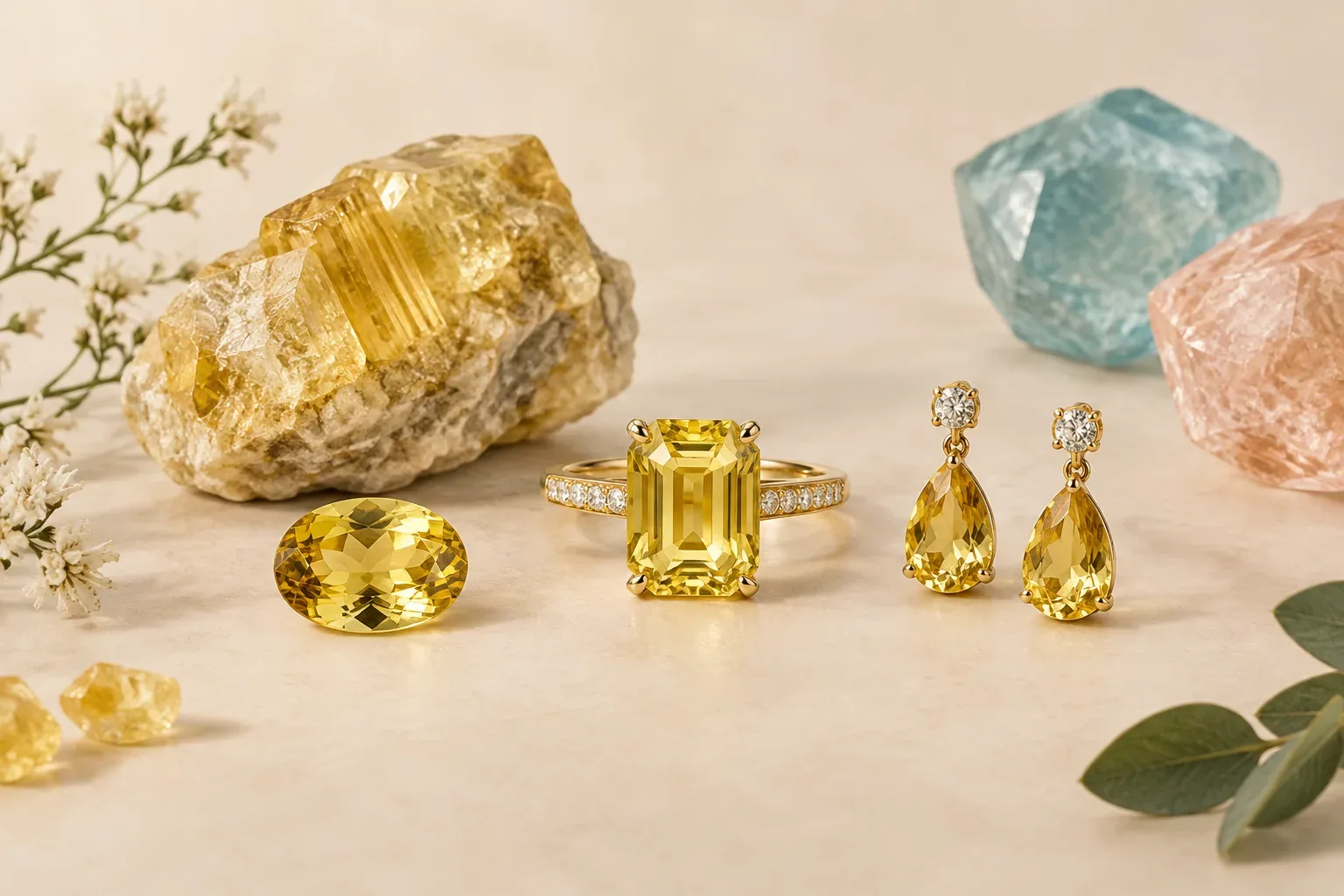
Heliodor is used in the same ways other facetable beryls are used: as faceted stones for rings, pendants, earrings, and sometimes as accent stones in multi-gem designs. The gem’s transparent, yellow-to-golden color can be presented in a range of cuts designed to show color and brilliance, and it pairs well with both warm metals like yellow gold and cooler metals like white gold or platinum, depending on the desired contrast.
Because beryl is relatively hard and can take a good polish, heliodor stones are commonly faceted to maximize color and light return. For styles intended for frequent wear, protective settings such as bezels or lower-profile prongs can help reduce the chance of edge chips. In settings where the wearer leads an active lifestyle, choosing a pendant or stud earrings can protect the stone more than a high-prong ring.
Buying heliodor: what to ask and expect
When buying heliodor, treat it like any other colored gemstone purchase: prioritize clear information about the stone’s origin, whether it is natural, treated, lab-grown, or an imitation, and ask for condition and setting details. The Federal Trade Commission’s guidance for consumers emphasizes that sellers should disclose when a gem has been treated or is lab-grown and that accurate terminology is essential for fair comparison shopping.
The Gemological Institute of America’s resources explain that gem treatments exist across many species of gemstones and that disclosure is a professional standard in reputable trade channels. For heliodor, ask the seller whether any color-enhancement or stabilization treatments have been applied and whether those treatments are documented. A laboratory report from a recognized gemological laboratory is a useful but not always necessary tool; for more expensive or unusually large stones, a report can confirm identity and treatment status.
Practical selection and gifting guidance
Select a heliodor gift by balancing aesthetic preferences with lifestyle and intended use. If the recipient prefers everyday jewelry, choose a stone set in a protective setting and consider slightly lower but durable clarity grades that still show color well; for special-occasion pieces, you can prioritize vivid color and larger size. Consider the recipient’s metal preferences and whether warm golden tones should be echoed in the mounting or contrasted by white metals.
When gifting a gemstone with symbolic intent, be explicit about your meaning so that the receiver understands whether the stone is meant to signify confidence, sunshine, or another personal sentiment. Because modern symbolic associations are not universal, framing the gift—either in a note or conversation—helps the recipient appreciate the intended sentiment. Also consider asking the recipient indirectly about their lifestyle and jewelry habits: heavy manual work or contact sports suggests rings should be robust or avoided, while necklaces and earrings are often safer choices.
Care and maintenance
Heliodor should be cleaned and stored like other medium-hard beryls. Gentle cleaning with a mild soap, warm water, and a soft brush is effective for routine maintenance. The Smithsonian’s materials on gems and minerals emphasize handling gemstones according to their physical properties, and the Gemological Institute of America underscores that treatment status affects safe cleaning methods—if a stone has an unknown treatment, it is prudent to avoid aggressive cleaning.
If you are unsure about whether a specific heliodor has been treated, ask the seller about safe care recommendations and avoid steam cleaners or ultrasonic cleaners until you have confirmation. Store heliodor pieces separately from harder stones and metal objects to reduce the chance of scratching or chipping, and have settings inspected periodically by a jeweler to ensure prongs and bezels remain secure.
A concise buying checklist
Before you buy, confirm whether the heliodor is natural, treated, lab-grown, or an imitation and request clear written disclosure. Ask about return policies and guarantees so you can evaluate the piece at home and under light that shows color accurately. For valuable pieces, consider getting a gemological report to verify identity and treatment. Finally, match the stone size, color intensity, and setting style to the recipient’s lifestyle: protective settings for active wearers and more open styles for occasional-wear pieces.
Final thoughts
Heliodor’s appeal comes from its golden-yellow color and its place within the beryl family, which gives it a balance of beauty and practical durability for jewelry. Distinguish carefully between the mineral facts—its identity as beryl and the implications for wear and care—and any symbolic associations, which are modern and personal rather than universally historical. With clear disclosure from sellers, sensible cleaning and storage, and a thoughtful match between stone and wearer, heliodor can make a durable and attractive choice for both everyday and occasional jewelry.
Frequently asked questions
What exactly is heliodor?
Heliodor is the yellow to golden variety of the mineral beryl, the same mineral family that includes emerald, aquamarine, and morganite; its identity as a beryl is a mineralogical fact supported by museum references.
Does heliodor have an established historical symbolism?
The museum and professional sources referenced in this article focus on mineralogy and modern gemology rather than detailed historical symbolism for heliodor specifically; many symbolic meanings in circulation today are modern or personal interpretations rather than well-documented historical facts.
Are heliodors commonly treated?
Gem treatments are used across many gem species and treatment disclosure is a standard professional expectation; the Gemological Institute of America advises buyers to ask sellers about any treatments and seek documentation if needed.
How should I clean and care for heliodor jewelry?
For routine care, use mild soap, warm water, and a soft brush, and store heliodor pieces separately from harder stones to reduce abrasion; if you suspect a stone has been treated, consult the seller or a gemologist before using steam or ultrasonic cleaners.
What should I ask a seller before buying?
Ask whether the heliodor is natural, treated, lab-grown, or an imitation; request written disclosure of any treatments, inquire about return policies and guarantees, and consider a laboratory report for higher-value stones, following the consumer-protection guidance of the Federal Trade Commission.
Sources and further reading
- Gems and Minerals: Beauties and Building Blocks — Smithsonian National Museum of Natural History
- An Introduction to Gem Treatments — Gemological Institute of America
- Buying Gemstones, Diamonds, and Pearls — Federal Trade Commission