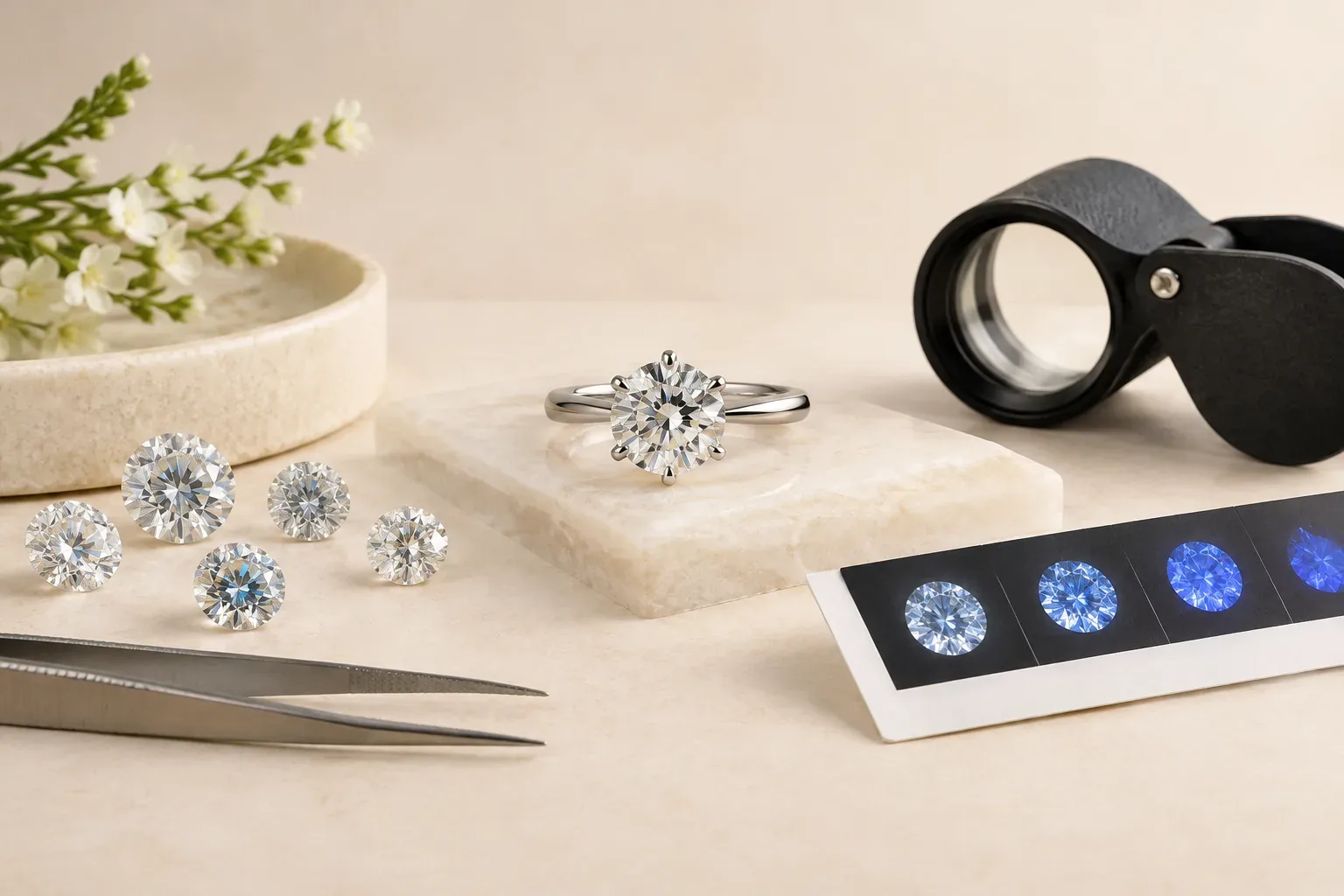
Meaning at a glance
Diamond fluorescence is a laboratory-observed optical response that can affect appearance and price in particular diamonds; buyers should ask for written disclosure and a gemological report, weigh visual trade-offs against savings, and understand that some verifications require a qualified jeweler or gemological laboratory.
What diamond fluorescence is (practical definition)
In a buying context, fluorescence is reported by gem laboratories as an attribute of a diamond. It describes a diamond’s tendency to emit visible light when exposed to shortwave ultraviolet (UV) radiation. Lab reports name the presence and intensity of fluorescence so buyers and sellers can make informed decisions. Gemological authorities include fluorescence among the physical attributes that create consumer questions about treatability, detectability, durability, and care, which is why buyers should seek written documentation before purchase (Gemological Institute of America).
Documented historical evidence and cultural context
Among the approved reference sources used for this guide there is no documented record that specific cultures or historical periods assigned a distinctive symbolic meaning to the optical property called fluorescence. The available authorities focus on disclosure, consumer protection, and gemological testing rather than cultural symbolism. That means, according to the sources used here, fluorescence is principally treated as a scientific and market attribute rather than a historically documented cultural motif.
Separating documented history from modern interpretation
Documented history, as reflected in consumer and gemological references, treats fluorescence as a measurable gem property that requires disclosure and laboratory description. Modern personal meanings—what an individual buyer or recipient might feel about a bluish glimmer or a technical-sounding attribute—are separate and subjective. Sellers and appraisers relied on by consumers distinguish between objectively reported lab attributes and personal or cultural interpretations that owners apply after purchase. The Federal Trade Commission requires clear disclosure about the nature of materials and treatments, and the Gemological Institute of America underscores why detectability and disclosure are relevant to consumers, which reinforces that the historical record in these sources is technical rather than symbolic.
How fluorescence appears in jewelry and why it matters to shoppers
Fluorescence is a laboratory notation that does not alter the physical setting or design of jewelry. It is an attribute you will find on a diamond’s grading report and on a seller’s product description. For shoppers focused on engagement rings, studs, and other high-demand styles, market research shows continuing strong consumer demand in those categories, which means fluorescence will more frequently appear as one of several technical choices buyers must balance when selecting stones for popular pieces (Imaginaire Digital).
Decision criteria and practical trade-offs
Treat fluorescence as part of the overall decision matrix rather than a single deal-breaker. Important decision criteria include the diamond’s written grade report, the intensity of fluorescence as shown on that report, how the stone appears in the lighting conditions where it will be worn, certification and seller disclosure, and price. Gemological authorities emphasize that treatments, detectability, and disclosure are central consumer questions; fluorescence fits into that framework (Gemological Institute of America).
Questions to ask the seller or jeweler
Ask for a full, current lab report that lists fluorescence and its intensity. Request written disclosure that the seller follows FTC guidance on gemstone disclosure. Ask how the diamond looks in a range of real-world lighting conditions and whether you can see the stone in daylight, indoor light, and under a jeweler’s UV lamp. If the seller offers a video or standardized photos, ask for those too. If any treatments are present, or if the stone is lab-grown, request clear written disclosure consistent with Federal Trade Commission guidance. Finally, ask about return, exchange, and warranty terms so you can make a purchase with recourse if the diamond’s appearance does not meet expectations after purchase (Federal Trade Commission; Gemological Institute of America).
Practical selection and gifting guidance
When selecting a diamond as a personal purchase or a gift, prioritize the combination of certification and appearance. If you prefer objective certainty, choose diamonds with a recognized laboratory report that notes fluorescence and other attributes. If price is a major concern, compare stones with similar report grades and different fluorescence intensities to see whether a discount compensates for any visible difference to your eye. For gifting, consider the recipient’s preferences: some people value technical attributes and certification, while others judge only by how the finished jewelry looks on them. When in doubt, buy from sellers who provide clear written disclosure, an authoritative lab report, and an accessible return policy so the recipient can exchange the piece if the look is not as expected.
Care and long-term considerations
From a consumer-care perspective, fluorescence itself is a documented optical behavior rather than a treatment that requires special handling. The Gemological Institute of America notes that treatments, detectability, and special care can create consumer questions; therefore, preserve paperwork and gem reports and follow standard jewelry care for mounted diamonds. If future resale is a concern, retain documentation of the diamond’s lab report and any seller disclosures, because buyers and appraisers will rely on that paperwork when evaluating the stone.
Limits on what a shopper can verify without experts
Buyers can and should verify fluorescence and other attributes by asking for an up-to-date grading report from an accredited laboratory and a written seller disclosure as required by the Federal Trade Commission. However, certain determinations—such as precise fluorescence grading, the presence of subtle treatments, or confirmatory testing for origin—are tasks for trained gemologists and accredited laboratories. Visual impressions from photographs or short in-store views are useful, but they are not substitutes for a certified report or a professional appraisal when definitive information is required.
Final practical checklist
Before you buy, request the lab report that lists fluorescence and read the seller’s disclosures. Inspect the stone in typical lighting for the recipient or wearer and compare similarly graded stones with and without fluorescence to judge appearance and price difference. Confirm return and warranty terms and keep all documentation. If you encounter conflicting information or if the fluorescence level is important to you, arrange for evaluation by a qualified jeweler or an accredited gemological laboratory.
Frequently asked questions
What is diamond fluorescence and why does it show up on reports?
Diamond fluorescence is an optical attribute recorded by gem laboratories; it describes a diamond’s tendency to emit visible light under certain UV conditions and is reported so buyers have a factual basis for comparison.
Does fluorescence change a diamond’s value?
Fluorescence can influence price in the market, but its effect depends on intensity, how the stone looks to the buyer, certification, and market demand; always compare similarly certified stones and ask for written disclosure when assessing value.
Can I verify fluorescence myself in a shop or online?
You can inspect a stone in different lighting conditions and ask the seller for a lab report, but definitive grading and detection of subtle issues require a qualified jeweler or an accredited gemological laboratory.
What questions should I ask the seller about fluorescence?
Request a current laboratory report that states fluorescence intensity, ask for written disclosure consistent with FTC guidance, view the diamond in typical wear lighting, and confirm return or exchange policies before buying.
Will fluorescence affect durability or care?
Fluorescence is a reported optical attribute rather than a treatment that changes how you care for a diamond; keep documentation and follow standard jewelry care and servicing recommendations.
Sources and further reading
- Imaginaire Digital — Imaginaire Digital
- Gemological Institute of America — Gemological Institute of America
- Federal Trade Commission — Federal Trade Commission