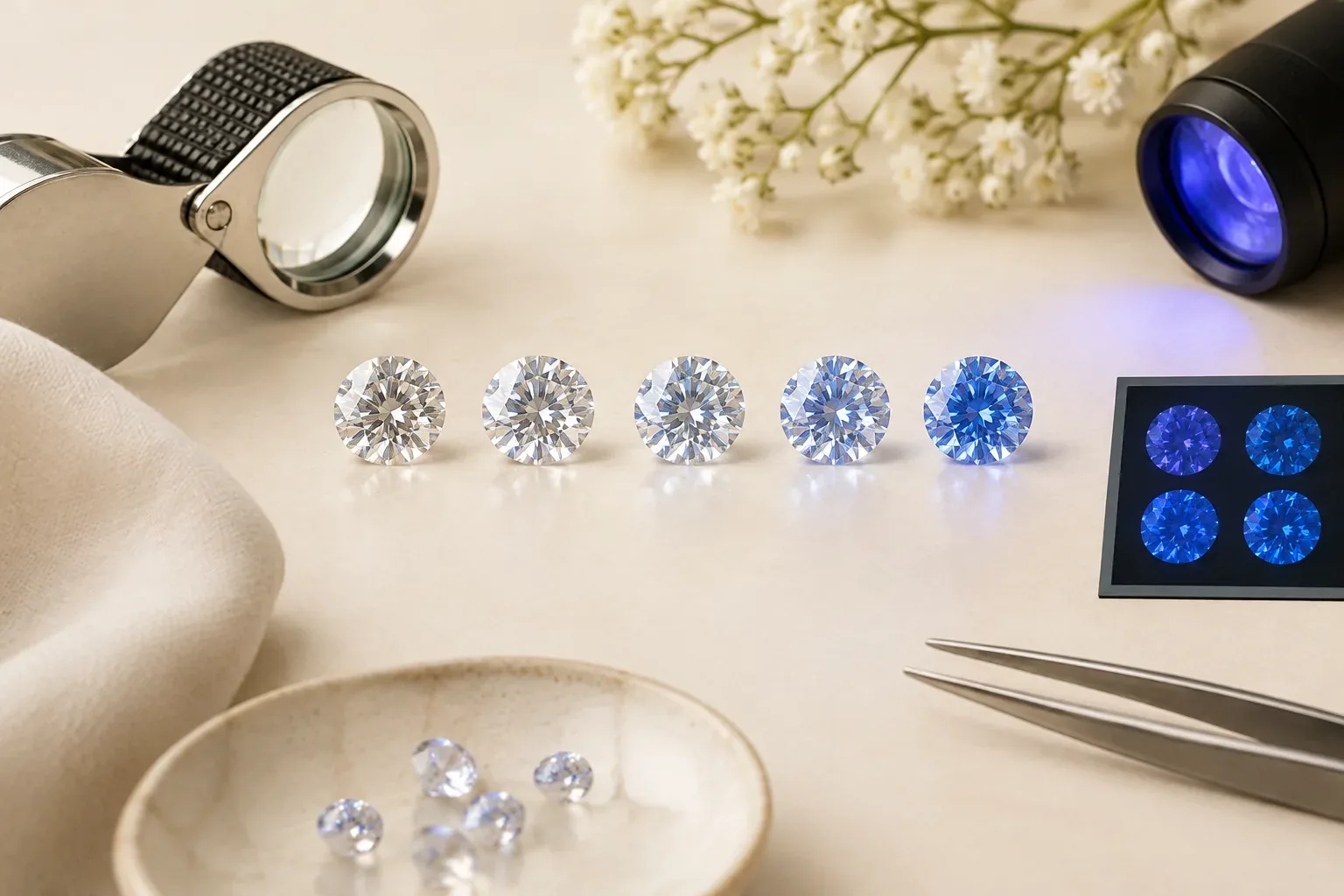
Meaning at a glance
This diamond fluorescence comparison guide defines fluorescence and its common grades, explains how different strengths change a diamond’s look in various lighting, outlines typical price trade-offs and disclosure rules, and sets clear limits on what a shopper can reliably verify without a qualified jeweler or gemological laboratory.
What diamond fluorescence is and how it’s graded
Fluorescence is a physical property caused by trace elements in the diamond that emit visible light after exposure to ultraviolet (UV) radiation. Gem labs describe fluorescence qualitatively with grades such as None, Faint, Medium (sometimes called Moderate), Strong, and Very Strong. These categories help buyers and sellers communicate expected behavior under UV-rich lighting conditions.
Gemological laboratories and trained appraisers determine fluorescence strength using controlled light sources and standardized viewing conditions. Because grading requires calibrated instruments and experience, a consumer’s unaided observation can only suggest presence or absence; accurate grading and explanation of visual impact require a certificate or an expert inspection.
How fluorescence changes a diamond’s appearance
Fluorescence most commonly appears as a blue glow when a diamond is exposed to UV-rich light such as black light or certain sunlight. In ordinary indoor and incandescent lighting the fluorescence is usually imperceptible; in direct sunlight the effect varies by UV content of the light and by the diamond’s cut, color, and clarity.
For diamonds with lower color grades (for example the J–K range), blue fluorescence can sometimes counteract yellow body color, making the diamond appear visually whiter in many settings. Conversely, some diamonds with strong or very strong fluorescence can show a hazy, oily, or milky look in certain viewing conditions; this outcome is uncommon but is the main reason many buyers prefer to evaluate individual stones rather than rely only on a grade.
Price effects and market trade-offs
Market pricing for fluorescent diamonds is a negotiation between perceived appearance and buyer sentiment. Because some buyers avoid strong fluorescence while others value the potential for improved apparent color, fluorescent diamonds—especially in the Moderate to Very Strong range—often sell at a discount relative to comparable non-fluorescent stones. The size of that discount depends on the stone’s color, cut quality, and whether the fluorescence produces an unwanted haze.
If you prioritize maximum resale value or need an insurance-ready certificate, bear in mind that some appraisers and buyers factor fluorescence into value. Conversely, if you want the best visual result for a given budget, a moderately fluorescent lower-color diamond can be a smart cost-saving choice provided you confirm its appearance in photographs and in-person under the light conditions you expect to wear it in.
Documented historical meanings versus modern personal interpretations
There is no widely documented cultural or traditional symbolism attached specifically to diamond fluorescence in the major gemological literature. Modern gemology treats fluorescence as a physical, measurable property rather than a symbol with long-standing cultural meanings; institutions such as the Gemological Institute of America discuss fluorescence in technical and consumer-protection contexts rather than as a cultural motif.
By contrast, contemporary personal interpretations are common: some buyers describe fluorescence as a desirable ‘secret bonus’ that improves perceived whiteness, while others call it a defect to avoid. Those modern opinions reflect individual taste and market trends rather than historical symbolism, so they are best treated as personal preferences rather than universal meanings.
How fluorescence appears in different jewelry settings
Because fluorescence is an internal optical property of the diamond, it can appear in any setting that uses diamonds: engagement rings, studs, tennis bracelets, pendants, and other pieces. The jewelry style does not change the fluorescence itself, but the setting affects how you perceive it. For example a halo or colored metal can mask or emphasize perceived body color, while step cuts and emerald cuts may show any haziness more readily than brilliant cuts.
Retail and search data show strong consumer demand across typical diamond settings—engagement rings, studs, and bracelets are commonly shopped categories—so buyers frequently encounter fluorescence when comparing pieces online and in-store. Practical evaluation in each setting is the safest way to know whether the fluorescence is acceptable for a given design and wearer.
Selection and gifting guidance
If you are shopping for yourself, request high-quality photos and videos of the exact stone under natural daylight, incandescent light, and UV light, and ask whether a lab report accompanies the diamond. For engagement rings and other sentimental gifts, prioritize the recipient’s taste: if they prize visual whiteness on a budget, a moderately fluorescent lower-color diamond can be attractive; if they prefer guaranteed neutrality, opt for None to Faint fluorescence with a reliable lab certificate.
When gifting, always ask for written disclosure and a certificate from a trusted laboratory and include the certificate with the gift. If you are purchasing online, use retailers who provide return policies that permit seeing the piece in your normal lighting and, if possible, in-person inspection by a jeweler. The Federal Trade Commission requires clear distinctions and disclosures about treatments and origins, which supports asking for written confirmation about fluorescence or any other material treatments.
Care, durability and what you can test yourself
Fluorescence does not change a diamond’s hardness or basic durability; diamonds remain extremely hard even when they fluoresce. Normal cleaning and care routines for diamonds apply equally to fluorescent and non-fluorescent stones. Gemological guidance highlights the importance of disclosure and testing for treatments and durability concerns that are unrelated to fluorescence but relevant to overall care.
There are practical checks a shopper can do at home: view the diamond in natural daylight, in warm indoor light, and under a UV lamp to see the fluorescence glow. However, you cannot reliably grade fluorescence strength, determine whether fluorescence causes minor hazing, or verify treatment status without a qualified jeweler or laboratory report. For those limits and for any claims about treatments or lab-created origin, rely on an accredited laboratory report or an independent gemological opinion.
Final checklist before buying
Ask for the diamond’s laboratory certificate and confirm the fluorescence grade, then view clear photos and videos of the actual stone under multiple lighting conditions or examine the stone in person. If the fluorescence is Moderate, Strong, or Very Strong and you are concerned about haziness, request side-by-side comparisons with a non-fluorescent stone of similar color and cut.
Remember that fluorescence is only one factor among cut, color, clarity and carat. Use fluorescence as a decision point rather than an automatic disqualifier: for budget-conscious shoppers, it can offer real value; for buyers wanting predictable resale or institutional appraisal behavior, prioritize non-fluorescent stones or secure comprehensive certification and independent appraisal.
Frequently asked questions
Does fluorescence always reduce a diamond’s value?
No. Fluorescence can reduce value in some market segments—particularly with Strong or Very Strong fluorescence that produces a visible haze—but light to Moderate fluorescence is often neutral or can improve perceived color, which may give buyers better value. Price effects vary by color, cut and buyer preference, and documented disclosure is required for fair transactions.
Can I check fluorescence at home?
You can observe fluorescence qualitatively with a UV lamp and by viewing the diamond in daylight and warmer indoor light, but you cannot reliably grade its strength or determine subtle appearance issues. Accurate grading and any claims about treatment or origin require a qualified jeweler or a laboratory certificate.
Should I avoid strong fluorescence when buying an engagement ring?
Not automatically. Strong fluorescence can occasionally cause a hazy look, which some buyers dislike, but others find the visual trade-off acceptable—especially if the stone’s cut and setting minimize negative effects. Always request photos or an in-person inspection and a lab report before deciding.
Does fluorescence affect diamond durability or care?
No. Fluorescence is an optical property and does not alter diamond hardness or routine care needs. Treat fluorescent diamonds the same way you would any diamond, and follow any special-care notes on a certificate if treatments unrelated to fluorescence are present.
What documents should I ask for when buying a fluorescent diamond online?
Ask for a full laboratory certificate from a recognized lab, clear photos and video of the specific stone under multiple lighting conditions, a written disclosure of any treatments, and a return policy that allows in-person inspection or return if the stone’s appearance differs from expectations.
How common is diamond fluorescence in the market?
Fluorescence occurs in a meaningful share of natural diamonds, and it appears across many popular settings such as engagement rings and studs. Market interest and availability mean you are likely to encounter fluorescent diamonds while shopping, particularly in online search categories with high demand.
Sources and further reading
- Imaginaire Digital — Imaginaire Digital
- Gemological Institute of America — Gemological Institute of America
- Federal Trade Commission — Federal Trade Commission