Meaning at a glance
This guide defines the diamond bow‑tie effect, explains how to read seller and lab information about it, gives decision criteria and trade-offs for buyers, explains safe care, and clarifies what requires a qualified jeweler or gem lab to verify.
Direct answer — what this guide does
Concise answer: the "diamond bow‑tie effect" is an optical pattern that can appear in certain faceted diamond shapes; this guide gives evidence‑led definitions, the decision criteria you should use when reading listings or reports, practical trade‑offs when selecting a stone, safe care notes, and clear limits on what you can verify without a qualified jeweler or a gemological laboratory.
What the bow‑tie effect is, in plain evidence‑led terms
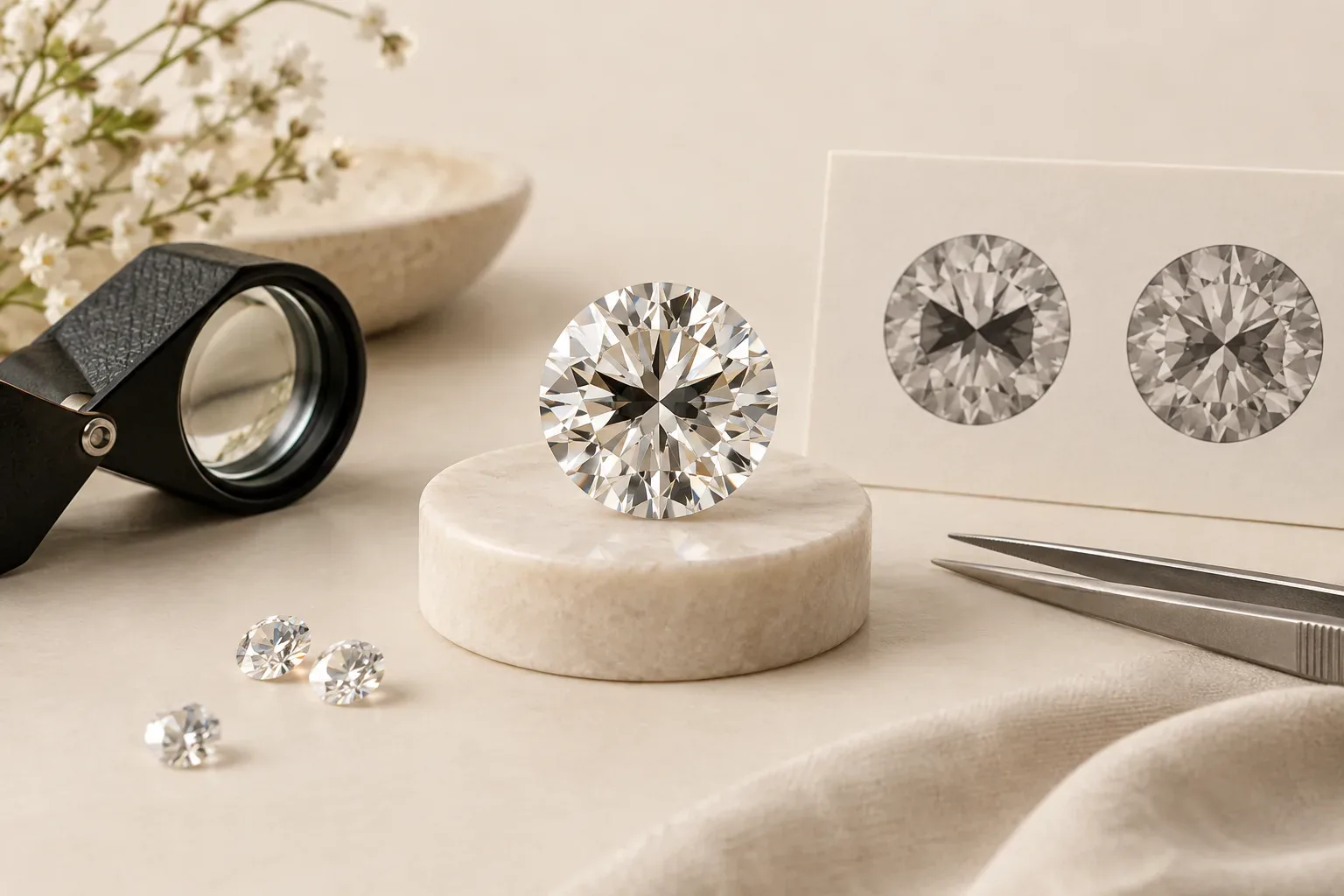
The bow‑tie effect is an optical shadowed band or pair of darker areas that can appear across the face of some faceted stones when viewed face‑up under direct or directional light. It is a result of the interplay between pavilion and crown facet geometry, the viewer’s angle, and how light is returned to the eye. In practice, buyers see it most often discussed for elongated and fancy shapes rather than for round brilliant cuts. For consumers, the important point is that the bow‑tie is a structural light‑performance characteristic, not a surface flaw, treatment, or separate material.
Historical evidence and where meanings come from
There is no strong primary source tradition that attaches longstanding cultural or ceremonial meanings specifically to the optical bow‑tie in diamonds. The bow‑tie as a visual artifact is a modern technical observation used in gem cutting and light‑performance assessments rather than a historic symbolic motif documented by established sources. When shoppers look for cultural or period meanings in jewelry, remember those are typically about motifs (for example, ribbon or bow-shaped metalwork) rather than optical phenomena inside a faceted stone.
Documented history versus modern personal interpretation
Documented history: authoritative consumer and gemological guidance (for example, on disclosure of treatments and material origin) focuses on material identity, treatments, and durability rather than assigning symbolic meaning to optical patterns inside cuts. Modern personal interpretation: individuals and retailers sometimes assign symbolic ideas to a visible bow‑tie—words like "bond," "tie," or "centered contrast"—but these are contemporary, personal, or marketing interpretations rather than documented historical meanings. Never assume such symbolism is universal; it is an optional layer of meaning that a buyer or recipient may prefer.
How the bow‑tie appears in jewelry and how it is reported
Two distinct uses of the word ‘‘bow’’ appear in jewelry descriptions and it's important to keep them separate. First, a metal or gem setting may incorporate a decorative bow or ribbon motif; that is a literal design element. Second, the "bow‑tie effect" refers to the internal optical pattern inside a faceted stone. In listings and reports you will see the latter described qualitatively (for example, "noticeable bow‑tie" or "minimal bow‑tie") or illustrated with face‑up photographs and light‑performance imaging. Reliable sellers may provide multiple photographs under different lighting angles or images from light‑performance viewers so you can judge how intrusive the bow‑tie is to face‑up brightness.
How to read a diamond bow‑tie effect report guide: decision criteria
Start with images: examine face‑up photos under directional light, and images that mimic normal wear. Look for the size, location, and symmetry of the darker band. A small, centrally placed bow‑tie that does not break the stone’s overall brightness is commonly acceptable to buyers who prioritize size and shape. Check proportions: listings that include pavilion angle, crown angle, table size, and length‑to‑width ratio allow you to cross‑check why a bow‑tie may be present. Verify lab reports and seller disclosures: the Federal Trade Commission emphasizes clear disclosure of material origin and treatments, while gemological authorities note detectability and disclosure needs for treatments. If a listing claims a lab report, confirm the lab name and report number and ask for that report before purchase.
Practical trade‑offs buyers face
If you prefer certain shapes, you may accept a degree of bow‑tie to get the shape or face‑up size you want. Eliminating a bow‑tie entirely often means choosing a different shape, opting for tighter pavilion/crown proportions that can reduce apparent size, or accepting higher price for a stone with better light return. There is no single "best" choice; trade‑offs commonly involve face‑up appearance, total price, and personal preference for brightness versus size. Keep in mind that the bow‑tie itself does not indicate treatment; the presence or absence of treatments and the stone’s origin are separate questions that reputable sellers should disclose in writing in line with FTC guidance.
What you can and cannot verify without a qualified jeweler or lab
You can verify the bow‑tie’s visible appearance yourself by inspecting good‑quality face‑up photos, videos, or by viewing the stone in person under directional light. You can also ask the seller for specific proportions and comparison images. What you cannot reliably verify without a qualified expert or gemological laboratory includes definitive identification of natural versus lab‑created material in some cases, the presence of certain treatments that are subtle or detectable only by specialized instruments, and authoritative grading of color, clarity, or light performance. The Gemological Institute of America highlights how treatments, detectability, and durability raise distinct consumer questions; if the seller’s disclosures or the lab report are incomplete, ask for independent lab verification.
Safe care guidance and durability notes
From a care standpoint, the bow‑tie is an appearance issue and not a vulnerability. Diamonds remain highly durable, but GIA materials about treatments and care advise buyers to be aware of possible enhancements or treatments that can affect cleaning methods and durability. Routine cleaning with warm soapy water and a soft brush is appropriate for most diamonds, but if a stone is set in a delicate openwork setting or has been treated, follow any seller or lab care instructions. If you suspect undisclosed treatments or have concerns about a stone’s stability, consult a qualified jeweler or request a lab report that discusses treatments and their detectability.
Practical selection and gifting guidance
When choosing or gifting a stone where the bow‑tie may be visible, prioritize evidence: ask for multiple images, the stone’s proportions, and any available lab report. If the recipient values sparkle above all, select stones that show strong face‑up brightness with minimal bow‑tie. If they value shape or size, explain the trade‑off and select a stone whose bow‑tie is symmetrical and not visually disruptive. For engagements or heirloom gifts, insist on written disclosures about origin and treatments per FTC guidance and, when in doubt, obtain a reputable laboratory report. Respect personal meaning: if you intend symbolic significance, discuss with the recipient whether the bow‑tie or a decorative bow motif is meaningful to them rather than presuming a universal symbolism.
When to seek professional help
Get a qualified jeweler or a recognized gemological laboratory involved when you need authoritative grading, verification of natural versus lab‑created origin, or testing for treatments. Lab reports are the appropriate tool for disputes over disclosure and for high‑value purchases. For everyday purchases where the visual appearance matters most, a combination of high‑quality images, seller transparency, and a trusted jeweler’s inspection is often sufficient.
Closing summary
The diamond bow‑tie effect is a face‑up light‑performance phenomenon best judged visually and in context of a stone’s proportions. Use clear images, proportion data, lab reports, and seller disclosure as your evidence. Acceptable trade‑offs depend on your priorities for brightness, shape, and size. For treatments, origin, and authoritative grading, rely on reputable labs and written disclosure in line with guidance from the Gemological Institute of America and the Federal Trade Commission.
Frequently asked questions
Does a bow‑tie mean my diamond is flawed?
No. A bow‑tie is an optical pattern caused by facet geometry and light return. It is not the same as a surface scratch, chip, or an internal inclusion graded under clarity. Visible inclusions are separate grading considerations; a bow‑tie affects appearance, not necessarily durability.
Can a seller remove the bow‑tie?
The bow‑tie cannot be 'removed' without recutting the diamond to different proportions or choosing a different shape. Recutting can change carat weight, face‑up size, and price, so it is a trade‑off. Ask the seller for alternate stones or recutting options if minimizing a bow‑tie is essential.
Will photos show the bow‑tie accurately?
High‑quality face‑up photos and directional light images can show whether a bow‑tie is visible, but photos can be influenced by lighting, camera angle, and editing. Request multiple images under different lighting and ask for video or live viewing when possible.
Do lab reports list the bow‑tie?
Standard grading reports typically do not quantify a bow‑tie as a graded attribute like color or clarity. Some sellers or light‑performance labs provide supplementary imaging and commentary about light performance that addresses the bow‑tie.
When should I get an independent lab report?
Obtain an independent lab report for high‑value purchases, if the seller’s disclosures are incomplete, or if you need authoritative confirmation of origin or treatments. The FTC and recognized gemological authorities recommend written disclosure and formal lab documentation for material origin and treatments.
Sources and further reading
- Imaginaire Digital — Imaginaire Digital
- Gemological Institute of America — Gemological Institute of America
- Federal Trade Commission — Federal Trade Commission