Meaning at a glance
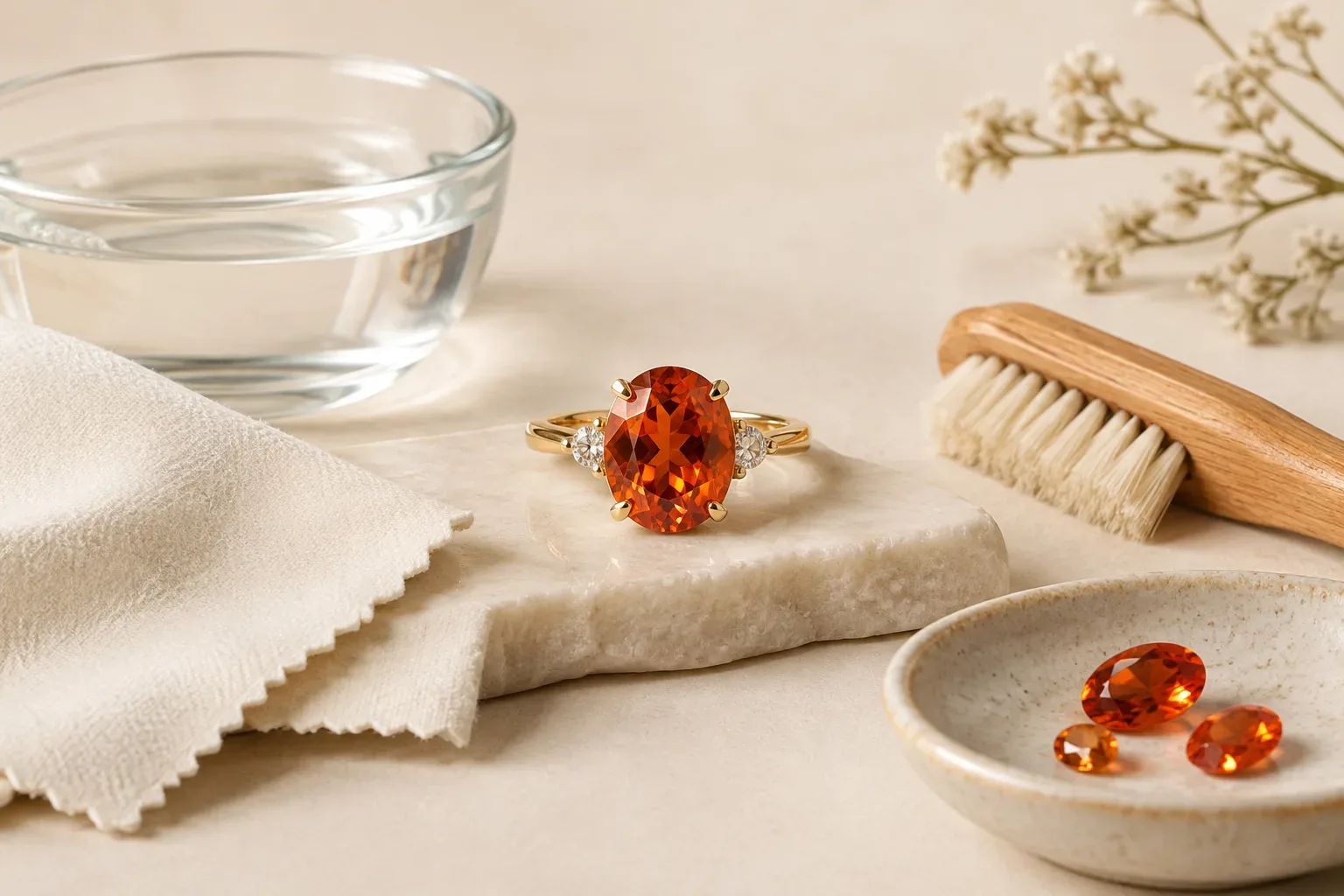
For everyday home care, clean spessartine garnet jewelry with a soft brush, warm water and mild detergent; avoid harsh chemicals, prolonged heat, and do not use steam or ultrasonic cleaners unless a qualified jeweler has confirmed the stone is intact and untreated.
Quick, direct answer
For routine home cleaning of spessartine garnet jewelry, use warm (not hot) water, a mild soap, and a soft brush or cloth, rinse thoroughly, and dry with a lint-free cloth. Avoid strong acids, prolonged exposure to heat, and abrasive cleaners. Do not use steam or ultrasonic cleaners unless a qualified jeweler confirms the stone and setting are free of fractures, fillings, or treatments that would make those methods unsafe.
What this guide covers and the evidence standard
This article follows an evidence-led approach: cleaning and care recommendations rely on general guidance about gemstone treatments, durability, and consumer disclosure as described by the Gemological Institute of America (GIA) and the U.S. Federal Trade Commission (FTC). Market context and consumer search interest trends referenced here come from industry reporting by Professional Jeweller and Imaginaire Digital. Where historical or cultural claims are made, I indicate whether primary evidence exists in the cited sources; I do not assert universal meanings or undocumented traditions.
Historical evidence: what is documented and what is not
The sources reviewed for this piece do not provide primary historical documentation linking spessartine garnet to specific ancient cultures or discrete historical practices. Professional and academic coverage in the cited sources focuses on modern gemology, treatment, disclosure, and marketplace trends rather than historical lore.
Because spessartine is one variety within the broader garnet group and because the available sources here center on consumer protection and gem treatment, there is no detailed, source-backed record in these documents tying spessartine to named ancient cultures or precise ritual uses. For readers who want a full historical account of garnet symbolism across cultures, consult academic gemological histories or museum catalogues in addition to the trade and regulatory sources cited below.
Documented historical meanings versus modern personal interpretations
Documented historical meanings require primary historical or archaeological evidence. In the material used to prepare this guide, authoritative coverage is limited to contemporary trade, treatment, and consumer-disclosure issues rather than to cultural symbolism of spessartine. Therefore, any claims about historical meanings specific to spessartine would be speculative without additional historical sources.
Modern personal interpretations—how individual wearers, designers, or sellers describe a spessartine’s meaning—are common in today’s marketplace. These contemporary interpretations are valid as personal or marketing expressions, but they are not substitutes for historically documented beliefs. The FTC guidance in the cited sources underscores the importance of distinguishing marketing claims from verified facts when consumers purchase gemstones.
How spessartine appears in jewelry today
In contemporary jewelry, spessartine garnet is used as a faceted or cabochon gemstone in rings, earrings, pendants, and cluster settings. Jewelry designers often set it as a center stone or as accent stones alongside diamonds and other gems. Professional Jeweller and market analysis reference growing interest in gemstone rings and sculptural pieces, which aligns with demand for colorful gem varieties in modern settings.
Because style and setting affect cleaning needs, note the metal and mounting chosen for a spessartine piece. Protective settings (bezel or partial bezel) offer more protection for everyday wear than fully exposed prong settings and can influence whether professional cleaning methods are advisable.
Safe cleaning methods for home care
Routine home cleaning: prepare a bowl of lukewarm water with a drop or two of mild liquid soap. Soak the jewelry for a few minutes, then use a soft toothbrush or lint-free cloth to remove surface dirt. Rinse under warm running water and dry with a soft, non-abrasive cloth.
Frequency: clean as needed when visible dirt or oils accumulate; high-use pieces may benefit from a gentle clean every few weeks. Avoid prolonged soaking of jewelry with porous settings, fragile mounts, or unknown treatments.
Spot cleaning: for small spots of residue, use a damp cloth rather than soaking. For multi-stone pieces, clean each area gently so you do not disturb delicate settings or prongs.
What to avoid — chemicals, heat, and mechanical stress
Avoid exposure to strong acids, alkalis, bleach, chlorine pool water, and household cleaners that contain ammonia or abrasives. These chemicals can damage metal settings and may affect any surface treatments that the stone might have.
Do not assume ultrasonic or steam cleaners are safe. The GIA emphasizes that treatments, durability, and detectability vary between gemstones; stones with fractures, internal inclusions, or certain treatments can be damaged by ultrasonic vibrations or steam. Only use ultrasonic or steam cleaning after a qualified jeweler has inspected the stone and confirmed they are safe for that specific gem and mounting.
Avoid extreme or prolonged heat. Repeated thermal stress can affect some gemstones and settings; if jewelry has been exposed to significant heat (for repair, resizing, or other reasons), have it inspected before cleaning.
Decision criteria and practical trade-offs for cleaning choices
Start with a cautious assumption: if you do not know whether a stone is treated, filled, fracture-bearing, or fragility-prone, choose the gentlest cleaning method (warm soapy water and soft brush). The GIA notes that treatments and their detectability create distinct consumer questions; when in doubt, be conservative.
Trade-offs: home cleaning is low-cost and low-risk when done gently, but it will not remove all types of surface deposits or restore professional polish. Professional cleaning and maintenance remove tough deposits and can include inspection and repairs, but these services cost more and may involve polishing or ultrasonic methods that you should only allow if a qualified jeweler confirms the stone is appropriate for those techniques.
If fast results are required for a special occasion, choose a trusted jeweler for a professional clean and inspection rather than risk a home method that could cause damage.
What a shopper can and cannot verify without expert help
What you can verify at home: general surface condition, presence of obvious chips or loose settings, and how easily dirt and oils come off with gentle cleaning. You can also check for clear written disclosures from the seller about natural versus lab-created material and any treatments; under FTC guidance, sellers should make these disclosures.
What requires a pro or laboratory: whether a stone is natural versus lab-grown, exact treatments (such as fracture filling or diffusion), whether it has been heat-treated, and internal features that affect durability. The GIA explains that treatments and detectability can be complex and that some identifications require laboratory equipment and expertise.
If you need certification or assurance of natural origin and treatment status, obtain a written report from a qualified gemological laboratory or a reputable jeweler who will send the stone for testing.
Practical selection and gifting guidance
Match the setting to the recipient’s lifestyle: for active wearers, choose protective settings such as bezels or lower-profile prong settings and sturdier mounting metals. For occasional wearers, more open settings and delicate mounts are acceptable.
Ask for written disclosures and any available lab reports from the seller when purchasing as a gift, and retain receipts and documentation. The FTC emphasizes clear distinctions among natural, lab-created, treated, and imitation materials and recommends obtaining written disclosures.
Include care instructions with the gift: explain that regular gentle cleaning is recommended, that harsh chemicals and household cleaners should be avoided, and that periodic inspection by a jeweler will prolong the piece’s life. If you cannot provide lab documentation, be transparent about what is known and what is not known about the stone.
When to see a qualified jeweler or lab
Arrange a professional inspection if you see chips, loose prongs, opaque fractures, or if the stone has a dull appearance after careful home cleaning. A professional can advise whether ultrasonic or steam cleaning is safe, perform necessary repairs to the mounting, and, if requested, submit the stone for laboratory testing.
Seek a gemological laboratory report when provenance, treatment status, or natural origin materially affects purchase decisions. This step is especially important for higher-value stones or when resale, insurance, or certification is desired.
Final practical notes
Start conservatively: warm water, mild soap, soft brush, and a careful dry are safe and effective for routine maintenance. Reserve steam and ultrasonic cleaning for stones that have been inspected and cleared by a professional. Rely on seller disclosures and, where appropriate, lab reports to answer questions about treatments and origin.
Frequently asked questions
Is it safe to use an ultrasonic cleaner on spessartine garnet?
Do not use an ultrasonic cleaner unless a qualified jeweler has inspected the stone and confirmed it is free of fractures and treatments that make ultrasonic cleaning unsafe. The Gemological Institute of America notes that treatments and internal damage can make some gemstones vulnerable to ultrasonic and steam cleaning.
How often should I clean my spessartine jewelry at home?
For regular wear, a gentle clean every few weeks or when you see visible dirt is reasonable. High-use pieces may need more frequent cleaning; always use mild soap, lukewarm water, and a soft brush to avoid stressing the stone or setting.
Can household chemicals damage spessartine or its setting?
Yes. Avoid strong acids, bleach, chlorine, and abrasive cleaners, which can harm metal settings and any surface treatments. Remove jewelry before swimming, cleaning, or using harsh household products.
How can I verify whether a spessartine is natural or treated?
Determining natural origin and treatments often requires laboratory testing or a gemological appraisal. The FTC advises consumers to seek written disclosures from sellers and to request lab reports for confirmation when provenance or treatment status matters.
Should I include care instructions when gifting spessartine jewelry?
Yes. Provide simple care guidance—avoid harsh chemicals, clean gently with mild soap and a soft brush, and recommend periodic professional inspection—to help the recipient protect the piece.
Sources and further reading
- Imaginaire Digital — Imaginaire Digital
- Professional Jeweller / PRYA Jewellery Search Insights — Professional Jeweller / PRYA Jewellery Search Insights
- Gemological Institute of America — Gemological Institute of America
- Federal Trade Commission — Federal Trade Commission