Meaning at a glance
The bow-tie effect is an optical dark band that appears in certain elongated cuts; care focuses on protecting the setting and ensuring accurate disclosure and testing where needed. Use gentle cleaning, pre-purchase inspection, written disclosures, and a qualified jeweler for repairs—recognize what only a gem lab or trained pro can determine.
What the bow-tie effect is and where it appears
The term "bow-tie effect" describes a central dark band or pair of dark triangular areas that can appear across the table of certain elongated or fancy-shaped diamonds. It is an optical outcome of how light returns (or fails to return) to the viewer from the stone's faceting and proportions. The phenomenon is most often discussed in relation to elongated shapes in the retail market, which recent search-data analysis shows are in strong consumer demand among engagement and fashion buyers, particularly oval cuts in the U.K. market (see Imaginaire Digital).
Because the bow-tie is a light-performance attribute rather than a material treatment, its visibility varies with cut proportions, faceting design, mounting style and viewing conditions. That variability is why visual assessment under multiple lighting conditions and mounting styles is important when selecting a stone.
Historical evidence and cultural references
Among the approved reference materials used for this guide there is no specific historical record linking the optical bow-tie effect in diamonds to any named culture, era, or ritual meaning. The available sources used here focus on gemological practice, consumer disclosure and contemporary market demand rather than historical symbolism.
Because the primary references for this article are modern gemological and consumer-protection resources, readers should understand that claims about older or cultural symbolism for a technical light-performance phenomenon like the bow-tie are not documented in those sources and would need separate, specialist historical research to verify.
Documented historical meanings versus modern personal interpretations
Documented historical meanings: using only the approved sources, there is no established historical symbolism for the diamond bow-tie effect. The GIA and FTC resources used for this guide address technical care, treatments and consumer disclosure rather than symbolic history.
Modern personal interpretations: contemporary owners and designers may treat a pronounced bow-tie as a characterful signature—an aesthetic that can read as dramatic, vintage, or distinctive depending on the wearer. Those modern attributions are personal or market-driven, not historically documented by the sources cited here.
How the bow-tie appears in jewelry and how settings matter
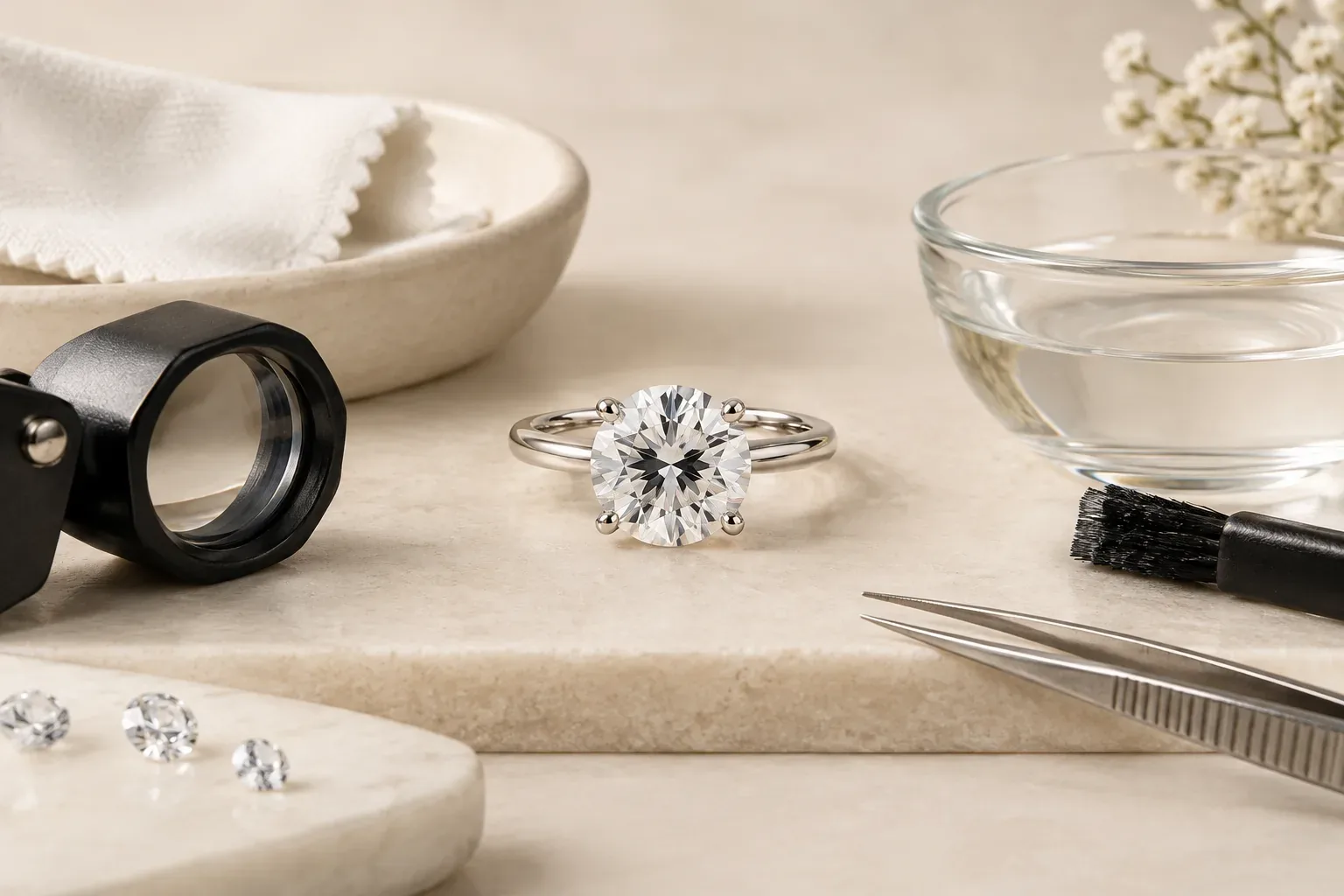
In jewelry the bow-tie effect is visible in loose stones and stones set into rings, pendants and other mounts. A tight bezel, low profile setting or heavy halo can mask the visual appearance of the dark band by limiting viewer angles or adding surrounding light return. Conversely, open prong settings and lower-profile mounts make the stone's internal light performance more apparent.
A buyer should consider how an intended setting will change perceived brightness. The retail data referenced by Imaginaire Digital highlights consumer interest in elongated shapes, which are precisely the cuts where the bow-tie often appears; that market context explains why attention to mount and viewing angles is a frequent selection criterion.
Durability: realistic expectations and what labs or jewelers can confirm
Durability questions around diamonds and repairs often mix optical, structural and treatment-related concerns. The Gemological Institute of America notes that distinctions among treatments, detectability and durability create specific consumer questions—some of which can only be resolved with laboratory testing and professional evaluation (GIA).
Practical limits: a retailer or trained jeweler can assess surface condition, mounting integrity and visible inclusions, but they cannot always confirm certain internal treatments, synthetic origin or subtle facet-angle issues without specialized instruments or lab reports. The Federal Trade Commission advises consumers to obtain clear, written disclosures from sellers about origin, treatments and warranties; if verification matters, insist on a reputable gem lab report before purchase.
Cleaning: safe daily and periodic methods
Routine cleaning for diamonds showing a bow-tie effect should prioritize the setting and any non-diamond components as much as the stone. Gentle warm soapy water and a soft brush or cloth are effective for removing oils and surface dirt that can exaggerate a dark area. Rinse thoroughly and dry with a lint-free cloth.
When to consult a pro: if the piece has delicate side stones, glued elements, or evidence of prior repair, consult the seller or a qualified jeweler before using ultrasonic cleaners or chemical dips. The GIA's guidance on treatments and special care reinforces the need to confirm whether a stone or companion materials have special handling requirements before applying stronger cleaning methods.
Repair precautions and working with professionals
Before authorizing any repair that affects the stone or its facets—such as re-cutting, re-polishing or heavy setting adjustments—get a written estimate and an explanation of likely outcomes. Repairs that alter facet geometry can change the bow-tie's visibility and may reduce carat weight or value.
Choose a qualified jeweler and request documentation. If confirmation of origin or treatment is required, the GIA and similar laboratories can perform tests that a retail bench will not. The FTC advises that consumers ask for written disclosure and documented testing when origin, treatment or enhancement status is material to value.
Selection and gifting guidance
Decide whether you or the recipient will want the bow-tie visible or minimized. Some buyers prize the character of a slight bow-tie in an elongated cut; others prefer minimal bow-tie for maximum even brightness. Ask a seller for several photos or a short video of the exact stone set in the intended mount, viewed under different lighting and angles.
Request written disclosures and, when possible, a recent appraisal or gem-lab report. If you are gifting and the recipient might prefer choice, consider a flexible return or exchange policy and a professionally documented purchase so adjustments or setting changes can be made after gifting. The FTC guidance on purchases and disclosure is a useful standard to rely on when negotiating return and documentation terms.
A quick decision checklist
When evaluating a diamond with a bow-tie effect: inspect it in multiple lights and angles; view it in the proposed setting; request close-up images or a video; ask for written disclosure on origin and treatments; obtain a lab report if verification matters; and use a qualified jeweler for any cleaning or repair that might touch facets or settings. These steps follow the consumer-focused concerns described by the GIA and the FTC and reflect market realities identified by Imaginaire Digital.
Frequently asked questions
What exactly causes the bow-tie effect and can it be removed?
The bow-tie effect is caused by how light is returned through a diamond's faceting and proportions; it is not a material defect. Substantial changes to facet geometry or re-cutting can change its visibility but may reduce carat weight and value. Only a qualified gem cutter and possibly a gemological laboratory can advise on trade-offs and confirm outcomes.
Will a bow-tie reduce a diamond's value?
How a bow-tie affects value depends on market preferences, cut quality and how visible it is in the chosen setting. Some buyers accept or prefer a slight bow-tie in elongated shapes; others discount stones with pronounced dark bands. Use lab reports and seller disclosure to guide valuation decisions.
Is there special cleaning for diamonds with a bow-tie?
No unique chemical cleaning is required for the bow-tie itself; routine care is gentle warm soapy water and a soft brush. If the piece has delicate side stones, glued elements or unknown treatments, consult a qualified jeweler before stronger cleaning methods. The GIA highlights that treatments and special care questions warrant professional guidance.
Can I tell whether a stone is treated or lab-grown by looking at the bow-tie?
No. Treatments and origin issues are not reliably identifiable by eye. The FTC recommends obtaining written disclosures from the seller, and laboratory testing is often required to confirm origin or treatment status.
How often should settings be checked on rings with bow-tie stones?
Have a qualified jeweler inspect prongs and settings at least once a year or sooner if the piece is worn daily. Regular checks reduce the risk of stone loss and catch issues that can affect both appearance and safety.
If I dislike the bow-tie after purchase, what are my options?
Options include resetting the stone into a different mounting that reduces visibility, having a designer add accents or halos, or in some cases pursuing re-cutting—each option has cost and value implications. Confirm the seller's return and exchange policy before purchase, and, when possible, secure documentation to support adjustments.
Sources and further reading
- Imaginaire Digital — Imaginaire Digital
- Gemological Institute of America — Gemological Institute of America
- Federal Trade Commission — Federal Trade Commission