Meaning at a glance
Spessartine garnet can be a durable choice for many kinds of jewelry when set and worn with reasonable care; this guide defines the durability criteria shoppers should use, explains practical trade-offs (size, cut, setting, and disclosures), recommends safe cleaning and handling, and makes clear which attributes require a qualified jeweler or gemological laboratory to confirm.
Quick answer
Spessartine garnet can be suitable for regular wear if you pick the right cut, size and protective setting and follow conservative care. Durability for stones is not a single number: it combines hardness, resistance to breakage (toughness), cutting characteristics, and whether the stone has been treated. Use concrete decision criteria—visible condition, secure setting, seller disclosures, and return policies—before daily wear, and consult a qualified jeweler or gem lab for treatment or origin claims that matter to you.
What 'durability' means for gemstones
In practical buying terms, durability blends at least three ideas: hardness (resistance to scratching), toughness (resistance to chipping and breaking), and stability (how the stone reacts to chemicals, heat and cleaning). These are separate measures and affect how a gem performs in rings, bracelets, necklaces or earrings.
The Gemological Institute of America (GIA) emphasizes that durability and treatments influence care and disclosure questions for gemstones. Treat a durability assessment as a checklist rather than a single verdict: harder does not always mean tougher, and a hard but brittle stone may still chip if struck or set insecurely.
Historical evidence and culture-specific claims
Among the sources consulted for this guide there is limited specific historical documentation about spessartine garnet as a distinct mineral in archaeological or cultural records. Authoritative trade and gemology references consulted here focus primarily on modern consumer questions about treatments, detectability, durability and disclosures rather than ancient symbolic uses.
When sellers or writers attribute precise historical meanings or cultural uses to spessartine, treat those as modern narratives unless they are backed by primary archaeological or historical scholarship. The materials used for jewelry and the meanings attached to stones can vary widely across periods and cultures, and the sources used for this article do not supply a verified canon of spessartine symbolism tied to a particular culture or century.
Documented historical meanings versus modern personal interpretations
Documented historical meanings are statements grounded in verifiable historical records, museum catalogues, or peer-reviewed studies. The sources behind this guide do not provide such records specifically for spessartine, so any precise cultural attributions should be treated as unverified here.
Modern personal interpretations—how people describe spessartine today in marketing, social media or personal belief—are common for gemstones. These contemporary meanings are legitimate as personal or cultural expression, but they differ from historically documented uses and should be labeled as modern interpretations when you rely on them for gifting, display or resale value.
How spessartine typically appears in jewelry
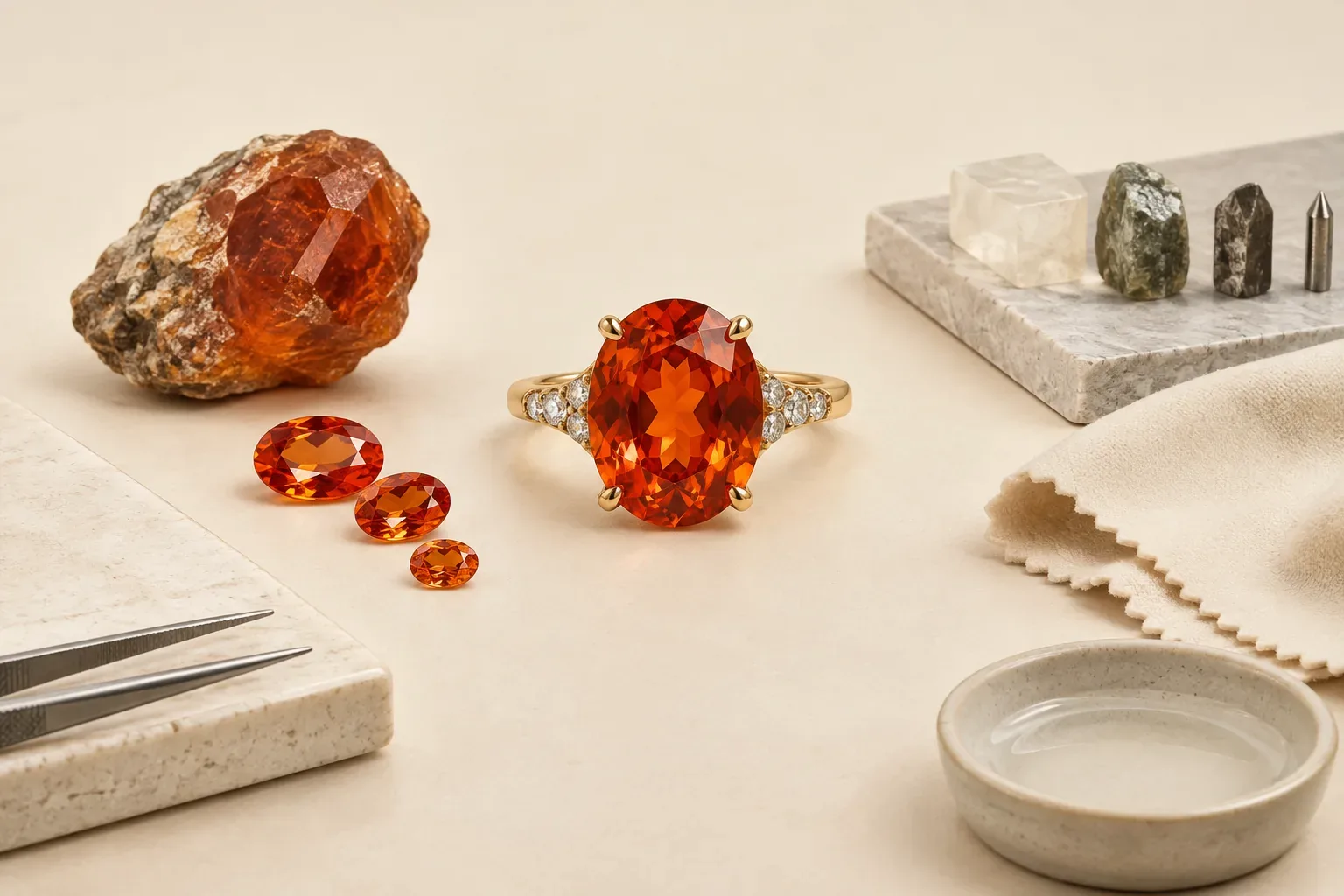
In contemporary jewelry design, spessartine garnet is used in rings, pendants, earrings and bracelets, often as faceted gems to showcase color and brilliance. Industry trend reporting indicates growing consumer interest in gemstone rings and necklaces, categories where spessartine is commonly offered alongside other colored stones in sculptural or vintage-inspired settings, according to Professional Jeweller and market visibility surveys reported by Imaginaire Digital.
Practical choices for everyday pieces include protective settings (bezel, halo or low-profile prong settings) and smaller sizes in high-impact locations such as rings or bracelets. Because durability depends as much on mounting and wear patterns as on the stone itself, jewelers will often recommend settings that reduce exposed edges and limit the chance of direct knocks.
Selection and gifting guidance
Decide what matters most to the wearer: maximum color and size, or a low-maintenance stone for daily wear. If daily wear is the goal, prioritize secure settings and moderate stone size rather than the largest, most exposed gem available.
Ask the seller for written disclosures. The U.S. Federal Trade Commission (FTC) requires clear distinctions among natural, lab-created, treated and imitation materials and recommends written seller disclosures. Request information about any treatments, the stone’s country of origin if relevant to you, the return policy and any warranty or service plan.
Inspect the physical condition before purchase. Surface chips, deep cleavage planes, or an unstable setting are immediately verifiable by sight and by a qualified retail jeweler. For attributes that matter to valuation—such as undisclosed enhancement or confirmed geographic origin—you should obtain a report from a qualified gemological laboratory or a written statement from a recognized independent appraiser.
Care, cleaning and safe handling
Treat spessartine like a gem that benefits from careful handling: remove jewelry before heavy manual work, sports or activities that risk knocks or impact. Avoid exposing the stone to harsh chemicals and household cleaners because treatments, when present, may react unpredictably.
For routine cleaning, use mild soap and warm water with a soft brush and rinse thoroughly. If you are unsure whether a stone has been treated or is set in a way that could trap moisture or cleaning fluids, ask the seller or a qualified jeweler before using ultrasonic cleaners or steam—GIA guidance underlines that treatments and special-care needs frequently create consumer questions and that some procedures are inappropriate for certain stones.
When in doubt, store gemstone pieces separately to avoid abrasion from harder gems or metal components and schedule periodic inspections with a reputable jeweler to check setting security.
Practical trade-offs and limits on verification
Trade-offs are inevitable: larger, more vividly colored stones often show more inclusions or surface vulnerability; protective settings reduce visibility of the stone’s pavilion or girdle; aggressive cleaning can remove surface coatings or accentuate micro-fractures. Decide which trade-offs you accept before purchase.
There are firm limits to what a shopper can verify without professional help. Visual inspection and seller documentation can establish condition, mounting quality, and basic disclosure of treatments. However, confirmatory testing for treatments, synthetics or geographic origin typically requires specialized equipment and expertise available only through a qualified jeweler or a gemological laboratory. The FTC guidance underscores the need for written disclosures from sellers; GIA notes that detectability and disclosure of treatments are central consumer questions. If provenance or treatment status affects price or personal preference, obtain an independent lab report.
When to consult a jeweler or lab
Consult a bench jeweler if you need an assessment of setting security, a repair estimate, or advice on an appropriate mounting for daily wear. A bench jeweler can also test for obvious problems such as loose prongs or chips that require conservation.
Order a laboratory report when treatment disclosure, confirmation of natural versus synthetic material, or country of origin materially affects your purchase decision or expected resale value. Only qualified gemological labs can reliably perform the specialized tests needed for those determinations.
Frequently asked questions
Is spessartine garnet suitable for daily wear?
Spessartine can be suitable for daily wear when set in a protective mounting and worn with care, but suitability depends on the specific stone’s condition, cut and mounting. Ask the seller for disclosures and choose settings that minimize edge exposure; consult a jeweler if you plan heavy daily wear.
How can I tell if a spessartine has been treated?
Sellers should provide written disclosures about treatments. Definitive detection of many treatments typically requires laboratory testing by a qualified gemological laboratory; visual inspection alone is not enough for many enhancements.
What cleaning methods are safe?
Use a mild soap, warm water and a soft brush for routine cleaning. Avoid harsh chemicals and be cautious with ultrasonic or steam cleaners unless the stone’s treatment status and structural stability have been confirmed by the seller or a qualified jeweler, in line with GIA guidance on treatment and care.
What should I verify before buying?
Verify the seller’s written disclosures on whether the stone is natural, lab-created, treated or an imitation; check the return policy and any warranty; inspect the stone for chips or loose settings; and request an independent lab report if treatment, origin or authenticity affects your purchase decision.
When do I need a lab report?
Obtain a lab report when the stone’s treatment status, synthetic versus natural nature, or geographic origin materially affects price or your confidence in the purchase. Only qualified gem laboratories can reliably perform the specialized tests for those determinations.
Sources and further reading
- Imaginaire Digital — Imaginaire Digital
- Professional Jeweller / PRYA Jewellery Search Insights — Professional Jeweller / PRYA Jewellery Search Insights
- Gemological Institute of America — Gemological Institute of America
- Federal Trade Commission — Federal Trade Commission