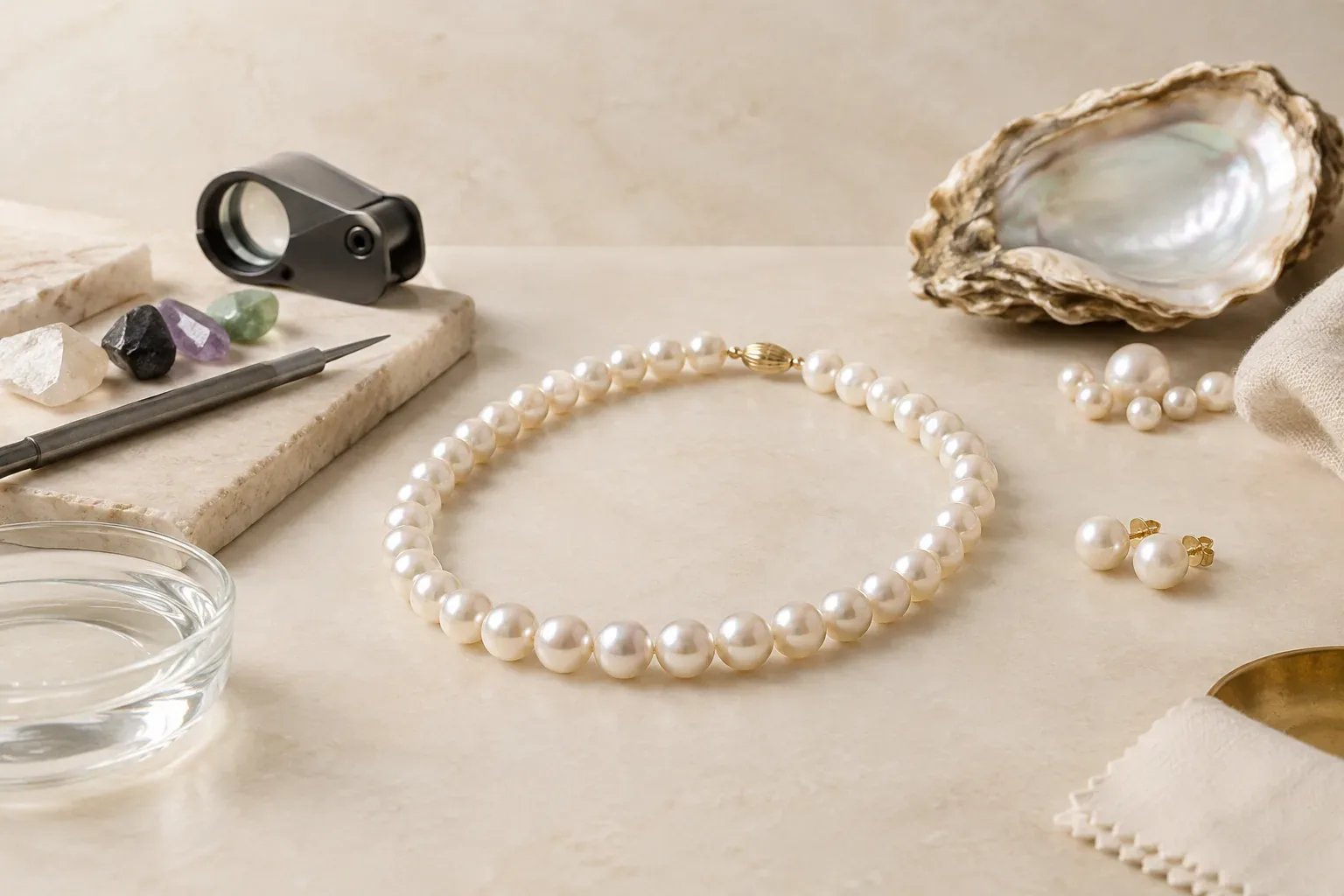
Meaning at a glance
This pearl durability guide explains pearl durability in plain terms, distinguishes hardness from toughness, outlines decision criteria and trade-offs for settings and daily wear, gives practical care and gifting advice, and clarifies what requires a qualified jeweler or gemological laboratory to verify.
Quick answer
Pearl durability depends on surface hardness, internal toughness, and the organic layers that form the pearl’s nacre; pearls are relatively delicate compared with most faceted gemstones, so choose settings and daily-use designs accordingly, follow gentle care practices, and rely on a qualified jeweler or gemological laboratory when you need definitive verification about origin, treatments, or imitation status. This pearl durability guide focuses on clear definitions, decision criteria, practical trade-offs, safe care steps, and the limits of what shoppers can verify without specialist testing.
What durability means for pearls: hardness vs toughness
Durability in jewelry is a practical concept made of at least two technical parts: hardness (resistance to surface scratching) and toughness (resistance to breaking, chipping or flaking). For pearls, the outer material is an organic, layered substance that behaves differently from crystalline gemstones. Because the surface layers can be scratched, abraded, or thinned, pearls demand gentler handling than most faceted gems.
When choosing or wearing pearl jewelry, think about both kinds of vulnerability. A pearl with high surface luster can still be scratched by everyday abrasion; likewise, an impact can fracture or chip pearl layers even if the surface looks smooth. Those distinct failure modes are why the terms 'hardness' and 'toughness' matter separately for buyer decisions and care plans.
How pearls are made and why that matters for wear
Pearls form when layers of nacre are deposited around an irritant inside a mollusc; cultured pearls are created under human management by introducing a nucleus or tissue to stimulate that process, while natural pearls form without deliberate intervention. Because nacre is organic and layered, any change in thickness, bonding, or environmental exposure affects the pearl’s durability. Treatments, coatings or imitation materials can alter surface behaviour and require disclosure.
Federal Trade Commission guidance reminds consumers that clear distinctions among natural, lab-created, treated, cultured and imitation materials should be disclosed in writing at purchase. For durability decisions this matters: an imitation bead will behave differently from a genuine nacre-coated pearl, and some surface treatments can change scratch resistance or the need for special cleaning.
Documented historical evidence versus modern personal meanings
This guide is focused on physical durability rather than the many cultural meanings associated with pearls. Documented historical evidence about pearl use and symbolism exists across scholarly literature and specialist texts; compiling a precise catalogue of cultural meanings requires sources dedicated to those historical studies rather than a consumer durability guide.
Modern personal interpretations—why someone gifts, wears, or values pearls today—are separate from documented historical uses. Contemporary symbolism is individual and variable; treat modern meanings as personal or retail conventions rather than universal facts. This distinction helps avoid conflating cultural history with present-day marketing or private sentiment.
How pearls typically appear in jewelry and the trade-offs
Pearls commonly appear in strands and chokers, drop or stud earrings, pendant necklaces, brooches, and ring centers. Each application carries trade-offs. Strand necklaces offer minimal contact with hard surfaces and are among the least risky ways to wear pearls daily. Earrings are also relatively low-risk because they are not exposed to frequent rubbing.
Rings or bracelets expose pearls to knocks, chemicals, and abrasion; selecting a protective setting (for example, a bezel or partial bezel that reduces contact) and reserving pearl rings for occasional rather than everyday wear are practical trade-offs. The jewelry market continues to innovate with sculptural and cluster designs that incorporate pearls in mixed-media settings; recent trade reports show growth in necklaces and expressive cluster pieces alongside other trends, which affects availability and style choices.
Decision criteria when selecting pearls for daily wear or gifting
Match the piece to the recipient’s lifestyle. If the wearer is very active with hands-on work, choose low-contact formats such as necklaces or studs rather than rings and bracelets that get bumped frequently. Consider clasp strength and stringing quality for strands, and prioritize secure mountings for pendants.
Ask for written disclosures about origin, whether pearls are natural, cultured, treated or imitation, and whether any surface coatings have been applied. The Federal Trade Commission explicitly advises consumers to require clear vendor disclosures for gemstones and pearls. Where available, request any laboratory reports or seller certificates and understand that a lab or qualified jeweler is the correct route to resolve disputes about authenticity or treatment.
Practical care guidance for daily wear and storage
Adopt gentle, preventive habits. Avoid contact with perfumes, hairsprays and household chemicals; apply cosmetics and fragrance before putting on pearls, and wipe pearls with a soft, slightly damp cloth after wearing to remove oils and residues that can dull the nacre. Do not use ultrasonic cleaners or steam cleaners on pearls, as common professional guidance warns that aggressive cleaning and heat can damage organic layers.
Store pearls flat so that strings are not stressed and keep pearls separate from harder gemstones to prevent scratches. For strand necklaces, restringing periodically is a simple, practical safety step—regular wear can weaken stringing material. Insure high-value pearl jewelry if the recipient intends frequent wear, and consider reserving extremely delicate types for occasional use.
What a shopper can and cannot verify without a professional
You can visually inspect luster, surface condition, matching (for strands), and the quality of mountings and clasps yourself. You can also ask the seller for written disclosures about origin and treatments and gauge seller transparency before buying. Consumer protection guidance from the Federal Trade Commission emphasizes written disclosures and clarity at sale, which should be your first line of verification.
You cannot reliably determine, by sight alone, whether a pearl is natural, cultured, dyed, coated, or an imitation in ambiguous cases. Definitive answers about origin, treatments, or advanced identification require a qualified jeweler’s instruments and, for conclusive results, testing by a gemological laboratory. The Gemological Institute of America and other reference organizations note that detectability, durability, and treatment disclosure are specialist matters; when provenance matters to you, ask for laboratory documentation or a professional appraisal.
Practical trade-offs summarized
If you prioritize everyday durability, choose low-contact designs, higher-quality mountings, and pearls with clean surfaces and good luster rather than exceptionally large or shallow-nacre specimens that may be more fragile. If aesthetics weigh more heavily—such as for a statement ring—accept shorter wearing windows and commit to careful handling and occasional professional maintenance. Balance aesthetics, expected use, and budget to make a choice that fits real life rather than idealized retail imagery.
Choosing and gifting pearls respectfully
When gifting, match the design to the recipient’s routine and tastes and be explicit about care expectations to help the recipient preserve the piece. Request written disclosures at purchase, keep receipts and any certificates, and offer to pay for professional cleaning or restringing as a practical add-on gift. If cultural or symbolic meanings are important to the recipient, ask about those preferences and, if necessary, consult scholarly or community sources for historically documented meanings rather than relying on general retail claims.
Final takeaways
Pearls are beautiful but require a different approach than most faceted gemstones: treat the surface and the layered organic structure with respect. Use this pearl durability guide to make decisions based on the intended use, ask for clear seller disclosures as recommended by the Federal Trade Commission, follow gentle home care practices, and turn to a qualified jeweler or gemological laboratory when you need definitive identification or treatment reports. Thoughtful selection and realistic expectations will keep pearls wearable and enjoyable for years.
Frequently asked questions
Are pearls hard enough for everyday wear?
Pearls are relatively soft compared with many faceted gemstones and are more vulnerable to surface wear and impacts, so they are better suited to low-contact items such as necklaces and stud earrings for everyday wear; rings and bracelets with pearls are higher risk and are best reserved for occasional use.
How should I clean my pearl jewelry at home?
Clean pearls gently: wipe them with a soft, slightly damp cloth after wearing to remove oils and residues, avoid ultrasonic or steam cleaners, and never soak pearls in harsh chemicals; when in doubt, ask a qualified jeweler for recommended cleaning based on the specific piece.
Can I tell if a pearl is natural, cultured, treated or imitation myself?
You cannot reliably determine natural versus cultured, treated versus untreated, or genuine versus imitation by sight alone in many cases; the Federal Trade Commission recommends written seller disclosures and a qualified jeweler or gemological laboratory for definitive identification and treatment reports.
How often should I restring a pearl necklace?
Restring frequency depends on wear: a frequently worn strand may need restringing every one to two years while occasional-wear strands last longer; inspect the string and have a jeweler restring as soon as you see fraying or looseness to prevent loss.
What should I ask the seller before buying pearl jewelry?
Ask for written disclosures about origin and whether the pearls are natural, cultured, treated or imitation; request any available certificates or lab reports, examine stringing and clasps, and confirm return and repair policies—these items help manage durability expectations and potential post-sale issues.
Sources and further reading
- Imaginaire Digital — Imaginaire Digital
- Professional Jeweller / PRYA Jewellery Search Insights — Professional Jeweller / PRYA Jewellery Search Insights
- Gemological Institute of America — Gemological Institute of America
- Federal Trade Commission — Federal Trade Commission