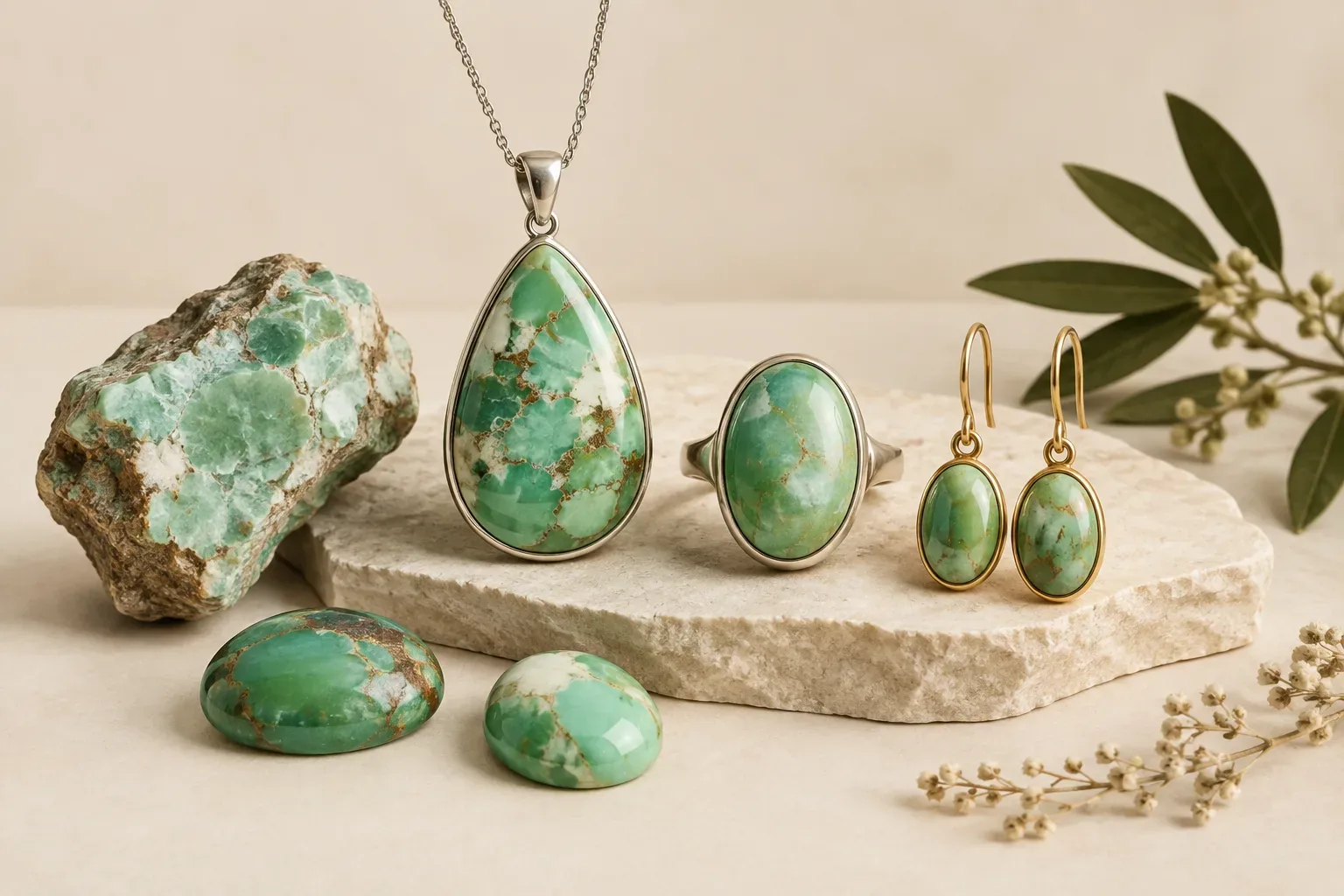
Meaning at a glance
Variscite is a hydrated aluminum phosphate often cut as cabochons and sometimes confused with turquoise; identity, matrix, porosity, stabilization or treatment, and gentle care matter more than modern hope symbolism.
What variscite is (mineral identity and context)
Variscite is a hydrated aluminum phosphate mineral that forms as green to bluish-green nodules or masses in the weathering zones of aluminum-rich rocks. Museum and geological descriptions treat variscite first as a mineral specimen and gem material rather than as a single cultural symbol. The Smithsonian National Museum of Natural History frames variscite in the same context used for other gems and minerals: as an identifiable mineral with particular properties that affect how it is cut, set, and cared for.
Documented historical evidence — what the professional records say
Professional and museum literature preserved by institutions such as the Smithsonian focuses on variscite’s mineralogy, occurrence, and use as a gem material rather than on a stable, widely documented symbolic meaning tied to a specific culture. In other words, the authoritative public records used for curatorial and educational purposes emphasize the stone’s physical identity and the contexts in which it appears, but they do not establish a single historical ‘meaning’ attached to variscite across multiple societies. Where historical or archaeological studies do treat gem materials as culturally meaningful, those sources must be read separately and cited directly; the general gem-and-mineral treatments in museum literature do not supply a cross-cultural symbolic history for variscite.
Separating documented history from modern personal interpretation
Because the professional sources used for this article are primarily mineralogical and consumer-protection in scope, it is important to separate documented record from later, personal, or marketing-driven meanings. Documented historical claims require primary archaeological, ethnographic, or archival evidence. In contrast, many modern claims about variscite’s symbolism — for example, that its green color represents healing, renewal, or emotional balance — are contemporary personal interpretations or popular-attribution motifs and not established facts in the museum and mineralogical literature cited here. Those modern symbolic uses are valid as personal or cultural expressions but should not be confused with documented, universal historical meanings.
How variscite appears in jewelry
As a gem material, variscite is most commonly cut and polished for jewelry. It is frequently fashioned as cabochons because its opaque to translucent character and attractive green hues polish well in rounded shapes. Variscite is sometimes visually confused with turquoise due to overlapping color ranges; for that reason, identity and testing are important when color is central to the purchase. Beyond cabochons, jewelers may use variscite for small inlays, beads, and carved elements, but its physical properties — including any natural brown or green matrix, porosity, and the presence or absence of fractures — influence how it is set and finished. Those same features affect the stone’s durability in rings, pendants, and bracelets and how much protection it requires in daily wear.
Why identity, matrix, porosity, and treatment matter
Variscite’s composition and structure affect both appearance and performance. The stone’s matrix (host rock remnants that can appear as brown or darker streaks), porosity (how readily the surface absorbs liquids), and tendency to be stabilized or treated are all practical concerns for buyers. Treatments such as stabilization or resin impregnation are used in a number of gem materials to reduce porosity and improve surface durability. The Gemological Institute of America recommends clear disclosure of treatments because they change how a stone will wear and how it should be cared for. Buyers who need to know whether a variscite gem is natural, stabilized, dyed, or an imitation should ask for explicit treatment disclosure and, when needed, independent testing.
How to choose variscite jewelry: practical, respectful guidance
When selecting variscite for yourself or as a gift, start with clear, simple questions of identity and treatment: is the stone natural variscite, has it been stabilized or otherwise treated, or is it an imitation? The Federal Trade Commission advises consumers to seek straightforward disclosure about whether gems are natural, treated, laboratory-made, or imitations and to expect honest answers from reputable sellers. Ask the seller for written treatment information and for any backing paperwork that accompanies the piece. Consider the setting: because porosity and surface softness can make variscite more vulnerable to wear than harder minerals, choose protective settings for rings and bracelets, such as bezel settings or metal edges that shield the stone, or reserve variscite pieces for pendants and earrings that are less likely to be struck or abraded. If the recipient prefers low-maintenance jewelry, select a piece with a documented stabilization treatment and ask the seller how that treatment affects care.
Gift-giving and meaning: choosing sensitively
If you are gifting variscite for its color or perceived symbolic value, be explicit about whether the meaning you associate with the stone is personal, cultural, or commercially presented. Modern symbolic attributions—such as using green variscite to represent renewal or calm—are personal or marketing interpretations and may not carry the same weight for every recipient. Respect the recipient’s beliefs and preferences by asking about metal allergies, style preferences, and whether they would like a card that explains the gift’s meaning. For items of potential cultural significance to a particular community, seek guidance from members of that community or from specialists rather than assuming a specific symbolic history based on color alone.
Care and maintenance
Because variscite is a hydrated phosphate and can be porous or treated, handle it gently. Avoid exposing variscite to acids, household chemicals, and prolonged soaking. Do not assume variscite can withstand ultrasonic cleaning or strong heat; treatments, stabilization resins, and natural porosity can be damaged by aggressive cleaning methods. Wipe variscite jewelry with a soft, dry or slightly damp cloth after wear and store pieces separately to prevent abrasion. If a piece is described as stabilized or treated, ask the seller or a qualified jeweler how that treatment changes recommended care. General guidance from gem professionals is to favor gentle, mechanical cleaning and to avoid chemicals or high temperatures that could alter surface appearance or any applied treatment.
When to ask for testing or documentation
If the price, rarity claim, or visual appearance raises questions, request independent testing or a written report. For higher-value purchases, ask for a gemological laboratory report or a statement from a recognized professional that confirms identity and documents treatments. The GIA and similar gemological organizations describe a range of possible treatments for gem materials and stress transparent disclosure. The Federal Trade Commission expects sellers to disclose material facts about gemstones, so asking for documentation is both reasonable and standard practice for conscientious buyers.
Final practical notes
Variscite’s green color and soft, matte-to-waxy luster make it appealing for quiet, natural-looking jewelry. Its value for a buyer or recipient will rest on a combination of visual appeal, documented identity, disclosed treatment, and the appropriateness of the setting for intended wear. For meaningful gifting, pair a clearly described stone with thoughtful presentation and, when relevant, a brief explanation of whether any symbolic meaning is personal, cultural, or contemporary.
Frequently asked questions
What is variscite and how does it differ from turquoise?
Variscite is a hydrated aluminum phosphate mineral that commonly has green to bluish-green colors and is often cut as cabochons. It can be visually similar to turquoise, but they are distinct minerals. Because their color ranges overlap, buyers should confirm identity through reputable sellers or testing if correct identification is important.
Does variscite have a single historical symbolic meaning?
No single, widely documented historical symbolic meaning for variscite is established in the museum and mineralogical literature cited here. Many modern symbolic attributions—such as associations with healing or renewal—are contemporary personal or commercial interpretations rather than documented historical facts.
Are variscite gems treated, and should sellers disclose treatments?
Variscite pieces may be stabilized or otherwise treated to reduce porosity and improve durability. The Gemological Institute of America recommends transparent disclosure of any treatments. The Federal Trade Commission advises consumers to expect clear statements about whether a gem is natural, treated, lab-grown, or an imitation.
How should I care for variscite jewelry?
Because variscite can be porous and is a hydrated phosphate, avoid harsh chemicals, strong heat, ultrasonic cleaners, and prolonged soaking. Clean gently with a soft cloth and mild, brief water contact only when necessary, and store items separately to prevent abrasion.
What should I ask when buying variscite as a gift?
Ask whether the stone is natural variscite, whether it has been stabilized or treated, and whether any documentation or testing is available. Consider the intended wear: choose protective settings for pieces that will be worn daily and communicate any symbolic intentions clearly to respect the recipient’s views.
When is independent testing appropriate?
Independent testing or a gemological report is appropriate for higher-value purchases, when identification is in doubt, or when treatment disclosure is incomplete. A lab report can confirm identity and list treatments, which affect both value and care.
Sources and further reading
- Gems and Minerals: Beauties and Building Blocks — Smithsonian National Museum of Natural History
- An Introduction to Gem Treatments — Gemological Institute of America
- Buying Gemstones, Diamonds, and Pearls — Federal Trade Commission