Meaning at a glance
This pearl treatment guide defines common enhancements, explains decision criteria and trade-offs, lists safe-care steps, and clarifies what shoppers can verify only with a qualified jeweler or gemological laboratory.
Direct answer — what shoppers need from a pearl treatment guide
A practical pearl treatment guide should define the types of enhancements you are likely to encounter, explain how each choice changes appearance, durability and price, give clear selection and gifting criteria, outline safe care, and state what you cannot confirm without a qualified jeweler or a gemological laboratory. Trusted authorities emphasize that treatments affect detectability, durability and disclosure requirements, and that sellers should provide written distinctions among natural, cultured, treated and imitation materials (Gemological Institute of America; Federal Trade Commission).
Historical evidence and cultural periods (what the sources document)
Recent trade and editorial reporting shows renewed public interest in historical jewelry styles and the categories where pearls commonly appear. Professional Jeweller reports a resurgence in Art Deco and other historical styles that influence contemporary pearl usage in necklaces and statement pieces, while market search reports document ongoing consumer demand for necklaces and earrings that often feature pearls (Professional Jeweller; Imaginaire Digital).
Those industry and market sources document demand and stylistic cycles rather than primary archaeological details. For technical, scientific or provenance history—for example, the development of cultured pearl technology or the historical use of pearls in specific royal courts—consult specialised gemological and historical references. The Gemological Institute of America provides the gemological framework that separates natural, cultured, treated and imitation materials and explains how treatment and testing practices evolved alongside pearl commerce (GIA).
Documented historical meanings versus modern personal interpretations
Documented historical meanings are context-specific and documented by historians and trade writers in the contexts they study. Trade reporting notes that design periods such as Art Deco influence how pearls are styled today, but it does not claim a single, universal symbolic meaning for pearls (Professional Jeweller).
Modern personal interpretations vary widely. Today people commonly choose pearls for attributes such as a classic look for formal occasions, a clean neutral palette for bridal jewelry, or an organic, tactile surface in contemporary designs. These are personal or stylistic choices rather than universal symbolic statements. Treat any claim about a single, universal meaning for pearls with caution; cultural or historical symbolism should be verified from specialist historical or cultural studies if provenance or specific cultural association matters to your purchase.
Common enhancements, decision criteria and practical trade-offs
Gemological authorities and consumer-protection guidance make three linked points you should use to decide: enhancements exist and change a pearl’s appearance; treatments affect detectability, durability and required disclosure; and written disclosure from the seller is a baseline consumer right (GIA; FTC).
Commonly encountered enhancements include surface and color modifications that change how a pearl looks and wears. These enhancements can improve uniformity, color intensity, or surface appearance, but they often require different long-term care and may affect value compared with untreated or naturally coloured examples. The primary decision criteria for shoppers are appearance, durability, price, ethical or provenance priorities, and the extent of documentation and disclosure provided by the seller.
Trade-offs are predictable: a treated pearl may offer a more uniform colour and lower cost, but it may be more sensitive to cleaning agents, re-polishing or long-term fading than an untreated example. Conversely, natural or minimally treated pearls may command higher prices and stronger resale value but offer less colour consistency between matched pieces. Because detectability varies by treatment and instrumentation, a qualified jeweler or gemological laboratory is often required to determine specific processes used.
How pearl treatments and choices appear in finished jewelry
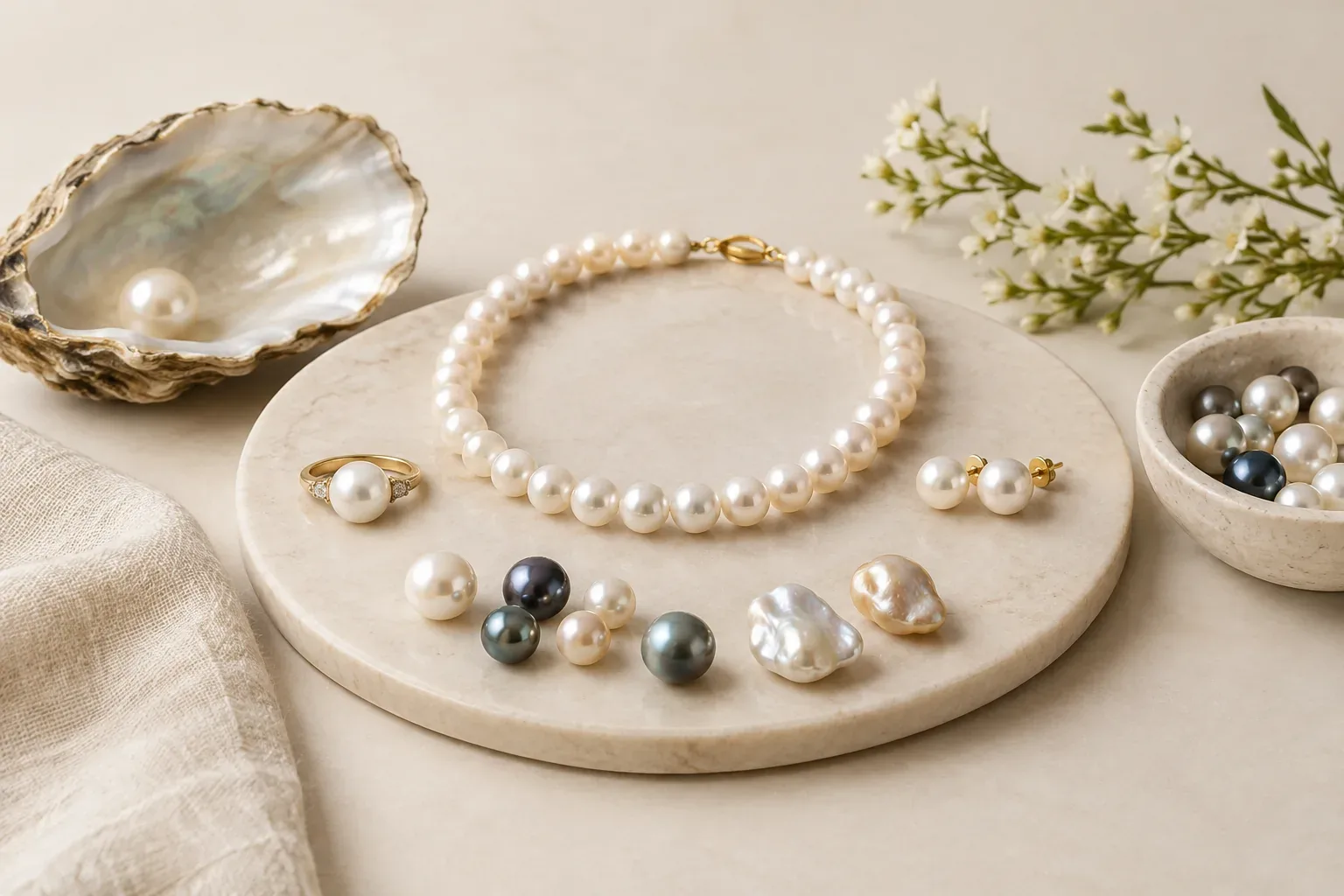
Treatment decisions influence the kinds of jewelry in which pearls are used. Treated or uniformly coloured pearls are commonly used where matching is critical, for example in symmetrical strands, matched stud earrings and bridal sets. Pearls with pronounced surface character or unusual shapes are often chosen untreated or minimally enhanced for contemporary, sculptural or artisan pieces where individuality is a design asset. Trade reporting highlights that necklaces and sculptural statement pieces remain popular formats for gemstones and pearls in the current market (Imaginaire Digital; Professional Jeweller).
Design and mounting also reflect treatment and care needs. Pearls mounted in sensitive settings should be secured in ways that avoid prolonged contact with harsh adhesives or plating chemicals that could affect surface finish. For strand pearls, quality of drilling and knotting affects both the look and the long-term durability of the jewelry.
Selection and gifting guidance — practical, respectful advice
Ask for written disclosures before purchase. The Federal Trade Commission’s consumer guidance stresses that sellers should clearly distinguish among natural, cultured, treated and imitation materials in writing. When buying a pearl for a gift, request documentation that states whether the pearl is natural, cultured or imitation and whether it has undergone treatments that affect appearance or durability (FTC).
Match the gift to the wearer’s priorities. If the recipient values classic, low-maintenance pieces, consider a well-matched cultured pearl strand with clear seller warranties. If they prefer artisanal uniqueness, choose a piece that highlights individual surface texture or baroque shape and accept that matching and uniformity may be less important. Where budget and longevity both matter, prioritize verified seller reputation, clear return and warranty policies, and the option to have the item inspected by a qualified jeweler after purchase.
For higher-value purchases where provenance or treatment status affects value materially, plan to obtain a report from a recognized gemological laboratory or an assessment from a qualified jeweler. Industry and gemological sources warn that some treatment effects require specialised equipment to detect reliably; written seller disclosure is necessary but not always sufficient if resale or insurance valuation is a future concern (GIA; FTC).
Safe care guidance and durability notes
Treatments can influence how a pearl should be cleaned and stored. Gemological guidance stresses that treated gemstones require special care depending on the process used; for pearls this commonly means avoiding ultrasonic cleaning, harsh chemicals, and prolonged exposure to perspiration or cosmetics, and storing pearls separately to prevent abrasion (GIA).
Practical care steps are simple and respectful: wipe pearls with a soft damp cloth after wear, avoid contact with perfumes and hair sprays, store them flat in a soft pouch or lined box, and have strand pearls re-knotted periodically to prevent strain on the drill holes and string. If you suspect a surface treatment, ask the seller for care guidance specific to that treatment and consider professional cleaning rather than at-home methods.
What you can and cannot verify without a lab or qualified jeweler
What you can verify yourself includes visual characteristics such as luster, surface condition, colour consistency and drill-hole finishing, and whether a seller provides written disclosure and a return policy. You can also confirm seller reputation, warranty terms and whether the piece is represented as natural, cultured, treated or imitation.
What you usually cannot verify without professional help includes identification of the specific treatment process used, quantifying how a treatment will age over decades, and distinguishing certain subtle laboratory-applied enhancements from naturally occurring colour or surface variations. Gemological testing or a qualified jeweler’s inspection is often needed to detect or characterize treatments reliably; the Gemological Institute of America explains that detectability, durability and disclosure are core consumer concerns and that specialised testing may be required (GIA).
Summary — using this guide to make a confident choice
Use this pearl treatment guide as a framework: request written disclosure, match the piece to the wearer’s priorities, weigh appearance against long-term maintenance and resale considerations, follow care guidance appropriate to the disclosed treatment or lack of it, and obtain professional testing when treatment status materially affects value or intended use. Trade and regulatory sources converge on three practical consumer rights: clear disclosure, reasonable care information, and the option to seek a qualified professional opinion when needed (GIA; Federal Trade Commission).
Frequently asked questions
Do sellers have to disclose pearl treatments?
Yes. U.S. consumer guidance from the Federal Trade Commission requires sellers to distinguish clearly and in writing among natural, cultured, treated and imitation materials, so you should request written disclosure before buying.
How can I tell if a pearl has been treated?
Some treatments affect colour or surface appearance you can see, but many require specialised equipment or a jeweler’s inspection to detect reliably. If treatment status matters to you, ask for written disclosure and consider a report from a recognised gemological laboratory or an evaluation by a qualified jeweler.
Will a treatment make a pearl less durable?
Treatments can affect durability and care needs depending on the process used. Gemological authorities note that detectability and durability vary by treatment, so obtain care instructions from the seller and avoid harsh cleaning methods if a treatment is disclosed.
What should I ask for when buying a pearl as a gift?
Ask for written disclosure on natural versus cultured status and on any treatments, request the seller’s care and return policies, choose a style that matches the recipient’s preferences for uniformity versus individuality, and consider purchasing from a reputable vendor who will allow professional inspection if needed.
Can I return a pearl if I later discover an undisclosed treatment?
If a seller failed to disclose treatments as required by consumer guidance, you may have recourse under your local consumer-protection laws. Start by contacting the seller, and keep documentation of the purchase and any lab or jeweler reports that identify an undisclosed treatment.
Sources and further reading
- Imaginaire Digital — Imaginaire Digital
- Professional Jeweller / PRYA Jewellery Search Insights — Professional Jeweller / PRYA Jewellery Search Insights
- Gemological Institute of America — Gemological Institute of America
- Federal Trade Commission — Federal Trade Commission