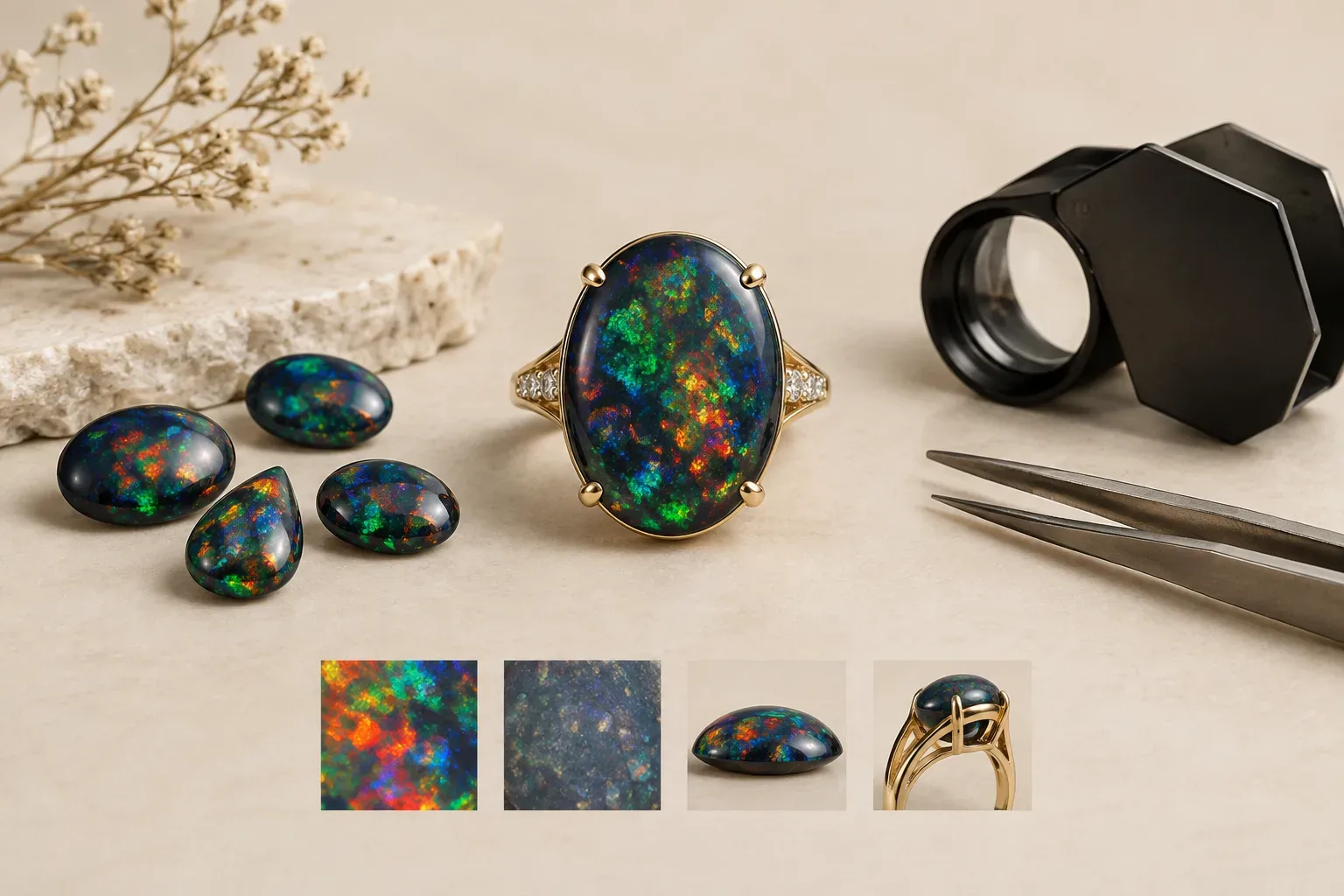
Meaning at a glance
A black opal buying guide should define color (body tone and play-of-color), clarity (inclusions and surface condition), cut (cabochon shape and proportions), and value drivers (rarity, treatment, origin, and setting needs); require written seller disclosure about treatments and origin; advise laboratory reports for treatment/origin claims; and explain safe everyday care and realistic limits on what a shopper can verify without expert testing.
Direct answer — what a buyer needs from a black opal buying guide
A useful black opal buying guide gives clear definitions of the decision criteria you will use at the point of sale (color, clarity, cut, and value), explains common trade-offs you will face, lists the tests and disclosures that should accompany a purchase, and sets out care and durability considerations. It also tells you what can only be confirmed by a qualified jeweler or a gemological laboratory report.
How the available evidence shapes what we can say about history
The approved contemporary sources for this guide do not include primary historical texts about black opal in ancient cultures. Modern trade and search-data publishers document present-day demand and trends rather than ancient beliefs. For example, Professional Jeweller reports growing consumer interest in opal and gemstone rings and in sculptural and period-inspired jewelry styles, and Imaginaire Digital’s search data shows steady market demand for engagement rings, rings and other categories where opals may appear. Because the approved evidence set is focused on recent market and consumer-protection material, we cannot responsibly assert specific ancient or traditional cultural meanings for black opal that are not supported by those sources.
Documented historical meaning versus modern personal interpretation
Documented historical meanings are claims backed by primary historic or archaeological sources. Those kinds of sources are not present in the approved evidence for this article, so this guide does not attribute any specific ancient cultural symbolism to black opal as a documented fact.
Modern personal interpretations and contemporary symbolic uses are common and varied. Today, buyers and designers may attach meanings such as individuality, creativity, or mystery to black opal. Those are personal or marketing-based interpretations and should be treated as optional layers of meaning an owner may choose to adopt rather than as documented historical fact. Distinguishing the two keeps cultural claims honest and helps buyers make choices based on aesthetics and durability as well as sentiment.
Color: body tone and play-of-color — what to look for
Two color concepts matter for black opal: the body tone (the underlying dark background of the stone) and the play-of-color (the iridescent flashes that move with the light). Black or dark body tones typically make play-of-color appear stronger, which is why dark opals are often the most sought after.
When evaluating a stone in person, view it under multiple lighting conditions and angles. A strong, even play-of-color that is visible across the face of the stone usually increases desirability, while muted or patchy color can reduce value. Because market descriptions and images can vary, rely on in-person inspection or high-quality, color-accurate photos when possible.
Clarity and condition: what affects appearance and durability
Clarity for opal is less about transparent vs. opaque than about internal features and surface condition. Inclusions, cracking (including hairline crazing), pits, or uneven surfaces affect both appearance and structural stability. Surface scratches and chips are common in softer gemstones and reduce value.
Durability concerns are important. The Gemological Institute of America (GIA) stresses that treatments, detectability and durability create distinct consumer questions about gemstones. Ask the seller about any observed cracks, stability history, or past repairs, and be cautious buying stones with visible structural damage unless a jeweler confirms repairability and stability for your intended use.
Cut and setting: why cabochons dominate and what to consider
Black opals are most commonly cut as cabochons (a smooth, domed shape) because that cut displays play-of-color best. Proportions matter: a cabochon that is too shallow may show less colour, while one that is too tall may be fragile or difficult to set securely.
Because opal is relatively soft and can be brittle, consider protective settings for rings and bracelets—bezel settings, halo surrounds, or low-profile settings can reduce the risk of impact damage. Professional Jeweller’s trend reporting notes increasing use of gemstone rings and sculptural settings where designers balance visibility and protection when choosing how to mount colorful gems like opal.
Value drivers and practical trade-offs
Value in black opal follows a combination of rarity (strong play-of-color on a dark body tone), size, condition, and whether the stone has been treated. Larger stones with attractive, balanced color and good surface condition command higher prices. Buyers must weigh size against color quality: a smaller stone with intense play-of-color can be worth more than a larger, duller stone.
Treatments and origin claims strongly affect price. The Federal Trade Commission (FTC) requires clear seller disclosure among natural, lab-created, treated and imitation materials, so always expect written information about any treatments and whether the seller is claiming an origin that justifies a premium. For substantive treatment or origin claims that materially affect value, a laboratory report from a recognized gem lab is the reasonable standard of proof.
What a shopper can and cannot verify without a jeweler or lab
You can verify many practical attributes at point of sale: overall color and play-of-color, visible surface condition, shape and how a stone sits in a setting, seller-provided disclosures, and whether a certificate accompanies the piece. You can also evaluate the seller’s reputation, return policy, and whether they provide written disclosure required by the FTC.
You cannot reliably verify internal treatments, origin, or some forms of enhancement (such as resin impregnation, dyeing, or some heating techniques) without laboratory analysis. The GIA and other laboratories perform specific tests to identify treatments and determine provenance. If treatment or origin materially affects your purchase decision or the price, insist on a current laboratory report from a reputable facility.
Safe care guidance for black opal jewelry
Treat black opal as a gemstone that needs careful handling. The GIA highlights the importance of understanding a gemstone’s durability and any treatments when advising consumers about care. Avoid exposing opal to harsh chemicals, extreme temperature changes and abrasive cleaning methods. Remove opal rings for heavy manual work and consider protective settings for daily-wear pieces.
Storage should keep opal pieces separate from harder stones to prevent scratching. When in doubt about cleaning a particular piece, ask the seller or a qualified jeweler for recommendations rather than using aggressive home methods.
Selection and gifting guidance — practical and respectful advice
When selecting a black opal as a gift, match the stone’s durability and setting to the recipient’s lifestyle. For someone who wears rings daily, choose a sturdier setting and confirm the stone’s condition and stability. For a recipient who values design or symbolic meaning, choose color and pattern that align with their preferences and be transparent about the stone’s characteristics and any treatments.
Respect cultural or personal meanings by asking the recipient about preferences and sensitivities rather than making assumptions. Provide the recipient with the written seller disclosures and any laboratory report you received. If gifting an engagement or heirloom-quality piece where value and provenance matter, budget for a verified laboratory report and a professional setting to protect the stone.
Buying steps checklist
Before purchase, inspect the stone in person or request accurate images from multiple angles and lighting types, ask for written disclosure about treatments and whether the stone is natural, lab-created, treated or imitation, request any laboratory reports for treatment or origin claims, check the seller’s return policy and reputation, and confirm the setting suits the intended wear.
If a purchase includes a claim that affects price—such as untreated natural origin or a specific provenance—insist on a recent laboratory report from a recognized gem lab. The FTC requires clear distinctions and disclosures for consumers; rely on written information and documented lab results to make higher-stakes purchases.
Where black opal fits in contemporary jewelry
Contemporary market reporting shows opal and gemstone rings are a growth area in design, and black opal is valued by designers for strong chromatic effects. Professional Jeweller highlights opal in current ring trends and sculptural work, and market data from Imaginaire Digital points to steady demand for rings and engagement pieces—categories where black opal increasingly appears when designers and buyers want vivid color and individuality.
Designers balance the desire to showcase play-of-color with the practical need to protect the stone. Expect to see black opals in bezel and halo settings, in artistic cluster work, and in bespoke engagement pieces where uniqueness is a selling point.
Frequently asked questions
What makes a black opal more valuable?
Value typically increases with stronger, more evenly distributed play-of-color on a dark body tone, good surface condition, larger size, and lack of damaging inclusions or cracks. Treatment and claimed origin also affect value; the Federal Trade Commission requires sellers to disclose treatment and whether a stone is natural, lab-created, treated or an imitation, so verify such claims in writing.
Can I trust photos when buying a black opal online?
Photos can be helpful but are not a substitute for in-person inspection or high-quality, color-accurate images from multiple angles and light sources. For significant purchases, request a written disclosure and a laboratory report for claims about treatment or origin, and check the seller’s return policy.
How can I confirm whether a black opal has been treated?
Some surface or internal treatments are not detectable without laboratory testing. The Gemological Institute of America (GIA) and other labs can identify many treatments. If treatment materially affects your decision or the price, insist on a current laboratory report from a recognized gemological laboratory.
Are black opals suitable for everyday rings?
Black opals can be worn in rings, but they require protection because opal is softer and can be more fragile than many other gemstones. Choose protective settings and avoid impact or harsh chemicals. If you expect heavy daily wear, consider a setting that minimizes exposure to knocks and abrasion.
What written information should a seller provide?
Under guidance consistent with the Federal Trade Commission, a seller should provide clear written distinctions about whether the stone is natural, lab-created, treated or an imitation, disclose known treatments, and supply any laboratory reports relied upon to support origin or treatment claims.
Sources and further reading
- Imaginaire Digital — Imaginaire Digital
- Professional Jeweller / PRYA Jewellery Search Insights — Professional Jeweller / PRYA Jewellery Search Insights
- Gemological Institute of America — Gemological Institute of America
- Federal Trade Commission — Federal Trade Commission