Meaning at a glance
Phenakite is a beryllium silicate often colorless and visually similar to other clear gems; historically it is primarily a mineralogical curiosity with little documented cultural symbolism, while modern users may ascribe personal meanings such as clarity; buyers should emphasize independent identification, full disclosure of origin and treatments, and careful settings and care.
Quick answer
Phenakite jewelry meaning: phenakite is a beryllium silicate that is most often colorless and can look like other transparent gemstones, so its practical meaning for jewelry is tied to identification, disclosure, and the personal or modern symbolic associations people choose to give it rather than a widely documented historical symbolism.
What phenakite is (gemology and identification)
Phenakite (also spelled phenakite or phenacite in some older literature) is a silicate mineral that contains beryllium. It is noted in gemological and museum literature primarily for its mineralogy, occurrence, and suitability — or limited suitability — for use in jewelry rather than for longstanding cultural symbolism (Smithsonian National Museum of Natural History).
Because phenakite is often colorless and transparent it can be visually confused with other clear gems. That visual similarity is one reason identification and disclosure are important when a transparent stone is sold or presented as a named gem. Gemological sources emphasize occurrence and recovery context when discussing rarer gems like phenakite, because where and how a stone is found affects both availability and value (Gemological Institute of America).
Historical evidence and cultural uses — what is documented
In available museum and gemological records phenakite does not appear as a well-documented symbolic or ritual gemstone in the way that some minerals like jade or lapis lazuli do in specific cultures. Major institutional resources that catalogue gem identity, geology, and historical collections focus on phenakite as a mineralogical specimen and occasional gem material rather than as a named cultural symbol (Smithsonian National Museum of Natural History; Gemological Institute of America).
Because the published, authoritative literature treats phenakite primarily as a geological and gemological subject, there are no widely accepted historical meanings or cross-cultural traditions tied to phenakite documented in those sources. That absence of historical record is itself an important fact: it means claims about ancient cultural symbolism should be treated as unverified unless supported by primary historical evidence.
Modern personal interpretations versus documented history
In contemporary metaphysical and jewelry-market contexts people often assign symbolic meanings to less-common gems to help market them or to provide personal significance for wearers. For phenakite, common modern associations include ideas such as clarity, focus, spiritual insight, or personal transformation. These are contemporary, subjective interpretations and are separate from the mineralogical record.
Institutional sources do not document these personal meanings as historical facts. If you value a gemstone for its modern symbolic associations, that is a legitimate personal choice, but it should be presented honestly as a modern interpretation rather than a historical or cross-cultural fact (Smithsonian National Museum of Natural History; Gemological Institute of America).
How phenakite appears in jewelry
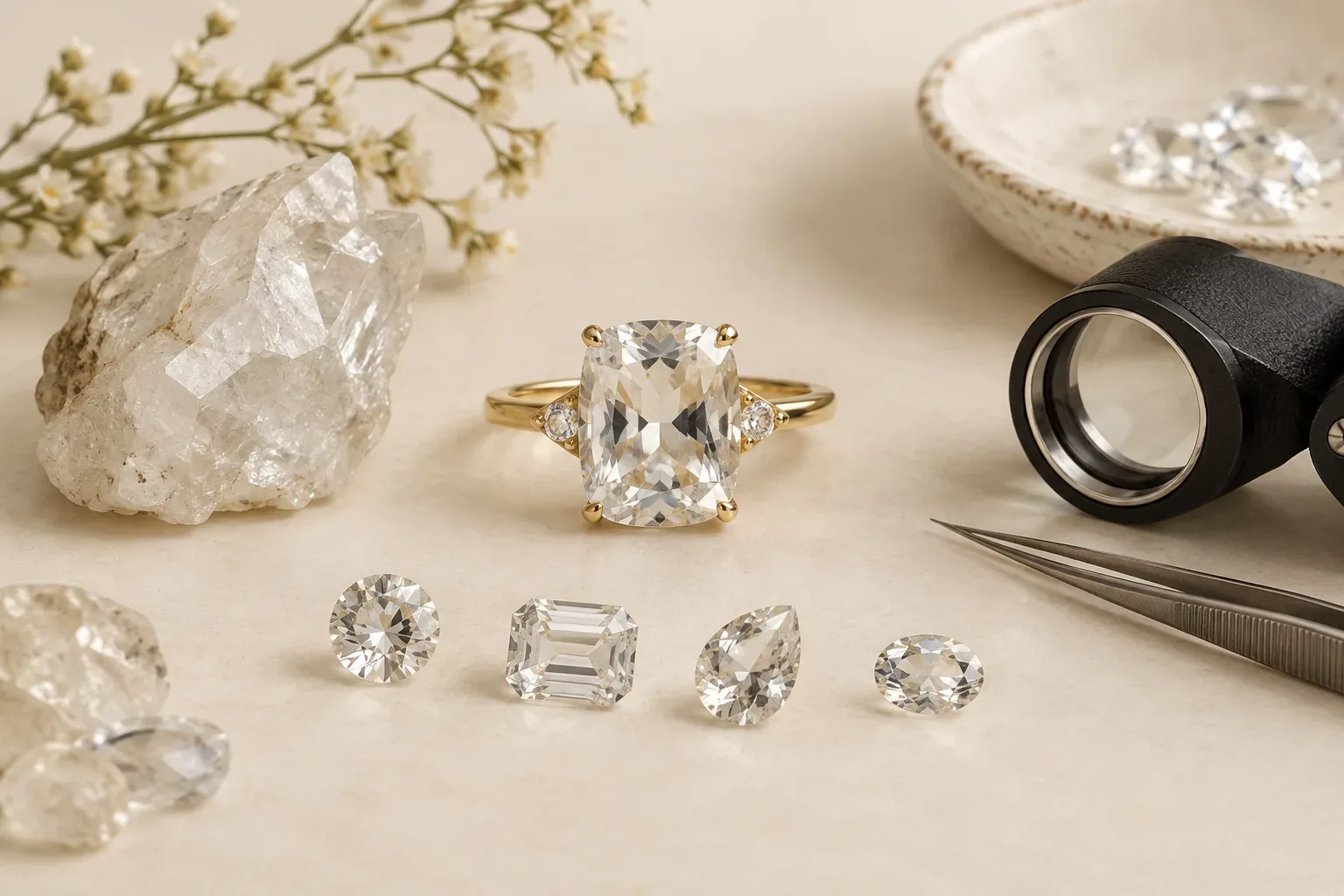
Because phenakite can be transparent and colorless, it is most commonly used as a faceted gemstone in rings, pendants, and other jewelry where a clear center stone is desired. When faceted, a clean, well-cut phenakite can exhibit significant brilliance and appeal to buyers who like the look of clear gems.
Phenakite’s rarity as a facetable gem means you will see it less often than common clear alternatives. Because it can resemble other gems visually, it sometimes appears in pieces where the seller emphasizes its clarity and brightness. Where phenakite is used, skilled cutting and secure settings are important because collectors and buyers prize both the optical quality and the assurance of correct identification (Gemological Institute of America; Smithsonian National Museum of Natural History).
Buying phenakite: authentication, disclosure, and practical checks
Because phenakite can be confused with other colorless gems, buyers should emphasize identification and disclosure. Ask for clear documentation about whether the stone is natural, treated, lab-grown, or an imitation. U.S. consumer-protection guidance requires sellers to disclose treatments, imitations, and whether a gem is natural or lab-grown; the Federal Trade Commission provides practical consumer guidance on these disclosure obligations (Federal Trade Commission).
Practical steps include requesting a gem identification report from an independent, reputable laboratory; asking the seller to detail any treatments; verifying return policies; and comparing the stone visually and under magnification when possible. Reliable sellers will welcome these questions and provide paperwork or testing results. Because phenakite is relatively rare as a faceted gem, provenance and laboratory verification become especially valuable.
Care and everyday wear
Institutional resources that cover gems and minerals note that suitability for everyday jewelry depends on both a mineral’s physical properties and the way a piece is constructed (Smithsonian National Museum of Natural History). For rarer faceted gems like phenakite, avoid rough wear situations and choose protective settings that shield the stone from knocks and abrasion.
When cleaning, use gentle methods and avoid harsh chemicals, strong ultrasonic cleaners, or prolonged exposure to heat unless a gem identification report explicitly states such treatments or tolerances. If in doubt, consult a qualified jeweler or gemologist who can advise based on the stone’s verified identity.
Selection and gifting guidance
If you are buying or gifting phenakite as a meaningful object, be explicit about what you mean. If the gift’s meaning is a modern symbolic association (for example, clarity or focus), state that clearly so the recipient understands whether the significance is personal rather than historical.
When selecting a piece to gift, prioritize documented identification and a clear return or exchange policy. Choose settings that protect the gem and complement the recipient’s style. If the recipient values verification, include any laboratory reports or seller documentation with the gift. If you prefer a surprise but want to preserve options, buy from a seller who allows an exchange with full documentation, or accompany the gift with a note explaining the stone’s modern symbolic associations and documentation for its identity.
Frequently asked questions
Is phenakite historically significant as a cultural symbol?
There is little documented evidence in major museum and gemological literature that phenakite served as a named cultural symbol in historic periods. Institutional resources treat phenakite primarily as a mineralogical subject rather than a widely recorded cultural or ritual gemstone (Smithsonian National Museum of Natural History; Gemological Institute of America).
How can I be sure a stone sold as phenakite really is phenakite?
Request independent laboratory identification or a gemological report, ask about treatments or whether the stone is lab-grown or an imitation, and insist on seller disclosure. Federal consumer guidance advises buyers to seek documentation and clear disclosure of treatments and origin (Federal Trade Commission).
What modern meanings do people ascribe to phenakite?
Modern personal or metaphysical associations with phenakite often include ideas like clarity, insight, or personal transformation. These are contemporary interpretations and should be described as personal or modern meanings rather than historical facts.
Is phenakite suitable for everyday rings or jewelry?
Suitability depends on the stone’s physical properties and how the jewelry is made. Institutional resources recommend protective settings and care tailored to the specific gem; for rarer faceted stones, avoid rough wear and choose secure settings (Smithsonian National Museum of Natural History).
What should I include when gifting phenakite?
Include any lab reports or seller documentation, explain whether the symbolic meaning is personal or historical, and provide care guidance or an exchange policy so the recipient can verify or return the stone if needed.
Sources and further reading
- Gems Recovered from Sedimentary Rocks — Gemological Institute of America
- Gems and Minerals: Beauties and Building Blocks — Smithsonian National Museum of Natural History
- Buying Gemstones, Diamonds, and Pearls — Federal Trade Commission