Meaning at a glance
This black opal treatment guide defines common enhancements and assembled options, explains the trade-offs in appearance, durability and price, outlines buyer disclosure expectations and verification limits, and gives practical care and selection advice based on gemological and consumer-protection guidance.
Why treatments matter and what authoritative sources say
The Gemological Institute of America (GIA) explains that treatments, their detectability, and how they affect durability and care are central questions for anyone buying gemstones. Treatments can improve appearance or stability but often change a stone's behavior and long-term needs. The Federal Trade Commission (FTC) makes clear that consumers need clear distinctions among natural, lab-created, treated, cultured and imitation materials and that sellers should provide written disclosures to avoid misleading buyers.
Together these authorities frame the practical issues a shopper faces: what was done to the opal; how that affects daily wear and cleaning; whether the seller has told you; and whether independent testing is required to confirm the claim. Trade publications and 2026 market studies show renewed interest in opal jewelry, which increases the frequency of these buyer questions and the likelihood of encountering both natural and treated material.
Common black opal enhancements and their practical trade-offs
In trade practice, several kinds of interventions appear with black opal. One class is assembled stones—thin slices of play-of-color opal joined to a dark backing (doublets) or sealed under a protective cap (triplets). Assemblies can make striking play-of-color affordable and create a darker body tone that highlights color, but the thin opal layer and seams reduce longevity compared with a single solid opal and require more cautious cleaning and repair.
Another common intervention is stabilization or impregnation, where a porous or fissured opal is filled with resin or similar stabilizer to increase toughness and resistance to crazing. Stabilization improves wearability in jewelry but can alter the feel, refractive appearance and the stone's response to heat and solvents. Some treatments aim to enhance body color or contrast; these may be permanent or semi-permanent and can influence resale value and repair options.
Each enhancement carries trade-offs a buyer should weigh: assembled pieces and stabilized stones typically cost less and can offer dramatic visual impact, but they are usually less durable and less valuable than untreated solid black opal. Conversely, untreated solid opal with deep body tone and strong play-of-color is rarer, often more expensive, and may still require care because opal is sensitive to heat and sudden humidity changes.
Historical evidence and cultural notes (what the record shows)
Published gemological and consumer-protection sources in our evidence set focus on treatments and market behavior rather than detailed cultural histories. The GIA's work prioritizes technical documentation of treatments and their effects rather than cataloguing historical meanings, and the FTC's guidance is regulatory rather than ethnographic. Trade reporting in 2026 by Professional Jeweller and search visibility data from Imaginaire Digital document a contemporary revival of interest in opals and gemstone settings, but they do not provide historic cultural belief inventories.
Because the approved evidence here does not include primary historical sources on symbolism, any historical claims beyond the fact that opal has been used in jewelry across many periods would require additional specialist citation. For readers interested in cultural history—how different societies interpreted opal—consult dedicated historical or anthropological sources beyond this treatment guide.
How black opal appears in jewelry and what that means for care
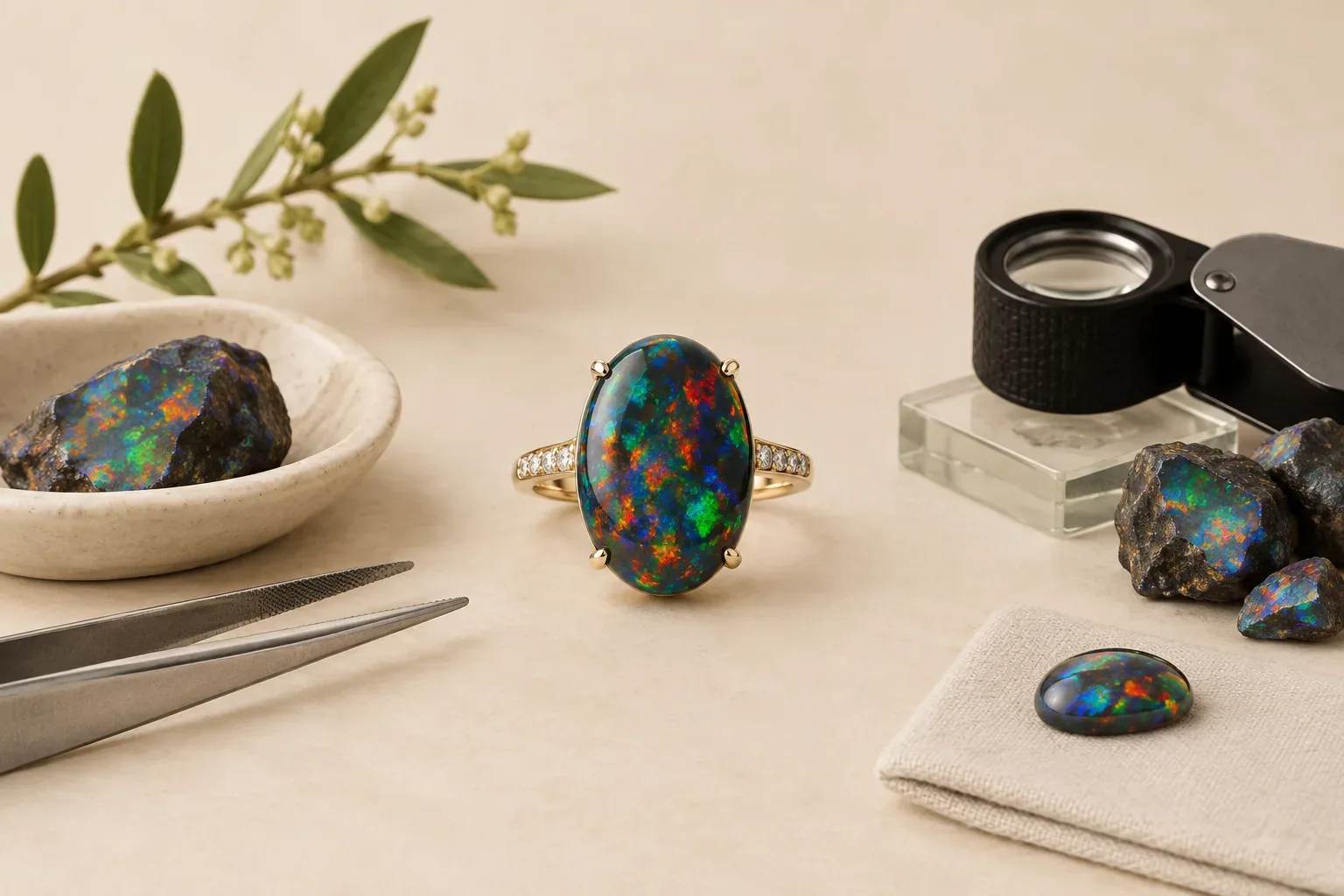
Black opal commonly appears in rings, pendants and earrings where its play-of-color is visible to the eye. Finished pieces range from single, solid black opal set in protective bezel or low-profile prong settings to more affordable doublets and triplets used in statement rings, cluster settings and fashion necklaces. Recent retail and trend analysis notes a renewed consumer interest in opal rings and gemstone-focused designs, which influences how many treated or assembled stones enter the market.
The setting choice is meaningful: solid black opal benefits from protective bezel or guarded-prong settings because the material can chip or craze; assembled stones with a cap may tolerate more exposure but can delaminate if subjected to heat or solvents. Where an opal is stabilized, its response to cleaning solutions and ultrasonic equipment may be different from an untreated stone. The GIA recommends treating each gemstone's care instructions according to the treatment it has received because detectability and durability vary.
Practical selection and gifting guidance
Decide what matters most: maximum rarity and resale value (seek an untreated solid black opal with documentation), visual impact at a moderate budget (consider high-quality doublets or stabilized opals with clear disclosure), or durability for everyday wear (look for well-cut, thicker opal and settings that protect the stone). If gifting, ask whether the recipient prefers authentic, untreated gem material or a visually similar but treated option that is more affordable and suitable for regular wear.
Always request written disclosure from the seller that describes whether the stone is natural, assembled, stabilized or otherwise treated. The FTC emphasizes that such distinctions should be clear in the sales process. For higher-value purchases, ask for a gemological report from a recognized laboratory or an appraisal by a qualified gemologist. If the seller cannot or will not provide clear written answers, treat that as a red flag.
What you can verify yourself and what requires a professional lab
Without a gemological laboratory you can still perform useful checks. Inspect the stone closely for visible layers or seams that indicate a doublet or triplet, look for surface crazing or irregularities, and evaluate how the play-of-color shifts when you tilt the piece. Ask the seller to show the stone out of the setting if possible, and request magnified photographs to confirm face-up thickness and any backing material.
However, many stabilizers, dyes and subtle impregnation treatments are not reliably detectable by unaided observation. The GIA notes that detectability and the effect of treatments on durability vary and that laboratory testing is often required to confirm certain treatments. For any significant purchase, a professional gemological report is the only way to reach a high level of certainty about specific chemical or physical treatments and whether the stone is a true solid opal or an assembled stone.
Care, durability and repair
Follow care guidance tailored to the stone's disclosed treatment. If an opal is untreated solid black opal, avoid sudden temperature changes, prolonged exposure to water or harsh chemicals, and ultrasonic cleaners. If an opal is stabilized or assembled, avoid solvents, prolonged soaking and high heat which can degrade a resin or weaken glue lines in a triplet. The GIA reminds consumers that treatments change a gemstone's vulnerability and therefore its recommended care.
For repair, always consult a jeweler experienced with opal. Assemblies may require specific handling to avoid delamination, and replacing settings on small or thin opal slices risks damage. When in doubt, request that the seller coordinate repairs or removal for inspection by a qualified stone setter or gemologist.
Questions to ask a seller before you buy
Ask whether the opal is a solid single-piece black opal, a doublet, or a triplet; whether it has been stabilized or otherwise treated; whether a laboratory report or assay accompanies the stone; and whether the seller provides written disclosure of treatments and a return policy. The FTC expects clear written distinctions about treated versus natural goods, and a reputable seller will either supply a gemological report or explain why one is not available.
If the seller claims no treatment, ask what inspection methods confirm that claim and whether you may obtain independent verification. For important purchases, arrange for a pre-purchase examination by a qualified gemologist or insist on a laboratory report from a recognized gemological laboratory before completing the sale.
Conclusion
A practical black opal treatment guide centers on transparent disclosure, realistic trade-offs, and appropriate verification. Treated and assembled black opals make striking jewelry more accessible, while untreated solid black opal retains greater rarity and long-term value. Use the FTC's disclosure expectations and the GIA's treatment guidance as your decision framework: ask direct questions, inspect visually, request written documentation, and obtain laboratory confirmation when the purchase value or the stakes justify it.
Frequently asked questions
What is the single most important question to ask a seller about a black opal?
Ask whether the stone is a solid single-piece black opal, an assembled doublet or triplet, or treated/stabilized—and request that answer in writing. The FTC requires clear distinctions among natural, treated and assembled stones, and written disclosure reduces the risk of misunderstanding.
Can I tell if a black opal is a doublet or triplet by eye?
You can often spot seams or backing material with close inspection or a jeweller's loupe, and thin face-up thickness or a visible cap edge suggests an assembly, but subtle stabilization or impregnation treatments are not reliably identifiable without laboratory testing.
Do treatments make black opals less durable?
Some treatments, like stabilization, are intended to improve durability, while assemblies can be less robust than a single solid opal because thin slices and glue lines are more vulnerable; the GIA emphasizes that treatment type affects durability and care recommendations.
Should I get a gemological report for a black opal purchase?
For high-value purchases or when the seller's disclosure is incomplete, a gemological report from a recognized laboratory is advisable because only specialist testing can confirm many treatments and determine whether a stone is truly a solid black opal.
How should I care for a treated or assembled black opal?
Avoid ultrasonic cleaners, steam, significant heat and harsh solvents; do not soak triplets or doublets, and store opal jewelry separately to prevent knocks. Specific care depends on the disclosed treatment, so follow the seller's written care recommendations and consult a jeweler for repairs.
Sources and further reading
- Imaginaire Digital — Imaginaire Digital
- Professional Jeweller / PRYA Jewellery Search Insights — Professional Jeweller / PRYA Jewellery Search Insights
- Gemological Institute of America — Gemological Institute of America
- Federal Trade Commission — Federal Trade Commission