Meaning at a glance
This opal cleaning guide gives clear, safe care steps for solid opals, doublets, and triplets, explains decision criteria and trade-offs, and defines what only a qualified jeweler or gemological laboratory can verify.
Direct answer: what to do and why
If you need a concise opal cleaning guide: use only gentle, lukewarm water with a mild soap and a soft cloth for most solid opals, avoid ultrasonic and steam cleaners, protect opals from sudden temperature changes and harsh chemicals, and ask the seller for written disclosure about whether the piece is a solid opal, doublet, triplet, or treated stone. For any valuable or physically damaged opal, stop home cleaning and consult a qualified jeweler or a gemological laboratory for testing and conservation. This guidance balances safe day-to-day care with clear limits on what a consumer can verify without professional equipment.
Historical evidence and what our sources cover
Within the approved sources for this article there is limited direct primary material about cultural, ritual, or symbol histories of opal. Professional Jeweller and related trend reports document contemporary commercial interest in opal and opal rings but do not serve as primary historical sources. Imaginaire Digital provides modern search and market context for jewelry demand in 2026 and does not supply cultural-historical claims. The Gemological Institute of America focuses on treatments, detectability, durability and the consumer questions those technical issues raise. The Federal Trade Commission sets expectations for disclosure and consumer protection when sellers present gemstones to buyers.
Distinguishing documented history from modern interpretation
Many modern accounts attribute symbolic meanings to opal that draw on Victorian-era lore, Indigenous Australian traditions, or classical anecdotes, but those specific cultural claims are outside the scope of the approved evidence used here. The sources available to this guide document treatment, disclosure and market trends rather than cultural symbolism. Where meaning or origin matters to you as a shopper or gift giver, treat historical or spiritual claims as personal or interpretive unless you can find them in academic or museum-published histories; for buying and care decisions rely on technical information about the stone's construction and durability as described by gemological authorities such as the Gemological Institute of America.
How opal appears in jewelry today
Contemporary jewelry uses opal in several construction types: solid (natural or lab-grown) opal, assembled stones called doublets and triplets that combine thin opal layers with backing or a protective cap, and imitation opal materials. The opal motif appears in rings, necklaces, earrings and inlay work and is often cut as a cabochon to display play-of-color. Trend reporting for 2026 shows renewed interest in gemstone rings and opal settings specifically, which influences how opals are marketed and disclosed by sellers.
Decision criteria: what determines the safest cleaning method
Before you clean an opal, identify whether it is a solid opal, a doublet, or a triplet and whether it has surface damage, glue seams, or a protective cap. Solid opals are generally more tolerant of careful wet cleaning than assembled stones. Doublets and triplets include adhesives and layers that can be damaged by water, heat, solvents or sudden temperature change. If you cannot confidently identify the construction from the seller's paperwork or a reputable appraisal, treat the piece conservatively and consult a professional. The Gemological Institute of America explains that treatments, detectability and durability are distinct factors that determine the right consumer questions and care approach.
Safe cleaning method for most solid opals
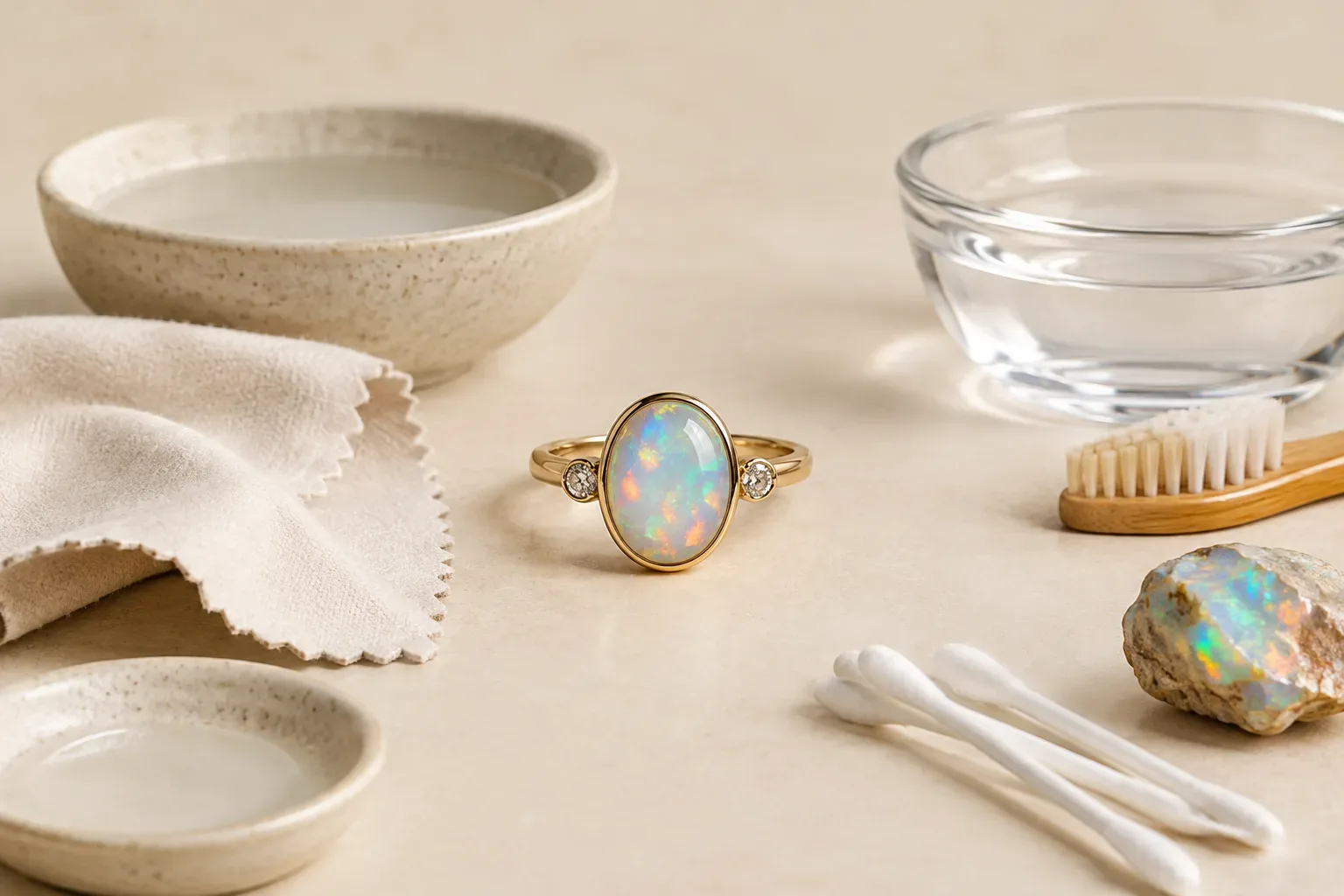
For everyday dirt or skin oils on a confirmed solid opal, prepare a bowl of lukewarm water with a single drop of mild, non-abrasive soap. Use a soft lint-free cloth or a very soft toothbrush to gently wipe the surface, keeping motions light and avoiding vigorous scrubbing. Rinse briefly with lukewarm water and dry immediately with a soft cloth. Avoid soaking a delicate or thin opal for long periods and never subject opal to large, sudden temperature shifts during the cleaning process. These simple steps remove surface grime while minimising mechanical and thermal stress.
What to avoid: ultrasonic, steam, chemicals and heat
Do not use ultrasonic cleaners or steam cleaners for opal unless a qualified jeweler has confirmed that the specific piece is safe for such treatment. Avoid solvents, acetone, ammonia-based cleaners and abrasive pastes because they can dissolve adhesives in doublets and triplets and can penetrate micro‑cracks in solid opal. Never expose opal to direct heat or sudden temperature changes, as thermal shock can cause cracking. These precautions follow the practical issues that arise from treatments and assembled constructions described by the Gemological Institute of America and reflect consumer-protection concerns cited by the Federal Trade Commission about proper disclosure of material types.
Special care for doublets and triplets
If the opal is a doublet or triplet, limit cleaning to a very light dry wipe with a soft cloth and avoid water and solvents that could delaminate the layers or weaken the adhesive. With triplets, the clear cap layer may be more water-resistant than the glued junction, but the junction remains a point of vulnerability. Unless you have written confirmation from the seller about the assembly method and glue type, avoid any wet cleaning and seek professional advice for restoration or deeper cleaning.
When to consult a jeweler or gemological lab
Stop home cleaning and consult a qualified jeweler if you see cracks, crazing (a network of tiny cracks), loose settings, visible glue lines, or significant value in the piece. For high-value purchases or when authenticity, treatment history or origin is important, only a gemological laboratory can provide reliable certification about whether an opal is natural, lab-created, treated, or assembled. The Federal Trade Commission advises consumers to request clear written disclosure from sellers, and the Gemological Institute of America notes that detectability and disclosure of treatments are technical topics that require proper laboratory examination.
Practical selection and gifting guidance
When selecting or gifting an opal, ask the seller for written disclosure stating whether the stone is solid, a doublet, triplet, lab-grown, or otherwise treated. If the recipient leads an active lifestyle or is likely to wear the opal daily, favour a setting that protects the stone, such as a bezel, and consider a harder nearby metal and design that reduces impact risk. For an occasion gift where symbolic meaning matters, be explicit about whether any historical or spiritual meaning is a modern interpretation rather than a certified historical attribute. If you prefer an opal accent in a delicate botanical or birth-month design, choose a reputable seller who will supply paperwork and a short care instruction sheet; the Federal Trade Commission recommends written disclosures so buyers can make informed choices.
Limits of what you can verify without specialists
As a shopper you can visually inspect for obvious clues like glue lines, layering edges, or labels that indicate doublets or triplets, but you cannot confidently detect many treatments, whether the opal is natural versus lab-grown, or its precise country of origin without gemological testing. For valuable pieces, request laboratory reports from recognized institutions and ask for a return policy that covers undisclosed treatments. The Gemological Institute of America and the Federal Trade Commission both underline that treatment detection and truthful disclosure are specialist tasks and important consumer protections.
Quick maintenance checklist for ongoing care
Keep opal jewelry away from household chemicals and prolonged exposure to water for assembled stones. Store opal pieces separately in soft pouches to avoid abrasion and avoid leaving opals in direct sunlight or near heat sources for extended periods. For routine light cleaning of solid opal, use the mild soap and lukewarm water method described earlier. If you are unsure about the stone type or if the piece is antique or especially valuable, refrain from home cleaning and seek professional conservation.
Closing: balance care, documentation, and professional help
This opal cleaning guide balances safe, practical steps for everyday care with an emphasis on documentation and the limits of what a shopper can verify at home. Ask sellers for written disclosures, favour protective settings for wearable pieces, and bring damaged or high-value opals to a qualified jeweler or gem lab. Market trends show growing consumer interest in opal jewelry in 2026, and that interest makes clear, documented care guidance and truthful disclosure more important than ever.
Frequently asked questions
Can I clean all opals the same way?
No. Solid opals can usually be cleaned gently with lukewarm water and mild soap, but doublets and triplets contain glued layers that water, solvents or heat can damage. If you cannot confirm the opal type from the seller, avoid wet cleaning and consult a professional.
Is it safe to use an ultrasonic cleaner on opal?
Ultrasonic and steam cleaners are not recommended for opal unless a qualified jeweler has inspected the specific piece and confirmed it is safe for that treatment, because both can cause cracking or delamination.
How can I tell if an opal is a doublet or triplet?
You can sometimes see a thin seam or a layered edge with a loupe, but many assemblies are well-finished. The Federal Trade Commission recommends requesting written disclosure from the seller, and only a gemological laboratory can definitively characterize many assembled or treated constructions.
When should I bring an opal to a gemological lab?
Bring an opal to a gemological lab when you need certification of natural versus lab-grown status, treatment history, origin, or when the item is valuable and you need an authoritative report for insurance, resale, or legal purposes.
What simple storage advice helps protect opal jewelry?
Store opals separately in soft pouches or lined boxes to avoid abrasion, keep them away from direct prolonged heat or sunlight, and avoid leaving assembled stones in water for extended periods. For high-value or antique pieces, seek professional conservation advice.
Sources and further reading
- Imaginaire Digital — Imaginaire Digital
- Professional Jeweller / PRYA Jewellery Search Insights — Professional Jeweller / PRYA Jewellery Search Insights
- Gemological Institute of America — Gemological Institute of America
- Federal Trade Commission — Federal Trade Commission