Meaning at a glance
Poudretteite jewelry meaning centers on rarity and documented origin—primarily Canada and Myanmar—and should be understood by separating scientific identity, provenance, and care requirements from modern individual symbolism.
Quick answer
Poudretteite jewelry meaning is rooted in the gem’s rarity, documented localities (notably Canada and Myanmar), and the need for laboratory identification and careful wear; any symbolic or emotional significance applied to poudretteite today is a modern, individual interpretation rather than a long-standing cultural meaning.
What the historical and scientific record shows
Documented evidence for poudretteite’s identity, sources, and physical behaviour comes from professional gemology research rather than from ancient or widely shared cultural traditions. The Gemological Institute of America (GIA) describes poudretteite as a rare gem species known from occurrences in Canada and the Mogok Valley in Myanmar, and the GIA’s reporting establishes the modern scientific and geographic context for the stone.
Because poudretteite appears in the gemological literature as a relatively recent, scientifically described species and because the GIA’s account focuses on mineral identity and locality, there is no comparable record in those sources of an older, widely attested cultural symbolism attached to poudretteite. The GIA’s documentation therefore serves as the primary historical source for where and how the gem has been recognized in modern gemology.
Documented meanings versus modern personal interpretation
The professional record—mineralogical descriptions, locality reports, and laboratory identifications—does not assign a traditional cultural meaning to poudretteite. The GIA’s work provides details about identity, rarity, and occurrence but does not connect the gem to an established symbolism from a particular historical culture.
In contrast, contemporary wearers, designers, and buyers often give poudretteite personal or modern symbolic meanings. These modern associations—for example, treating the stone as a symbol of individuality because of its rarity—are valid personal or marketing-driven interpretations but are not documented historical meanings supported by the professional evidence cited above. Keep the distinction clear when you describe the gem to others: provenance and lab documentation are factual; symbolism is chosen by people now.
How poudretteite appears in jewelry
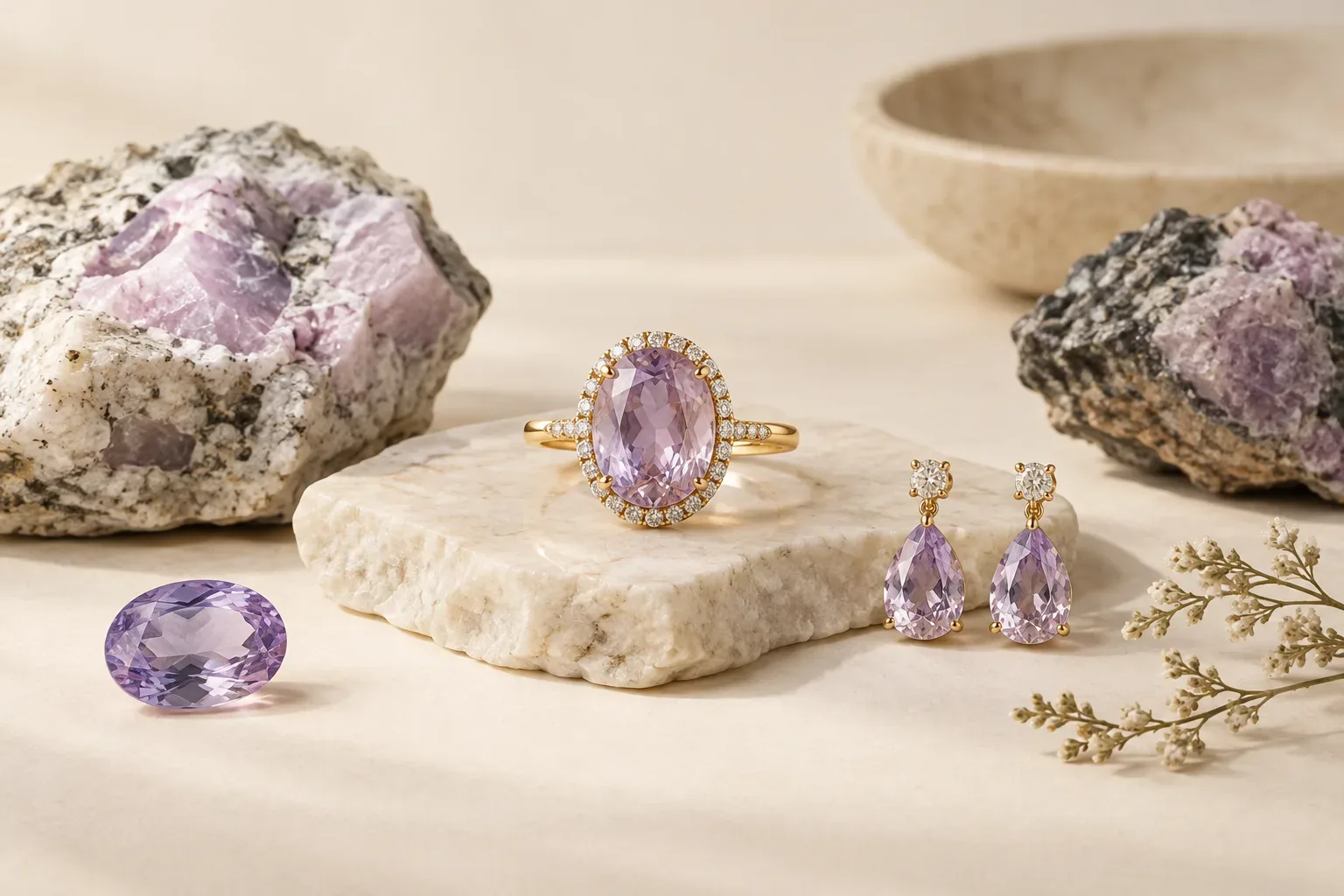
Because poudretteite is rare and typically available in modest sizes, pieces that use it tend to be custom work, collector pieces, or limited-production designs created to protect and showcase the stone. Jewelers and buyers commonly select protective settings and custom mounts that minimize the risk of damage during wear.
In practice, poudretteite is set as the focal stone in rings, pendants, or earrings when available, and it may also appear as an accent in high-end or bespoke jewelry. Designers often consider the gem’s color and optical properties when choosing cut, setting height, and metal to emphasize the stone while preserving its integrity.
What to look for when buying poudretteite
Ask for laboratory documentation and provenance information. Given poudretteite’s rarity and the importance of confirming identity and locality, buyers should request a report from a reputable laboratory or a credible jeweler who can provide transparent evidence of the gem’s natural origin and whether it has been treated or enhanced. The Federal Trade Commission (FTC) advises buyers to seek full disclosure about whether a gem is natural, lab-grown, imitated, or treated, and sellers must not misrepresent such facts.
Because supply is limited, examine the seller’s return policy, evidence of ethical sourcing where available, and any independent grading or testing that accompanies the stone. If the item is being promoted as from a particular locality, ask whether the provenance is supported by lab testing or sourcing documentation rather than only by label or anecdote.
Selection and gifting guidance
Choose a recipient whose lifestyle and tastes match a rare, delicate gem. Because modern symbolic meaning for poudretteite is personal, consider the recipient’s appreciation for uncommon stones, custom jewelry, or collector pieces rather than relying on any assumed historical symbolism.
When gifting, provide the documentation with the piece, explain the gem’s rarity and any provenance information, and recommend a protective setting and occasional rather than daily wear if the stone’s durability suggests caution. Consider insuring the piece and documenting the purchase for future resale or appraisal; written lab reports and receipts add clarity and value to a gift.
Care, cleaning, and long-term handling
Treat poudretteite with caution and follow best-practice care for rare gems. The Gemological Institute of America’s guidance on caring for jewelry emphasizes careful cleaning techniques, proper storage, and professional inspection. For rare gems, avoid harsh chemical cleaners and consider gentle soap, water, and a soft brush when cleaning an item at home, and always dry thoroughly before storing.
Store poudretteite separately from harder gems to prevent scratching, and use protective settings or guards to reduce the chance of knocks and abrasion. Schedule periodic professional inspections so settings can be checked and any necessary repairs made before a stone is lost or damaged.
Pricing expectations and market context
Because poudretteite is uncommon in the gem trade and often available only as small material or specialized collector specimens, its market behavior is driven by scarcity and demand among connoisseurs. Expect supply limitations to influence availability and pricing, and rely on reputable sellers who provide independent documentation rather than on casual listings or unverifiable claims.
If you are considering poudretteite as an investment, treat it as a specialist collecting interest; values for rare, small-quantity gems can fluctuate and often depend on provenance, transparency of documentation, and the stone’s visual quality.
Frequently asked questions
What is poudretteite?
Poudretteite is a rare gem species documented by professional gemological research, known from occurrences in Canada and the Mogok Valley in Myanmar; the Gemological Institute of America provides detailed mineralogical and locality information.
Is poudretteite traditionally symbolic in any culture?
No long-established cultural symbolism for poudretteite is recorded in the professional literature cited here; modern symbolic uses are personal or marketing-driven rather than historically documented.
How can I confirm a poudretteite’s authenticity?
Request a laboratory report or independent testing that identifies the gem species and discloses treatments and provenance; the FTC advises buyers to seek full disclosure about whether gems are natural, lab-grown, imitations, or treated.
Can poudretteite be worn every day?
Because poudretteite is rare and may require cautious handling, consider protective settings and occasional wear rather than daily exposure; follow professional care guidance and have settings inspected periodically.
How should I clean and store poudretteite jewelry?
Follow gentle cleaning methods, avoid harsh chemicals, store the gem separately to prevent scratching by harder stones, and arrange professional inspections as recommended by the Gemological Institute of America’s care guidance.
Is provenance important for poudretteite?
Yes. Provenance and laboratory documentation are important because poudretteite’s rarity and locality can affect collector interest and value; ask sellers for clear, written evidence of origin and any testing performed.
What should I tell the recipient when gifting poudretteite?
Include the gem’s documentation, explain its rarity and known source context, recommend cautious wear and care, and suggest insurance and periodic professional inspections to protect the gift.
Sources and further reading
- Poudretteite: A Rare Gem Species from the Mogok Valley — Gemological Institute of America
- Buying Gemstones, Diamonds, and Pearls — Federal Trade Commission
- Tips on Caring for Jewelry — Gemological Institute of America