Meaning at a glance
This blue sapphire durability guide explains hardness versus toughness, how common treatments and settings change everyday risk, practical selection and gifting criteria, safe cleaning and care, and the clear limits of what shoppers can verify without a qualified jeweler or a gemological laboratory report.
Direct answer — short and practical
Blue sapphires are among the harder gemstones and are generally suitable for daily wear, but durability depends on three separate factors—surface hardness, structural toughness, and any treatments the stone has undergone—plus the setting and the wearer’s activities. Use this guide to weigh those factors, choose protective settings, request clear treatment disclosure and lab reports when needed, and follow safe-care routines to reduce the risk of scratches, chips, or damage.
Durability defined: hardness, toughness, and stability
Hardness measures a gem’s resistance to being scratched by other materials. Toughness describes how well a gem resists breakage, chipping or cleavage from impact. Stability covers resistance to heat, chemicals, and solvents that can alter color or surface finish. Together these three attributes determine whether a gem will hold up to daily life; no single number tells the whole story. The Gemological Institute of America (GIA) highlights that consumer questions about durability, treatments and special care are common and that those factors change everyday handling recommendations.
What we can say specifically about blue sapphire (evidence-led limits)
Blue sapphire is a variety of corundum that is widely used in jewelry; durability claims depend on the stone’s physical properties and any enhancements. The GIA and consumer guidance emphasize that treatments and detectability affect both appearance and long-term care. Buyers should therefore treat statements about durability as conditional: a stone’s scratch resistance may make it appropriate for rings, but toughness and surface treatments can change the practical risk of chipping, fracture, or damage from domestic chemicals or cleaning methods. For the clearest, verifiable facts about a specific stone (treatment status, whether a gem is natural or lab-grown, and any laboratory grading), the GIA advises relying on written disclosures and, when warranted, a report from a qualified gemological laboratory. The Federal Trade Commission (FTC) similarly warns consumers to insist on clear written disclosure of natural, lab-created, treated, or imitation materials.
Historical evidence and how meanings vary by culture and period
Specialist gem-history research and museum records document different cultural relationships with blue corundum across time. For example, historical material in museum catalogues and gemological literature often discusses uses of blue corundum in medieval European regalia and church settings, references in Persian literature associating blue stones with the heavens, and long-standing references in South Asian traditions naming a blue corundum as 'neelam' in astrological contexts. These are historical themes reported by scholars and in broader gemological resources; they are not universal meanings and must be verified in primary historical sources or museum documentation when precision is required. Modern writers and sellers also project contemporary personal interpretations—romantic, astrological or wellness-related—onto sapphires. Distinguish documented historical uses (museum provenance, archival records, and specialist scholarship) from modern personal or marketing interpretations, which are contemporary and subjective.
How blue sapphire appears in jewelry and what that means for wear
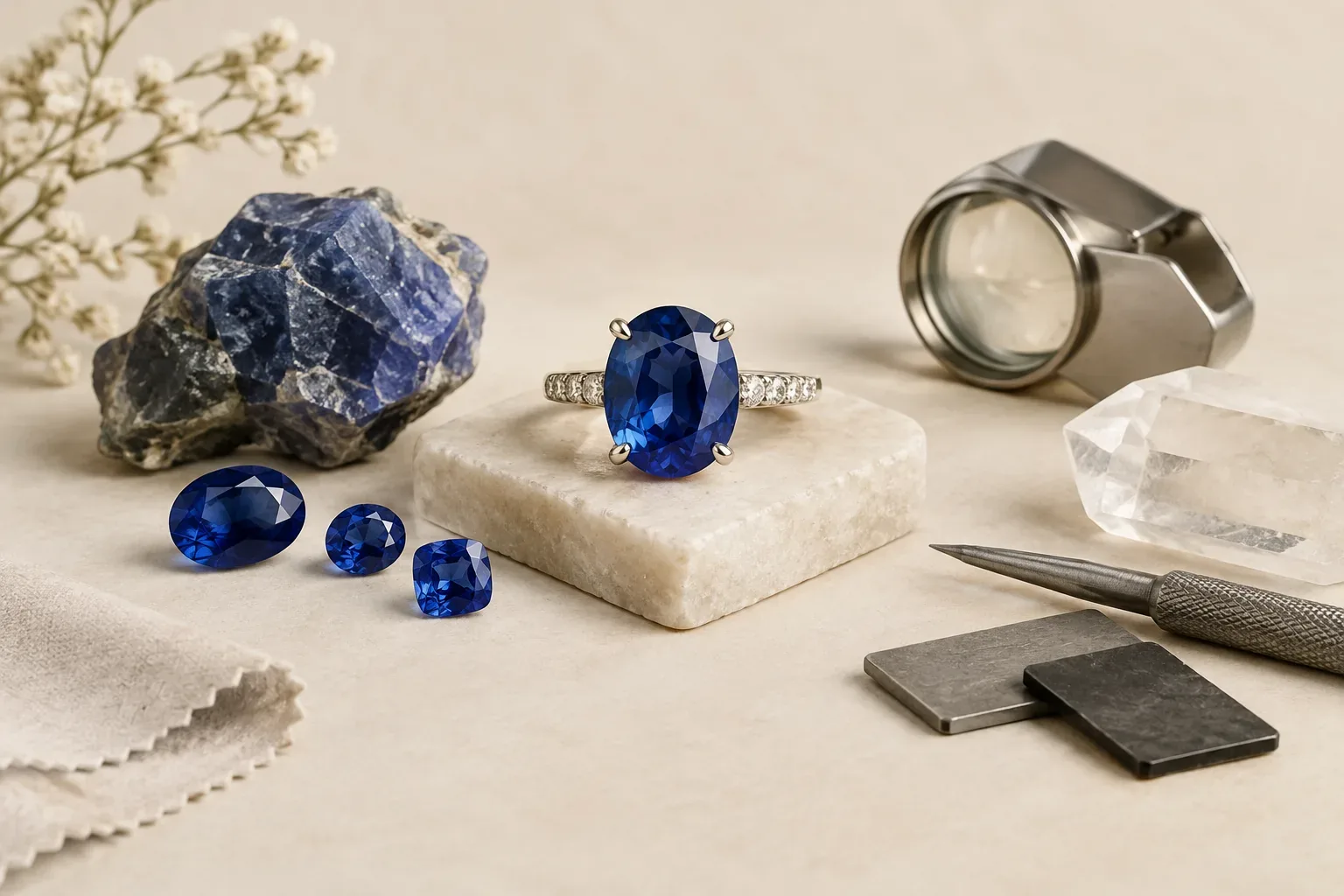
Blue sapphires are used across many jewelry types: engagement rings, dress rings, pendants, earrings and bracelets. Market and trend reports from Imaginaire Digital and Professional Jeweller note strong consumer demand for gemstone rings, sculptural settings, and birthstone necklaces, which affects how sapphires are set and finished. For daily-wear pieces such as rings, setting design is crucial: protective settings (for example, bezels or partial bezels) will reduce the chance of edge chipping, while elevated or exposed settings are more likely to receive knocks. Smaller stones mounted in protective halos or low-profile channels can be safer for everyday use than large, high-set stones with exposed girdles and corners. The setting metal, bezel thickness, and prong quality also change the practical durability of the finished piece.
Practical selection and gifting guidance
Decide whether the recipient’s lifestyle requires extra protection. For an active wearer, prioritize a lower-profile or bezel setting and consider smaller or cabochon-cut stones, which expose fewer edges. Ask the seller for written disclosure about whether a stone is natural, lab-created or treated; the FTC requires clear disclosure and the GIA outlines common treatments, detectability and their implications for durability. For engagement rings or higher-value gifts, request a current laboratory report from an accredited gemological lab that documents treatment and whether the stone is natural or lab-grown. If the seller claims geographic origin (for example, a particular mine region), understand that origin statements can be difficult to verify conclusively and often require advanced laboratory testing. Obtain the return policy, a written description of the stone and a receipt that records any disclosed treatments; this documentation helps with future resale, insurance and repair decisions. Consider insurance or a jewelry warranty that covers accidental damage, especially for daily-wear rings.
Safe care and cleaning for everyday wear
Follow the seller’s and laboratory guidance for cleaning, because certain treatments change which cleaning methods are safe. The GIA notes that treatments and durability interact: some enhancements may be stable under normal cleaning while others require gentler care. In general, avoid sudden shocks, hard impacts and heavy manual work while wearing sapphire jewelry; remove rings for sports, gardening or heavy lifting. For routine cleaning, many jewelers recommend warm soapy water and a soft brush for finished sapphire jewelry, but ultrasonic or steam cleaners may be unsuitable for stones with certain surface-reaching treatments or fracture fillings. Confirm with the seller whether a stone has been treated and whether ultrasonic or steam cleaning is safe before using those methods. Regularly check prongs and settings and have a jeweler tighten or repair settings to avoid loss.
What you can verify without a lab, and when to get professional testing
Without a qualified jeweler or gemological laboratory, you can check for a few practical things: request written disclosure about natural vs lab-grown and treatments; inspect the workmanship of the setting and ask whether the mount was designed for daily wear; and look for obvious surface damage that could indicate poor handling or a fragile treatment. However, you cannot reliably determine treatment type, origin, or subtle laboratory-detectable enhancements by eye. For treatment disclosure, durability-affecting enhancements, or origin claims that matter to price or care, request a report from an accredited gemological laboratory. The FTC emphasizes that consumers should not accept ambiguous or verbal-only claims—get written documentation.
Decision criteria and trade-offs
If maximum day-to-day durability with minimal maintenance is your priority, choose a protective setting and prioritize well-cut stones with documented treatment history and stable enhancements. If color intensity or size is the priority, be prepared to accept trade-offs: more dramatic colors or larger stones may have been enhanced and could require gentler care or more protective mounting. For a balance of durability and brilliance in a daily-wear ring, combine a durable setting, clear seller disclosure, a supportive return policy, and insurance. Where budget is a constraint, consider smaller natural stones, high-quality lab-created sapphires with known treatment profiles, or designs that place the sapphire in a protected position.
When to consult a jeweler or a gemological laboratory
Consult a qualified jeweler if you need an assessment of setting security, practical repairs, or guidance about cleaning methods compatible with the setting and any disclosed treatments. Seek a gemological laboratory report when treatment status, origin or formal grading affects the purchase decision, insurance valuation, or resale. Laboratory testing is the only reliable way to confirm many durability-relevant facts, such as diffusion treatments or certain fracture-filling materials, which can change both care instructions and value.
Quick summary and next steps
Blue sapphires are strong candidates for daily-wear jewelry when hardness, toughness and treatments are considered together with setting design and the wearer’s lifestyle. Use this guide to ask the right questions: request written treatment disclosure, prefer protective settings for active wearers, follow seller and lab cleaning guidance, and obtain a laboratory report when treatment or origin materially affects value or care. For peace of mind on higher-value pieces, combine a lab report, insurance and a robust return policy.
Frequently asked questions
Is a blue sapphire suitable for an everyday engagement ring?
Blue sapphire can be suitable for everyday engagement rings when the stone’s durability is treated as a system: stone properties, any treatments, the setting design, and the wearer’s lifestyle all matter. Choose a protective setting (for example, a bezel or low-profile prongs) for active wearers, request written disclosure about any treatments, and consider a laboratory report and insurance for higher-value stones.
What is the difference between hardness and toughness for gems?
Hardness is a measure of how easily a gem’s surface is scratched; toughness measures resistance to breaking or chipping from impact. Both matter for daily wear: a hard but brittle gem can resist scratches yet chip from a hard knock if not set protectively.
How do treatments affect sapphire durability and care?
Treatments can change appearance and influence how a stone should be cleaned or serviced. Some enhancements are stable under routine care, while surface-reaching treatments or fracture-fillings may require gentler cleaning and avoid ultrasonic or steam cleaners. Ask the seller for written treatment disclosure and follow the cleaning guidance they provide.
What should I ask the seller before buying a sapphire for everyday wear?
Ask whether the stone is natural, lab-created or imitation; request disclosure of any treatments; ask if a laboratory report is available; check the return policy and whether the setting is recommended for daily wear. The FTC requires clear written disclosure for many of these items.
Can I verify treatments or origin myself?
No. Determining many treatment types, diffusion processes, or geographic origin requires specialized instruments and laboratory testing. For reliable confirmation, obtain a report from an accredited gemological laboratory.
Are bezel settings better than prongs for durability?
Bezel or low-profile settings generally protect a gem’s girdle and edges more effectively than high prong settings and are often recommended for active daily-wear. However, design aesthetics and comfort also influence the best choice for an individual wearer.
Is ultrasonic or steam cleaning safe for blue sapphire?
Whether ultrasonic or steam cleaning is safe depends on the stone’s specific treatments and the setting. Some treated stones or those with fracture-filling should avoid ultrasonic and steam cleaning. Confirm with the seller or a qualified jeweler before using those methods.
Do I need insurance for a sapphire I wear every day?
For higher-value pieces—especially engagement rings worn daily—insurance or a warranty that covers accidental damage is strongly recommended. Insurance can help cover repair or replacement costs in case of loss, theft, or accidental damage.
Sources and further reading
- Imaginaire Digital — Imaginaire Digital
- Professional Jeweller / PRYA Jewellery Search Insights — Professional Jeweller / PRYA Jewellery Search Insights
- Gemological Institute of America — Gemological Institute of America
- Federal Trade Commission — Federal Trade Commission