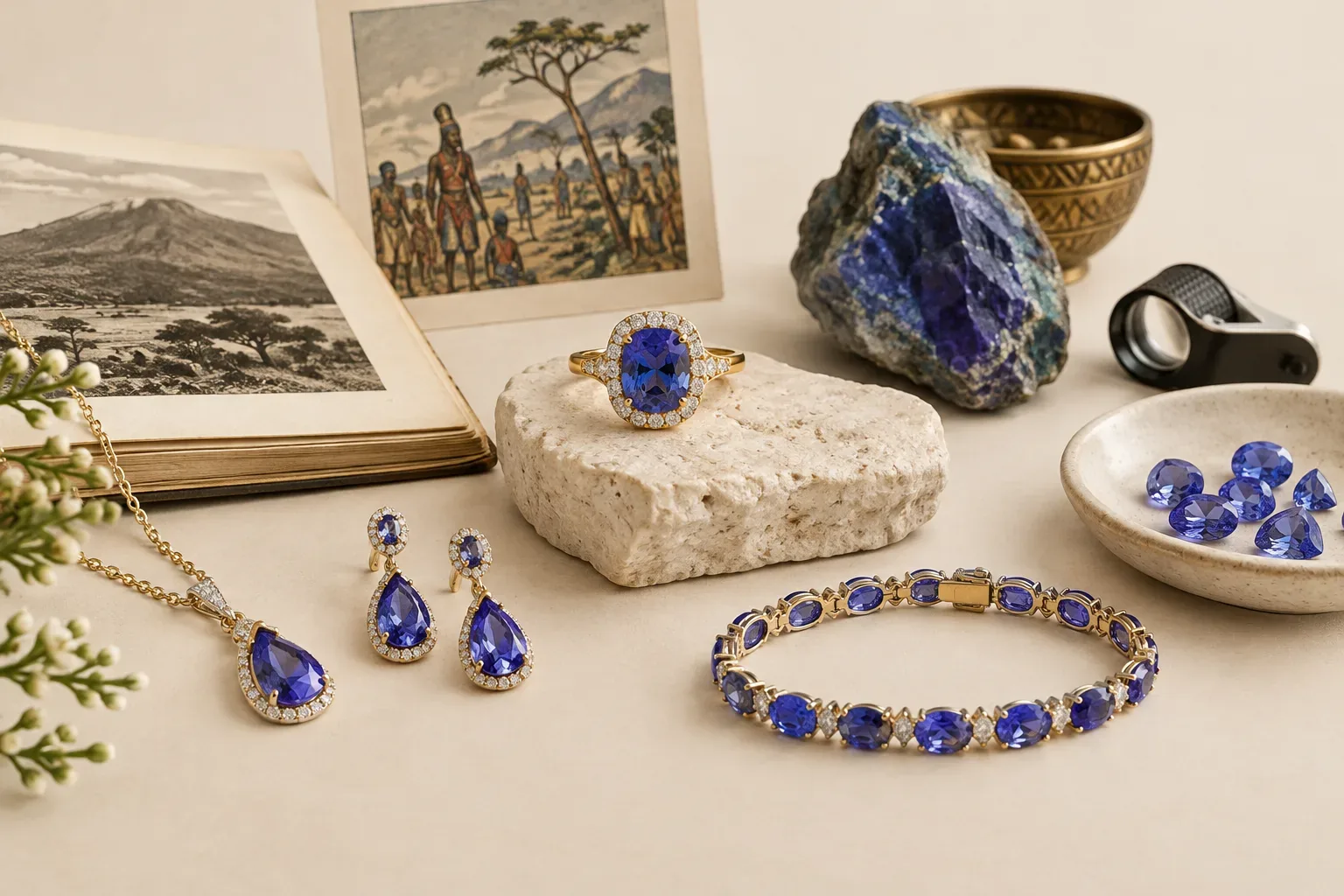
Meaning at a glance
Tanzanite frequently reaches the market after treatments to optimize color, and imitations or look‑alikes exist; ask sellers for clear, written disclosure about treatments and origin, request independent test reports for higher‑value pieces, and use return and warranty policies to protect purchases while recognizing that documented historical meanings differ from later popular interpretations.
Historical evidence and documented context
The use and symbolic meanings of gemstones have changed throughout history as societies, technologies, and tastes evolved. The Victoria and Albert Museum places individual gemstones within these changing social contexts in its exhibition and A–Z resources, showing that what is considered fashionable or meaningful in one period may be different in another. V&A’s materials emphasize how gem use, cutting, and setting developed alongside lapidary and jewelry fashions rather than remaining fixed symbols across all cultures.
Because tanzanite’s presence in jewelry is a relatively recent phenomenon in the longer sweep of gem history, most of the cultural meanings attached to it are modern or regionally specific rather than ancient traditions established in multiple cultures. The V&A’s resources on gemstones make clear that documented historical associations differ from later personal or commercial interpretations; where older gemstones have layered meanings built over centuries, newer favorites often acquire significance through contemporary storytelling, fashion, and marketing.
Documented history versus modern interpretation
Separate the documented from the speculative: documented historical evidence about gemstones focuses on where and when stones were used, recorded techniques for cutting or treating them, and how social elites or craftspeople valued those materials. The V&A’s historical work supports this approach by tracing material use and changing social contexts rather than assigning universal symbolic meanings.
By contrast, modern interpretations—personal, spiritual, or marketing‑driven—are not universal historical facts. Many modern claims about tanzanite’s symbolic properties or ancient spiritual uses are contemporary constructions or regional narratives. When you hear a broad claim about a gem’s universal meaning, treat it as an interpretation, not as established historical evidence.
How tanzanite treatments and imitations appear in jewelry
In practical terms, treatment and imitation issues show up in several common ways in the jewelry supply chain. Treating a gem to improve color or clarity is performed before setting and may not be visible to the naked eye once the stone is mounted. Imitations and look‑alikes may be offered as lower‑cost alternatives and can appear unlabelled in secondary markets or informal sales.
From the museum perspective, retailers and makers present gemstones in particular settings and styles to emphasize color and brilliance, which encourages the use of treatments or the comparison with visually similar stones. The V&A’s materials on gemstone identification and historical context advise that gemologists and conservators look at cutting style, mounting, and known treatment practices when attributing a stone’s origin or history.
What buyers should ask—practical guidance
Start with clear, direct questions and insist on written answers. Ask whether a stone has been treated or enhanced and, if so, which processes were used and whether the seller will provide that information in writing. The Federal Trade Commission requires sellers to disclose material treatments and that imitations are accurately represented, so request documentation that reflects those disclosures.
For higher‑value purchases, request an independent gemological report from a recognized laboratory. A lab report can confirm whether the stone is natural, whether treatments are present, and sometimes where it was sourced. If a seller cannot or will not provide independent testing for a significant purchase, consider walking away or choosing a vendor with transparent policies and written guarantees.
Always ask about provenance, the seller’s return policy, and any after‑sale support such as resizing, repairs, or warranties. For gifts, ask about exchange windows and gift receipts so the recipient can have the stone independently assessed if they wish. Treat authenticity and treatment disclosure as part of the etiquette of respectful gifting: making the recipient aware of the purchase’s characteristics helps them care for the piece and understand its value.
If you encounter an unusually low price for a piece described as tanzanite, ask why. Low prices can indicate a smaller, treated natural stone, an imitation, or misrepresentation. Request photos of the loose stone if possible, and consider independent appraisal for any purchase where you suspect mislabeling.
Selecting and wearing tanzanite respectfully
When choosing a piece, consider how the stone will be used and cared for. Gemstone treatments can affect durability and cleaning requirements; sellers should explain how to care for treated stones and whether certain cleaning methods or ultrasonic devices are safe. Written care instructions are a reasonable request for any gemstone purchase.
Respect for cultural meanings is also important. If a seller or artisan presents tanzanite with a specific cultural or spiritual interpretation, ask about the source of that claim. If the meaning is a modern or personal interpretation, acknowledge that it is a contemporary layer of significance rather than a universal historical tradition. This distinction honors both documented history and the buyer’s or recipient’s personal connection to the gem.
When to seek expert help
If you are uncertain about a stone’s identity or treatment status, consult an independent gemological laboratory or a qualified jeweler who uses standard testing methods. The V&A’s resources underscore the importance of specialist study in identifying gem materials and their historical context, and the FTC supports consumers’ right to truthful disclosure about treatments and imitations.
Independent testing is especially important for expensive pieces, antiques, or items purchased sight unseen. A lab report can be used in negotiating price, verifying a seller’s claims, or documenting an item for insurance and estate purposes.
Final considerations for buyers and gifters
Treat information about treatments and imitations as a normal part of the purchasing conversation rather than a sign of mistrust. Clear, written disclosure is a standard practice endorsed by consumer protection guidance, and reputable sellers will accommodate reasonable requests for documentation and independent testing.
Remember that the meanings people attach to gems like tanzanite are layered and change over time. A piece chosen for its color, rarity, or the story you want to tell can be meaningful regardless of whether that meaning is historical or contemporary, provided you communicate honestly with the recipient and consider care and sustainability in your choice.
Frequently asked questions
Is it common for tanzanite to be treated?
Yes. Treatments to improve color or appearance are common for many gemstones in modern jewelry markets. The Victoria and Albert Museum explains that gem treatment has a long history of changing with technology and taste, and the Federal Trade Commission requires sellers to disclose material treatments.
How do I know if a tanzanite is an imitation?
Ask the seller directly and request written disclosure. The FTC advises that sellers must identify imitations clearly. For certainty with a higher‑value piece, obtain an independent gemological report that describes whether the stone is natural, treated, or synthetic.
What should I ask a seller before buying tanzanite?
Ask whether the stone has been treated, which processes were used, whether there is a lab report or certificate, the seller’s return policy, and any care recommendations. Ask for written answers so you have documentation in case you need appraisal or resale later.
Are the meanings attached to tanzanite historically established?
Most meanings associated with tanzanite are modern or regional rather than ancient or universal. The Victoria and Albert Museum emphasizes that gemstone meanings shift with social context, so distinguish documented historical usage from contemporary or marketing interpretations.
Should I get an independent lab report?
For any important purchase, an independent lab report is a useful safeguard. It can confirm identity and reveal treatments. If a seller hesitates to provide independent testing for a high‑value item, consider other vendors with transparent practices.
What if the price seems too good to be true?
An unusually low price can mean a smaller natural stone, a treated or lower‑quality gem, or an imitation. Ask for provenance and documentation and consider independent evaluation before committing to the purchase.
Sources and further reading
- Bedazzled: A History of Jewellery — Victoria and Albert Museum
- An A-Z of Gemstones — Victoria and Albert Museum
- Buying Gemstones, Diamonds, and Pearls — Federal Trade Commission