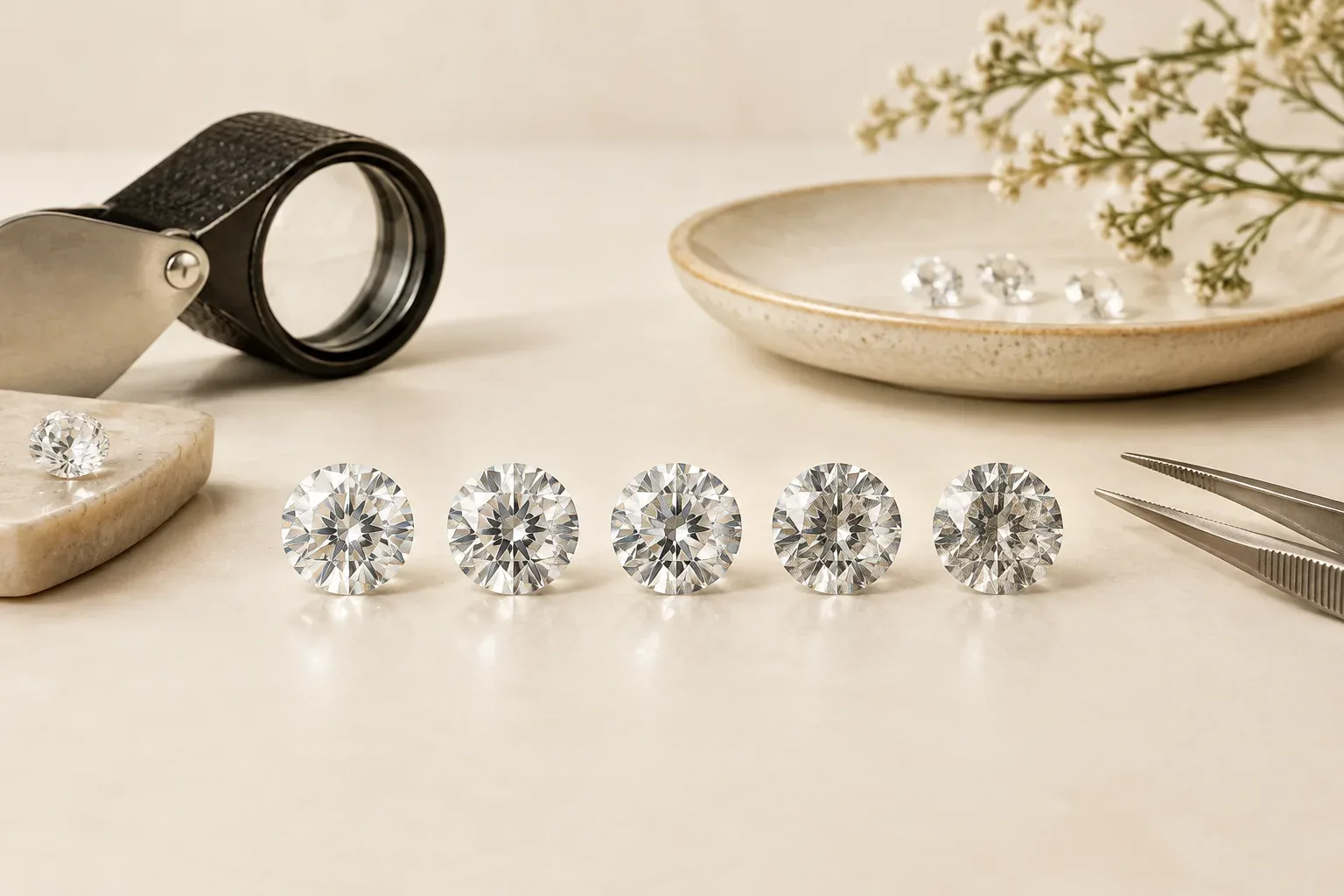
Meaning at a glance
Eye-clean refers to whether inclusions are visible to the unaided human eye at normal viewing distance; this guide defines the term, explains the factors that change how a diamond looks and how those factors influence price, sets out practical trade-offs for buyers and gifters, gives safe care advice, and clearly lists what a shopper cannot reliably verify without a qualified jeweler or gemological laboratory.
Definitions and decision criteria
Eye-clean is trade-language used to describe whether inclusions and blemishes are visible without magnification under normal viewing conditions. It is distinct from clarity grade, which is an expert assessment under standardized lighting and magnification. When comparing diamonds for eye cleanliness, weigh these decision criteria: the clarity grade on a trusted grading report, stone shape and cut (which influence how light hides or highlights inclusions), carat size (larger stones can make inclusions more obvious), the location and contrast of inclusions, and whether the stone has received treatments that can affect appearance or durability.
Documentation and disclosure are essential. The Federal Trade Commission advises consumers to expect clear written disclosure about whether a gemstone is natural or lab-created, treated or imitation. The Gemological Institute of America notes that treatments have consequences for detectability, durability and care. Use these two vectors—visual appearance to the eye, and verified technical details on a report—to make a purchasing decision you can defend later.
Historical evidence and cultural context (what the approved sources do — and do not — document)
None of the three approved sources for this article (Imaginaire Digital, the Gemological Institute of America, and the U.S. Federal Trade Commission) provide a primary historical account tying the phrase "eye-clean" to a specific culture or period. The phrase itself is modern trade language used by jewelers, appraisers and sellers to describe naked-eye visibility of inclusions.
There are many historical and cultural traditions that use eye imagery in jewelry (for example, the Eye of Horus in ancient Egypt and the Mediterranean "evil eye" motif), but those cultural-meaning discussions are not documented in the approved sources for this piece and would require separate historical scholarship to cite responsibly. Treat such cultural histories separately from the modern, technical term "eye-clean," which belongs to contemporary gem-trade and consumer-evaluation practice.
Documented technical factors that change appearance
Clarity characteristics: The type, size, color (contrast with the bodycolor of the diamond), number and especially the location of inclusions determine whether they are visible to the unaided eye. Inclusions directly under the table or crown are more likely to be seen than those near the girdle or in the pavilion.
Cut and shape: A well-executed cut can hide inclusions by directing light and sparkle across the surface, while shallow or poor cuts can expose dark or disruptive inclusions. Some shapes, like rounds, tend to hide flaws better because of their brilliant facet pattern; elongated shapes with large tables can make some inclusions more apparent.
Carat and size perception: As carat increases, tiny inclusions that were previously inconspicuous may become visibly noticeable because the surface area grows and viewing distances or expectations change. Price per carat also typically rises with size, so buyers often balance clarity against carat.
Colour and light: Strong fluorescence, body color and the setting metal (white, yellow or rose) affect how inclusions contrast with the diamond and therefore their visibility. Lighting conditions—direct spot light versus diffuse room light—change perception of both sparkle and inclusions.
Treatments and enhancements: The Gemological Institute of America explains that treatments exist and that disclosure is essential because treatments can change both appearance and durability. Some clarity-improvement treatments may make a stone look cleaner to the eye but require special care and can affect value and resale.
How cleanliness affects price and trade-offs to consider
Price is driven by the interplay of the four standard value factors—carat, cut, colour and clarity—plus origin or certification. A diamond graded higher in clarity commands a premium, but the premium only makes sense if the higher clarity grade produces a visible improvement to the buyer in everyday wear conditions.
Common trade-offs: Many shoppers accept a lower clarity grade in order to afford a larger or better-cut stone that looks more brilliant in real life. Conversely, collectors or investors may prioritise pristine clarity regardless of naked-eye appearance. If you care about perceived brilliance in everyday conditions, prioritise cut and a clarity grade that normally yields eye-clean stones for your chosen shape and carat range.
Risk and resale: Treated stones or those with undisclosed enhancements can sell for much less or be rejected in resale; the FTC underscores the need for disclosure. If you plan to resell, insist on lab reports and documented treatment histories.
How the motif, gemstone, or tradition appears in jewelry
In contemporary jewelry trade language, "eye-clean" most often describes a single round or fancy-shaped diamond used as a focal stone, such as in engagement rings or studs. Jewelers also use small diamonds as accents to form "eyes" in animal motifs or talismanic pieces, but that uses the gemstone as imagery rather than describing clarity.
Design choices that affect perceived cleanliness include bezel and halo settings, which can conceal or distract from inclusions, and pavé settings, where many small stones are set closely and individual inclusion visibility is less important to overall appearance. Metal colour and mounting style change how the diamond presents: yellow and rose gold warm the visual field and can make small dark inclusions less noticeable, while white metals emphasize brilliance and may make inclusions more apparent against a brighter background.
Practical selection and respectful gifting guidance
Decide what matters first: If everyday sparkle matters most, prioritise cut and choose a clarity level known to produce eye-clean stones in your size/shape range. If size or investment value matters more, consider stepping up clarity or insist on a higher-tier lab report.
Ask for and read documentation: Request a grading report from a reputable lab, and ask the seller to disclose treatments and whether the diamond is natural or lab-grown. The FTC makes clear that consumers should receive written disclosures on these points.
View in person or use calibrated images: Photos can be misleading. Whenever possible, inspect the diamond in person under different lighting and at normal viewing distances. If buying remotely, ask for specific, calibrated images and a video of the stone rotating under diffuse and direct light, and a statement attesting to the conditions under which the images were taken.
Respect cultural meaning when gifting: If a piece uses an "eye" motif with cultural significance, learn and respect its meaning for the recipient's background. If you are unsure, ask sensitively or choose a neutral design to avoid unintentional offence.
Budget for verification: If the diamond is a significant purchase, budget for a pre-purchase appraisal or independent verification from a qualified jeweler or a recognized gemological laboratory, especially if the seller’s price seems unusually low for the stated grade.
Safe care, maintenance and limits of buyer verification
Care and cleaning: Regular gentle cleaning with mild soap and a soft brush restores sparkle and reduces the chance that surface dirt will mimic inclusions. The Gemological Institute of America cautions that some treatments and enhancements affect durability and care needs, so follow any treatment-specific guidance you receive.
Professional checks: Have prongs and settings inspected periodically to prevent loss, and ask a jeweler to clean and examine the stone if you suspect a clarity change due to damage.
What you cannot reliably verify alone: Without a qualified jeweler or a gemological laboratory report you cannot definitively determine whether a stone has been treated, whether it is natural or lab-grown in all cases, nor can you provide an authoritative clarity grade that holds up for insurance or resale. The FTC recommends written seller disclosure for those exact reasons. For full assurance on origin, treatment and grade, obtain an independent lab report.
Final practical checklist before purchase
Before you buy, verify three things in writing: the grading report or lab certification, explicit disclosure of any treatments or enhancements, and the seller’s return or upgrade policy. Inspect the stone in person when possible, prioritise cut for visible brilliance, and choose a clarity grade that gives you confidence in everyday viewing conditions. If in doubt, pay for an independent evaluation; treating visual appearance and technical verification as separate but related decisions will help you make a choice that matches both taste and long-term value.
Frequently asked questions
What does "eye-clean" mean for diamonds?
Eye-clean means a diamond's inclusions are not visible to the unaided eye at normal viewing distance. It is a practical description of appearance rather than a formal clarity grade.
Can I tell if a diamond is eye-clean from photos or videos?
Photos and videos can help but are not definitive. Lighting, camera settings and editing can hide or exaggerate inclusions. Whenever possible inspect a stone in person under normal room lighting, or request calibrated images and a video of the diamond rotating under both diffuse and direct light.
Do lab-grown diamonds change eye-cleanliness compared to natural diamonds?
Lab-grown diamonds can have similar ranges of clarity as natural diamonds; eye-cleanliness depends on the same factors—type and location of inclusions, cut, shape and size. The FTC recommends written disclosure about whether a stone is lab-grown or natural so buyers know exactly what they are purchasing.
Are clarity treatments safe and do they affect price?
Some treatments can improve visible appearance but may affect durability, care needs and resale value. The Gemological Institute of America advises that treatments require disclosure and can have detectable and practical consequences, so you should request written details before purchasing.
What can only a lab or qualified jeweler verify?
A qualified jeweler or gemological laboratory can verify whether a diamond has been treated, determine origin categories (natural versus lab-grown), and provide an authoritative clarity grade and report suitable for insurance or resale. Seller claims alone are not a substitute for lab verification.
Sources and further reading
- Imaginaire Digital — Imaginaire Digital
- Gemological Institute of America — Gemological Institute of America
- Federal Trade Commission — Federal Trade Commission