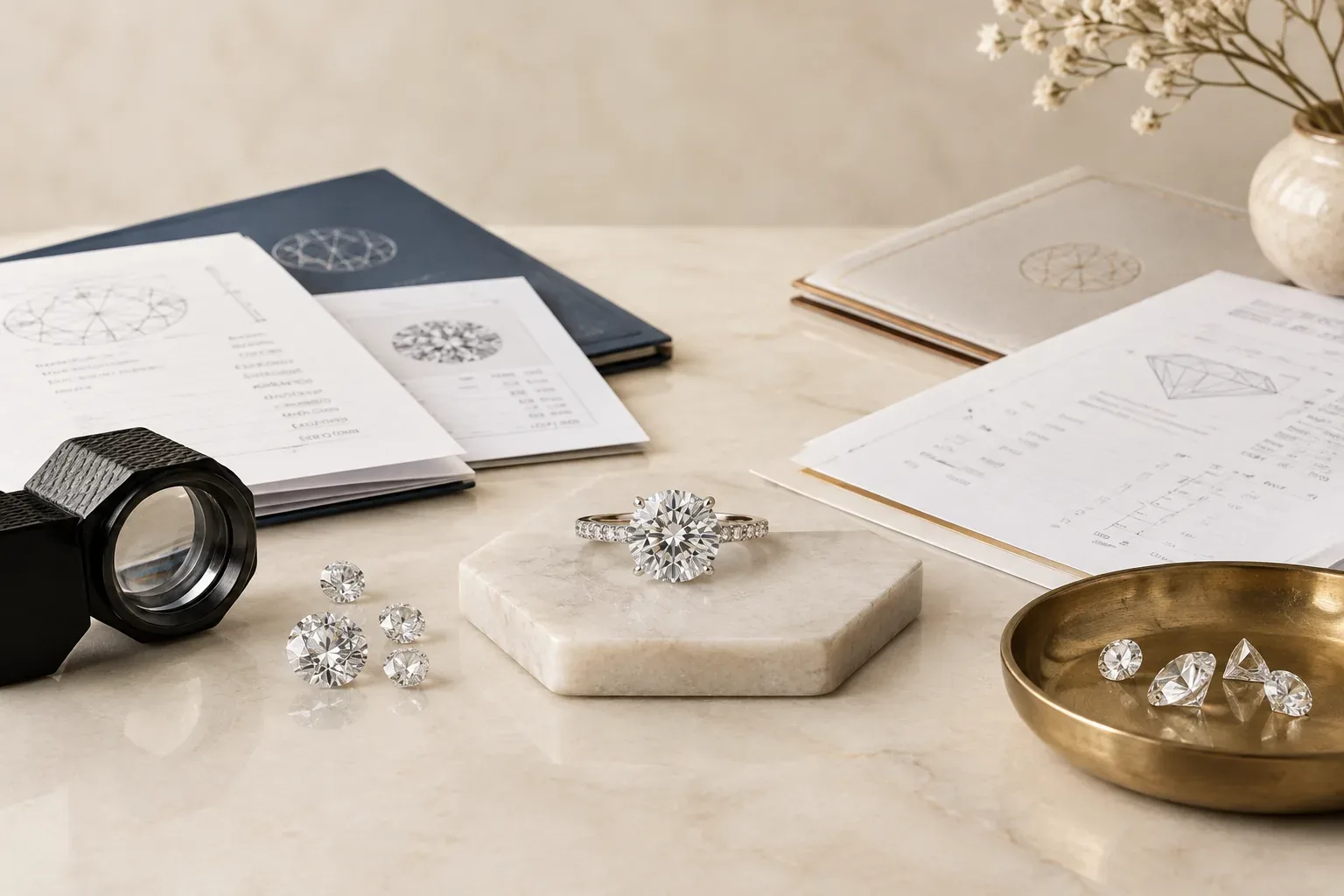
Meaning at a glance
A diamond certification comparison guide should explain what each kind of report covers, which factors most affect appearance and price (cut, carat, color, clarity, and treatments), what labs and consumer-protection rules can and cannot guarantee, and practical trade-offs and care guidance so shoppers can make informed choices without overstepping what only a qualified laboratory can verify.
What a certification is and what it typically contains
A certification (often called a gem or diamond report) is a document supplied by a gemological laboratory or, sometimes, by a seller that records measurements and observations used to describe a diamond. Typical report items include carat weight, cut or proportions, color and clarity grades, and notes on whether the stone shows treatments or is lab-created. A trustworthy guide compares what different reports include and how strictly those features were measured.
Regulatory and consumer-protection guidance matters to how certifications are used. The U.S. Federal Trade Commission advises consumers that clear, written seller disclosures are necessary to distinguish natural, lab-created, treated, cultured and imitation materials. That means you should expect written statements about any treatments or whether a diamond is lab-grown, and you should treat a report and seller disclosure together when you evaluate a purchase.
How modern certification and regulation developed (historical evidence)
The system of written laboratory reports and consumer-protection rules that shoppers use today is a modern development in gem commerce. Contemporary gemological laboratories such as the Gemological Institute of America produce technical reports and guidance on treatments, detectability and care. At the same time, consumer-protection agencies such as the U.S. Federal Trade Commission set expectations for seller disclosure to protect buyers.
Where older cultures and periods used diamonds and other gems for status, religious or symbolic purposes, the modern practice of issuing laboratory reports is a twentieth- and twenty-first-century response to industrial-scale gem markets, advanced testing methods, and regulatory needs. This guide focuses on contemporary certification practices and consumer safeguards rather than the cultural symbolism of gems in earlier historical periods.
Documented facts versus modern personal interpretation
Documented facts are the measurable or disclosed attributes on a report and the legal or regulatory requirements that apply to selling diamonds. For example, whether a diamond is identified as treated, lab-grown, or natural on a written report and whether a lab assigns specific grades are documented. The Gemological Institute of America and similar authorities record treatments and discuss detectability and durability issues; the Federal Trade Commission requires clear seller disclosures about these distinctions.
Modern personal interpretation is how a buyer perceives a stone’s beauty, symbolism or value for a given relationship or style. Personal preferences—favoring a larger carat over a pristine clarity grade, choosing a warmer color in a particular setting, or preferring a certified lab-grown diamond for ethical reasons—are valid but subjective. A certification provides objective data to support those subjective decisions; it does not by itself determine personal meaning.
What changes a diamond’s appearance and price
Cut and proportions: Cut quality determines how light returns from a diamond and therefore how bright or scintillating it appears. A better-cut stone will often appear more lively at a given carat weight and can therefore command a premium because observers value visible sparkle more than abstract grades alone.
Carat weight: Size, measured in carats, has a predictable influence on price. Larger stones are rarer on the market and typically cost more per carat, but the perceived size in a setting also depends on cut proportions and mounting style.
Color and clarity: Color grade (how near to colorless a diamond is) and clarity grade (how free a diamond is of internal or surface blemishes) both influence price and appearance. In many practical viewing situations, moderate color and clarity trade-offs produce minimal visible differences to the unaided eye while saving significant cost. Those trade-offs are personal decisions guided by the information on a certificate and by in-person inspection where possible.
Treatments and enhancements: Treatments that change a diamond’s color or clarity can alter appearance and price. According to gemological laboratories and guidance on treatments, disclosure is essential because some treatments affect detectability, durability and care. Consumers should expect written disclosure when a stone has been treated and should understand that treated stones usually have different market pricing and care requirements compared with untreated natural diamonds.
Natural vs lab-created: Laboratory-grown diamonds can have physical properties similar to natural diamonds but are a distinct commercial category. The Federal Trade Commission emphasizes that consumers need clear disclosure to distinguish natural and lab-created stones. Whether a lab-grown diamond commands the same resale value, or whether a buyer prefers it for ethical or budgetary reasons, depends on market conditions and personal priorities.
Provenance and special attributes: Provenance claims (for example, conflict-free sourcing statements) or proprietary marking systems can influence buyer confidence and price, but such claims should be supported by documentation and seller disclosure. Certification helps record objective grades, but provenance and ethical claims are separate considerations requiring their own verification.
How certification affects the look of finished jewelry
A certification records attributes that predict how a diamond will look when set, but setting choices also strongly influence final appearance. A deep or shallow cut can change face-up size and sparkle. Mounting styles such as halo settings, bezel or prong work alter perceived size and brightness. Imaginaire Digital’s market analysis shows ongoing strong consumer demand for engagement rings and diamond studs, which means most certifications you’ll see are evaluated in relation to those popular styles.
Retail presentation, photos and video can make differently graded stones look similar online. A certificate gives you standardized information to compare stones that might otherwise appear identical in marketing images. When shopping online, ask for the certificate number and verify it with the issuing laboratory if the lab provides online verification.
Practical selection and gifting guidance
Start with a certified report and seller disclosures. A good starting point is to ask for a current lab report from a recognized laboratory and for written disclosure about whether the stone is natural, lab-created, treated, or an imitation, consistent with Federal Trade Commission guidance. Use that documentation together with in-person inspection or video to judge the stone.
Prioritize cut and overall visual effect. If a diamond will be viewed often on the hand, prioritize cut quality and proportions that produce strong brightness and contrast over chasing marginal numerical improvements in color or clarity that may not be visible to the eye.
Balance budget and size. If your budget is finite, consider small trade-offs in color and clarity to afford a larger carat that gives more visible impact, while keeping track of what the certificate records.
Ask about return, repair and insurance options. Make sure the seller will provide a return window and that you can obtain an insured appraisal if you plan to insure the piece. Confirm how treatments, if any, affect care and repair; the Gemological Institute of America notes that treatments and durability considerations create distinct consumer questions.
Get independent verification for high-stakes purchases. For engagement rings, heirloom pieces, or high-value stones, consider independent review by a qualified jeweler or a second laboratory report before completing the purchase. Ask whether the lab report number can be checked on the issuing lab’s website to confirm authenticity.
What you cannot reliably verify yourself (limits and safe care)
Without lab equipment or a qualified professional, you cannot reliably distinguish some treatments or confirm origin claims. The Gemological Institute of America explains that treatments can be detectable only with specialized testing and that detectability affects disclosure and care instructions. The Federal Trade Commission advises that consumers should receive written disclosure on whether a stone has been treated or is lab-created. If a seller cannot or will not provide clear written disclosures, that is a red flag.
Care and durability: Different materials and treatments can require special care. Follow any care guidance accompanying the report and ask your jeweler for maintenance advice. When in doubt about cleaning or repair, consult a qualified professional to avoid damage to treated or fragile materials.
Putting it together: a simple shopping checklist
Request a current, full laboratory report and written seller disclosures that state whether the stone is natural, lab-grown, treated or imitation. Verify the report number with the issuing lab when possible. Prioritize cut and in-person visual appraisal when your aim is maximum visible sparkle. Use graded color, clarity and carat information to balance size and budget. When treatments, provenance or ethical sourcing matter to you, ask for documentary support and independent verification. When consumer-protection questions arise, rely on the kind of guidance the Federal Trade Commission provides about disclosures and the technical expertise summarized by gemological laboratories such as the Gemological Institute of America.
This approach helps you use certification to compare objective data while keeping personal taste and practical trade-offs front of mind.
Frequently asked questions
What is the most important thing to check on a diamond certificate?
Check whether the certificate identifies the stone as natural, lab-created or treated, and then review cut, carat, color and clarity grades. The U.S. Federal Trade Commission requires clear seller disclosure on these distinctions, and a lab report documents the objective grades you will compare between stones.
Which labs should I trust for diamond reports?
Prioritize reports from well-known, independent gemological laboratories and verify report numbers on the issuing lab’s site when possible. Remember that lab names can indicate different grading strictness; for high-value purchases, consider independent verification or a second report.
Can I tell if a diamond is treated or lab-grown from photos alone?
No. The Gemological Institute of America explains that treatments and some characteristics require specialized testing; photos and videos are not reliable substitutes for a written report and professional evaluation.
Do certificates guarantee a diamond’s resale value?
Certificates document objective attributes but do not guarantee market value or resale price. Resale depends on market demand, provenance, and the buyer’s preferences. Use a certificate as a factual basis for valuation and obtain appraisals if you need insurance or resale estimates.
How do treatments affect care and durability?
Treatments can affect detectability, durability and the recommended cleaning or repair methods. The Gemological Institute of America notes that treatments create distinct consumer questions about care, so always follow the lab report and seller guidance for maintenance.
What should I do if a seller won’t provide written disclosure or a certificate?
Treat the absence of written disclosure or a certificate as a significant red flag. The Federal Trade Commission expects clear written distinctions among natural, lab-created, treated and imitation materials. Walk away or insist on documentation and verification before completing a purchase.
Sources and further reading
- Imaginaire Digital — Imaginaire Digital
- Gemological Institute of America — Gemological Institute of America
- Federal Trade Commission — Federal Trade Commission