Meaning at a glance
A diamond certification buying guide should define lab reports, explain what they do and do not prove, list decision criteria and trade-offs (cost, resale, insurance, report detail), identify the limits of buyer verification without a qualified jeweler or gemological laboratory, and offer care and gifting guidance supported by authoritative sources.
What a diamond certificate is — clear definitions
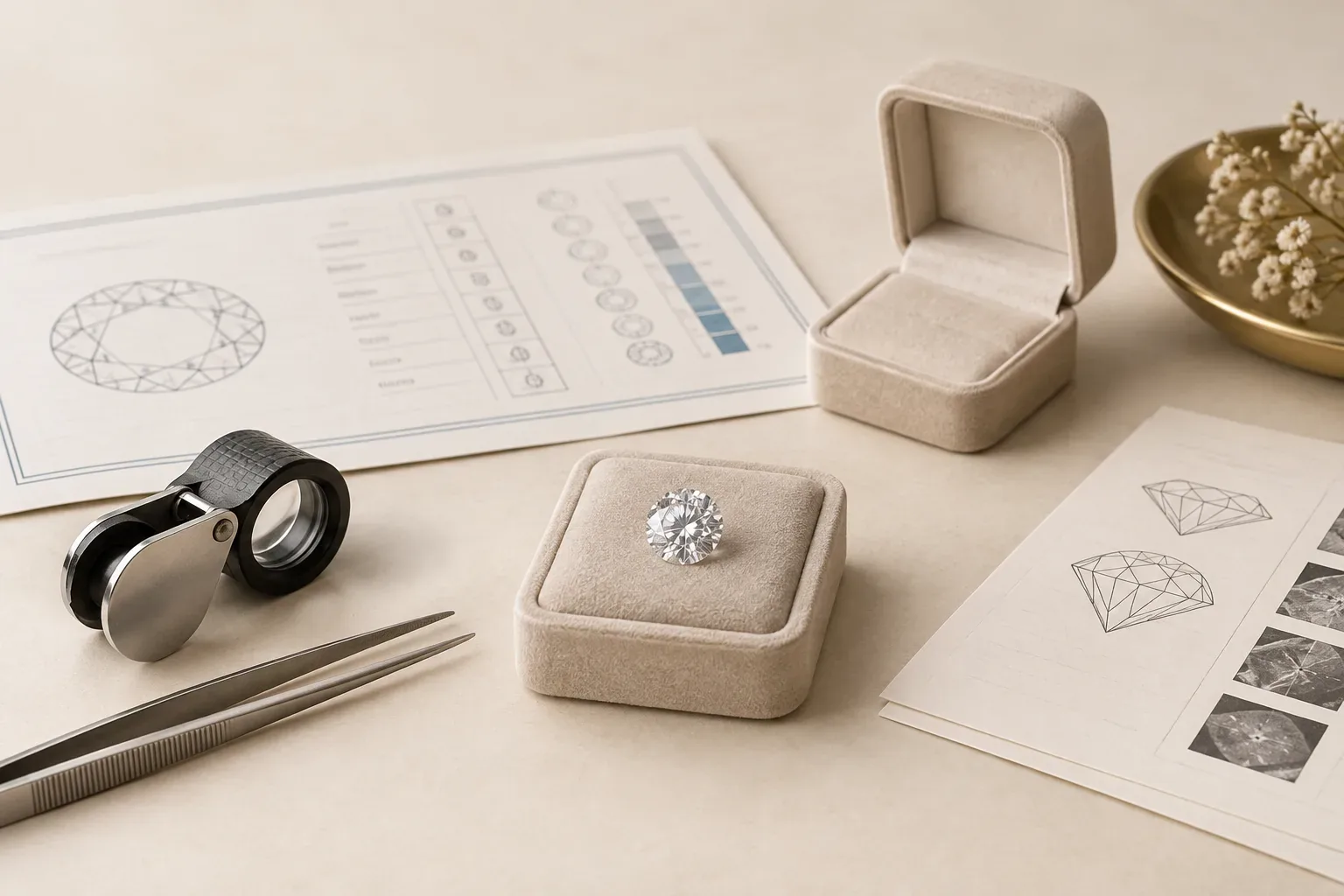
A diamond certificate (often called a report) is a document prepared by a gemological laboratory that records measured characteristics of a diamond and any important disclosures. Typical contents include weight, measurements, the laboratory’s grading of color and clarity (if performed), a cut assessment for certain shapes, and notes on treatments, enhancements, or distinguishing features such as fluorescence.
Laboratory reports use instruments and trained graders to create a standardized record. That record increases transparency for buyers, insurers, and resellers, but the report represents the laboratory’s findings at the time of testing rather than an unchanging absolute truth.
Historical context and how certification developed
Formal laboratory grading and the widespread use of written reports are modern developments in the gem trade. According to the Gemological Institute of America, gemological laboratories and standardized grading systems became established in the 20th century, and those institutional practices are what most consumers encounter today.
This article separates documented historical meanings of gemstones from modern certification practice. Cultural and symbolic meanings for diamonds and other gems have long histories in specific societies, but modern lab reports are technical documents produced by gemological institutions and are not part of traditional symbolic systems.
Documented history versus modern personal interpretation
Documented historical meanings—such as how a culture used a gemstone in rituals, trade, or status—belong to specific records and periods and should be cited from historians or cultural sources when precise claims are made. Modern personal interpretations, whether sentimental or marketing-driven, are subjective and vary by person and culture.
When you read a certificate, treat it as an objective technical statement about that stone at test time. When you choose a diamond for symbolism or gifting, separate that personal meaning from the technical report: the certificate does not certify intent, relationship meaning, or emotional value.
What certificates say and what they do not
Certificates typically report measurable features: carat weight, proportions, a laboratory’s color and clarity grades, and any treatments or lab-grown origin if detectable. The Gemological Institute of America emphasizes that treatments, disclosure, detectability, durability and special care create distinct consumer questions for gemstones, and those topics are exactly what many laboratory reports cover.
Certificates do not guarantee retail price, future appreciation, or a stone’s marketability. They are not warranties of authenticity beyond the lab’s testing methods and cannot fully substitute for an in-person appraisal for insurance or precise valuation. The Federal Trade Commission stresses that consumers need clear distinctions among natural, lab-created, treated, cultured and imitation materials and written seller disclosures, reinforcing that certificates are one piece of the overall buying record.
How certification appears in jewelry
Most retail diamonds sold with certificates will be accompanied by a printed report or a certificate number that links to a lab’s online report. Laboratories sometimes laser-inscribe a report number on a diamond’s girdle to help match a loose stone to its report, but inscriptions may be small and not visible once a stone is mounted.
Sellers may offer the certificate along with photos, magnified plotting diagrams, and sometimes short videos to show proportions and inclusions. For mounted stones, ask whether the seller will show the certificate and the matching inscription (if present) before purchase, especially if you are buying online.
Choosing a lab and the trade-offs
Not all reports are created equal in format, perceived market recognition, or fee. Laboratories differ in grading standards, the detail they provide, how they handle treatments, and their perceived acceptance among resellers and insurers. Buyers should weigh brand recognition and consistency against cost. A more widely recognized laboratory report can support resale and insurance processes, but it often adds to the stone’s invoice.
Smaller or specialty labs can provide useful information and may be more affordable, but some buyers accept an implicit trade-off in market liquidity. Consider whether you want a report primarily for confidence at purchase, for appraisal and insurance, or for eventual resale; different priorities lead to different sensible choices.
Practical decision criteria
Decide what you need the certification for: authentication and disclosure at time of sale, an independent valuation for insurance, or a record to preserve resale value. If preservation of resale and easier insurance claims are important, a report from a broadly recognized laboratory is often preferable.
Also weigh budget and how much of the purchase price you assign to the report itself. Laboratory fees, laser inscription costs, and the premium sellers charge for certified stones all add to the final price. For modest budgets, prioritize the grading categories that matter most to you—such as color or clarity—rather than chasing the highest-grade certificate alone.
Questions to ask sellers and what to verify
Before you buy, ask the seller for the laboratory report number and the issuing laboratory’s name so you can view the report independently online. Ask if the diamond is natural or lab-grown and whether any treatments have been performed; the Federal Trade Commission requires clear seller disclosures on these points.
Verify whether the lab’s report includes a plotted diagram of inclusions and whether the diamond has a laser inscription matching the report number. If the stone is mounted, ask if you can view the certificate while seeing the mounted piece and whether the seller offers a return period for buyers who want an independent appraisal.
Limits on what you can verify without a lab or jeweler
A consumer can verify a report number online and check that the report details match the seller’s listing, but many important identifications—detecting subtle treatments, confirming origin, or certifying very fine grades—require specialized instruments and trained graders. The Gemological Institute of America notes that treatments and detectability create distinct consumer questions, meaning specialized testing is often necessary to confirm certain disclosures.
If you need absolute confirmation about origin (natural versus lab-grown) or hidden treatments, plan to use an independent laboratory or a qualified, reputable jeweler who can recommend laboratory testing. Certificates help, but they do not negate the need for expert confirmation when the stakes are high.
Care and durability guidance
Care instructions depend on whether a diamond is treated, mounted, or paired with other gemstones. The Gemological Institute of America recommends understanding treatments and special-care needs, because some treatments and certain companion stones require gentler handling or avoid ultrasonic cleaners.
For everyday care, diamonds resist scratching but can collect grease and oils; clean gently with warm soapy water and a soft brush, and follow any lab or seller care recommendations. If a stone’s report notes treatments, ask for explicit cleaning and storage guidance from the seller or an accredited jeweler.
Selection and gifting guidance
When selecting a certified diamond as a gift, match the certificate level to the recipient’s priorities. If they value transparency and future resale, choose a diamond with a report from a widely recognized laboratory and keep that report with the piece. If the gift emphasizes sentiment over market considerations, a clear, accurate certificate is still useful but need not be the primary factor.
Present the certificate with the gift and explain what it documents. Respect cultural meanings the recipient may attach to the stone, but be careful not to conflate technical grading statements with symbolic claims about value or fate. Certificates support honesty and long-term ownership care, which many recipients appreciate.
Final steps before purchase
Always review the seller’s written disclosures, ask for the laboratory report number, and if buying online, ask about in-person appraisal options and return policies. Keep copies of the certificate and any receipts, and consider an independent appraisal if you will insure the piece.
Certification is a valuable tool for transparency and confidence, but it is one part of a responsible purchase process that includes seller reputation, clear disclosures, and, when needed, independent verification from qualified professionals.
Frequently asked questions
Do I always need a diamond certificate?
You do not always need a certificate to enjoy or wear a diamond, but a certificate provides independent documentation of identity, measured features, and disclosures that help with insurance, resale, and transparency. If resale and insurance are priorities, a certificate from a widely recognized laboratory is usually advisable.
Can I verify a certificate myself online?
You can verify a report number and view the issuing laboratory’s report online, but you cannot reproduce laboratory-grade tests at home. Determining subtle treatments, confirming origin, or verifying very high-precision grades requires specialized equipment and trained graders.
Are lab-grown diamonds certified?
Yes. Laboratories will report whether a diamond is natural or lab-grown and should disclose treatments. The Federal Trade Commission requires sellers to make these distinctions and provide written disclosures, and reputable labs will list the origin on the report.
Does a certificate guarantee value or future resale price?
No. A certificate documents measured characteristics and disclosures at the time of testing but does not guarantee retail price or future market value. Market demand, brand, mounting, and other factors all affect resale value.
What questions should I ask a seller about certification?
Ask for the laboratory name and report number, whether the stone is laser-inscribed to match the report, whether any treatments have been performed, the seller’s return policy for independent appraisal, and whether they provide a printed or online copy of the report prior to purchase.
Sources and further reading
- Imaginaire Digital — Imaginaire Digital
- Gemological Institute of America — Gemological Institute of America
- Federal Trade Commission — Federal Trade Commission