Meaning at a glance
This teal sapphire cleaning guide gives a concise, evidence-led answer: use warm water, mild soap, and a soft brush for routine cleaning; avoid harsh chemicals, abrasives, and at-home ultrasonic or steam cleaning when the stone may be treated or fracture-filled; and rely on a qualified jeweler or gemological laboratory to verify treatments, origin, or the presence of fill materials—following the decision criteria, trade-offs, and limits described below.
Direct answer — what to do now
For everyday cleaning of a teal sapphire that you believe is a standard corundum sapphire set in metal, the safest home method is a short soak in warm water with a drop of mild dish soap and gentle agitation with a soft toothbrush, followed by rinsing and patting dry with a lint-free cloth. This method removes oils and surface dirt without abrasive action or strong chemicals.
Do not use household bleach, strong acids, household ammonia, or abrasive polishes. Also avoid aggressive ultrasonic or steam cleaning unless you have written confirmation from the seller or a qualified jeweler that the specific stone is untreated and stable, because certain treatments change how a stone responds to heat, pressure, and chemicals. For high-value purchases, or if the stone might be fracture-filled, have the piece checked by a professional before exposing it to ultrasonic or steam cleaners.
What the evidence base says about treatments and care
The Gemological Institute of America (GIA) highlights that treatments, disclosure, detectability, durability, and special care create distinct consumer questions for gemstones. That means that whether a teal sapphire can safely tolerate ultrasonic or steam cleaning depends on its specific treatments and stability as determined by gemological testing.
The Federal Trade Commission emphasizes the consumer need for clear seller disclosures about natural versus lab-created, treated, or imitation materials. If a seller provides written disclosure saying a teal sapphire is treated or fracture-filled, follow the care guidance for those treatments—do not assume the safest home methods apply.
Historical evidence and cultural context
There is no approved source in this curated evidence set that documents historic cultural uses or meanings specifically for the color term 'teal sapphire.' The sources provided do not supply primary historical accounts tying teal-colored corundum to particular cultures or historical periods.
What can be documented from the approved sources is recent market interest in colored gemstone jewelry. Industry reporting from Professional Jeweller and search analysis reported by Imaginaire Digital indicate strong contemporary demand for a range of gemstone styles and colored rings, which helps explain why unusual sapphire hues such as teal appear more often in modern designs and searches. Attribute for current trend evidence: Professional Jeweller and Imaginaire Digital.
Documented history versus modern interpretation
Because the approved evidence set does not include historical records specific to 'teal sapphires,' any cultural or symbolic claims about teal sapphires should be treated as modern or personal interpretation unless supported by primary historical sources. Modern buyers and designers often project color-driven meanings—such as calmness, balance, or uniqueness—onto teal stones, but those are contemporary, subjective interpretations, not documented historical meanings in the provided sources.
When you encounter claims about a gemstone’s traditional symbolism, check whether the seller cites a historical source. If no credible historical source is provided, consider the symbolism a personal or marketing interpretation rather than a documented cultural meaning.
How teal sapphires appear in jewelry
In contemporary jewelry, 'teal sapphire' usually refers to corundum whose color lies between blue and green. Designers set teal sapphires in rings, pendants, and earrings that highlight their color contrasts with white or yellow metals and accent diamonds. Trade press and search-data publishers show that sculptural rings and colored gemstone engagement styles are current trends that feature distinctive hues such as teal, supporting why you see the color in modern pieces (Professional Jeweller; Imaginaire Digital).
Because color range and tone are central to the appeal, settings that expose the pavilion for light return (solitaires, halo settings) are common. However, the way a teal sapphire is mounted affects both cleaning access and the choice of cleaning method—the more open the setting, the easier routine cleaning will be; the more intricate the setting, the more likely dirt and oil will accumulate, which may prompt professional cleaning.
Safe home cleaning methods
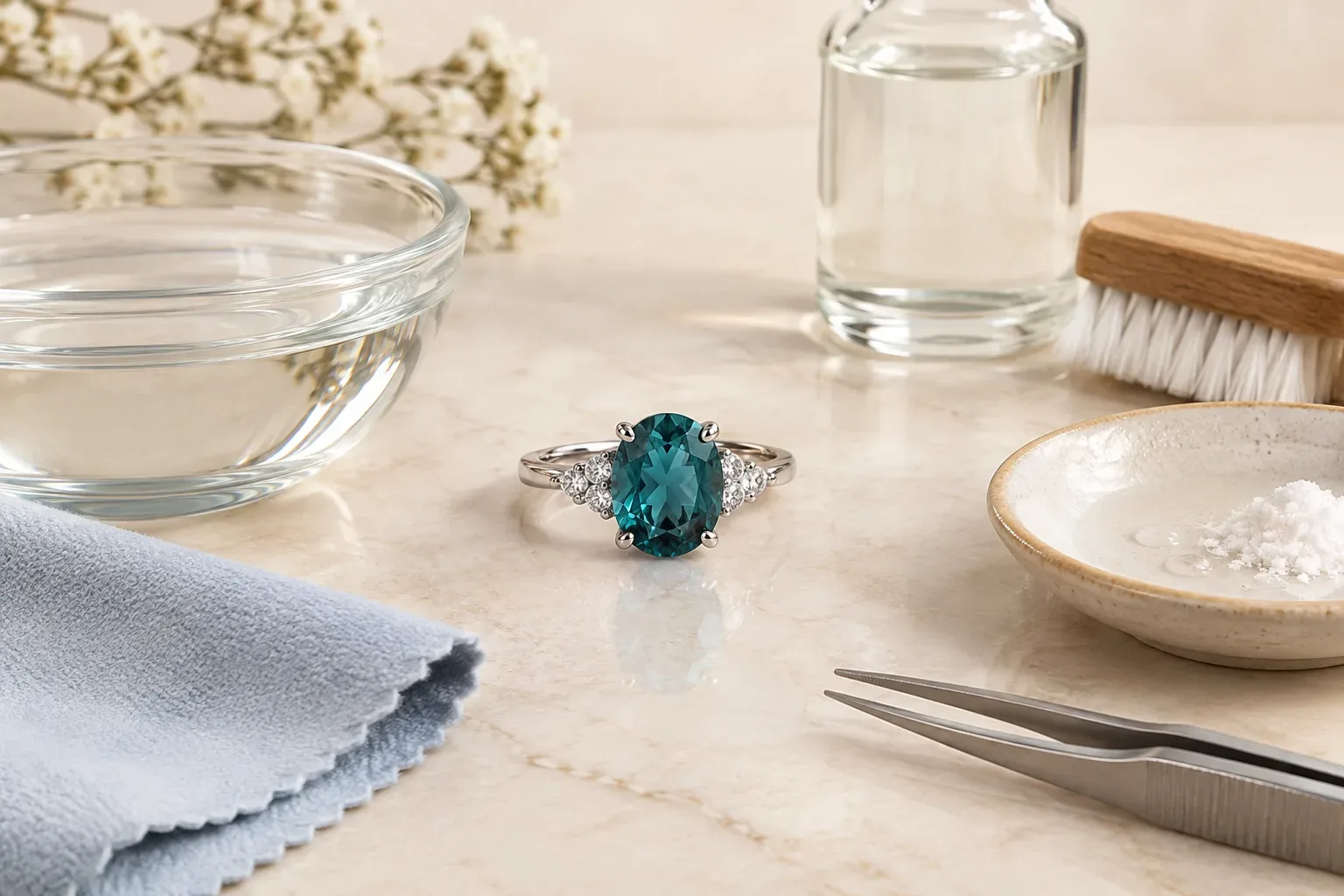
Routine cleaning: Prepare a bowl of warm (not hot) water with a drop of mild dish soap. Soak the sapphire for a few minutes, then gently brush with a soft toothbrush to dislodge oils and debris. Rinse under running water and dry with a lint-free cloth. This method is low-risk and suitable for most stable sapphires.
Spot cleaning: For fingerprints or light oil, a damp lint-free cloth with a small amount of mild soap can be used. Avoid scrubbing at the stone with tissue or paper towels, which can leave micro-abrasions on softer setting metals or polish residues.
Polishing metals: Use a dedicated jewelry polishing cloth on the metal only; do not use metal polishes that can contact the gemstone unless the product explicitly states it is safe for gemstones.
What to avoid — trade-offs and limits
Ultrasonic and steam cleaners can be effective for many durable gemstones, but they can damage stones that have been fracture-filled, surface-coated, or subjected to certain fillers or dye treatments. The GIA notes treatments create distinct consumer questions; that includes the question of whether a stone can tolerate ultrasonic or steam cleaning. If you do not have written confirmation that a specific teal sapphire is untreated and stable, treat ultrasonic and steam cleaning as potentially risky.
Chemicals and abrasives: Avoid household bleach, concentrated acids, strong solvents, and abrasive cleaners. These can damage some treatments, alter the appearance of surface coatings, or harm softer setting materials. If a seller mentions treatments, follow their care guidance and when in doubt, consult a professional jeweler.
When to consult a jeweler or gemological laboratory
If the sapphire is high value, an engagement center stone, or a purchase where treatment disclosure matters to you, ask the seller for written disclosure and any available gemological certificates. The FTC supports consumers requesting clear distinctions and written disclosures about natural, lab-created, treated, or imitation materials.
If the seller cannot or will not provide reliable documentation about treatments, origin, or whether the piece is fracture-filled or coated, you should obtain an independent assessment. A qualified jeweler can often identify obvious treatments and advise on cleaning; a gemological laboratory can provide authoritative testing and a report that verifies treatments or origin if needed. Without these professional tests you cannot reliably verify treatment status or origin at home.
Selection and gifting guidance
For buyers and gifters, prioritize transparency: ask for written disclosure and any grading or treatment reports for a teal sapphire, especially on higher-value pieces. The FTC’s guidance supports requesting and retaining written descriptions that explain whether a gemstone is natural, lab-created, treated, or imitation.
Decide how important long-term durability and low-maintenance care are for the recipient. If you want a stone that tolerates all standard cleaning methods, seek explicit confirmation the stone is solid, untreated corundum. If the aesthetic of a particular treated stone is worth extra care requirements, plan to include cleaning recommendations with the gift and, if possible, a retail return policy or a certificate.
Practical trade-offs and final recommendations
The principal trade-off is between appearance and maintenance. Some treatments enhance color and clarity but impose care limits; untreated stones may be more durable under a broader range of cleaners. Use warm soapy water and a soft brush for routine care; avoid potentially damaging methods (strong chemicals, abrasives, or at-home ultrasonic/steam cleaning) unless the stone is confirmed safe for them by a qualified professional or lab report.
Document and keep any seller disclosures and certificates, and when in doubt, err on the side of conservative care and professional inspection. This approach aligns with the evidence that treatments and disclosure matter for consumer decisions (GIA; Federal Trade Commission).
Frequently asked questions
Can I safely use ultrasonic or steam cleaners on a teal sapphire?
Ultrasonic and steam cleaners can be safe for stable, untreated sapphires, but they can damage fracture-filled, surface-coated, or otherwise treated stones. The Gemological Institute of America notes treatments affect detectability and care needs, so obtain written confirmation from the seller or a professional assessment before using ultrasonic or steam cleaning.
What home cleaning method is safest for most teal sapphires?
A short soak in warm water with mild dish soap followed by gentle brushing with a soft toothbrush, then rinsing and drying with a lint-free cloth, is the safest routine home method for most stable sapphires.
How can I tell if a teal sapphire is treated or filled?
You cannot reliably determine treatment or fill status at home. The Federal Trade Commission advises consumers to request clear, written disclosures from the seller; for definitive verification, seek a qualified jeweler’s inspection or an independent gemological laboratory report.
Are there chemicals I should never use on a teal sapphire?
Avoid household bleach, concentrated acids, strong solvents, and abrasive cleaners. These can react with treatments or setting materials and potentially damage the stone or its appearance.
How often should I have a teal sapphire professionally inspected or cleaned?
Have a jeweler inspect settings and mountings annually or whenever you notice looseness or significant dirt buildup. For high-value stones or pieces with unknown treatment histories, consider a professional evaluation before attempting any aggressive cleaning.
What should I ask a seller before buying a teal sapphire?
Request written disclosure about whether the stone is natural, lab-created, treated, or fracture-filled; ask for any available gemological reports; confirm return policies; and if care or cleaning restrictions exist, get those in writing. The FTC supports requesting and keeping these disclosures.
Sources and further reading
- Imaginaire Digital — Imaginaire Digital
- Professional Jeweller / PRYA Jewellery Search Insights — Professional Jeweller / PRYA Jewellery Search Insights
- Gemological Institute of America — Gemological Institute of America
- Federal Trade Commission — Federal Trade Commission