Meaning at a glance
This citrine durability guide explains the durability concepts buyers need—hardness (resistance to scratching), toughness (resistance to breaking), and stability—then gives practical trade-offs for everyday wear, care steps, and the limits of what you can verify without a jeweler or gem lab. It emphasizes asking for written treatment disclosure and choosing protective settings for active wear.
Direct answer — should you wear citrine every day?
Short answer: you can wear citrine daily if you choose settings and care routines that match its material durability, but you should plan for reasonable protective choices and periodic professional checks. This guide explains the durability terms that matter, the practical trade-offs for rings, bracelets, necklaces and earrings, and what a buyer can and cannot verify without laboratory testing.
What 'durability' means for gemstones (definitions and decision criteria)
Gemstone durability is a combination of several separate properties that together determine how a stone will hold up in daily life. The primary factors to consider are hardness (resistance to scratching), toughness (resistance to chipping, fracturing or cleaving), and stability (resistance to heat, chemicals and light). Each factor matters for different everyday hazards: hardness relates to surface wear and abrasion, toughness to impacts, and stability to exposure during cleaning, cosmetics use, or environmental exposure.
The Gemological Institute of America (GIA) highlights these distinctions when discussing gem durability and treatments: consumers should treat hardness, toughness and stability as complementary criteria when deciding whether a stone is appropriate for a particular piece of jewelry. Treatments and their disclosure also affect durability and care requirements, so venue and seller transparency matter when evaluating a specific gem.
Historical evidence and cultural associations
Among the approved reference materials for this article there are no primary historical accounts that document precise cultural uses or meanings of citrine across specific ancient or medieval societies. Because those historical sources are not part of the supplied evidence, this guide does not assert precise cultural provenance or ancient ritual uses for citrine.
Contemporary trade and publishing sources emphasize modern market patterns and consumer interpretation rather than ancient provenance. For example, professional market reports describe growing interest in gemstone rings, birthstone necklaces and sculptural jewelry, which affects how gems including warm-toned stones are used in current designs. Those modern trends reflect current tastes rather than documented ancient beliefs.
Documented history versus modern personal meanings
Documented history (with respect to the materials referenced for this guide) focuses on the gem trade, treatment practices and disclosure standards rather than on fixed symbolic meanings attached to a stone in a single ancient culture. The Federal Trade Commission stresses that consumers need clear distinctions among natural, lab-created, treated and imitation materials and that sellers should provide written disclosures. That regulatory emphasis shapes how the modern market presents gemstones and their associated narratives.
Modern personal meanings—how an individual wearer perceives citrine—are personal or commercially framed. They may be inspired by color, birthstone marketing, or contemporary trend reporting, but such meanings are not the same as documented historical evidence and should be treated as personal symbolism rather than an established cultural fact.
How citrine appears in jewelry (styles, settings, and practical trade-offs)
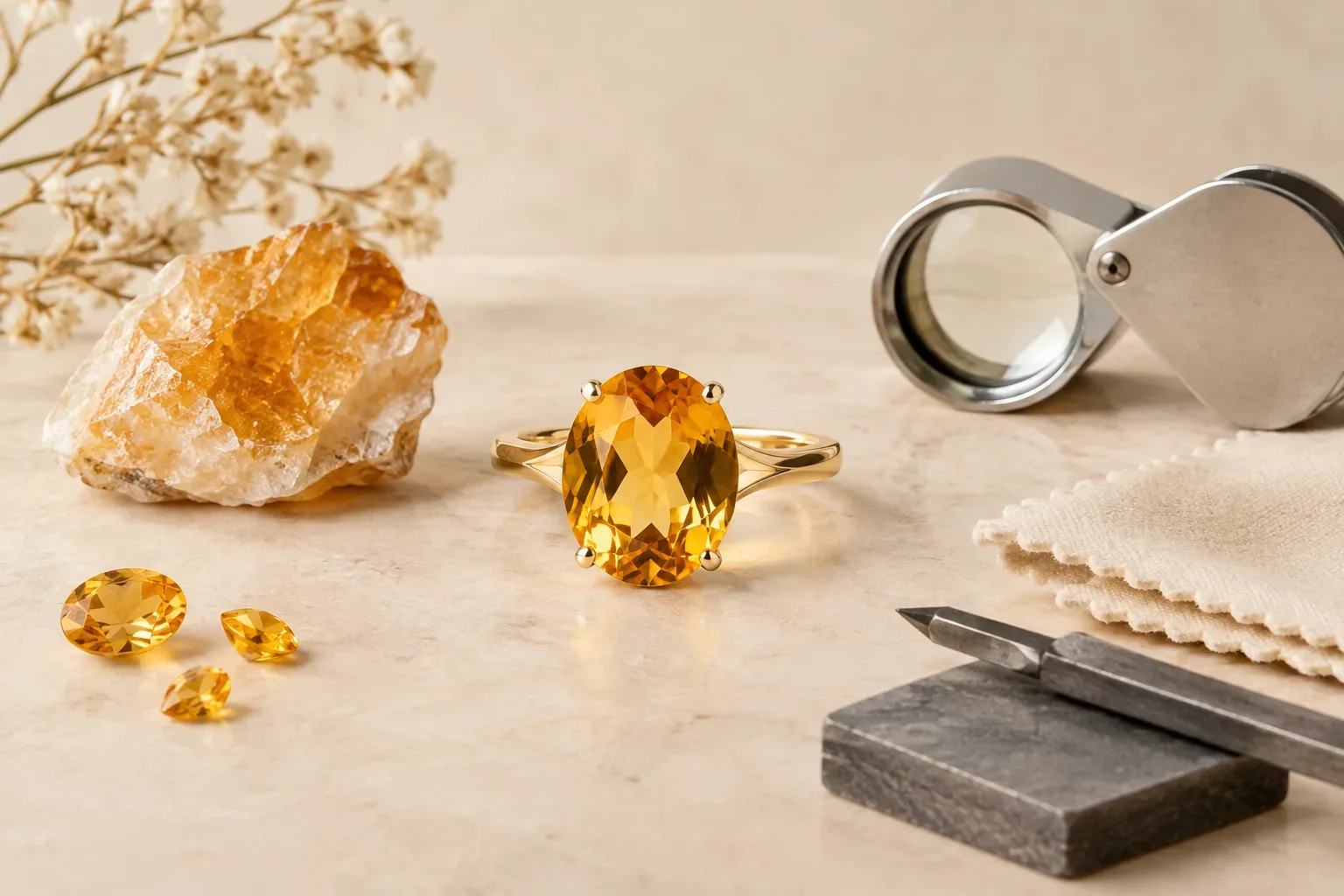
In contemporary jewellery practice, warm yellow to golden gemstones are commonly set in rings, pendants, earrings and cluster pieces. Industry trend reporting indicates continued demand for gemstone rings and birthstone necklaces, which is relevant if you are shopping for citrine in engagement-style or everyday pieces. Choice of setting should reflect the intended wear: rings and bracelets are subjected to more knocks and abrasion than pendants or stud earrings, so protective design is important for pieces worn most of the time.
Protective choices include settings that reduce edge exposure (for example, settings that surround the girdle or bezel-like designs) and metal choices that allow for periodic maintenance without compromising the gem. Prong settings can highlight a stone's face-up color but leave the edges more exposed; bezel or partial bezel settings offer greater protection against impact and edge chipping but change the visual presentation. For active wearers, modestly protective settings and regular maintenance are sensible trade-offs.
Selection and gifting guidance (questions to ask and verification limits)
Before buying or gifting, ask the seller for written disclosures about whether the stone is natural, lab-created, or treated. The Federal Trade Commission requires clear distinctions and written seller disclosure; this is a practical consumer right. Ask whether any color-enhancing treatments or thermal treatments have been applied and whether those treatments will affect care or durability.
Understand the limits of what you can verify independently. Without a qualified jeweler's assessment or a report from an accredited gemological laboratory you cannot reliably determine a stone's treatment history, origin, or, in many cases, whether a material is natural or synthetic. For higher-value purchases, request a lab report from an accredited lab and purchase from sellers who provide that documentation voluntarily. The GIA guidance on treatments and disclosure underscores that detectability, disclosure and durability concerns are often technical and may require professional analysis.
Daily wear and safe care guidance
Treat gemstones according to their likely daily exposures. For items you wear every day, minimize hard knocks, avoid contact with harsh household chemicals, and remove jewelry for heavy manual tasks. Clean with mild soap and water and a soft brush unless a seller or lab report states a treatment or sensitivity that requires a different approach.
Consider heat and chemical stability in cleaning: some gemstones and treated materials can be affected by high heat, ultrasonic cleaners or steam, and a gem treatment disclosure should indicate whether specialized cleaning is necessary. If the seller cannot confirm safe cleaning methods in writing, avoid ultrasonic and steam cleaning and choose gentle manual cleaning instead. Regular professional checks help ensure settings remain secure and any minor damage is managed before a stone is lost or more severely damaged.
When to consult a jeweler or gem lab
Consult a qualified jeweler if you notice chips, a loosened setting, cloudiness, or sudden changes in appearance. A jeweler can advise on setting repair or replacement and safe cleaning for a given piece. For questions about whether a stone is treated, natural, or lab-grown—or to obtain an objective durability assessment for insurance or resale—you will need a report from an accredited gemological laboratory. The GIA and regulatory guidance referenced earlier stress that treatments impact detectability and care, and that lab testing is the reliable route to document those properties.
For higher-value purchases, insist on written documentation from the seller and consider arranging independent laboratory testing prior to completing the transaction if the seller cannot provide acceptable certification. This step protects both buyer and seller and aligns with good consumer practice in the gem market.
Practical decision checklist
When deciding whether a citrine piece is right for daily wear or gift-giving, use this checklist: ask for written treatment disclosure; choose a setting appropriate for intended wear (more protection for rings and bracelets); prefer gentle cleaning methods unless the seller confirms otherwise; and obtain professional inspection periodically. If the purchase is high value, request an accredited lab report or be prepared to fund independent testing.
Remember that modern market preferences and styling choices influence how stones are presented. Reports from industry publishers show continuing consumer interest in gemstone rings and birthstone necklaces, so stylistic demand is strong—but match that stylistic appeal with the practical durability and disclosure information described above before committing to everyday wear.
Frequently asked questions
Is citrine suitable for everyday rings?
Many citrine pieces are worn daily when set and cared for appropriately, but suitability depends on the stone's specific durability profile and setting. Choose more protective settings for rings that see heavy use, ask the seller for treatment disclosure, and plan for periodic professional inspection.
Can I tell if citrine has been treated or is lab-created without a lab report?
No. According to regulatory guidance and gemological practice, you cannot reliably determine treatment history, origin, or whether a stone is lab-created without a qualified jeweler's assessment or a report from an accredited gemological laboratory. Ask the seller for written documentation and consider independent testing for higher-value purchases.
How should I clean and store citrine jewelry?
Use gentle manual cleaning with mild soap and water and a soft brush unless a seller's disclosure indicates a treatment that changes cleaning recommendations. Avoid ultrasonic and steam cleaning if you do not have confirmation that those methods are safe for the specific stone. Store pieces separately to avoid abrasion.
What questions should I ask a seller when buying citrine?
Request written disclosure of whether the stone is natural, lab-created, or treated; ask for details of any treatments; ask about recommended cleaning and care; and, for higher-value purchases, request a report from an accredited gemological laboratory.
When should I get a professional inspection or lab report?
Get a professional inspection when you notice damage, after any hard knock, or as part of regular maintenance. Obtain a lab report before purchasing a high-value stone if you require objective verification of treatment, origin, or authenticity.
Sources and further reading
- Imaginaire Digital — Imaginaire Digital
- Professional Jeweller / PRYA Jewellery Search Insights — Professional Jeweller / PRYA Jewellery Search Insights
- Gemological Institute of America — Gemological Institute of America
- Federal Trade Commission — Federal Trade Commission