Meaning at a glance
Clean tanzanite gently at home using warm water, a mild detergent, and a soft cloth or brush; avoid harsh chemicals, extreme heat, high-impact knocks, and unverified ultrasonic or steam cleaning unless a qualified jeweler confirms the stone's treatment and mounting will tolerate such methods. For questions about treatments, durability, or authenticity, ask the seller for written disclosure and consult a qualified gemologist or gemological laboratory for testing.
Direct answer: What to do and what to avoid
If you want a short, practical answer: clean tanzanite with warm (not hot) water, a mild dish soap, and a soft cloth or soft-bristled brush; rinse and dry thoroughly. Avoid harsh chemicals, abrasive cleaners, extreme heat, forceful knocks, and any ultrasonic or steam cleaning unless a qualified jeweler or gemological laboratory has confirmed that the particular stone and its setting are safe for those methods. If you are unsure about treatment history or durability, get written seller disclosure and professional testing before using aggressive cleaning methods.
Historical evidence and precise cultural context
Tanzanite does not have the layered cultural history that many older gemstones do. There is little to no documented pre-modern or ancient cultural use for tanzanite; its presence in jewelry is a modern phenomenon associated with 20th–21st-century jewelry markets and consumer trends rather than with ancient or traditional cultures. Because documented historical use is minimal, most symbolic or cultural meanings attached to tanzanite are contemporary or personal rather than traditional.
When discussing historical evidence for any gemstone, professionals focus on documented treatments, durability concerns, and market disclosures. The Gemological Institute of America (GIA) highlights that treatments, disclosure, detectability, durability, and special care create distinct consumer questions for gemstones. The Federal Trade Commission (FTC) also underscores that consumers need clear distinctions among natural, lab-created, treated, and imitation materials and that sellers should provide written disclosure of treatments. Use those modern, documented frames—treatment, disclosure, and laboratory verification—when evaluating tanzanite rather than expecting a long cultural lineage.
Documented meanings versus modern personal interpretations
Because tanzanite lacks an extensive pre-modern cultural record, documented historical meanings are minimal. Any claim that tanzanite carries a specific ancient symbolism should be treated as modern interpretation rather than a verified cultural tradition.
By contrast, modern personal interpretations and market-driven symbolism are common. Contemporary buyers and designers may ascribe meanings such as transformation, rarity, or emotional significance to tanzanite because of its color and relative scarcity in the market. Those are valid personal or marketing-driven meanings, but they differ from historically documented cultural symbolism and should be presented as personal or modern associations.
How tanzanite typically appears in jewelry
Tanzanite is most often used as a colored gemstone focal in rings, pendants, earrings, and statement pieces. In modern jewelry markets, gemstones remain a strong category of demand alongside classic styles such as engagement rings, bracelets, and gemstone rings, and buyers often choose colored stones for birthstone necklaces or sculptural pieces, according to recent jewelry trend reporting. These market trends indicate that tanzanite is used where a vivid blue–violet color is desired and where the wearer or buyer expects a gemstone to be the focal point.
Because tanzanite pieces are typically set as center stones or accents, the choice of setting metal, protective bezel or prong design, and overall piece construction affect both the stone’s visual impact and its practical durability. When a stone is mounted in a way that leaves edges exposed, it is more susceptible to knocks and abrasions; a protective setting reduces that risk and influences cleaning and care choices.
Safe home cleaning: a step-by-step approach
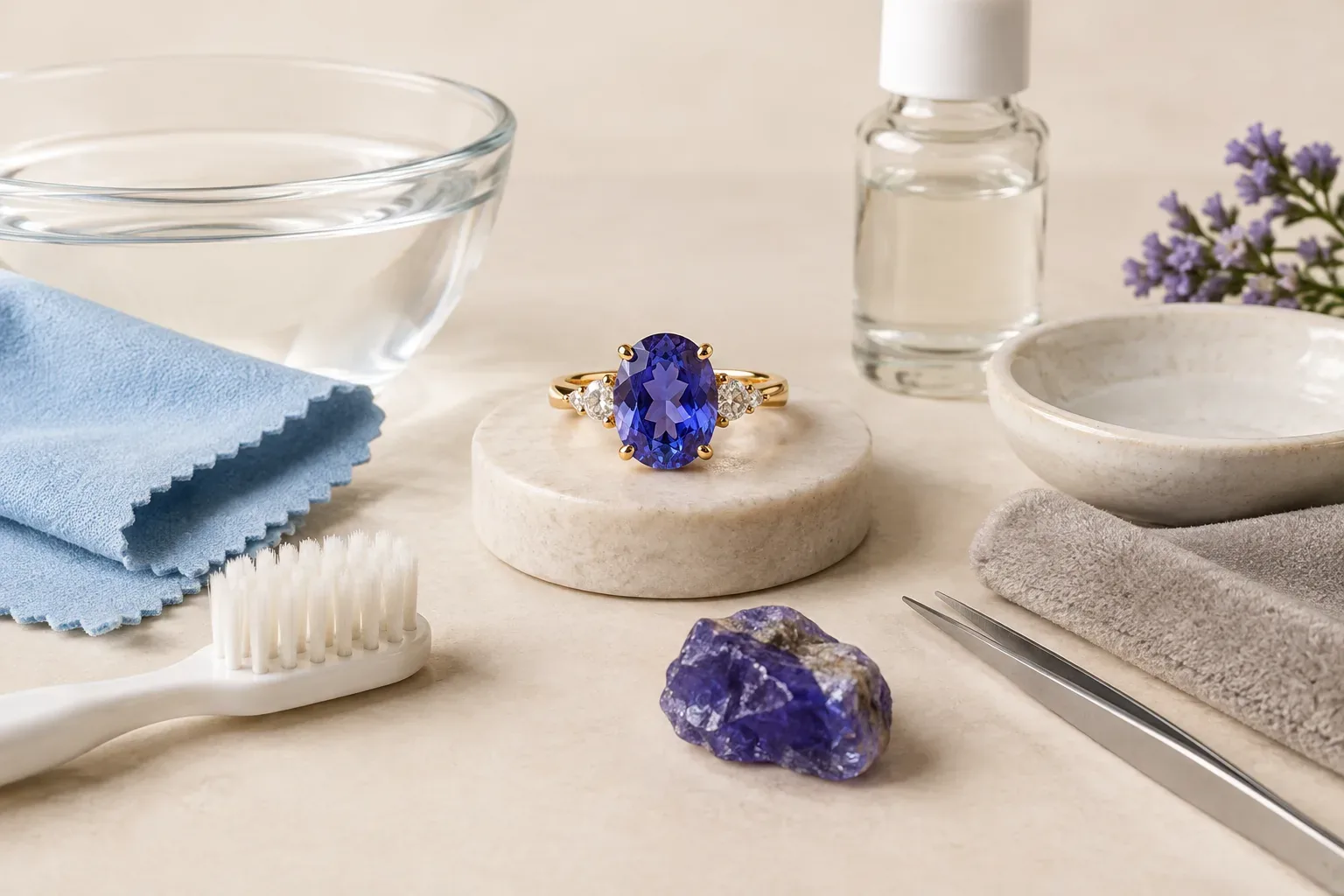
Use a conservative, low-risk method when cleaning tanzanite at home. First, remove the jewelry and inspect the setting for loose claws, chips, or obvious damage. If you see damage, stop and consult a jeweler before cleaning further.
Prepare a bowl of warm (not hot) water and add a drop or two of mild dish soap. Gently place the jewelry in the solution for a short soak—typically a few minutes—then use a soft cloth or a very soft-bristled brush to loosen dirt at the back of the stone and around the setting. Rinse thoroughly in clean, lukewarm water and dry with a lint-free cloth. Ensure the piece is completely dry before storing.
This conservative method minimizes exposure to heat, solvents, and mechanical stress. It is appropriate for routine cleaning of most mounted colored gemstones when no unusual treatments or vulnerabilities are known.
What to avoid and why
Avoid household cleaners that contain bleach, ammonia, or other harsh chemicals, as they can damage metal finishes and potentially affect some gemstone treatments. Do not use abrasive polishing compounds or hard brushes that could scratch the stone or metal.
Avoid exposing tanzanite to extreme heat or rapid temperature changes; heat can affect some gemstones and any treatments they may have received. Also avoid high-impact blows—tanzanite, like many colored gemstones, can chip or fracture if struck.
Be cautious with ultrasonic and steam cleaners. Unless the seller or a qualified gemologist has confirmed the stone’s treatment and mounting are safe for ultrasonic or steam cleaning, those methods pose a risk to certain gemstones and treatments. The Gemological Institute of America (GIA) notes that treatments, detectability, durability, and special care create distinct consumer questions for gemstones, which is why conservative care is prudent.
When to seek professional help or laboratory testing
If you need to verify whether a stone is natural, treated, lab-created, or an imitation, a qualified jeweler or a gemological laboratory is required. The Federal Trade Commission (FTC) emphasizes that consumers need clear distinctions among natural, lab-created, treated, and imitation materials and that sellers should provide written disclosure. If a seller cannot provide clear written disclosure about treatment or origin, ask for laboratory certification or consult a reputable gemologist.
Professional cleaning and inspection are advisable for high-value pieces, for items with visible damage, or before attempting any aggressive cleaning method such as an ultrasonic or steam clean. A jeweler can also check settings and tighten prongs, reducing the risk of losing a stone during wear or cleaning.
Selection and gifting guidance
When selecting or gifting tanzanite, request written disclosure from the seller about whether the stone is natural, treated, or lab-created. Ask whether any treatments exist and whether the seller provides a gemological report or certification. The FTC recommends clear written disclosure to help buyers make informed choices.
Consider the recipient’s lifestyle when choosing a setting. If the recipient leads an active life or frequently wears jewelry while working with their hands, favor protective settings—such as bezels—or lower-profile designs that reduce the risk of impact. For special occasion pieces meant for occasional wear, more open or decorative settings may be suitable.
Provide care guidance with the gift: include recommended cleaning steps, a note to avoid harsh chemicals and heat, and a suggestion to have the piece professionally inspected and cleaned periodically. That approach is practical and respectful and helps the recipient preserve the jewelry’s appearance and value.
Limits: what you cannot verify without experts
You cannot reliably determine treatment type, origin, or whether a stone is natural versus lab-created simply by visual inspection or home cleaning. The GIA highlights that treatments, disclosure, detectability, and durability raise distinct consumer questions that often require laboratory analysis. If those attributes matter to you, obtain written disclosure from the seller and, when appropriate, an independent report from a qualified gemological laboratory.
You also cannot safely assume a stone is safe for ultrasonic or steam cleaning without expert confirmation. If you are told a stone is safe for those methods, ask for written confirmation or a gemological opinion that identifies the treatment history and mounting suitability.
Practical trade-offs to consider
Choosing a conservative cleaning method reduces risk but may leave some deep-set dirt that only professional cleaning can remove. Professional cleaning (including steam or ultrasonic) can restore brilliance more effectively when it is safe to use, but that requires prior verification of the stone’s treatment history and the robustness of the mounting.
When buying or accepting a gift, there is a trade-off between visual impact and everyday durability. A large, high-profile tanzanite may offer impressive color and presence but will need more careful wear and occasional professional maintenance. Selecting a protected setting can decrease day-to-day maintenance and reduce the need for frequent professional services.
Quick care checklist
For routine home care: inspect the setting, wash with warm water and mild soap, use a soft cloth or brush, rinse, and dry. Avoid harsh chemicals, extreme heat, abrasive tools, and high-impact contact. Seek professional inspection or laboratory testing for high-value stones, unclear treatment history, or before using ultrasonic or steam cleaning.
Frequently asked questions
Can I use an ultrasonic cleaner on tanzanite?
You should not use an ultrasonic cleaner on tanzanite unless a qualified jeweler or gemological laboratory has confirmed the specific stone and setting are safe for that method. Ultrasonic cleaning can damage some gemstones or disturb treatments; when in doubt, use a conservative warm-soap-and-cloth method or seek professional cleaning.
Is steam cleaning safe for tanzanite?
Steam cleaning poses risks for some gemstones and treatments. Before using steam cleaning, obtain written disclosure from the seller about treatments and consult a jeweler or gemologist to confirm the stone and mounting can tolerate steam.
How often should I clean my tanzanite jewelry?
Clean tanzanite jewelry as needed based on wear—many people find a gentle home cleaning every few weeks to months is sufficient for regularly worn pieces. For high-value or infrequently worn pieces, limit home cleaning and obtain periodic professional inspections and cleanings.
How can I tell if my tanzanite is treated or lab-created?
You cannot reliably determine treatment or origin by sight alone. Ask the seller for written disclosure and, when necessary, obtain a report from a qualified gemological laboratory. The FTC recommends clear written disclosure for treatments and origins.
What should I do if my tanzanite gets chipped or the setting is loose?
Stop wearing the piece and take it to a qualified jeweler for inspection and repair. Continuing to wear damaged jewelry risks further loss or damage and may complicate subsequent repair or laboratory testing.
Are there storage tips to protect tanzanite?
Store tanzanite jewelry separately from harder gemstones and metals to avoid scratches. Use padded compartments or a soft pouch and keep pieces away from strong heat sources and household chemicals.
Sources and further reading
- Imaginaire Digital — Imaginaire Digital
- Professional Jeweller / PRYA Jewellery Search Insights — Professional Jeweller / PRYA Jewellery Search Insights
- Gemological Institute of America — Gemological Institute of America
- Federal Trade Commission — Federal Trade Commission