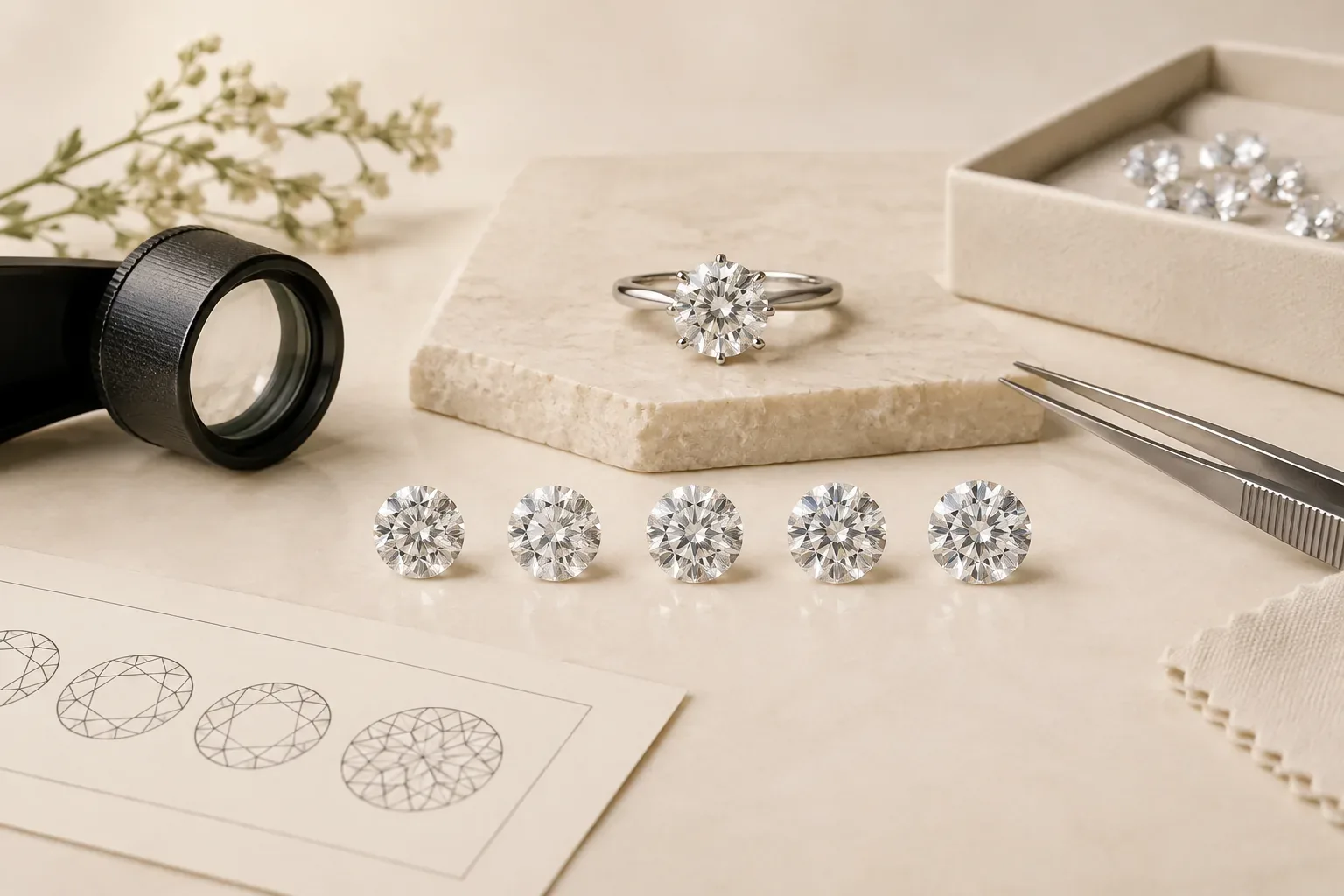
Meaning at a glance
Cut grade describes how well a diamond’s facets interact with light and is a major driver of what you see; balance cut grade against size, color and clarity to match your budget and priorities, rely on certified grading reports for claims, and ask specific verification questions because some tests need a qualified lab or gemologist.
What a cut grade means and why it matters
A cut grade is an evaluation of how the shape, proportions, symmetry and polish of a faceted diamond affect its interaction with light. In consumer terms, a better cut grade usually produces more sparkle and stronger face-up appeal at a given weight. Shoppers commonly prioritize cut because a well-cut diamond can look brighter and sometimes larger to the eye than a poorly cut stone of the same carat weight.
Cut is one factor among the traditional trade-offs known to the jewellery market: cut, color, clarity and carat weight. Deciding which to prioritize is a personal and budget-driven choice: some buyers prefer the visual impact of cut, while others choose a larger carat weight or a very high color or clarity grade.
Historical evidence and documented development
Our approved sources focus on modern gemological practice, disclosure and consumer protection rather than detailed ancient symbolism. The Gemological Institute of America (GIA) and other modern gemological authorities developed standardized grading systems to help consumers and trade professionals evaluate diamonds and other gemstones. These systems are products of 20th- and 21st-century gemological science and trade standardization rather than a single ancient culture or period.
When looking for historical meanings attached to diamonds or cuts, note that the materials we rely on for consumer guidance emphasize treatments, detectability and disclosure over cultural narratives. For contemporary shoppers, the most relevant historical fact is that cut grading is a modern, scientificized practice established by gemological institutions to create consistent expectations between sellers and buyers.
Documented historical meanings versus modern personal interpretation
Documented claims in the consumer and gemological literature relate to identification, treatment disclosure and grading practices rather than to cultural symbolism. Government consumer guidance focuses on accurate disclosure of whether a stone is natural, lab-grown, treated or imitation. The Federal Trade Commission instructs sellers to provide clear, written information so consumers can compare offerings on an equal footing.
Modern personal interpretations — for example, what a certain cut “says” about the wearer — are private and culturally variable. Those meanings are not standardized facts and will differ across families, cultures and occasions. Distinguish between what gemological reports document (physical characteristics, treatments, and origin declarations where available) and the private symbolism that buyers or recipients attach to a stone or design.
How cut grade appears in finished jewellery
Cut grade affects how a diamond looks once set: a higher cut grade typically shows more brightness, contrast and scintillation in ordinary lighting, which changes how a setting and other stones appear alongside it. Designers use different cuts to achieve specific visual effects; for example, certain settings highlight a stone’s face-up size while others emphasize sparkle.
Cut choices also influence mounting decisions. Some settings protect delicate pavilion or girdle areas, while others are designed to maximize light entry to the stone. Retail displays, photography, and video can exaggerate or diminish a stone’s apparent performance, so rely on independent grading reports and in-hand inspection when possible.
Value trade-offs and decision criteria
When evaluating value, think of cut grade as a multiplier on what you perceive. For many shoppers, a very good or excellent cut at a slightly lower carat weight yields a more pleasing result than a larger stone with a poor cut. That said, priorities differ: some purchasers place maximum value on carat size, others on a high color grade to avoid any warmth, and some focus on clarity to minimize visible inclusions.
Budget constraints require trade-offs. If you must choose, decide whether you want maximum sparkle, maximum visual size for the budget, or the highest possible numbers on other grading parameters. Use an independent grading report to compare stones on equivalent terms and to ensure the seller’s descriptions are not overstated.
What you can verify yourself and what needs a pro or lab
Without a qualified jeweller or gemological laboratory you can verify several practical things: ask to see a readable, certified grading report from a recognized laboratory; inspect the stone in multiple lights or request video to judge sparkle and face-up size; request clear images or a loupe view for obvious surface damage or large inclusions; and ask for written disclosure about whether the diamond is natural, lab-grown, treated, or an imitation.
Some important determinations require specialized equipment and expertise. Confirming whether a stone is treated, identifying subtle clarity enhancements, or verifying origin claims (for example, distinguishing certain natural origins) typically requires a gemological laboratory or a qualified, independent appraiser. The Gemological Institute of America (GIA) and other laboratories provide testing and reports that detect many treatments and establish formal grading; consumers should not assume these tests are replaceable by informal inspection.
Questions to ask sellers and jewellers
Ask for a copy of any grading report and verify the issuing laboratory. The Federal Trade Commission advises that sellers provide clear, written disclosure of whether a gem is natural, lab-created, treated, or an imitation. Ask which lab issued the cut grade and whether the report describes treatments or enhancements.
Request recent, clear photos or videos showing the stone in hand, and, if practical, ask to view the diamond with a jeweller’s loupe. Ask whether the seller will allow an independent appraisal or third-party verification before final purchase and whether any return or warranty terms apply if the report or expectations differ from what was represented.
Care and durability considerations
Diamonds are hard, but settings and any treatments they have undergone affect care and durability. The Gemological Institute of America highlights that treatments and special care needs are consumer questions; any disclosure on treatment should come with care instructions. For instance, mounted stones can trap oils and debris and benefit from periodic professional cleaning and inspection to ensure prongs remain secure.
Follow the seller’s care guidance and have settings and stone security checked periodically by a qualified jeweller. If the stone has documented treatments, follow treatment-specific care advice provided by the laboratory report or seller.
Practical gifting guidance
For a gift, prioritize the recipient’s aesthetic and lifestyle needs. If they value sparkle and everyday wearability, prioritize a strong cut grade and a secure setting. If size matters more than optimum light performance, accept a lower cut grade to reach a larger carat within budget, but be transparent about the visual trade-off.
Always obtain written certification and retention of any grading documents with the purchase to make future resale, insurance, or appraisal straightforward. If gifting a surprise, consider flexible return or upgrade policies so the recipient can confirm the stone with a jeweller or exchange it if expectations differ from the representation.
Conclusion
A diamond cut grade buying guide should equip you to balance visual performance, numerical grades, and price. Rely on reputable grading reports, insist on clear disclosure about treatments and origin, and use careful in-hand or video inspection to judge appearance. Recognize the limits of unaided verification: some determinations need a gemological laboratory or qualified professional. Asking the right questions and securing written reports protects both buyer and seller and leads to more confident choices.
Frequently asked questions
What is the single most important thing to check when buying a diamond?
Obtain and read the diamond’s grading report from a reputable laboratory and confirm whether the report documents cut grade, treatments, and whether the stone is natural or lab-grown; the Federal Trade Commission emphasizes written seller disclosure for these attributes.
Can I judge cut grade from photos or video alone?
Photos and videos help but are not definitive; they can illustrate sparkle and face-up size, but certain treatments and subtle optical performance features require in-person inspection or laboratory analysis as noted by the Gemological Institute of America.
Do I need a lab report to insure or resell a diamond?
A lab report or independent appraisal simplifies insurance and resale because it documents characteristics and any treatments; many insurers and secondary-market buyers require or prefer such documentation.
Is a higher cut grade always the best choice?
Not always; a higher cut grade usually offers more brilliance, but buyers sometimes prioritize carat weight, color, or clarity instead. Your personal priorities and budget determine the best trade-off.
How can I tell if a diamond has been treated or is lab-grown?
Sellers should provide written disclosure per FTC guidance; detection of many treatments and confirmation of lab-grown origin are tasks for qualified labs or experienced gemologists such as those at GIA.
What should I ask a jeweller before purchase?
Ask for the grading report and lab name, whether any treatments were disclosed, whether the seller allows independent verification or returns if the report differs from claims, and for clear photos or video of the actual stone in hand.
Sources and further reading
- Imaginaire Digital — Imaginaire Digital
- Gemological Institute of America — Gemological Institute of America
- Federal Trade Commission — Federal Trade Commission